Tag Archives: jihad

Islamic State Claims It Follows God’s Law, Jews and Christians Do Not

By Kyle Orton (@KyleWOrton) on August 1, 2016
1

The fifteenth issue of the Islamic State’s English-language magazine, Dabiq, released on 31 July 2016 contained an essay, “By the Sword,” a brief polemic that defends the Islamic State’s brutality on the basis that it is conducted according to the Word of God—laying open claim to genocide and slavery so long as it is undertaken by Muslims and not disbelievers, saying they would have felt no need to have apologized for the atomic bombing of Japan or the use of defoliants in Vietnam and would have been more thorough-going in the extermination of Native Americans and Jews, since these things are vouchsafed by the Creator. The Islamic State contends that the Jewish and Christian religious contain the same prescriptions for the forcible implementation of the Holy Law that the Qur’an does, but these monotheists have lapsed and pay more attention to the edicts of the United Nations. Continue reading

What We Know About The Islamic State’s Attack in Nice

By Kyle Orton (@KyleWOrton) on July 30, 2016

Mohamed Lahouaiej Bouhlel on the promenade in Nice on 14 July 2016

Mohamed Lahouaiej Bouhlel on the promenade in Nice on 14 July 2016

On 14 July 2016, Bastille Day, a lorry zig-zagged along the seafront Promenade des Anglais in Nice for two kilometres (1.25 miles) during a fireworks display. Eighty-four people, including ten children, were murdered instantly and two-hundred-plus wounded, nearly two-dozen critically. Below is a compilation of the evidence so far, which indicates that the killer was a part of a substantial network acting on behalf of the Islamic State, though there is not yet any evidence of a direct contact with the terrorist state headquartered in Raqqa. Continue reading

Jabhat al-Nusra Claims to Dissociate From Al-Qaeda

By Kyle Orton (@KyleWOrton) on July 28, 2016

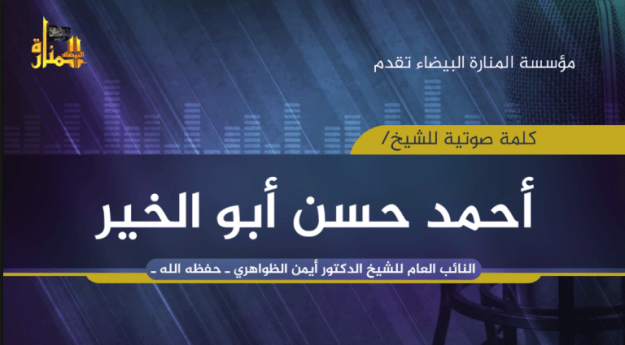
Graphic released with the speech of Ahmad Hassan (Abu Khayr al-Masri) about Jabhat al-Nusra and relations with al-Qaeda

Graphic released with the speech of Ahmad Hassan (Abu Khayr al-Masri) about Jabhat al-Nusra and relations with al-Qaeda

In advance of Jabhat al-Nusra rebranding as Jabhat Fatah al-Sham (JFS) on 28 July 2016, there were carefully coordinated media releases between al-Qaeda “central” (AQC) and al-Nusra. First, al-Manara al-Bayda (The White Minaret), al-Nusra’s media arm, released a six-minute audio speech by Abdullah Muhammad Rajab Abd al-Rahman (Abu Khayr al-Masri),[1] identified as the deputy to al-Qaeda’s leader Ayman al-Zawahiri; then there was the first ever picture of al-Nusra’s leader, Abu Muhammad al-Jolani, whose real name is Ahmad Husayn al-Shara, and shortly thereafter a video of al-Shara ostensibly severing ties with al-Qaeda; and finally the founding document for JFS was published. Continue reading

Islamic State Intelligence Guided The Würzburg Train Attacker

By Kyle Orton (@KyleWOrton) on July 21, 2016

muhammad-riyad-2

On 18 July 2016, in the Heidingsfeld district of Würzburg of Bavaria in southern Germany, a seventeen-year-old Afghan refugee named Riaz Khan Ahmadzai (Muhammad Riyad), armed with a hatchet and a knife, wounded five civilians, two of them seriously, on a train between Treuchtlingen to Würzburg. The four people injured on the train were from the same family from Hong Kong; Ahmadzai/Riyad then wounded another civilian seriously as he jumped from the train. Ahmadzai, who had entered Germany as an unaccompanied minor and had been living in Ochsenfurt, Bavaria, was shot dead after a chase with police.  Continue reading

Al-Qaeda Leader Focuses on Main Enemies: Saudi Arabia and the Islamic State

By Kyle Orton (@KyleWOrton) on January 13, 2016

1

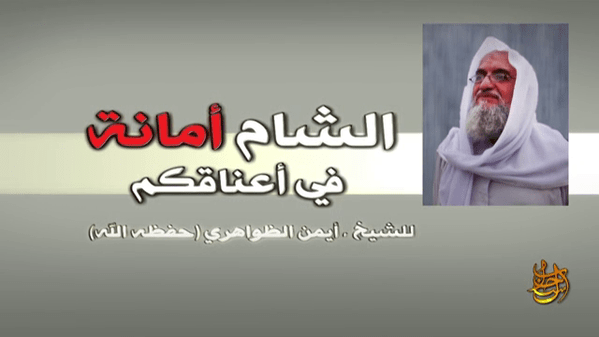
As-Sahab Foundation for Islamic Media Publication, al-Qaeda’s media outlet, produced an English translation of a speech by the organization’s leader, Ayman al-Zawahiri, on 13 January 2016. The speech was entitled, “Syria Is Entrusted Upon Your Necks”. The speech does focus on the West, particularly its de facto alliance with the pro-Assad coalition—namely Russia and Iran—and calls for the Syrian rebellion to unite with al-Qaeda to resist this conspiracy. What is more noticeable, however, is the two enemies on whom Dr. al-Zawahiri really focuses: Saudi Arabia and the Islamic State. The Saudis are accused—not without reason—of having been allied closely to the West and thwarting the jihadist projects at every turn. And al-Zawahiri makes a fierce ideological assault on the Islamic State, comparing them with the Khawarij and the Armed Islamic Group (GIA), whose conduct in Algeria in the 1990s and their justifications for it took Islamist extremism to new depths. The speech is reproduced below with some minor editions, to transliteration and punctuation, and some interesting and important sections highlighted in bold.
Continue reading

Islam’s First Terrorists, Part 3

By Kyle Orton (@KyleWOrton) on August 19, 2015

This is the third of a six-part series. Read parts one and two.

Masyaf fortress, eastern Hama, the headquarters of the Assassins (1141-1270)

Masyaf fortress, eastern Hama, the headquarters of the Assassins (1141-1270)

The death of Hassan-i Sabbah and The Resurrection

Rashid ad-Din Sinan

Rashid ad-Din Sinan

Hassan-i Sabbah, the Nizaris’ first and most successful leader, died in May 1124. Hassan-i Sabbah was a fanatic who sternly imposed the Holy Law—even executing one of his own sons for drinking wine and another son (mistakenly) for an unauthorized assassination. An extreme ascetic and recluse, Hassan-i Sabbah left his house twice in the thirty-five years after taking Alamut. Hassan-i Sabbah’s great skill was in weaponizing the discontents of the dispossessed and refining the doctrine of al-dawa jadida (the new preaching).

Hassan-i Sabbah never claimed to be the Imam, merely the only one who knew what the Imam wanted. Hassan-i Sabbah confirmed the Ismaili doctrine as essentially authoritarian, where the believer must follow an Imam, the only source of truth, who has been appointed by god (unlike the Sunni view where the believer can choose an Imam).

The Nizaris’ history divides into essentially four parts after this: Continue reading

Islamist Clerics Give Permission to Work with Turkey Against ISIS and PKK

By Kyle Orton (@KyleWOrton) on August 4, 2015

Just over a week ago, a new clerical body was formed, al-Majlis Shura Ahl al-ilm fil-Sham (Advisory Council of the People of Knowledge in Syria), which includes Islamists from within Syria and from outside. Among the notable foreigners are Umar al-Hadouchi, a Moroccan jihadi-salafist, and Muhammad Ould al-Dedew, a Mauritanian who is more in line with the Sururis. There is also Abdallah al-Muhaysini, the Saudi jihadi cleric who is very close to al-Qaeda’s leadership inside Syria. From among Syrians, there are two Ahrar al-Sham notables, Dr. Ayman al-Harush and Mohamed Ayman Aboul-Tout (Abu Abbas al-Shami); Sa’ad al-Uthman, the son of Abd al-Karim, a major figure in the Hama wing of the Syrian Muslim Brotherhood, and Ahmad al-Salum, a Sururi (an activist/political Salafi).

The Council’s first statement condemned the 25 July assassination of the Faylaq al-Sham commander Mazin al-Qassum by Islamic State (IS) operatives with Jund al-Aqsa, and demanded that all groups clarify their stance on IS and cleanse their ranks of IS agents and sympathizers. Today’s fatwa, “Concerning cooperation and coordination with the Turks in repelling Daesh and the PKK,” licensed Muslims to work with the Turkish government against IS and the PKK. The fatwa is reproduced below. Continue reading

Islamic State Spokesman Calls For Immigration to the Caliphate, All Factions To Join

By Kyle Orton (@KyleWOrton) on July 1, 2015

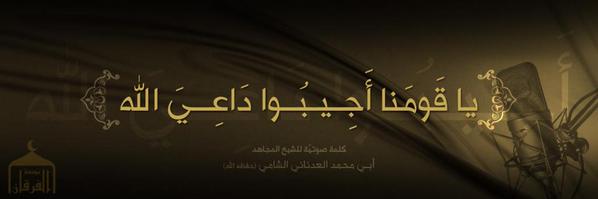
On June 23, 2015, the Islamic State (IS) spokesman Abu Muhammad al-Adnani gave a speech, “O Our People, Respond to the Caller of Allah”. Al-Adnani, noting the coming of Ramadan, called on Muslims to journey to the caliphate, saying that hijra (emigration) in this month—and martyrdom—is the most blessed. Al-Adnani called on Muslims—specifically Iraqi Sunnis and Syrian rebel and Islamist insurgent groups—to unite around IS, which had no theological factions or ethnic distinctions among its membership, being the only pure expression of Islam, ruling by god’s law. Iraqi Sunni militias and Syrian rebels had betrayed the religion by seeking favour from, and even seeking alliance with, Western states. Al-Adnani threatened the town of Haditha, specifically the Jaghayfa clan, that if it surrendered now its repentance would be accepted, but if the town was overrun first then they would be slaughtered. Al-Adnani played heavily on the interlinked themes of anti-Shi’a sectarianism and the spreading influence of Iran and its proxies, repressing Sunnis. The old guard of the jihadi movement—clerics like Abu Muhammad al-Maqdisi and al-Qaeda’s leader Ayman al-Zawahiri (though neither are mentioned by name)—are attacked for not being on the battlefields. Al-Adnani also accepted the allegiance of the Russian-based faction that declared itself under the caliph’s authority, naming the group Wilayat al-Kavkaz. An English transcript of the speech was posted by IS and is reproduced below with some minor editions in transliteration and some interesting sections highlighted in bold. Continue reading

Book Review: The Muslim Discovery of Europe (1982) by Bernard Lewis

By Kyle Orton (@KyleWOrton) on May 7, 2015

1

With the triumph of relativism and the current economic woes of the West, the sense that Western civilization is unique and in some respects—to use an old-fashioned word—better than the alternatives, and worth defending and exporting, is waning. But Bernard Lewis’ The Muslim Discovery of Europe suggests a longer view in which Europe, while containing all the faults of previous civilizations, has been one of the few to begin the process of correcting those faults, and has corrected many more than any other civilization.

One feature of European civilization that stands out as unique is curiosity. Continue reading

Islamic State Threatens Anti-Islam Activists, Claims A “Province” in America

By Kyle Orton (@KyleWOrton) on May 6, 2015

Two American loyalists of the Islamic State, Elton Simpson and Nadir Hamid Soofi, were killed during an attempted attack—guided by the British Islamic State operative Junaid Husain—on the Curtis Culwell Centre in Garland, Texas, on 3 May 2015. The primary intent of Simpson and Soofi was to murder anti-Islam agitator Pamela Geller, who was among the chief sponsors of an event taking place in the Centre that day: The “First Annual Muhammad Art Exhibit and Contest”.

A statement was circulated on 6 May 2017 by an American Islamic State supporter, “Abu Ibrahim al-Ameriki,” which claimed that Simpson and Soofi had been fully aware how well-guarded the Curtis Culwell Centre was but had intended “to show how easy we give our lives for the Sake of Allah”. Abu Ibrahim went on to threaten not only Geller but “[e]veryone who houses her events [or] gives her a platform”. Abu Ibrahim concluded by claiming that this attack was “only the beginning” of an Islamic State effort to establish a wilaya (province), as the Islamic State calls its foreign branches or affiliates, “in the heart of our enemy”. According to Abu Ibrahim, the Islamic State already has seventy-one “trained soldiers” in fifteen American states, including Virginia, Maryland, Illinois, California, and Michigan.

Abu Ibrahim’s full statement is reproduced below, with some important sections highlighted in bold. Continue reading