Tag Archives: jihadism

Shi’a Holy War and Iran’s Jihadist Empire

By Kyle Orton (@KyleWOrton) on February 12, 2015

1

In watching the Syrian conflict, one of the most extraordinary tendencies of the reporting is the way “foreign fighter” and “jihadist” have become synonymous with the Sunni militants who have descended on that tormented country. This is one among many illusions that will hopefully be ended by Phillip Smyth’s monograph, “The Shiite Jihad in Syria and its Regional Effects“. You should read the whole thing but below are the salient points I took away. Continue reading

Book Review: Introduction to the Qur’an (1953) by Richard Bell

By Kyle Orton (@KyleWOrton) on January 13, 2015

4

Richard Bell’s Introduction to the Qur’an is, at less than 200 pages, a brief and easily-digestible explanation of the context in which Islam’s “holy” book arose, and the problems of reconciling theological orthodoxy with historical accuracy. More than six decades after publication, the book remains influential in scholarship of the Qur’an. Continue reading

Jihadi Cleric Makes the Case for the Islamic State Leader as Caliph

By Kyle Orton (@KyleWOrton) on January 8, 2015

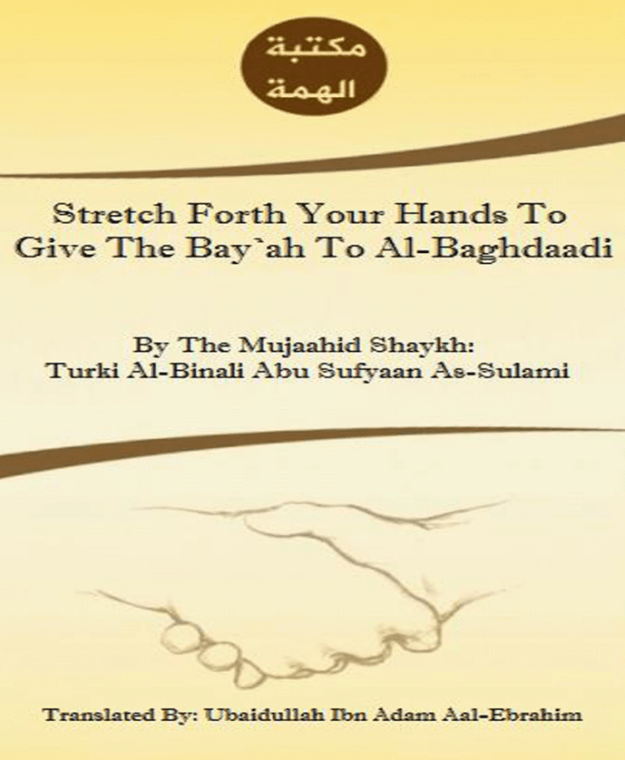
Soon after the public emergence inside Syria of the then-Islamic State of Iraq and Syria (ISIS) in the spring of 2013, a treatise was published by the Bahraini jihadi scholar, Turki al-Binali, which is to date the only official biography of the group’s leader, Abu Bakr al-Baghdadi, and piloted the idea that he was the caliph, i.e. the leader of Muslims worldwide. Al-Binali’s document, “Stretch [Out] the Hands to Give Allegiance to Al-Baghdadi”,[1] first published on August 5, 2013, would be amplified throughout late 2014 after ISIS declared that it had restored the caliphate last June and Abu Bakr took the mantle of caliph. An English translation of the document was produced on December 21, 2014, by someone using the name Ubaidullah ibn Adam al-Ibrahim on the pro-Islamic State Ansar al-Khilafa blog. It is reproduced below, with some editions for syntax and transliteration, to preserve it for study. Continue reading

Al-Qaeda Issues Strategic Guidelines for Jihadist Warfare

By Kyle Orton (@KyleWOrton) on January 7, 2015

Al-Qaeda’s emir, Ayman al-Zawahiri, released a document on 14 September 2013, entitled, Tawjihat ‘Amma lil-Amal al-Jihadi (توجيهات عامة للعمل الجهادي), variously translated as: “General Guidelines for the Work of Jihad” or “General Guidelines for Jihadist Action”. Al-Zawahiri’s document is reproduced below. Continue reading

Iraq Is Still Suffering The Effects Of Saddam Hussein’s Islamist Regime

By Kyle Orton (@KyleWOrton) on December 17, 2014

Throughout his entire trial, Saddam Hussein was never without a Qur'an

Throughout his entire trial, Saddam Hussein was never without a Qur’an

In June, Samuel Helfont published a paper for the Middle East Institute entitled, ‘Saddam and the Islamists: The Ba’thist Regime’s Instrumentalization of Religion in Foreign Affairs’. Relying on “newly released Iraqi state and Ba’th Party archives,” Helfont’s central argument is:

Saddam maintained deep reservations about Islamism until the end. However, this did not prevent his regime from working extensively with Islamists and Islamic activists outside Iraq. Indeed, religion played a leading role in the country’s foreign policy throughout the 1990s.”

Continue reading

The Other Side of the “Torture” Debate

By Kyle Orton (@KyleWOrton) on December 11, 2014

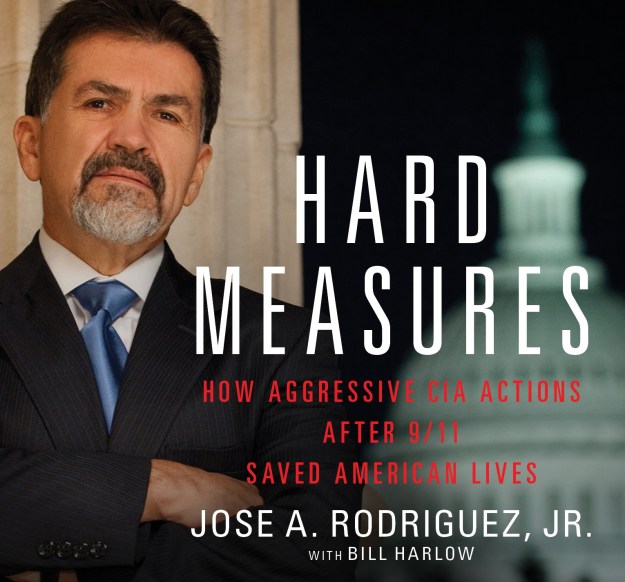
As a final act while the Democrats hold their majorities in Congress, the United States Senate Select Committee on Intelligence (SSCI) released a report on December 9, the “Committee Study of the Central Intelligence Agency’s Detention and Interrogation Program”, known to the Twitterverse as the “Torture Report”. This has reignited the debate about America’s use of harsh interrogation methods, the so-called “enhanced interrogation techniques” (EITs), against al-Qaeda operatives in the shadow of the 9/11 massacre. The politics surrounding this matter—even on basic questions, such as whether discomfort works to induce cooperation in detainees—are poisonous, and the publication of this partisan Committee Study has done nothing to assist this environment. One means of trying to get at the truth is to examine a counterpoint, the 2012 book, Hard Measures: How Aggressive CIA Actions After 9/11 Saved American Lives, a memoir by Jose Rodriguez, the man who oversaw the Central Intelligence Agency’s Counterterrorism Centre from 2001 to 2004. Continue reading

The Islamic State Creates Foreign “Provinces”

By Kyle Orton (@KyleWOrton) on December 6, 2014

Abu Bakr al-Baghdadi gave his eighth speech[1] since becoming the leader of the Islamic State (ISIS), entitled, “Even if the Disbelievers Despise Such”, on November 13, 2014. The speech was notable for two things. First, it taunted the American-led coalition about the lack of success their campaign has had against ISIS since it began in June and was extended into Syria in September, and invited the U.S. and other Western states to deploy ground troops. Secondly, the speech accepted the pledges of allegiance from groups outside Syria and Iraq for the first time, from Saudi Arabia, Yemen, Egypt, Libya, and Algeria. In Saudi Arabia and Yemen, the groups that have joined ISIS are unknown. In Egypt, the group is Ansar Bayt al-Maqdis (The Partisans of Jerusalem). In Libya, the group is al-Majlis Shura Shabab al-Islam (The Islamic Youth Consultation Council). And in Algeria the group is Jund al-Khalifa (Soldiers of the Caliphate). These areas will now become wilaya (provinces) of the caliphate, al-Baghdadi says, and ISIS will send a governor to oversee them. An English transcript of the speech was produced by ISIS and is reproduced below with important sections highlighted in bold. Continue reading

ISIS’s Leader Calls for the Syrian Rebels to Cease Attacking the Jihadists

By Kyle Orton (@KyleWOrton) on December 6, 2014

The leader of the Islamic State in Iraq and Syria (ISIS), Abu Bakr al-Baghdadi, gave an untitled speech on January 19, 2014. It was a response to the Syrian rebellion having launched a full-scale offensive against ISIS on January 3, 2014, which had driven them from large swathes of territory in northern Syria and was ongoing at the time. The rebel offensive continued for six months—until Mosul fell to ISIS in June, and the captured resources were fed into eastern Syria, breaking the rebels. Al-Baghdadi struck a relatively conciliatory note, though did accompany this with threats, should the rebels continue resisting the jihadists. A translation of the speech was made by Pieter Van Ostaeyen, and is reproduced below. Continue reading

Islamic State Claims Responsibility for Terror Attacks in Australia, Canada, and America

By Kyle Orton (@KyleWOrton) on November 21, 2014

The Islamic State released the fifth edition of its English-language propaganda magazine, Dabiq, on November 21, 2014. In it, the Islamic State claimed responsibility for the terrorist attacks: in Australia by Numan Haider on September 23, in Canada by Martin Couture-Rouleau on October 20 and Michael Zehaf-Bibeau on October 22, and in America by Zale Thompson on October 23. The Islamic State says these attacks were in response to the call on September 22 by the organization’s spokesman, Abu Muhammad al-Adnani. The article is reproduced below with some minor editions for transliteration and some important sections highlighted in bold. Continue reading

Islamic State Biography of the Spokesman: Abu Muhammad al-Adnani

By Kyle Orton (@KyleWOrton) on November 8, 2014

Picture of Abu Muhammad al-Adnani from the second edition of Dabiq magazine (July 27, 2014)

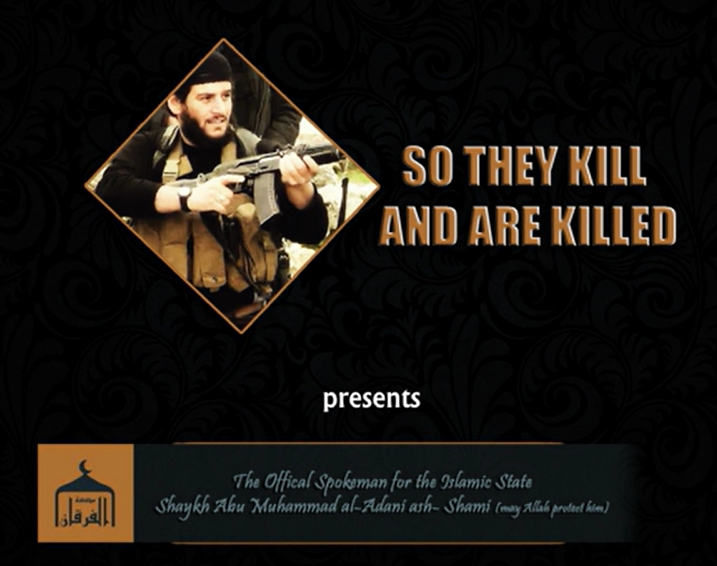
A Bahraini jihadist ideologue, Turki al-Binali, who has become a cleric in the Islamic State, put out a profile of the Islamic State’s official spokesman, Abu Muhammad al-Adnani, on November 1. By this account, al-Adnani took up jihadism in 2000 and was among a small cadre of people who joined the Islamic State’s founder, Ahmad al-Khalayleh, the infamous Abu Musab al-Zarqawi, when he journeyed through Syria on a recruitment-drive in 2002. Learned in Islamic jurisprudence and rigid in doctrinal literalness, al-Adnani was associated with some of the titans of the Islamic State’s legend like Abu Muhammad al-Lubnani and Abu Anas al-Shami. Appointed as emir of a small town in Anbar, Haditha, the first leader after the declaration of “the State” in 2006, Hamid al-Zawi (Abu Umar al-Baghdadi), worked under al-Adnani’s command. Al-Adnani then moved on to be an ideological instructor. Such was al-Adnani’s status, he did not have to consult al-Zarqawi before ordering operations; he only had to brief al-Zarqawi afterwards. Al-Adnani was arrested by the Americans in Iraq in May 2005, thereafter spending six years behind the wire, though never giving up his missionary activity. Indeed, the profile says al-Adnani developed the first full training program, academic and physical, for jihadi inmates. Upon release, al-Adnani took the post of official spokesman and has maintained it ever since. This profile is reproduced below with some minor editions for transliteration, syntax, and spelling. Continue reading