By Kyle Orton (@KyleWOrton) on September 6, 2015
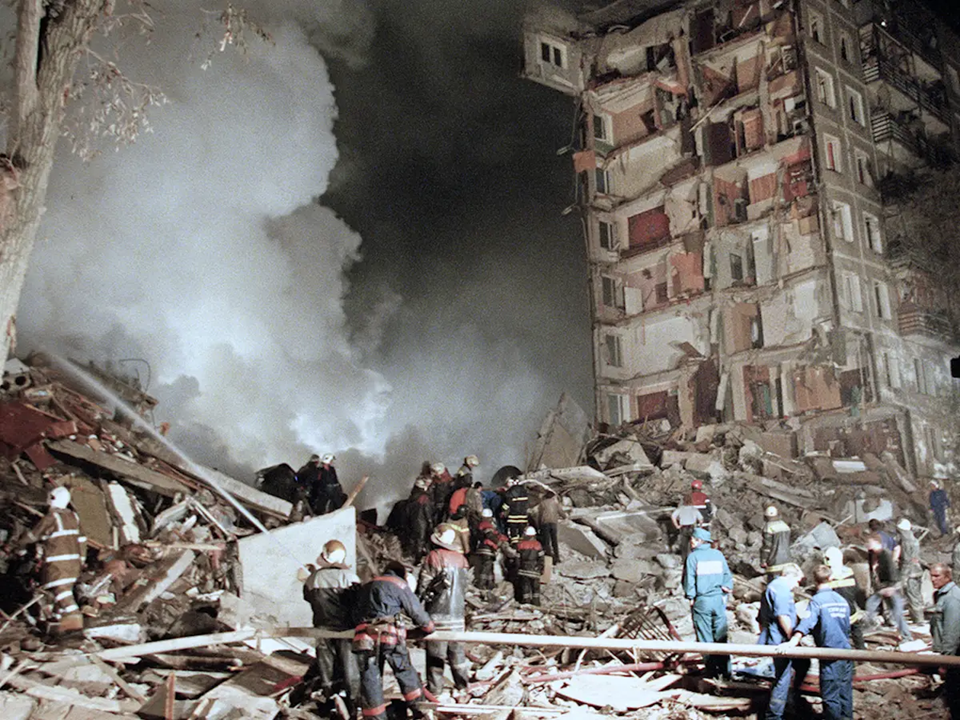
 Book Review: The Connection: How al-Qaeda’s Collaboration With Saddam Hussein Has Endangered America (2004) by Stephen Hayes
By Kyle Orton(@KyleWOrton) on June 21, 2015
More than twelve years after the fall of Saddam Hussein, the conventional wisdom is that Saddam’s regime had no connection with al-Qaeda, and such “evidence” as was adduced was tortured out of Ibn al-Shaykh al-Libi in the Bush administration’s desperation to cobble together a casus belli. But if one puts ideology on hold, and considers the evidence of Stephen Hayes’ The Connection, a rather different picture emerges. Continue reading
By Kyle Orton (@KyleWOrton) on April 5, 2015
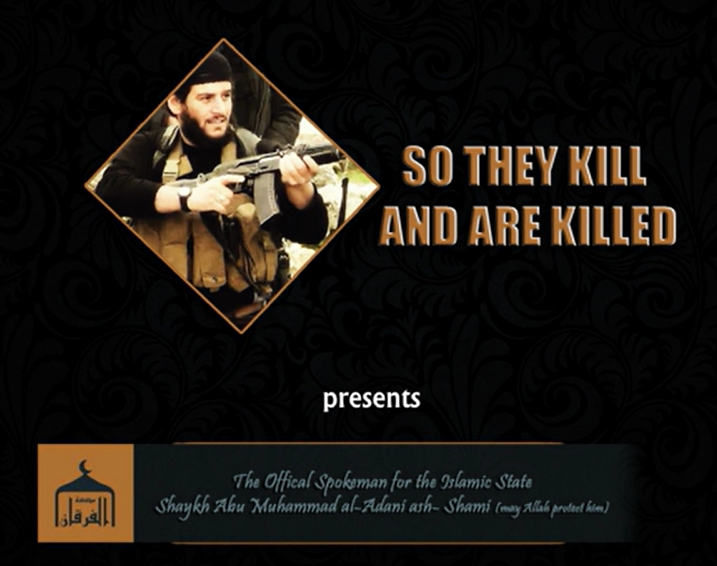
The spokesman of the Islamic State, Abu Muhammad al-Adnani, gave a speech on 12 March 2015 entitled, “They Kill and Are Killed” (فيَقتلون ويُقتلون), a phrase drawn from the Qur’an [9:111]. A translation of the speech is given below.
By Kyle Orton (@KyleWOrton) on February 12, 2015
In watching the Syrian conflict, one of the most extraordinary tendencies of the reporting is the way “foreign fighter” and “jihadist” have become synonymous with the Sunni militants who have descended on that tormented country. This is one among many illusions that will hopefully be ended by Phillip Smyth’s monograph, “The Shiite Jihad in Syria and its Regional Effects“. You should read the whole thing but below are the salient points I took away. Continue reading
By Kyle Orton (@KyleWOrton) on January 13, 2015
Richard Bell’s Introduction to the Qur’an is, at less than 200 pages, a brief and easily-digestible explanation of the context in which Islam’s “holy” book arose, and the problems of reconciling theological orthodoxy with historical accuracy. More than six decades after publication, the book remains influential in scholarship of the Qur’an. Continue reading
By Kyle Orton (@KyleWOrton) on January 8, 2015
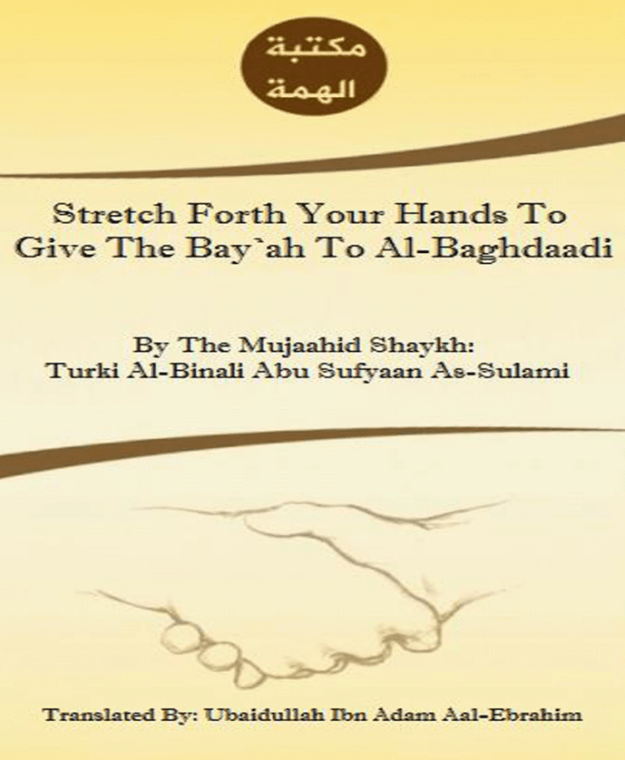
Soon after the public emergence inside Syria of the then-Islamic State of Iraq and Syria (ISIS) in the spring of 2013, a treatise was published by the Bahraini jihadi scholar, Turki al-Binali, which is to date the only official biography of the group’s leader, Abu Bakr al-Baghdadi, and piloted the idea that he was the caliph, i.e. the leader of Muslims worldwide. Al-Binali’s document, “Stretch [Out] the Hands to Give Allegiance to Al-Baghdadi”,[1] first published on August 5, 2013, would be amplified throughout late 2014 after ISIS declared that it had restored the caliphate last June and Abu Bakr took the mantle of caliph. An English translation of the document was produced on December 21, 2014, by someone using the name Ubaidullah ibn Adam al-Ibrahim on the pro-Islamic State Ansar al-Khilafa blog. It is reproduced below, with some editions for syntax and transliteration, to preserve it for study. Continue reading
By Kyle Orton (@KyleWOrton) on January 7, 2015

Al-Qaeda’s emir, Ayman al-Zawahiri, released a document on 14 September 2013, entitled, Tawjihat ‘Amma lil-Amal al-Jihadi (توجيهات عامة للعمل الجهادي), variously translated as: “General Guidelines for the Work of Jihad” or “General Guidelines for Jihadist Action”. Al-Zawahiri’s document is reproduced below. Continue reading
By Kyle Orton (@KyleWOrton) on December 17, 2014

Throughout his entire trial, Saddam Hussein was never without a Qur’an
In June, Samuel Helfont published a paper for the Middle East Institute entitled, ‘Saddam and the Islamists: The Ba’thist Regime’s Instrumentalization of Religion in Foreign Affairs’. Relying on “newly released Iraqi state and Ba’th Party archives,” Helfont’s central argument is:
“Saddam maintained deep reservations about Islamism until the end. However, this did not prevent his regime from working extensively with Islamists and Islamic activists outside Iraq. Indeed, religion played a leading role in the country’s foreign policy throughout the 1990s.”
By Kyle Orton (@KyleWOrton) on December 11, 2014
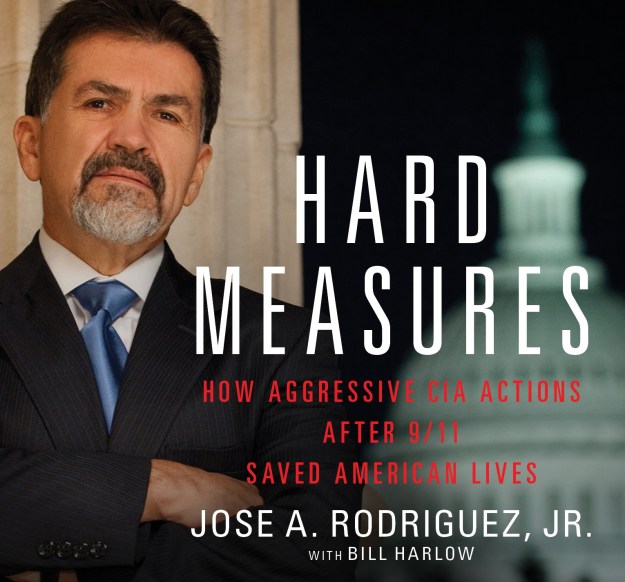
As a final act while the Democrats hold their majorities in Congress, the United States Senate Select Committee on Intelligence (SSCI) released a report on December 9, the “Committee Study of the Central Intelligence Agency’s Detention and Interrogation Program”, known to the Twitterverse as the “Torture Report”. This has reignited the debate about America’s use of harsh interrogation methods, the so-called “enhanced interrogation techniques” (EITs), against al-Qaeda operatives in the shadow of the 9/11 massacre. The politics surrounding this matter—even on basic questions, such as whether discomfort works to induce cooperation in detainees—are poisonous, and the publication of this partisan Committee Study has done nothing to assist this environment. One means of trying to get at the truth is to examine a counterpoint, the 2012 book, Hard Measures: How Aggressive CIA Actions After 9/11 Saved American Lives, a memoir by Jose Rodriguez, the man who oversaw the Central Intelligence Agency’s Counterterrorism Centre from 2001 to 2004. Continue reading
By Kyle Orton (@KyleWOrton) on December 6, 2014
Abu Bakr al-Baghdadi gave his eighth speech[1] since becoming the leader of the Islamic State (ISIS), entitled, “Even if the Disbelievers Despise Such”, on November 13, 2014. The speech was notable for two things. First, it taunted the American-led coalition about the lack of success their campaign has had against ISIS since it began in June and was extended into Syria in September, and invited the U.S. and other Western states to deploy ground troops. Secondly, the speech accepted the pledges of allegiance from groups outside Syria and Iraq for the first time, from Saudi Arabia, Yemen, Egypt, Libya, and Algeria. In Saudi Arabia and Yemen, the groups that have joined ISIS are unknown. In Egypt, the group is Ansar Bayt al-Maqdis (The Partisans of Jerusalem). In Libya, the group is al-Majlis Shura Shabab al-Islam (The Islamic Youth Consultation Council). And in Algeria the group is Jund al-Khalifa (Soldiers of the Caliphate). These areas will now become wilaya (provinces) of the caliphate, al-Baghdadi says, and ISIS will send a governor to oversee them. An English transcript of the speech was produced by ISIS and is reproduced below with important sections highlighted in bold. Continue reading

