By Kyle Orton (@KyleWOrton) on 26 August 2021

Taliban patrol in Wazir Akbar Khan, Kabul, 18 August 2021 [image source]
By Kyle Orton (@KyleWOrton) on 26 August 2021
Taliban patrol in Wazir Akbar Khan, Kabul, 18 August 2021 [image source]
By Kyle Orton (@KyleWOrton) on 20 August 2021

Khalil Haqqani, a senior Taliban leader and simultaneously a leader of Al-Qaeda’s Haqqani Network, leads Friday prayers at the Pul-i-Khishti, the largest mosque in Kabul, 20 August 2021
When the Taliban swept into the capital of Afghanistan on Sunday, little of the coverage focused on Pakistan and yet that was where this victory was made. This is a pattern that has persisted throughout the war. Continue reading
By Kyle Orton (@KyleWOrton) on 17 August 2021
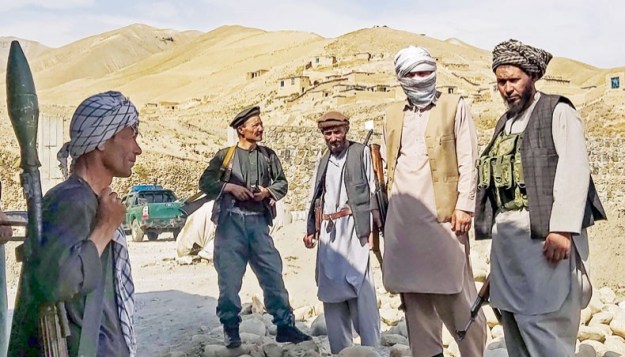
Afghan government forces guarding Taloqan, Takhar province, Afghanistan // July 2021 // AFP photo
Kabul fell to the Taliban on 15 August. There is so much more to be said about the disastrous decisions the United States that precipitated this calamity, not least the so-called peace process whose only concrete effects were to weaken and demoralise the Afghan government, while bolstering the ranks of the Taliban by forcing the release of thousands of jihadists. The chaotic Saigon scenes have testified to the incompetence of Joe Biden’s administration, even at administrative tasks, and the horrors are only just beginning.
This post has a slightly different focus, namely the role of Pakistan, specifically its military and Inter-Services Intelligence (ISI), as the author and operator of the Taliban and allied jihadists. This factor—absolutely fundamental to the conflict—has been, for twenty years, bizarrely absent in much of the coverage, and suggestions recur to this day that the Taliban is actually a problem for Pakistan. When the Pakistan dimension does come up, it will either be to note that Pakistan has some kind of role in funding or otherwise “supporting” the Taliban, and at its strongest the Taliban will be called a “proxy” of the ISI.
Even the word “proxy”, however, underplays the extent to which the Taliban is Pakistan, a wing of its (deep) state power. Continue reading
By Kyle Orton (@KyleWOrton) on 16 August 2021

The Taliban took over Afghanistan’s capital on Sunday after a nine-day offensive captured one provincial capital after another. The United States had already decided to abandon the country, and without the US the other NATO states had no choice but to leave. It was quite clear that the Afghan state would crumble in the absence of a Western presence, though it seems President Joe Biden thought he would have a longer “decent interval” before the Saigon evacuation scenes and the massacres began. Continue reading
By Kyle Orton (@KyleWOrton) on 12 August 2021
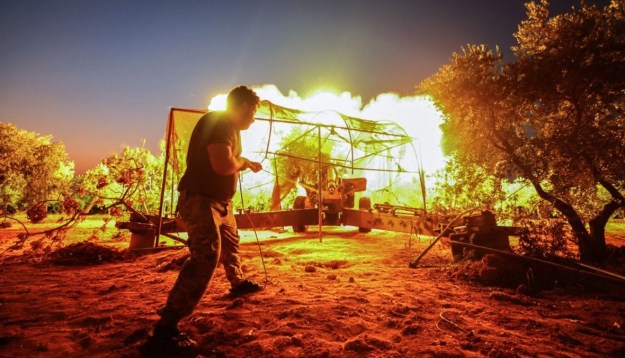
In early July, President Joe Biden confirmed his intention to withdraw all American troops from Afghanistan by September 2021. Biden cited a February 2020 U.S. “agreement” with the Taliban that he had “inherited” from the Trump administration. In truth, President Donald Trump had made no agreement. He had already begun pulling troops out by October 2019 and signed a fig leaf to cover his unconditional withdrawal.
Biden reassessed other Trump policies and could have reassessed this one, not least since the Taliban were in violation even of their vague paper promises — most notably on their commitment to deny space to al Qaeda and negotiate peace in good faith. The truth is that Biden is ideologically committed, as Barack Obama and Trump were, to ending American involvement in “forever wars.” Regardless, this does not mean those wars end or the threats that drew the United States in actually go away. Continue reading
By Kyle Orton (@KyleWOrton) on 8 May 2021

Wael al-Ta’i (Abu Muhammad al-Furqan), Al-Naba 285, p. 3
The 285th edition of Al-Naba, the weekly newsletter of the Islamic State (IS), released on 6 May, had a biography of Abu Muhammad al-Furqan, one of the most important IS leaders, the head of its Central Media Department and its operational ruler when he was killed in September 2016. Continue reading
By Kyle Orton (@KyleWOrton) on 5 April 2021
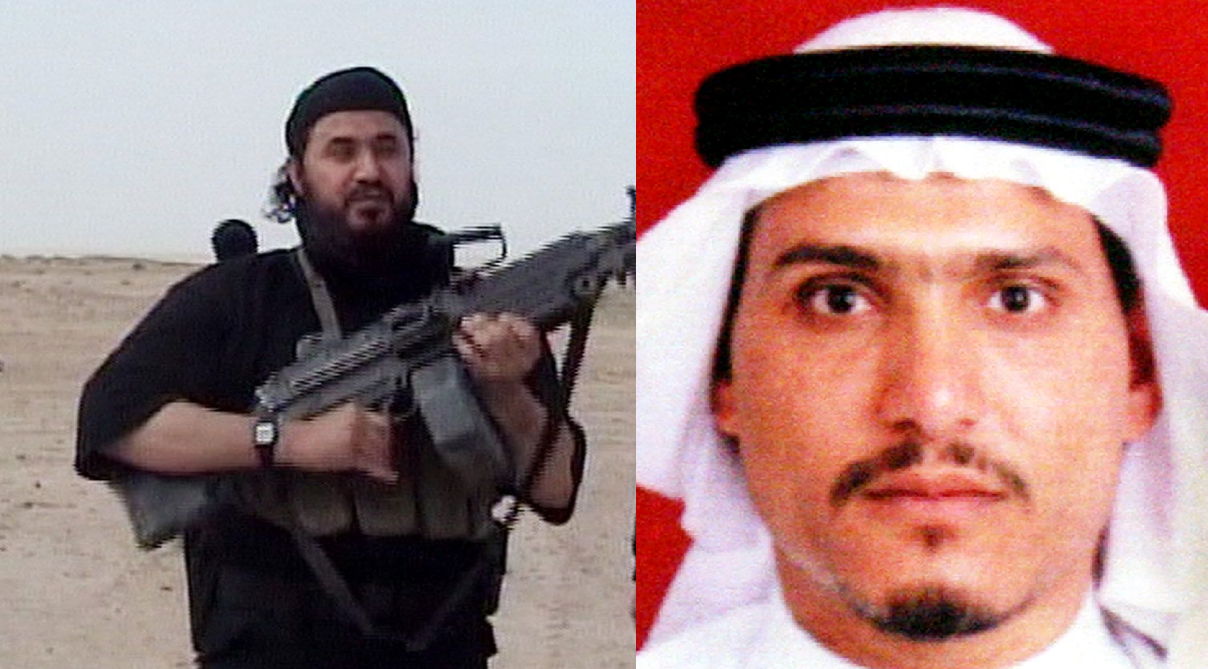
Ahmad al-Khalayleh (Abu Musab al-Zarqawi), the infamous founder of the Islamic State movement, known at the time as Al-Qaeda in Iraq (AQI) and formerly part of the Mujahideen Shura Council (MSC), was killed on 7 June 2006. Zarqawi’s successor was officially announced five days later, in a written statement released on 12 June, as Abu Hamza al-Muhajir, an Egyptian with a long history in and around Al-Qaeda. The next day, 13 June 2006, Abu Hamza gave his first speech as AQI emir, entitled, “The Gathering Will Be Defeated and They Will Turn Their Backs [in Retreat]”, drawn from an ayat of the Qur’an (54:45). The statement and the speech are translated below.
By Kyle Orton (@KyleWOrton) on 19 March 2021
Hamid al-Zawi, the leader of the Islamic State movement from 2006 to 2010, known only as Abu Umar al-Baghdadi during his lifetime, gave a speech on 19 March 2010 entitled, “The Soldiers’ Sermon for the Axe of al-Khalil Campaign” (Khutba al-Jund bi-Hamlat Fa’s al-Khalil). It was Al-Zawi’s twenty-second and, as it turned out, penultimate speech. Al-Zawi was killed almost exactly a month later, on 18 April 2010, alongside his deputy and “war minister”, Abd al-Munim al-Badawi (Abu Hamza al-Muhajir). A translation of the speech is published below.
By Kyle Orton (@KyleWOrton) on 17 March 2021
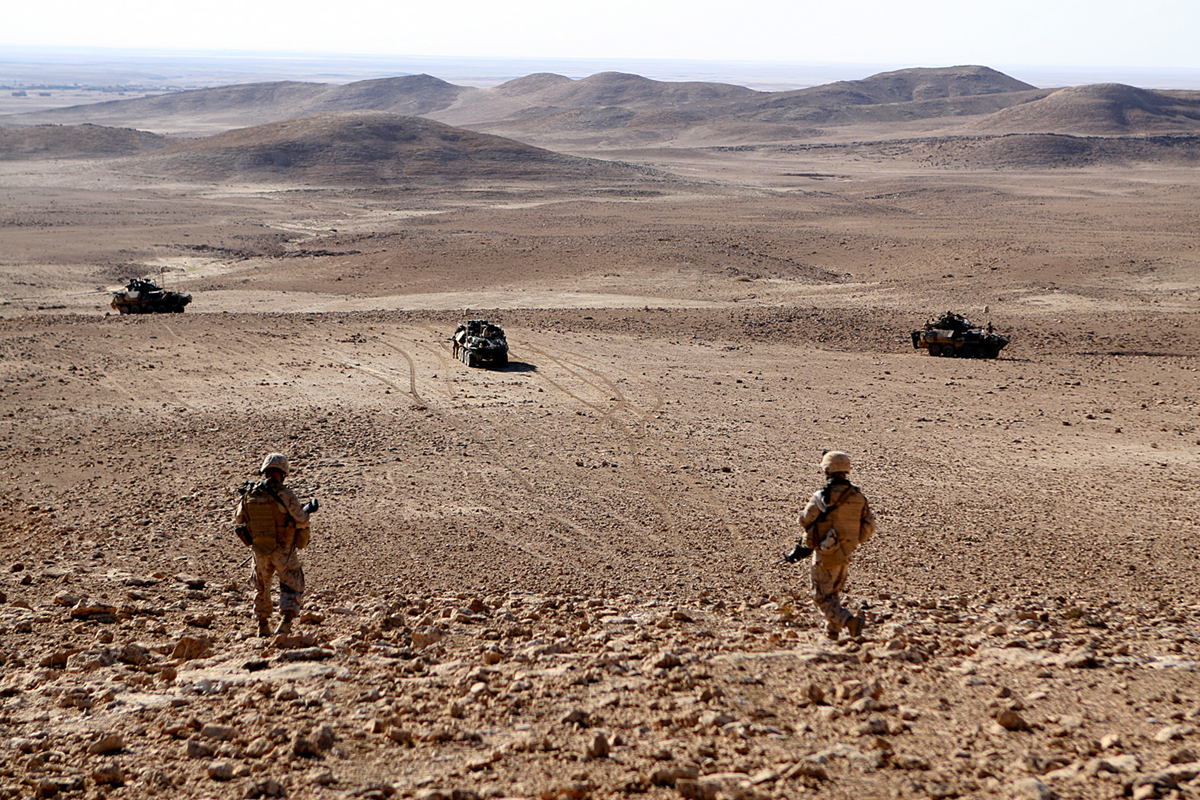
Abu Umar al-Baghdadi, the implied caliph of the Islamic State movement between 2006 and 2010, gave his sixteenth speech on 17 March 2009. The title of the speech was, “Harvest of the Good (The Gathering Will Be Defeated, and They Will Turn Their Backs and Flee)”.[1]
By Kyle Orton (@KyleWOrton) on 14 March 2021
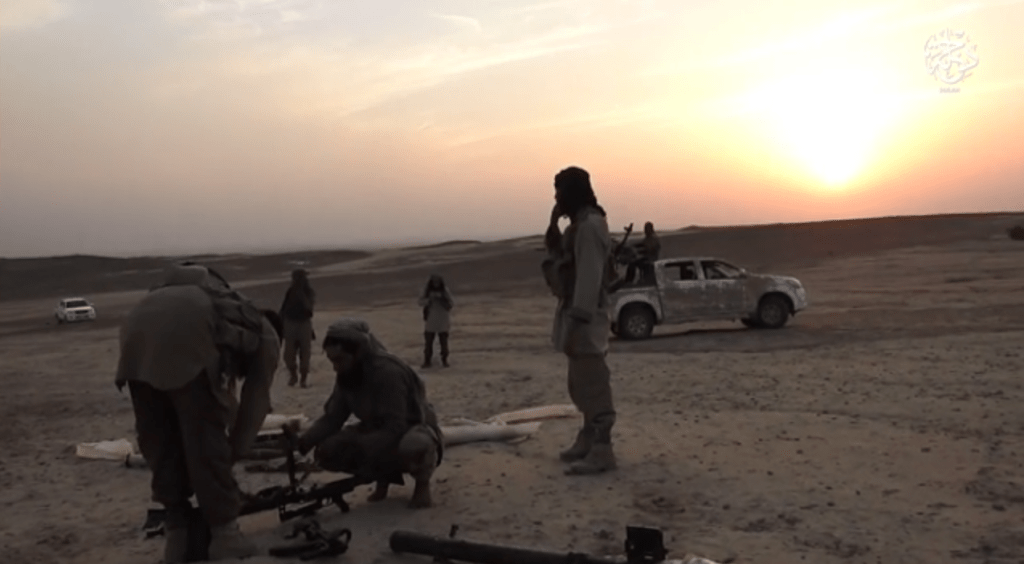
Abdul Munim al-Badawi (Abu Hamza al-Muhajir), the then-leader of Al-Qaeda in Mesopotamia (AQM), released his fourth audio statement on 28 September 2006. The speech was entitled, “Ta’alaw ila Kalimatin Sawa” (تعالوا إلى كلمة سواء): “Come to a Just Word”.[1] An English transcript was released by the jihadists and is reproduced below. Continue reading
 Kyle Orton's Blog