Tag Archives: Kurdistan

Turkey Fears A Kurdish State More Than The Islamic State

By Kyle Orton (@KyleWOrton) on July 28, 2015

A version of this article was published at NOW Lebanon 
1

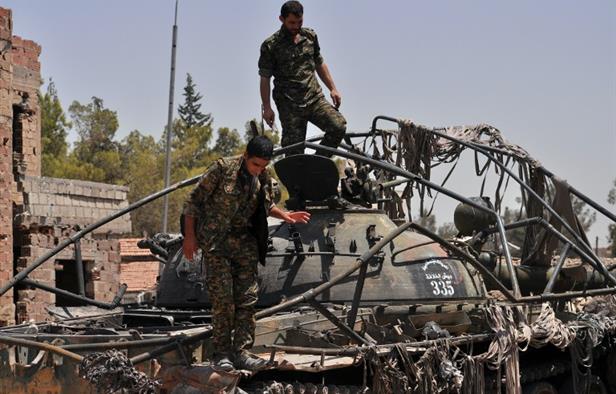
After years of threatening, Turkey directly intervened in Syria on Friday, launching airstrikes against the Islamic State (ISIS), and finally allowed the U.S. to use Incirlik for jet and drone attacks against ISIS. Concurrently, Turkey launched airstrikes into Iraqi Kurdistan against the Kurdistan Workers’ Party (PKK). Ankara is framing this as an equal-opportunities war on terrorists, but Turkey’s actions over the last four years in Syria give a lot of cause for wonder as to which side Ankara is on when it comes to terrorism. Continue reading
Islamic State: The Afterlife of Saddam Hussein’s Regime

By Kyle Orton (@KyleWOrton) on July 4, 2015

Published at Baghdad Invest

1

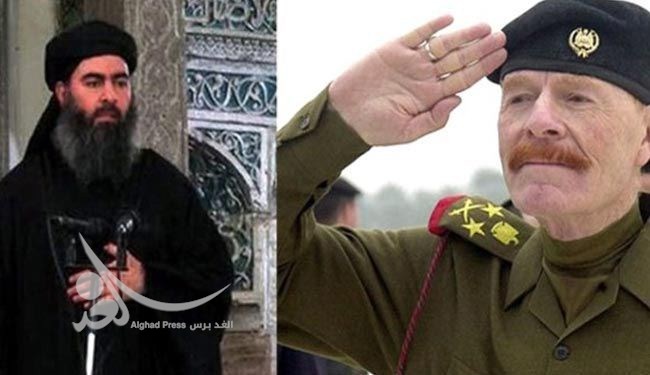
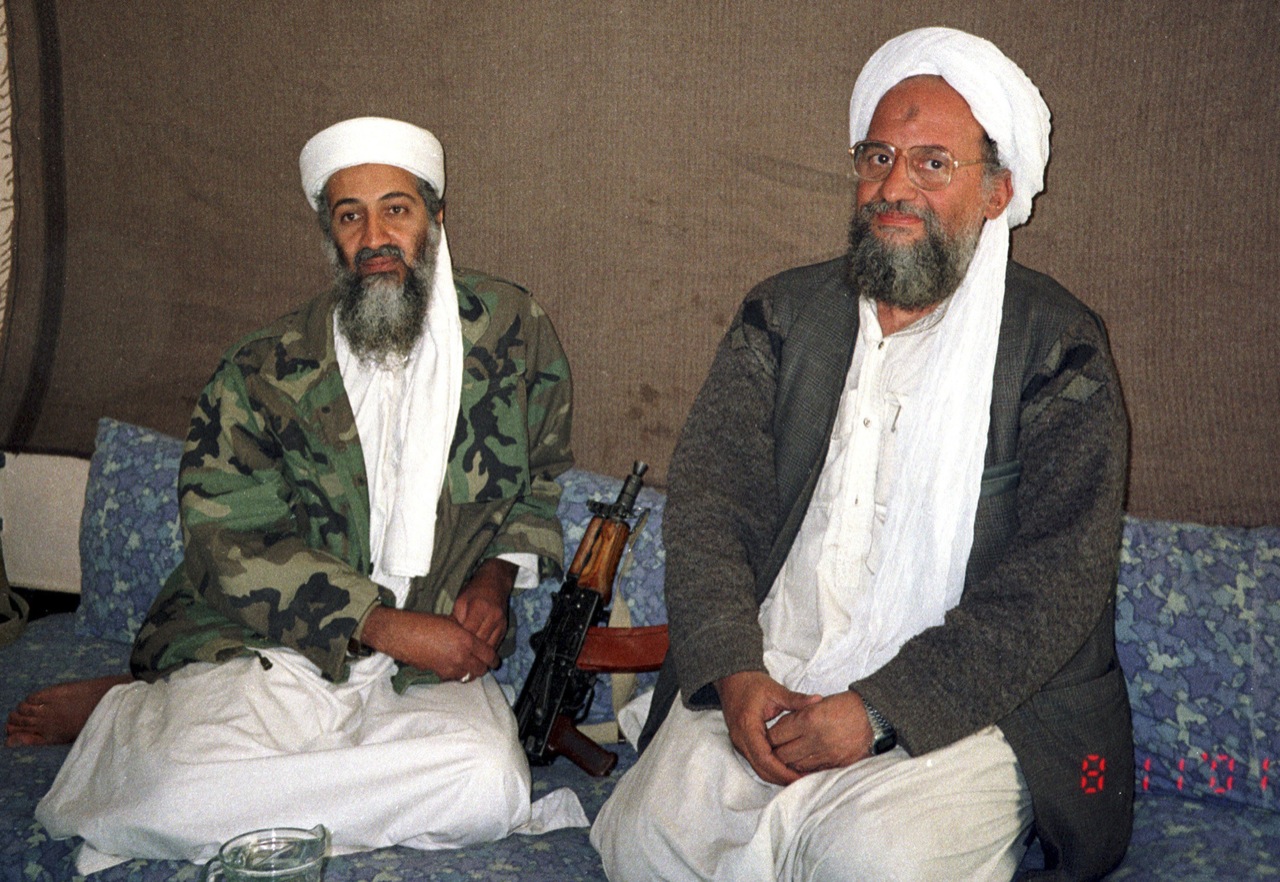
Izzat Ibrahim ad-Douri, Saddam Hussein’s long-time deputy, was reported dead (again) on April 17. An audio message on May 15 disproved this. Douri was the implementer of the Saddam regime’s Islamization program in its later years and a key architect of the insurgency after the regime was overthrown, which helped pave the way for the Islamic State (ISIS). ISIS has now turned on Douri and his associates, but ISIS could not have risen to its current stature without Douri’s help. Continue reading

A Postscript on the Relationship Between Saddam Hussein and Al-Qaeda

By Kyle Orton (@KyleWOrton) on June 26, 2015

Osama bin Laden (L) and Ayman az-Zawahiri (R)

Osama bin Laden (L) and Ayman az-Zawahiri (R)

The myth that Saddam Hussein’s regime had nothing to do with al-Qaeda is persistent. Stephen Hayes’ book, The Connection, ably debunks this notion. There are some additional details that one can add to this. Continue reading

Raids in Syria Can’t Defeat the Islamic State If Obama Continues Alignment with Iran

By Kyle Orton (@KyleWOrton) on May 16, 2015

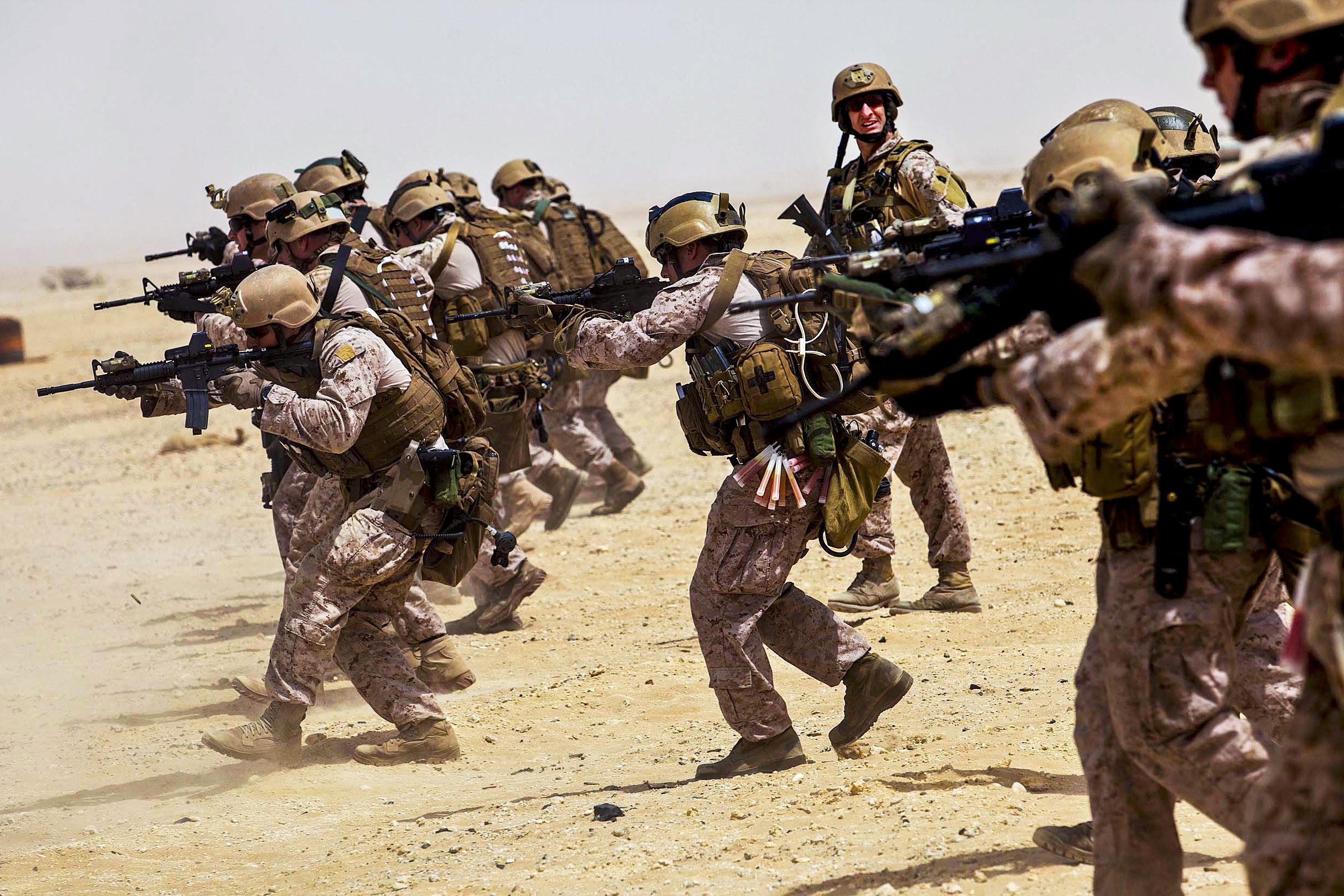
26th Marine Expeditionary Unit (MEU) Maritime Raid Force Marines fire M4 Carbines while conducting a marksmanship training exercise at a range in Qatar, April 22, 2013. Eagle Resolve is an annual multilateral exercise designed to enhance regional cooperative defense efforts of the Gulf Cooperation Council nations and U.S. Central Command. The 26th MEU is deployed to the 5th Fleet area of operations aboard the Kearsarge Amphibious Ready Group. The 26th MEU operates continuously across the globe, providing the president and unified combatant commanders with a forward-deployed, sea-based quick reaction force. The MEU is a Marine Air-Ground Task Force capable of conducting amphibious operations, crisis response and limited contingency operations. (U.S. Marine Corps photo by Cpl. Christopher Q. Stone, 26th MEU Combat Camera/Released)

Last night the United States launched a commando raid into al-Amr in Deir Ezzor in eastern Syria. According to the White House statement, Abu Sayyaf (real name: Fathi ben Awn ben Jildi Murad al-Tunisi), a senior Islamic State (ISIS) commander “overseeing … illicit oil and gas operations,” was killed, and his wife, Umm Sayyaf, was taken into American custody and is being held in Iraq. The Sayyaf couple had been holding a young Yazidi woman as a slave and she has now been freed.

Unfortunately, this American raid is a tactical success amid a strategic failure—and a tactical success likely to be used to obscure the strategic failure of the U.S. anti-ISIS campaign. Even in the narrowest humanitarian terms: if the freedom of this one Yazidi girl is used to perpetuate a policy that leaves many more Yazidi girls in bondage then it is a failure. Continue reading

Amerli Shows The Futility Of Aligning With Iran To Defeat The Islamic State

By Kyle Orton (@KyleWOrton) on March 18, 2015

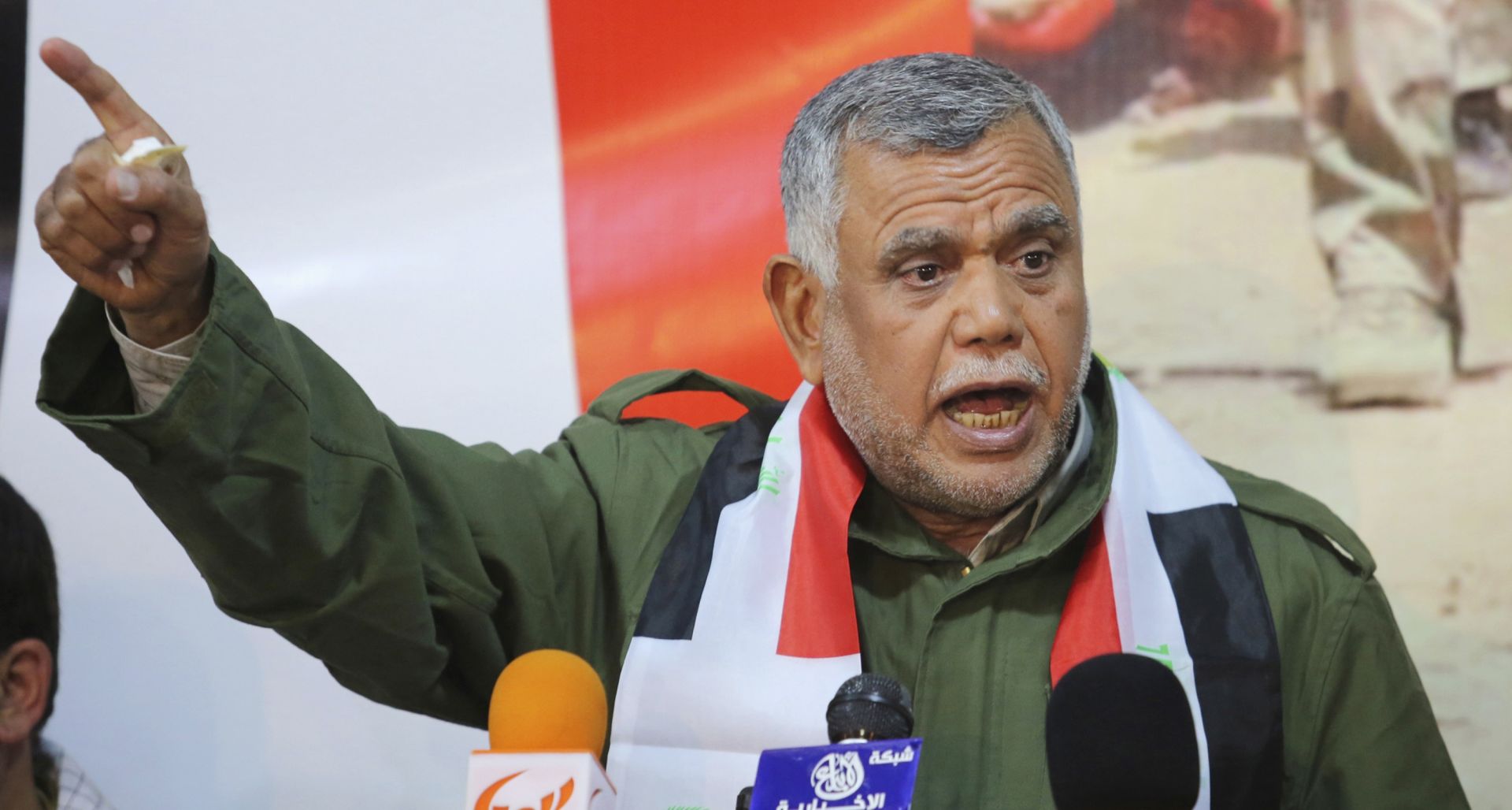
Badr Corp commander Hadi al-Ameri

Badr Corp commander Hadi al-Ameri

This morning Human Rights Watch released a report, “After Liberation Came Destruction: Iraqi Militias and the Aftermath of Amerli.”

Amerli is a town of about 25,000 people, mostly Shi’a Turcomen, in the east of Saladin Province, close to Diyala Province, sixty miles from the Iranian border.

The Islamic State (ISIS) invaded Iraq from Syria, conquering Mosul on June 10, 2014, then swept across central Iraq into Diyala. In a situation not dissimilar to the Assad regime’s terror-sieges and ISIS surrounding of the Yazidis on Sinjar Mountain, ISIS imposed a siege on the population of Amerli on June 14.

By the time the Iraqi government forces and Hashd al-Shabi (a.k.a. the Popular Mobilization Units, PMUs), the Shi’ite militias that are largely Iran proxies, broke the siege on August 31, with the help of airstrikes from the American-led Coalition, “at least 15 civilians in Amerli, including newborn infants, had died from lack of food, water or medical treatment, and more than 250 children were suffering from severe malnutrition and dehydration,” HRW reports. On Sept. 1, the militias and Iraqi Security Forces (ISF) entered Amerli. Continue reading

Obama’s Abandonment of Kobani Isn’t Just A Disaster For The Kurds

By Kyle Orton (@KyleWOrton) on October 9, 2014

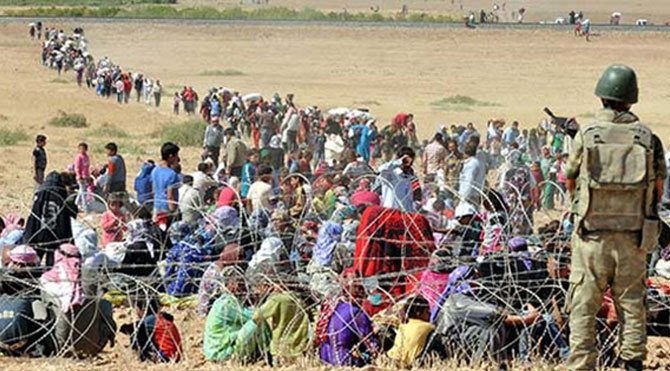
Syrian Kurdish refugees at the Turkish frontier

Syrian Kurdish refugees at the Turkish frontier

After three-and-a-half years of resistance, the United States finally intervened in Syria on September 23 with airstrikes against the Islamic State (I.S.). The I.S. had begun an attack on the Kurdish-controlled enclave in northern Aleppo along the Turkish border on September 15/16. By October 5, the Kurdish forces had been driven back into the Kurdish-majority town of Kobani (a.k.a. Ayn al-Arab), and I.S. had them surrounded. The desperate scenes of Syrian Kurds fleeing over the Turkish border in the face of the takfiris’ recalls the Iraqi Kurds making a run for the hills after the March 1991 uprising against Saddam Hussein was crushed. Then as now the Kurds believed they had stronger American backing than turned out to be the case. Continue reading

Syria’s Rebellion on the Ropes

By Kyle Orton (@KyleWOrton) on July 9, 2014

3

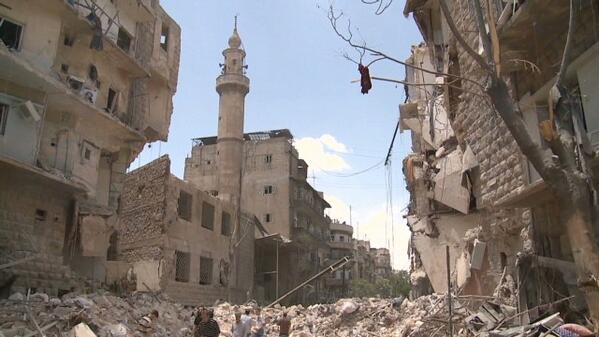
The devastated city of Aleppo

As we approach the forty month mark for the Syrian uprising the situation is grimmer than it has ever been. Not just the casualties: more than 200,000 people dead. Not just the physical devastation and mass-displacement of more than a third of the country. But now in military terms the rebellion is on the defensive in a way it has not been since it erupted at the end of 2011, after more than six months of peaceful protests.

Continue reading