By Kyle Orton (@KyleWOrton) on 18 November 2019

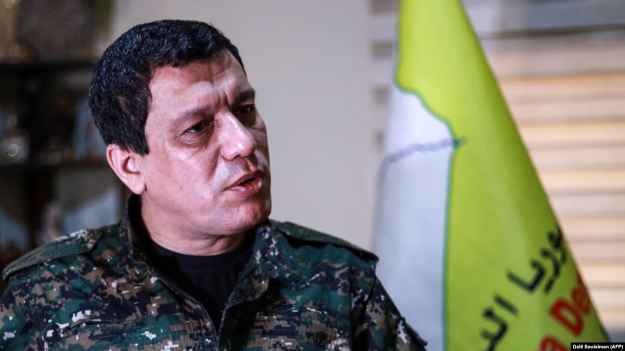
“SDF commander “General Mazlum Kobani” (the PKK executive official Ferhat Abdi Shahin) being interviewed by AFP in Hasaka city, 24 January 2019 [image source]
By Kyle Orton (@KyleWOrton) on 18 November 2019

“SDF commander “General Mazlum Kobani” (the PKK executive official Ferhat Abdi Shahin) being interviewed by AFP in Hasaka city, 24 January 2019 [image source]
By Oved Lobel on 18 November 2019

PKK at a terrorist training camp in the Asad regime-held Bekaa Valley of Lebanon, 1991 [source]
The broad outline of the PKK’s relationship with the Soviet Union—and then the Russian Federation—is fairly clear. After the PKK was founded in Turkey in the late 1970s by Ocalan, it was evicted from the country during the 1980 military coup. The PKK moved to Syria, where Ocalan was already based, having fled Turkey in June 1979. From there, the PKK moved into the Bekaa area of Lebanon, at that time controlled by the Syrian regime of Hafez al-Asad, and the Soviets acted through Asad, as they so often did in dealing with terrorist groups, to build the PKK into a fighting force that was then unleashed in 1984 on Turkey, a frontline NATO state in the Cold War. Continue reading
A version of this article was published at The Arab Weekly.
By Kyle Orton (@KyleWOrton) on 12 October 2019

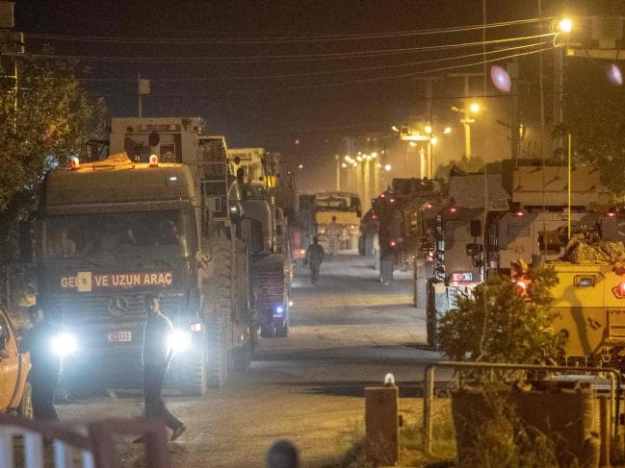
Turkish Armed Forces heading towards the border with Syria, 8 October 2019 // BULENT KILIC / AFP
The beginning of Turkey’s third incursion into Syria on Wednesday, this time dubbed Operation PEACE SPRING and aimed at the areas east of the Euphrates River, is the culmination of an American policy started under Barack Obama that has been continued by Donald Trump. That it is inevitable makes it no less tragic for the innocents caught up in this mess. It does mean that the emotive posturing on social media, and attempts by Obama era officials to cast the blame for the Syria catastrophe onto Trump, are more-than-usually grotesque. Continue reading
This article was published at The New Turkey
By Kyle Orton (@KyleWOrton) on 1 October 2019

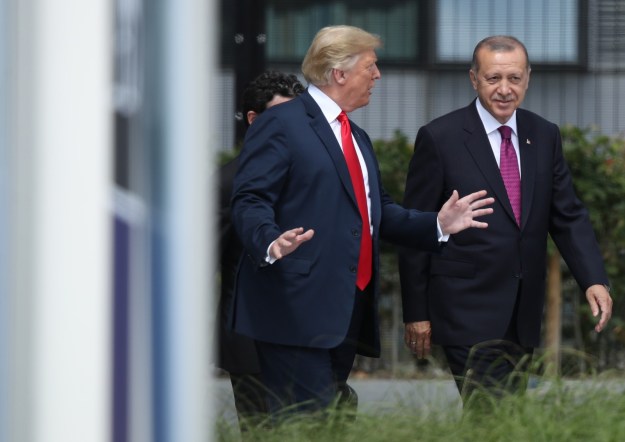
U.S. President Donald Trump and Turkish President Recep Tayyip Erdogan at the opening ceremony of the NATO Summit in Brussels, July 2018 // Getty Images
Turkey’s President Recep Tayyip Erdogan had said earlier in September that he would discuss the problems between Turkey and the United States when he met with the U.S. President Donald Trump on September 25, as part of his trip to New York for the opening of the United Nations General Assembly. But neither side has revealed what was discussed and if anything was resolved. Continue reading
By Kyle Orton (@KyleWOrton) on 22 July 2019

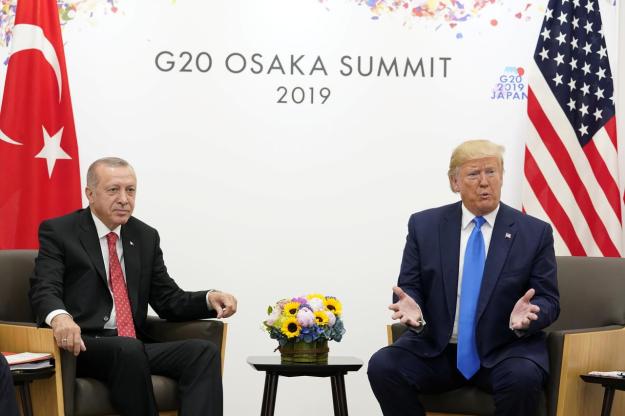
U.S. President Donald Trump and Turkey’s President Recep Tayyip Erdogan meeting during the G20 leaders summit in Osaka, Japan, 29 June 2019 [image source]
By Kyle Orton (@KyleWOrton) on 20 July 2019

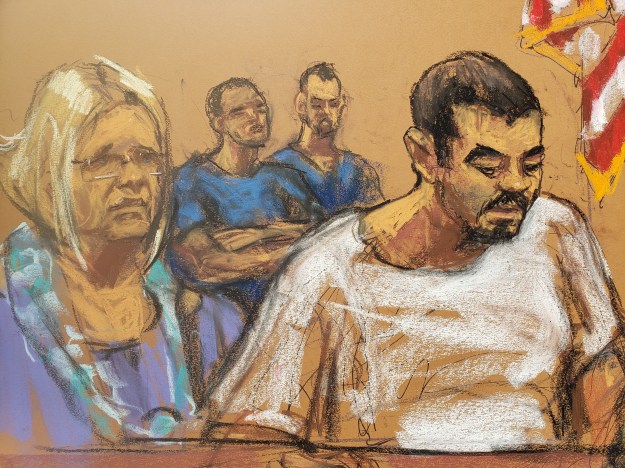
Sketch of Ruslan Asainov // Image credit: Jane Rosenberg/Reuters
In the Eastern District of New York, on 19 July, a criminal complaint was unsealed against Ruslan Maratovich Asainov, described in the press release as a “naturalized U.S. citizen born in Kazakhstan”. According to the release, Asainov is to be charged with providing and attempting to provide “material support, including training, services, and personnel” to a terrorist group, namely the Islamic State (IS), which he joined in 2013 and rose through the ranks to become an emir. Asainov was captured by the “Syrian Democratic Forces” (SDF), the Coalition’s anti-IS Kurdish partner force, and handed over to the FBI, before being returned to America this month. The maximum penalty for these charges is twenty years imprisonment, and it is likely the U.S. government will be seeking additional charges in the indictment. The case raises an interesting question over the gaps in knowledge about IS. Continue reading
By Kyle Orton (@KyleWOrton) on 15 June 2019
The Arab inhabitants of eastern Syria have once again turned out in protest against the Syrian Democratic Forces (SDF), the Western partner force in the campaign against the Islamic State (IS). The rejection of the SDF’s rule in the area has its roots in political dynamics that were entirely foreseeable. Continue readingPublished at The Arab Weekly
By Kyle Orton (@KyleWOrton) on 9 June 2019

An Islamic State being led into the Iraqi Criminal Court in Baghdad, 5 May 2019 (AP)
From May 26 to June 3, Iraq’s government sentenced to death 11 Islamic State operatives who had been captured in Syria. The novelty in the cases was that the Iraqis said the militants were French and ten of them were. The other was Tunisian.
The French government has made a pro forma protest against the death sentences but did nothing to impede the process. This is of a piece with the general approach European countries, including Britain, have taken to their citizens who joined jihadi groups in the Levant. Continue reading
By Kyle Orton (@KyleWOrton) on 10 May 2019

President Donald Trump speaks as John Bolton stands by in the Oval Office, 22 May 2018. OLIVER CONTRERAS-POOL/GETTY IMAGES
As tensions flared between the United States and Iran over the last ten days, a number of Washington’s Western allies have signalled their distance from the U.S. view, most dramatically in the case of Major-General Chris Ghika, Britain’s top commander in the coalition against the Islamic State (ISIS), who dismissed the U.S. intelligence assessment of an increased threat from Iran. This has since been walked back, but the fissures in the Western alliance over how to deal with Iran are real, and this has been compounded by differences within the U.S. government and the highly irregular nature of the Donald Trump administration, particularly its decision-making processes and public messaging. Continue reading
This article was published at Ahval
By Kyle Orton (@KyleWOrton) on 12 March 2019
The wheel turns again. After U.S. President Donald Trump announced the withdrawal of U.S. forces from Syria in December, it seemed rapprochement with Turkey was on the cards. Now that looks less likely. Continue reading