Tag Archives: Lebanon

Allowing Iran To Conquer Iraq Will Not Help Defeat The Islamic State

By Kyle Orton (@KyleWOrton) on March 15, 2015

Qassem Suleimani

Qassem Suleimani

Iraq’s Prime Minister Haider al-Abadi announced the beginning of an offensive on March 1 to dislodge the Islamic State (ISIS) from Salah ad-Din Province. Abadi announced that this would be led by the Iraqi army and Hashd al-Shabi, known in English as the Popular Mobilization Units (PMUs), the militias composed overwhelmingly of Shi’ites and directed by Iran.

While the offensive seems to be winding down, it is not over. ISIS is out of ad-Dawr/Dour and al-Awja, south of Tikrit, and Albu Ajeel to the east. Al-Alam to the north seems to still be contested. On March 10, ISIS was driven out of al-Qadissiya, a northern district of Tikrit City. On March 11, the anti-ISIS forces entered Tikrit City, “inched closer to the city center … and took up positions in a military hospital, the police academy and the traffic police headquarters … Forces in southern districts took over three palaces erected by former dictator Saddam Hussein”. Continue reading

America’s Silent Partnership With Iran And The Contest For Middle Eastern Order: Part Four

By Kyle Orton (@KyleWOrton) on February 10, 2015

1

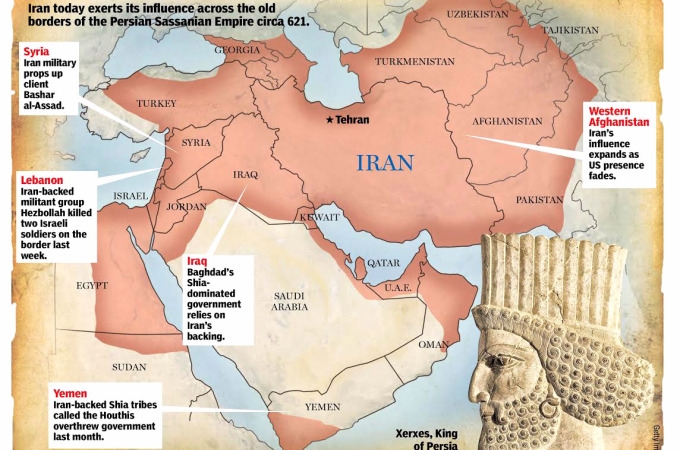
This is the fourth of a four-part series looking at the United States’ increasingly-evident de facto alliance with Iran in the region. The first part looked at the way this policy has developed since President Obama took office and how it has been applied in Iraq; the second part looked at the policy’s application in Syria; the third part looked at its application in Lebanon, Afghanistan, and Yemen; and this part is a conclusion. Continue reading

America’s Silent Partnership With Iran And The Contest For Middle Eastern Order: Part Three

By Kyle Orton (@KyleWOrton) on February 3, 2015

1

This is the third of a four-part series looking at the United States’ increasingly-evident de facto alliance with Iran in the region. This first part looked at the way this policy has developed since President Obama took office and how it has been applied in Iraq. The second part looked at the policy’s application in Syria; this part will look at its application in Lebanon, Afghanistan, and Yemen; and part four will be a conclusion. Continue reading

Black September: the PLO’s Deniable Terrorism Wing

By Kyle Orton (@KyleWOrton) on January 19, 2015

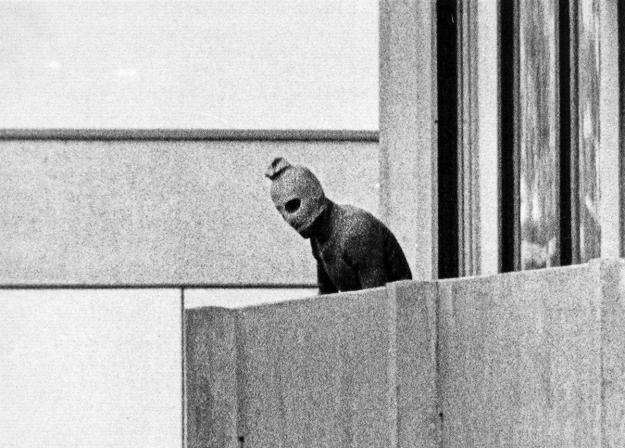
A Black September terrorist appears on the balcony in the Olympic Village in Munich, September 1972 (photo via AP)

The Black September group was formed in September 1971, ostensibly as a splinter from the Palestine Liberation Organization (PLO), but in reality the PLO retained control of Black September and used it to carry out terrorist operations that raised the Palestinian organisations’ profile, without staining the PLO with these atrocities. Continue reading

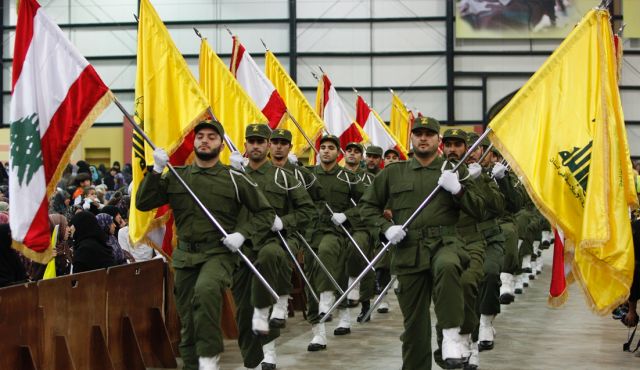
Iran Tries To Get American Support For Its Takeover Of Lebanon

By Kyle Orton (@KyleWOrton) on December 31, 2014

In early August, the Lebanese Armed Forces (LAF) arrested Abu Ahmad Jumaa, the leader of Liwa Fajr al-Islam (Islamic Dawn Brigade), which had been loyal to al-Qaeda’s Syrian branch, Jabhat an-Nusra but which had then-recently defected to the Islamic State (I.S.). In response, Nusra and I.S. fighters poured across the border into Arsal, Lebanon, where Jumaa was being held, and after five days of clashes the Salafi jihadists withdrew, taking with them thirty Lebanese security personnel. Five of the thirty are now dead: one from his injuries, the other four murdered—at least two of them beheaded. Continue reading

The Other Side of the “Torture” Debate

By Kyle Orton (@KyleWOrton) on December 11, 2014

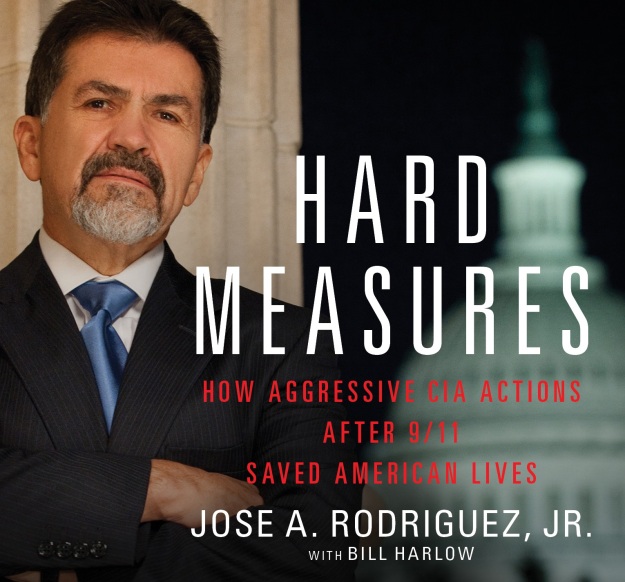
As a final act while the Democrats hold their majorities in Congress, the United States Senate Select Committee on Intelligence (SSCI) released a report on December 9, the “Committee Study of the Central Intelligence Agency’s Detention and Interrogation Program”, known to the Twitterverse as the “Torture Report”. This has reignited the debate about America’s use of harsh interrogation methods, the so-called “enhanced interrogation techniques” (EITs), against al-Qaeda operatives in the shadow of the 9/11 massacre. The politics surrounding this matter—even on basic questions, such as whether discomfort works to induce cooperation in detainees—are poisonous, and the publication of this partisan Committee Study has done nothing to assist this environment. One means of trying to get at the truth is to examine a counterpoint, the 2012 book, Hard Measures: How Aggressive CIA Actions After 9/11 Saved American Lives, a memoir by Jose Rodriguez, the man who oversaw the Central Intelligence Agency’s Counterterrorism Centre from 2001 to 2004. Continue reading

Israel’s Airstrikes in Syria

By Kyle Orton (@KyleWOrton) on November 12, 2014

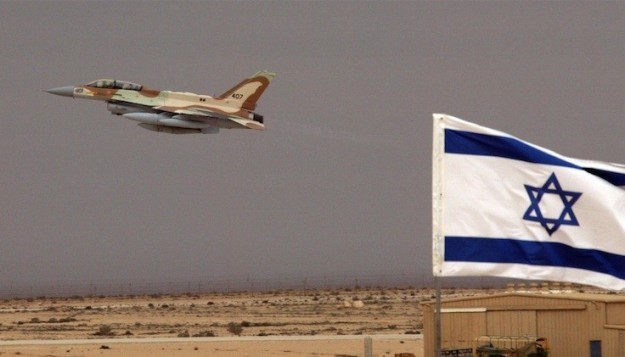
In a post yesterday I listed the operations Israel has so far carried out in Syria. Between 2007 and 2011, Israel eliminated several senior terrorists inside Syria and destroyed a nuclear-weapons facility. Since the war began in 2011, Israel has mostly carried out airstrikes in Syria to prevent Iran and its Islamic Revolutionary Guards Corps (IRGC) transferring advanced weaponry to the IRGC’s Lebanon-based branch, Hizballah. Rather than updating the prior post, which was on a slightly separate matter, this post will be kept as a rolling tally of Israeli operations in Syria, focused only on those since war broke out. Continue reading

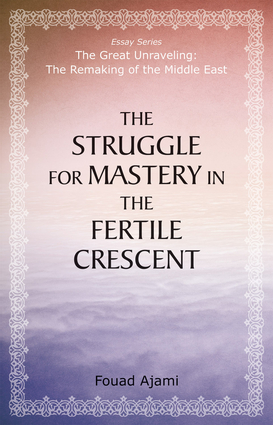
Book Review: The Struggle For Mastery In The Fertile Crescent (2014) by Fouad Ajami

By Kyle Orton (@KyleWOrton) on September 16, 2014

In June, those of us who try to keep up with events in the Greater Middle East suffered a devastating blow when the Lebanese-American scholar Fouad Ajami passed away. Having broken with the orthodoxy of his generation of Arabs and his scholarly field, both represented in the person of Edward Said, Ajami provided insight into the Arab/Muslim world that restored the agency of that world. Continue reading