Tag Archives: Libya

Al-Qaeda Gives its Verdict on the “Arab Spring” Seven Years On

By Kyle Orton (@KyleWOrton) on 28 January 2018

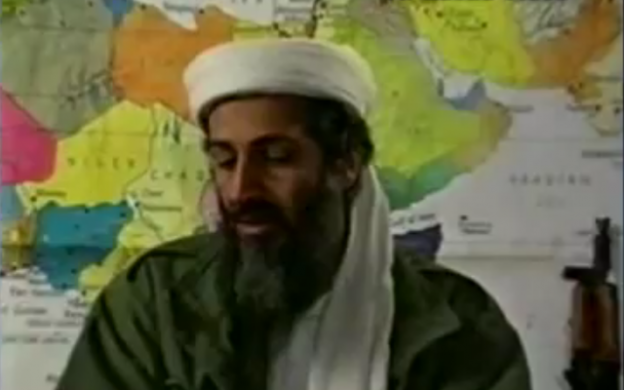
Al-Qaeda’s leader, Ayman al-Zawahiri, made a speech on 26 January 2018, entitled, “After Seven Years Where Is the Deliverance?” The speech built the case that the “Arab spring” uprisings failed because they tried to make changes within the framework of the nation-state, to be incremental, and to make accommodations with the fallen regimes, rather than radical “purification” by launching coordinated jihadist revolutions that respected no frontier, violently uprooted the old order, and implemented the shari’a. An English transcript of the speech was released by al-Qaeda’s As-Sahab Media station and is reproduced below. Continue reading

Islamic State Newsletter Tells the Story of Transition Between Statehood and Insurgency

By Kyle Orton (@KyleWOrton) on 13 January 2018

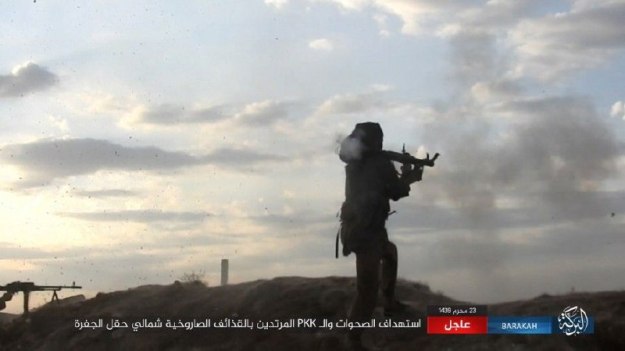
Islamic State, Wilayat al-Baraka, fighting north of al-Jafra with PKK, 14 October 2017

The Islamic State’s (IS) tactical behaviour, particularly its attitude toward the holding of territory, has become a centrally important matter recently with the destruction of the “caliphate” and IS’s reversion to insurgency. Continue reading

The Gulf Crisis and British Interests

By Kyle Orton (@KyleWOrton) on 4 December 2017

The decision by Saudi Arabia, the United Arab Emirates, Bahrain, and Egypt to impose a boycott on Qatar this summer was an out-of-character development for the Gulf, where all too much politics is conducted behind closed doors between the ruling families and elites. To go public, the schism between Qatar and the so-called Quartet must have been very serious.

It was the end-point of a dispute that began in the 1990s about Qatar’s foreign policy, which at that point became independent of the Saudi-led Gulf Cooperation Council (GCC), and indeed actively competitive with Saudi interests. Doha wanted to alter the Saudi-oriented status quo and did so by empowering groups—almost invariably Islamists—in its cause. Those Islamists not only had agendas running counter to the other Gulf states’ conception of regional order, but which the Quartet regarded as threatening to their internal security. Continue reading

Islamic State Profiles a Libyan Jihadist Killed in Eastern Syria

By Kyle Orton (@KyleWOrton) on 4 December 2017

Al-Naba 108, page 7

The latest edition of the Islamic State’s newsletter, Al-Naba 108, released on 1 December 2017, has a profile on page 7 of a fighter named Abu Sulayman al-Libi, a Libyan jihadist who came to Syria soon after the caliphate declaration in June 2014 and became the senior religious official in Homs. Abu Sulayman was killed in the fighting between IS and the pro-Asad coalition in the deserts of eastern Homs Province, near the T3 oil pumping station. This probably means Abu Sulayman was killed in the last days of September or the first few days of October during the IS counter-attack to the regime coalition’s push into Deir Ezzor. A rough translation of the Naba obituary is published below. Continue reading

Qatar and the Gulf Crisis

By Kyle Orton (@KyleWOrton) on 30 November 2017

I released a report today, published by the Henry Jackson Society, Qatar and the Gulf Crisis. The intent was to examine the charges made against the Qatari government by its Gulf neighbours with regard to the funding of terrorism, the hosting of extremists, the dissemination of hate speech and incitement, among other things. Having separated fact from fiction with regards to he accusations against Qatar, the report proposes how Britain might proceed in such a way as to press Doha on issues of concern, while avoiding being drawn into the middle of the Gulf dispute, and trying to foster reconciliation between allies, especially at a time when a united front is necessary to oppose the far larger challenge of the Iranian theocracy.  Continue reading

Russia Tries To Succeed Where the West Fails in Libya

By Kyle Orton (@KyleWOrton) and Lincoln Pigman on 14 September 2017

Libya, which has been wracked by instability and violence since 2011, is re-emerging as a geopolitical hotspot. With opposing forces fighting for control of the war-torn country—the main two being the U.N.-backed Government of National Accord (GNA) and the Libyan National Army (LNA)—foreign powers have begun taking sides, internationalizing the conflict. For Western observers, the growing involvement of Russia, a major ally of LNA commander Khalifa Haftar, represents a particular concern.

Coming on the heels of the Russian military intervention in Syria, Moscow’s role in Libya’s civil war may seem, at first glance, like déjà vu. Once again, it appears that the Kremlin is working to consolidate the power of a pro-Russian regional strongman and establish a “crescent of Russian influence” across the Middle East. And given the similarities between Haftar and Syrian President Bashar al-Assad, some degree of anxiety is understandable. Like Assad, who has long appealed to foreign governments by referring to Syrian rebels as terrorists, Haftar often frames himself as a bulwark against violent extremism in Libya, where the Islamic State remains active and Islamists have formed powerful militias and entered mainstream politics. Continue reading

The Fall of Islamic State’s Caliphate Won’t End the Foreign Attacks

By Kyle Orton (@KyleWOrton) on 28 July 2017

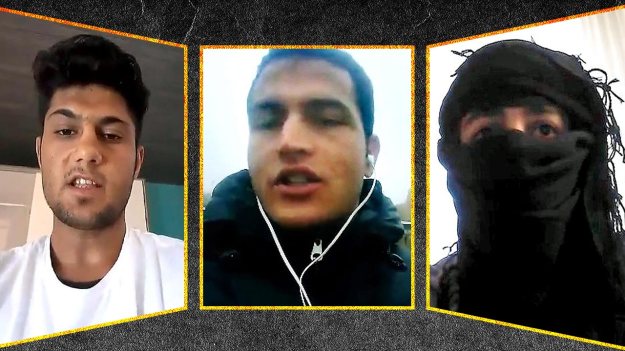
Screenshots from the bay’a-martyrdom videos of: Riaz Khan Ahmadzai (Muhammad Riyad), Anis Amri, Mohammad Daleel (source)

The Islamic State (IS) has escalated a campaign of global terrorism over the past few years, exactly as it was losing overt control of territory. In 2016, IS consolidated a model of guiding and claiming attacks in the West and elsewhere via is media channel, Amaq. The outlines of this have long been known. Now there is significant new detail thanks to a four part reporting series in the German newspaper BILD by Björn Stritzel, who contacted Amaq and posed over many months—in consultation with Germany security agencies—as a potential terrorist. Continue reading

Senior Islamic State Cleric Turki al-Binali Killed in an Airstrike

By Kyle Orton (@KyleWOrton) on 11 June 2017

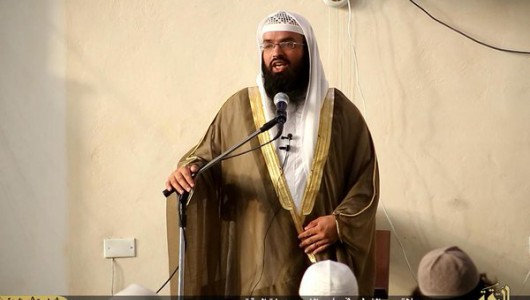
Turki al-Binali at prayers in Raqqa, July 2015

It was reported on jihadist websites and by local activists that Turki al-Binali (Abu Hammam al-Athari), a senior cleric of the Islamic State (IS) and perhaps the most important public proponent of the caliphate’s formation, had been killed in Syria by an airstrike from the U.S.-led Coalition on 29 May. IS has been silent on this despite releasing their newsletter al-Naba and the tenth edition of their English-language propaganda magazine Rumiyah since then. On Tuesday, the intelligence services of the Kurdistan Regional Government (KRG) in northern Iraq confirmed that al-Binali had been killed. Continue reading

Al-Qaeda Aligned Jihadist in Syria Condemns Rebel Group Jaysh al-Islam

By Kyle Orton (@KyleWOrton) on 2 May 2017

Maysar al-Jiburi (Abu Mariya al-Qahtani), on Twitter as @alghreeb, is an Iraqi and long-time operative of the Islamic State (IS), who was sent into Syria to set up IS’s secret wing, Jabhat al-Nusra, in 2011. After al-Nusra split with IS and became al-Qaeda’s official branch in Syria, Maysar remained with al-Nusra and was its deputy until the summer of 2014, when the Deir Ezzor branch of al-Nusra that Maysar led was destroyed as IS poured resources captured in Mosul over the border. Since then, Maysar has been—with Saleh al-Hamawi, another member of the advance party that founded al-Nusra—a kind of dissident, formally expelled from al-Nusra, and more recently has set to work spreading his influence in the Turkish-occupied zone of northern Syria, notably through the Ahrar al-Sharqiya group. With the various moves to rebrand and restructure al-Qaeda in Syria under the banner of Hay’at Tahrir al-Sham (HTS), Maysar has been drawn back into the fold to a degree.

Maysar has now released an essay, “Exposing the Backstabbers Within the Ranks,” condemning Jaysh al-Islam for its attacks on HTS in the East Ghouta area of Damascus beginning on 28 April. Intra-insurgent fighting in the besieged enclave a year ago allowed the coalition of states and militias supporting the Bashar al-Assad regime to considerably shrink the enclave and put it on the path to almost certain defeat. Maysar lays particular blame on Samir al-Kaka (Abu Abd al-Rahman al-Kaka; sometimes transliterated al-Kaakeh), a senior cleric of JAI, for issuing rulings licensing this conduct and compares JAI to IS. Maysar also asks, rhetorically, where the condemnations of JAI are from bodies like the Syrian Islamic Council, given how strongly they responded in January when al-Nusra attacked rebel factions as it laid the groundwork for the HTS merger. Masyar’s essay is reproduced below. Continue reading

How Powerful is the Islamic State in Saudi Arabia?

Originally posted at The Henry Jackson Society

By Kyle Orton (@KyleWOrton) on 27 April 2017

The U.S. Department of State designated Mubarak Mohammed Alotaibi, also transliterated as Mubarak Muhammad al-Utaybi, as a Specially Designated Global Terrorist (SDGT), because he has “committed, or pose[s] a significant risk of committing, acts of terrorism that threaten the security of U.S. nationals or the national security, foreign policy, or economy of the United States.” Al-Utaybi is a citizen of Saudi Arabia and is the “Syria-based deputy leader” of the Islamic State’s (IS) branch in the Saudi Kingdom. Continue reading