Tag Archives: Muslim Brotherhood

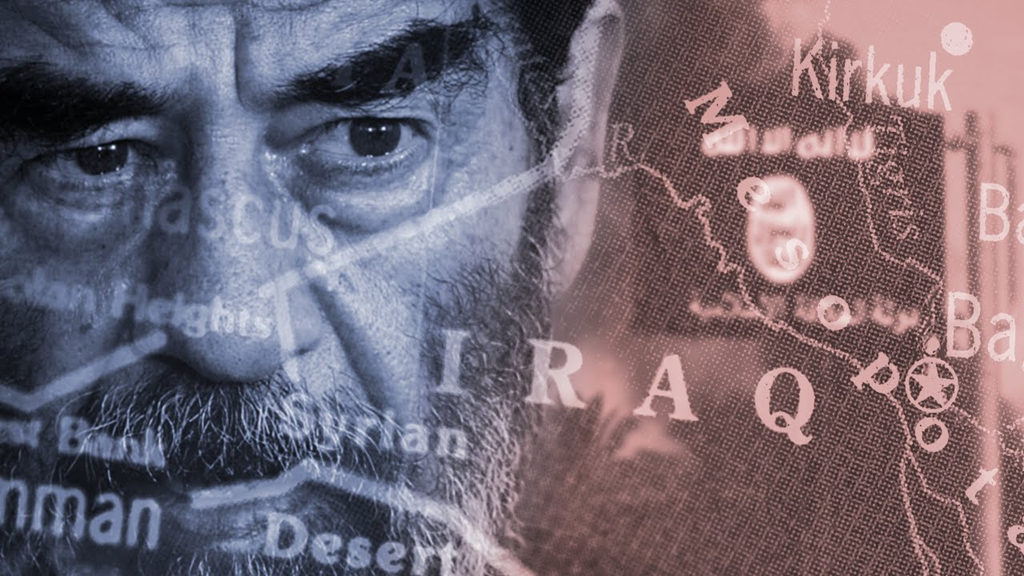
How Saddam Hussein Gave Us ISIS

By Kyle Orton (@KyleWOrton) on December 23, 2015

Published in The New York Times.

1

Whom should we blame for the Islamic State? In the debate about its origins, many have concluded that it arose from the American-led coalition’s errors after the 2003 invasion of Iraq. In fact, the groundwork for the emergence of the militant jihadist group was laid many years earlier by the government of Saddam Hussein.

The Arab nationalist Baath Party, which seized power in 1968 in a coup in which Mr. Hussein played a key role, had a firmly secular outlook. This held through the 1970s, even as religiosity rose among the Iraqi people. But soon after Mr. Hussein invaded Iran in 1980, it began to change.

Continue reading

In View of Vienna

By Kyle Orton (@KyleWOrton) on December 15, 2015

Published at NOW Lebanon.

1

So the Syrian opposition can unite. Foreign powers have been the major cause of rebel discord. Previous rebel unity initiatives like the Joint Command were pulled apart by the competition between the insurgency’s sponsors—Saudi Arabia and Qatar primarily—and the last rebel umbrella group, the Supreme Military Council, which was identified with Western power, collapsed after President Barack Obama decided not to punish Bashar al-Assad for the massive chemical weapons attack on the population of Ghouta. But under Saudi auspices, an opposition “team” was announced on December 10 after a three-day conference in Riyadh, which includes the political and military opposition and groups with varying ideologies and patrons. This is an achievement. Unfortunately, this team’s task is an impossible one: intended to partake in the Vienna process begun in October, ostensibly to negotiate an end to the war, Syria is not, at present, in a condition where a political agreement can be made and implemented, not least because the Assad regime and its supporters in Iran and Russia have doubled down, and the opposition continues to receive insufficient support to pressure the regime enough to force an agreement. Continue reading

As Syria’s Opposition Tries To Unite, Prospects For Peace Recede

By Kyle Orton (@KyleWOrton) on December 9, 2015

A version of this article was published at Middle East Eye.

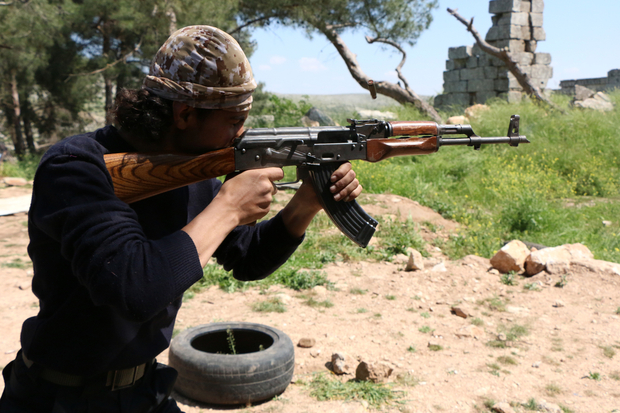
A rebel fighter from the Free Syrian Army's

A rebel fighter from the Free Syrian Army’s “First Battalion” takes part in military training on May 4, 2015, in rebel-held northern Rif Aleppo. (AFP, Baraa al-Halabi)

The Syrian opposition is meeting in Saudi Arabia between December 8 and 10 in an attempt to create a unified structure that can credibly sit across the table from the Bashar al-Assad regime in the internationally-organised peace talks in Vienna, and make a binding commitment on the path forward for Syria. Continue reading

Al-Qaeda Central in Syria

By Kyle Orton (@KyleWOrton) on September 14, 2015

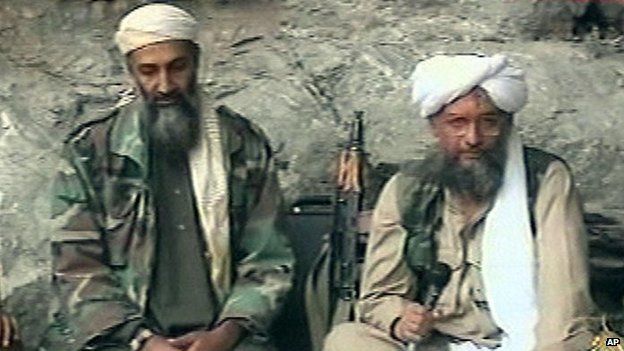
Osama bin Laden and Ayman az-Zawahiri (2001)

Usama bin Ladin and Ayman az-Zawahiri (2001)

A couple of days ago, a leader Jabhat an-Nusra issued a statement condemning Ahrar a-Sham. The statement is actually rather milder than initial reports suggested. Nusra is mostly annoyed at Ahrar for working with Turkey and Qatar to acquire money and weapons. Nusra is also displeased that Ahrar, at the instigation of Ankara and Doha, asked Nusra to publicly break its al-Qaeda link. Nusra also felt Ahrar was too willing to publicly distance itself from Salafi-jihadism to gain war materiel. This will no doubt help intensify the debate about Ahrar’s ostentatious “moderation” over the last eighteen months, and what the West should do about Ahrar.

In this post, however, I’d like to focus on the statement’s author, Abu Firas as-Suri, or more precisely on what he represents. Abu Firas is part of a group of (known) agents of al-Qaeda Central (AQC) who were sent into Syria in mid-2013 to mediate the dispute between Nusra and then-ISIS (now the Islamic State, I.S.), and when that failed the AQC veterans stayed, erected a veritable bureaucracy, and sought to forestall Nusra “going local”. Below are mini-profiles of these AQC veterans. Continue reading

Did Saddam Hussein Become A Religious Believer?

By Kyle Orton (@KyleWOrton) on September 12, 2015

Saddam Hussein prays at a mosque in Samarra, March 12, 1998 (AP Photo)

Saddam Hussein prays at a mosque in Samarra, March 12, 1998 (AP Photo)

It should be stated up front that the question posed in the headline is, strictly speaking, unanswerable: only Saddam Hussein could ever answer that question, and even then any out-loud answer given by Saddam could be untrue in any number of directions, for any number of reasons. Still, from the available evidence it does seem Saddam had some kind of “born-again” experience.

Of crucial importance, however, is that while Saddam’s actual beliefs had a significant impact in providing some of the colour and shape to the Faith Campaign, even if one believes Saddam remained a secularist and Islamized his regime as a wholly cynical means of shoring-up support, this is completely irrelevant to the effect this Islamization had. Saddam put in place a governmental administration that created a religious movement, which brought men to a faith they otherwise would not have had, and in combination with the increased sectarianism fostered by Saddam’s regime, this prepared the ground for al-Qaeda and its offshoots like the Islamic State (ISIS) in the aftermath of the regime. Continue reading

Reassessing the Saudi-led Intervention in Yemen

By Kyle Orton (@KyleWOrton) on July 24, 2015

1

The Saudi-led Operation DECISIVE STORM began in Yemen on March 25 as a campaign of airstrikes against the Iran-backed Houthis, to weaken them and re-install the president, Abd Rabbo Mansour Hadi, who was overthrown by the Houthis last September.

In April, I wrote in support of the Saudi-led operation for: (1) having drawn a line against Iran’s imperialism after Lebanon, Syria, and Iraq; (2) potentially decreasing the growth of the Islamic State (ISIS) by providing Sunnis, in Yemen and beyond, with an alternative form of resistance to Iran’s encroachments; and (3) offering a chance for more stability in Yemen, which was then in free fall with Iran, al-Qaeda, and ISIS capitalizing on the chaos. Continue reading

Saddam’s Henchmen Were Fanatics Long Before They Joined The Islamic State

By Kyle Orton (@KyleWOrton) on July 20, 2015

Published at National Review

After long neglect, the media has finally recognized the role of the FREs—former (Saddam) regime elements—within the Islamic State (ISIS). But the pendulum has now swung too far: Some reports are now claiming that the FREs have transformed the leader of the terror army, Abu Bakr al-Baghdadi, into nothing more than a front man for the Baathists.

These suppositions are mistaken. Most FREs within ISIS have not been ideologically Baathists for a long time. Continue reading

Is Ahrar a-Sham a “Moderate” Syrian Rebel Group?

By Kyle Orton (@KyleWOrton) on July 12, 2015

Ahrar a-Sham

To answer my headline simply: no, Ahrar a-Sham’s leadership is not what anybody in the West means by “moderate” Syrian rebels that could be supported.

The question is provoked by an op-ed in The Washington Post last night signed by Labib al-Nahhas, Ahrar’s foreign political relations officer, the culmination of a public-relations campaign by Ahrar to rebrand itself as the mainstream alternative to the Islamic State (ISIS) and the Assad tyranny we’ve all been waiting for. Continue reading

Islamic State: The Afterlife of Saddam Hussein’s Regime

By Kyle Orton (@KyleWOrton) on July 4, 2015

Published at Baghdad Invest

1

Izzat Ibrahim ad-Douri, Saddam Hussein’s long-time deputy, was reported dead (again) on April 17. An audio message on May 15 disproved this. Douri was the implementer of the Saddam regime’s Islamization program in its later years and a key architect of the insurgency after the regime was overthrown, which helped pave the way for the Islamic State (ISIS). ISIS has now turned on Douri and his associates, but ISIS could not have risen to its current stature without Douri’s help. Continue reading

A Myth Revisited: “Saddam Hussein Had No Connection To Al-Qaeda”

Book Review: The Connection: How al-Qaeda’s Collaboration With Saddam Hussein Has Endangered America (2004) by Stephen Hayes

By Kyle Orton(@KyleWOrton) on June 21, 2015


More than twelve years after the fall of Saddam Hussein, the conventional wisdom is that Saddam’s regime had no connection with al-Qaeda, and such “evidence” as was adduced was tortured out of Ibn al-Shaykh al-Libi in the Bush administration’s desperation to cobble together a casus belli. But if one puts ideology on hold, and considers the evidence of Stephen Hayes’ The Connection, a rather different picture emerges. Continue reading