Tag Archives: Osama bin Laden

From Bosnia to Guantanamo

By Kyle Orton (@KyleWOrton) on January 23, 2016

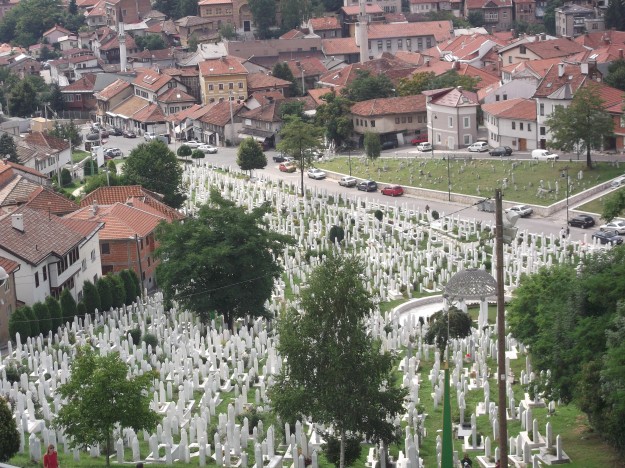
War cemetery in Sarajevo (personal picture, July 2011)

War cemetery in Sarajevo (personal photograph, July 2011)

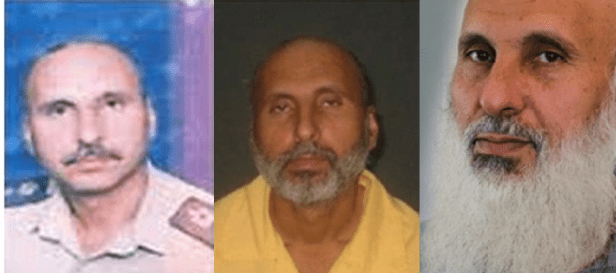
It was announced on Thursday that Guantanamo inmates Tariq Mahmoud Ahmed as-Sawah and Abd al-Aziz Abduh Abdallah Ali as-Suwaydi had been transferred to Bosnia and Montenegro respectively. Sawah’s path to jihadi-Salafism allows a window into the Bosnian jihad, a much-underestimated factor in shaping al-Qaeda, its offshoots, and the wider jihadist movement. In that story is an examination of the role certain States have played in funding and otherwise helping the jihadists. It also leaves some questions about whether emptying Guantanamo of its dangerous inhabitants is the correct policy.
Continue reading

The Islamic State Was Coming Without the Invasion of Iraq

By Kyle Orton (@KyleWOrton) on December 12, 2015

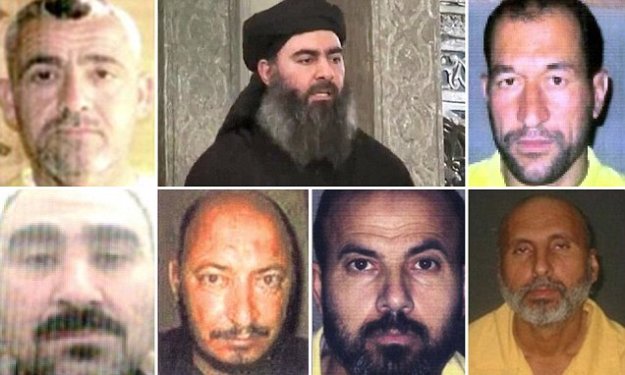
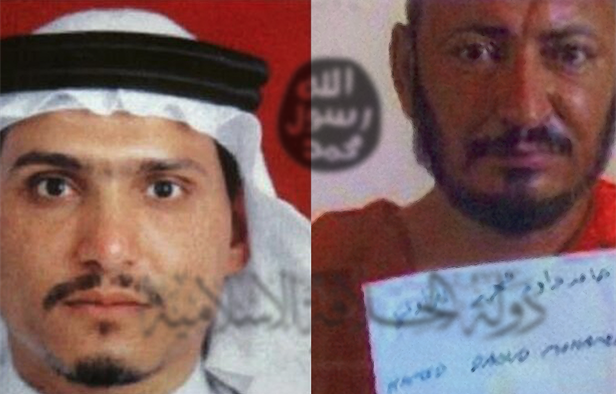
From top left clockwise: Fadel al-Hiyali, Ibrahim al-Badri (Abu Bakr al-Baghdadi), Adnan al-Bilawi, Samir al-Khlifawi (Haji Bakr), Adnan as-Suwaydawi (Abu Ayman al-Iraqi), Hamid az-Zawi (Abu Omar al-Baghdadi), Abu Hajr as-Sufi

From top left clockwise: Fadel al-Hiyali, Ibrahim al-Badri (Abu Bakr al-Baghdadi), Adnan al-Bilawi, Samir al-Khlifawi (Haji Bakr), Adnan as-Suwaydawi (Abu Ayman al-Iraqi), Hamid az-Zawi (Abu Omar al-Baghdadi), Abu Hajr as-Sufi

Yesterday, Reuters had an article by Isabel Coles and Ned Parker entitled, “How Saddam’s men help Islamic State rule“. The article had a number of interesting points, but in its presentation of the movement of former (Saddam) regime elements (FREs) into the leadership structure of the Islamic State (IS) as a phenomenon of the last few years, it was a step backward: the press had seemed to be recognizing that the Salafization of the FREs within IS dates back to the Islamization of Saddam Hussein’s regime in its last fifteen years, notably in the 1990s after the onset of the Faith Campaign. Continue reading

The Riddle of Haji Bakr

By Kyle Orton (@KyleWOrton) on November 10, 2015

Samir al-Khlifawi (Haji Bakr): in Saddam's army, in American prison, as a commander of the Islamic State

Samir al-Khlifawi (Haji Bakr): in Saddam’s intelligence service, in American prison, as a commander of the Islamic State

In the last few months I’ve increasingly focussed on the former (Saddam) regime elements (FREs) within the Islamic State (IS). There’s now an entire section on this blog about it, and Aaron Zelin over at Jihadology recently gave me time to elaborate in a podcast.

In studying this topic there is one inescapable name: Samir Abd Muhammad al-Khlifawi, better-known by his pseudonym Haji Bakr, and sometimes by his kunya, Abu Bakr al-Iraqi. Al-Khlifawi is a former colonel in an elite intelligence unit of the Saddam Hussein regime—focussed on air defence at Habbaniya airbase, though what exactly that entails is murky. Al-Khlifawi was also apparently involved in weapons development.

Al-Khlifawi came to international attention in April when Christoph Reuter published an article in Der Spiegel naming al-Khlifawi as the “architect” of IS’s expansion into Syria, and the man who had been “pulling the strings at IS for years.” Continue reading

What’s Behind the Rise of the Islamic State?

By Kyle Orton (@KyleWOrton) on November 5, 2015

Published at NOW Lebanon.

1

William McCants’ The ISIS Apocalypse: The History, Strategy, and Doomsday Vision of the Islamic State is an immensely readable addition to the literature on the most powerful terrorist-insurgent group in the world. McCants covers the Islamic State, often referred to as ISIS, from its inception in Taliban Afghanistan in 1999 to its migration to Iraq in 2002, and through its various stages before its blitzkrieg from Syria across central Iraq in June 2014, which brought ISIS to global attention. McCants shows that ISIS’s evolution is not just a religio-socio-political and military phenomenon, but an intellectual one. ISIS has built the foundations of its statelet on the lessons learned by Salafi-jihadists from their previous battlefronts, such as Afghanistan, Chechnya, and Algeria, and their various mistakes, many of them ISIS’s own. Continue reading

Why NATO Was Right To Intervene In Libya

By Kyle Orton (@KyleWOrton) on October 21, 2015

Published at Left Foot Forward.

1

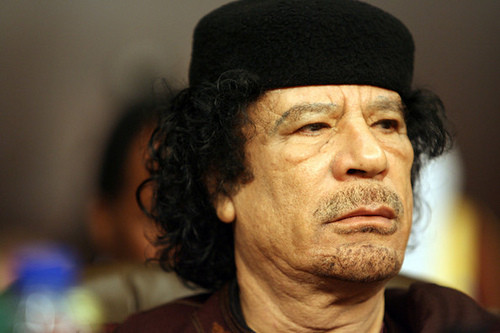
Periodically, since the overthrow of Libyan dictator Muammar el-Qaddafi, there appears a series of articles, couched in tones from tentative to vehement, suggesting that if NATO had stayed out and allowed Qaddafi to retake the rebellious city of Benghazi in March 2011 then Libya would now be stable and would not be haemorrhaging refugees.

With the onset of the refugee crisis in Europe earlier this year, and Libya providing a major transit point for those trying to get to Europe, it was inevitable that this would happen again. But it is still mistaken: instability was coming to Libya no matter what the West did, and the main problem with the intervention was that it wasn’t early enough, forceful enough, or protracted enough. Continue reading

Islamic State Spokesman Admits Caliph’s Deputy is Dead, Invites Armageddon

By Kyle Orton (@KyleWOrton) on October 14, 2015

1

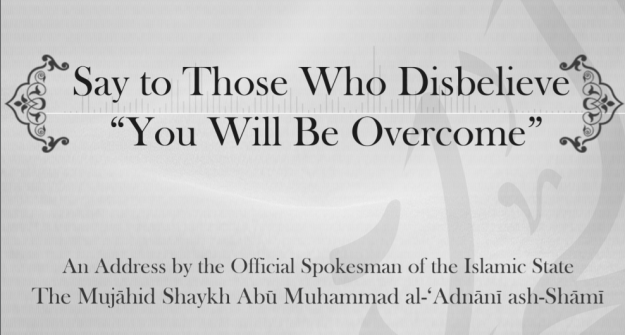
The Islamic State’s spokesman, Taha Subhi Falaha (Abu Muhammad al-Adnani) gave a speech on 13 October 2015 entitled, “Say to Those Who Disbelieve, ‘You Will Be Overcome’.”

Falaha’s speech contained an important piece of news, or rather confirmation of news: the caliph’s deputy, Fadel al-Hiyali, was in fact killed on 18 August 2015.[4]

The themes in Falaha’s speech were largely familiar: the jihadists were facing a global conspiracy of America, its allies, Russia, Iran, and apostate Muslims in Syria and Iraq; Muslims should therefore unite around the Islamic State’s banner in order to repel this aggression aimed at all (Sunni) Muslims; but the Islamic State remains strong—the killing of leaders and the loss of some areas was more than made up for by other advances—and able to murder those Muslims who remain opposed to it and shatter the Americans. Continue reading

The Islamic State: Between Al-Qaeda and Saddam Hussein

By Kyle Orton (@KyleWOrton) on September 22, 2015

Abu Musab az-Zarqawi

Abu Musab al-Zarqawi

In August 2015’s Perspectives on Terrorism, Truls Tønnessen writes about the evolution of the leadership of what is now the Islamic State (I.S.) from its origins in al-Qaeda in Iraq (AQI) under the heading, “Heirs of Zarqawi or Saddam?” Tonnessen makes the obvious point that AQI’s leadership was largely comprised of foreign Salafi-jihadists with al-Qaeda histories, while I.S. is led by Iraqis, most of them former (Saddam) regime elements (FREs). But Tonnessen’s argument that I.S.’s leaders had not been AQI members is mistaken (they had), which erodes his arguments that AQI’s influence diminished over time as I.S. formed from various mergers, and that this diminution of influence came about because I.S.’s post-2010 leadership purged the veteran AQI elements within I.S. (I.S.’s leaders are veteran AQI elements.) The main difference between AQI’s leaders and I.S.’s is that AQI’s leaders had background connections to al-Qaeda Central (AQC) networks, and I.S.’s largely do not. While Tonnessen sees Jabhat al-Nusra as linked to these shifting dynamics, this argument does not stack up. Ultimately, Tonnessen’s contention that I.S.’s leaders are more heirs of Saddam than Zarqawi fails in the terms Tonnessen presents it. Continue reading

Iran’s Partnership with al-Qaeda and Unanswered Questions

By Kyle Orton (@KyleWOrton) on September 19, 2015

Imad Mughniyeh and Osama bin Laden

Imad Mughniyeh and Osama bin Laden

The Islamic Republic of Iran released five senior al-Qaeda terrorists in March, ostensibly as part of a prisoner exchange for an Iranian diplomat kidnapped in Yemen by al-Qaeda in the Arabian Peninsula (AQAP). But the murky circumstances in which al-Qaeda’s leaders were “held” in Iran and other inconsistencies cast some doubt on this version of events, and draw attention to some old questions about Iran’s support for al-Qaeda and its affiliates and offshoots. Continue reading

Al-Qaeda Central in Syria

By Kyle Orton (@KyleWOrton) on September 14, 2015

Osama bin Laden and Ayman az-Zawahiri (2001)

Usama bin Ladin and Ayman az-Zawahiri (2001)

A couple of days ago, a leader Jabhat an-Nusra issued a statement condemning Ahrar a-Sham. The statement is actually rather milder than initial reports suggested. Nusra is mostly annoyed at Ahrar for working with Turkey and Qatar to acquire money and weapons. Nusra is also displeased that Ahrar, at the instigation of Ankara and Doha, asked Nusra to publicly break its al-Qaeda link. Nusra also felt Ahrar was too willing to publicly distance itself from Salafi-jihadism to gain war materiel. This will no doubt help intensify the debate about Ahrar’s ostentatious “moderation” over the last eighteen months, and what the West should do about Ahrar.

In this post, however, I’d like to focus on the statement’s author, Abu Firas as-Suri, or more precisely on what he represents. Abu Firas is part of a group of (known) agents of al-Qaeda Central (AQC) who were sent into Syria in mid-2013 to mediate the dispute between Nusra and then-ISIS (now the Islamic State, I.S.), and when that failed the AQC veterans stayed, erected a veritable bureaucracy, and sought to forestall Nusra “going local”. Below are mini-profiles of these AQC veterans. Continue reading

Did Saddam Hussein Become A Religious Believer?

By Kyle Orton (@KyleWOrton) on September 12, 2015

Saddam Hussein prays at a mosque in Samarra, March 12, 1998 (AP Photo)

Saddam Hussein prays at a mosque in Samarra, March 12, 1998 (AP Photo)

It should be stated up front that the question posed in the headline is, strictly speaking, unanswerable: only Saddam Hussein could ever answer that question, and even then any out-loud answer given by Saddam could be untrue in any number of directions, for any number of reasons. Still, from the available evidence it does seem Saddam had some kind of “born-again” experience.

Of crucial importance, however, is that while Saddam’s actual beliefs had a significant impact in providing some of the colour and shape to the Faith Campaign, even if one believes Saddam remained a secularist and Islamized his regime as a wholly cynical means of shoring-up support, this is completely irrelevant to the effect this Islamization had. Saddam put in place a governmental administration that created a religious movement, which brought men to a faith they otherwise would not have had, and in combination with the increased sectarianism fostered by Saddam’s regime, this prepared the ground for al-Qaeda and its offshoots like the Islamic State (ISIS) in the aftermath of the regime. Continue reading