Tag Archives: Pakistan

The Jihad Factor in Bosnia

By Kyle Orton (@KyleWOrton) on 20 January 2021
Last week, as one of his last acts in office, U.S. Secretary of State Mike Pompeo gave a speech about Iran’s collaboration with Al-Qaeda. It was unfortunate that Pompeo did this at this time and in this way, with such blatant political intent, because the factual content of Pompeo’s speech was unassailable: the Islamic Republic’s long relationship with Al-Qaeda does stretch back about three decades, the killing of Al-Qaeda’s deputy Abdullah Ahmed Abdullah (Abu Muhammad al-Masri) in Tehran in August 2020 is demonstrative of a shift in the strategic positioning of the organisation away from Pakistan to Iran, and even the part of Pompeo’s speech that got the most pushback—about Tehran’s contact with the 9/11 killers—is not controversial and is not new.

Unmentioned in Pompeo’s speech was one of the crucibles that forged this relationship, and forged Al-Qaeda into something more than a regional menace, namely the Bosnian war of 1992-5. Continue reading
Islamism in Syria

By Kyle Orton (@KyleWOrton) on October 23, 2020

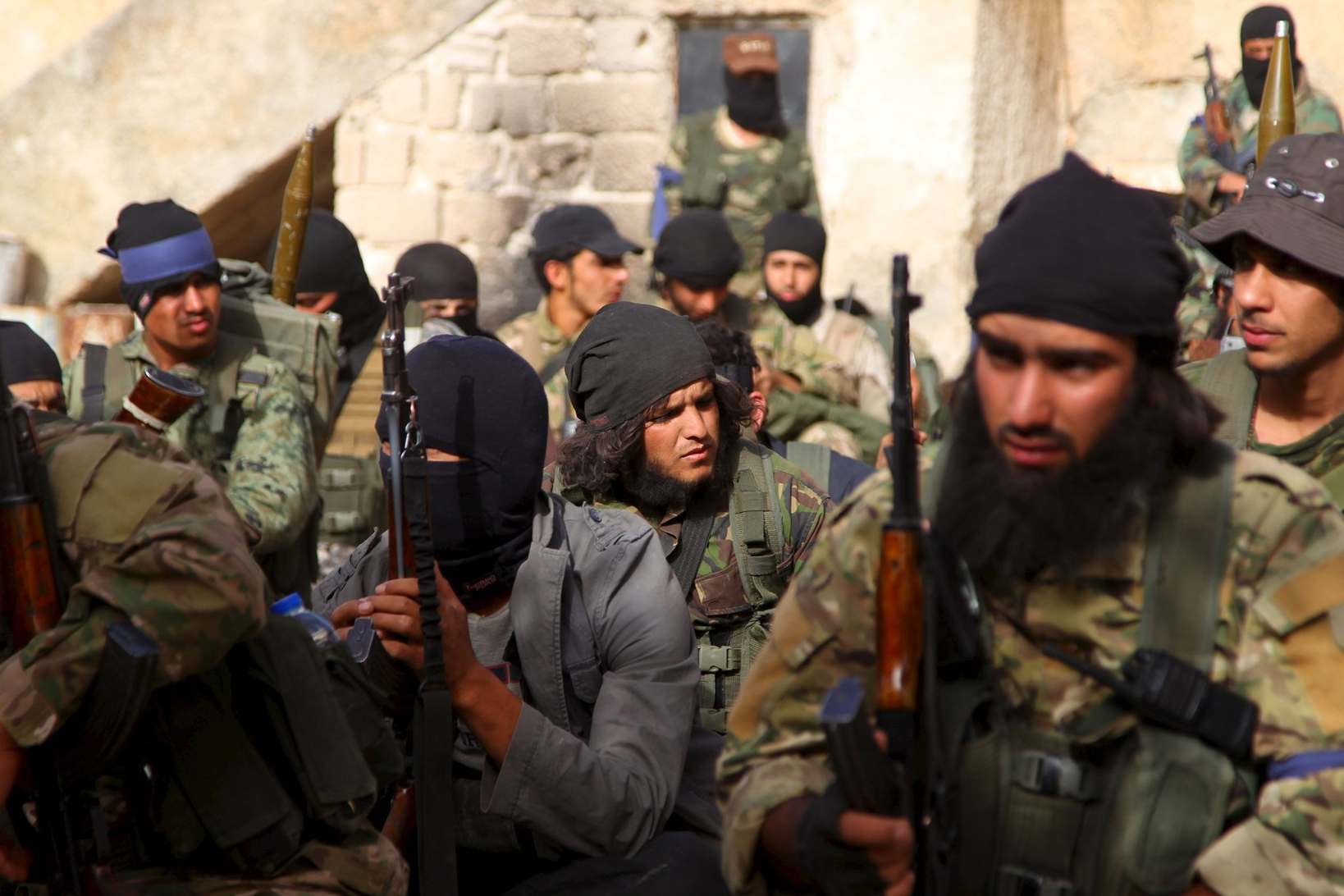
A chapter about Islamism in Syria I wrote for the American Foreign Policy Council’s (AFPC) ‘World Almanac of Islamism’ was published today. Do check it out, and the broader site, which is a great, accessible resource. The format of the website necessitated that the chapter as I submitted it was edited, condensed, and split up to fill out the various categories. In case it is of any interest, the original version of the chapter is reproduced below.

Continue reading

The Current Condition of Al-Qaeda

By Kyle Orton (@KyleWOrton) on October 4, 2020

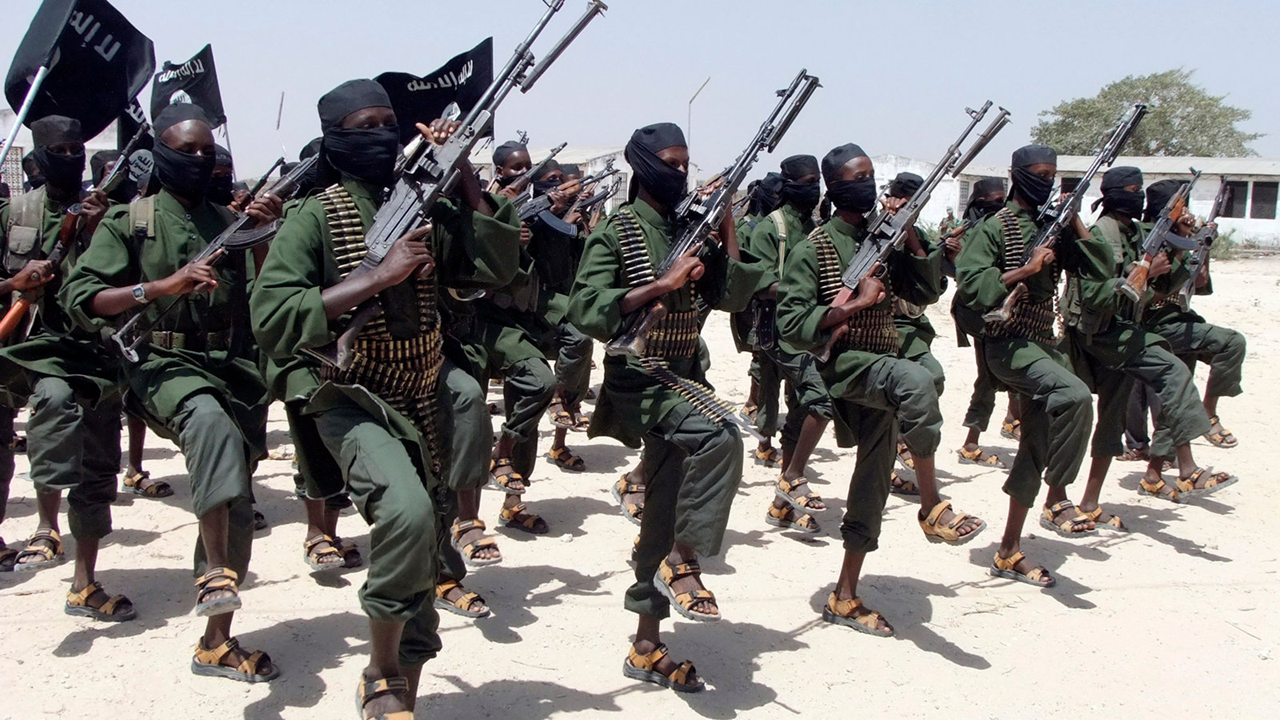
A chapter about Al-Qaeda I wrote for the American Foreign Policy Council’s (AFPC) ‘World Almanac of Islamism’ was published today. Do check it out, and the broader site, which is a great, accessible resource. The format of the website necessitated that the chapter as I submitted it was edited, condensed, and split up to fill out the various categories. In case it is of any interest, the original version of the chapter is reproduced below.

Continue reading

Islamic State Says America and the Taliban Are Conspiring in Afghanistan, Continues to Focus on Africa

By Kyle Orton (@KyleWOrton) on 20 September 2020

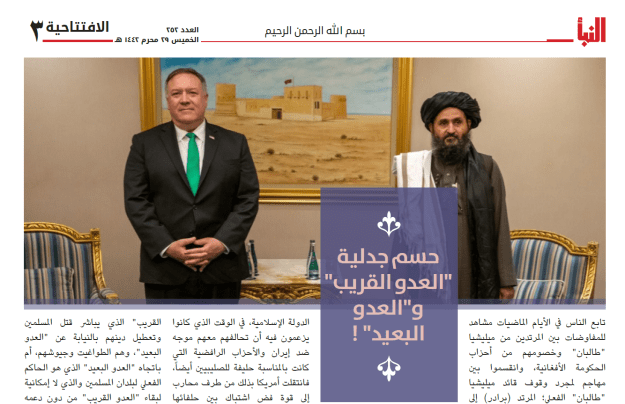
Al-Naba 252, page 3

The 252nd edition of Al-Naba, the weekly newsletter of the Islamic State (IS), was released on 17 September.

Al-Naba 252 contained reports of guerrilla attacks and targeted assassinations at the Centre—against Iraqi security forces and the Iranian proxy militias in the Hashd al-Shabi in Iraq, and against the SDF/PKK in eastern Syria—and the “West African State”, Chad and Niger specifically. IS has been making the Maghreb a primary front since the caliphate collapsed. There was, as ever, the ideological essay on page eleven (of twelve).

The two most notable aspects of Al-Naba 252—expanded on below—were the devotion of the main editorial on page three to an attack on the Taliban for the deal they have made with the Americans over Afghanistan, and IS finally claiming responsibility for the murder of the French aid workers in Niger on 9 August, while continuing its ideological war with Al-Qaeda in Africa. Continue reading

Al-Qaeda Has Never Been More Dominated by States

By Kyle Orton (@KyleWOrton) on September 11, 2020

In writing a chapter earlier this year about the current status of Al-Qaeda, part of the process was reviewing the organisation’s history since its formation in the late 1980s. What really struck me was how extensively Al-Qaeda is now manipulated, under the influence of, and in places even controlled by state powers. To mark the nineteenth anniversary of 9/11, I thought I could give a brief sketch of this development.

Continue reading

Turkey Increases the Pressure on the PKK Headquarters in Iraq

By Kyle Orton (@KyleWOrton) on 12 June 2020

Ismail Nazlikul (Kasim Engin) [image source]

The Kurdistan Workers’ Party (PKK) announced earlier this week that one of its senior commanders, Ismail Nazlikul (who used the codename “Kasim Engin”) had been killed on 27 May in a Turkish airstrike in Iraqi Kurdistan. Continue reading

The CIA and Iraq: Intelligence Failures, Media Successes

By Kyle Orton (@KyleWOrton) on 28 December 2019

In a long article last week, I looked at why the U.S. ran a formal occupation of Iraq for fourteen months after the fall of Saddam Husayn in April 2003, given that there had been an explicit pre-invasion decision not to have an occupation government. The short answer is that the occupation was installed through deception by the State Department, supported by the Central Intelligence Agency (CIA). State and CIA had argued for a protracted occupation in the Situation Room debates in 2002, but President George W. Bush had sided with the Pentagon, which advocated a rapid transfer of power to Iraqis. Having lost in the formal inter-agency process, the State Department succeeded by subversion in getting its way on the ground in Iraq. The disaster this caused in the mismanagement of post-Saddam Iraq was, as the article explained in detail, only the most serious impact of the toxic schism between State/CIA and the Pentagon, a factor whose import is difficult to overstate when examining how the Bush administration functioned. (This feud also at times drew in the Vice President’s Office, which tended to support the Pentagon.)

Continue reading

Al-Qaeda Leader Wants to Take the Jihad in Kashmir Away from Pakistan

By Kyle Orton (@KyleWOrton) on 9 July 2019

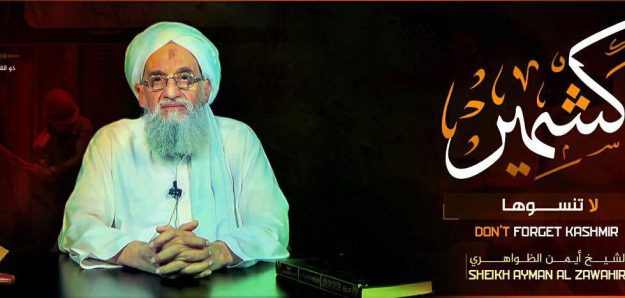
Al-Qaeda’s leader, Ayman al-Zawahiri, released a speech, “Don’t Forget Kashmir”, which as the title suggests focused on that conflict on the Subcontinent. Al-Zawahiri was insistent on fighting India, but he also wanted to “liberate” the Kashmiri jihad from the oversight of the Pakistani secret police and military, who have used these Islamist paramilitary forces as instruments of state policy against the Indian Union since the time of partition. In Al-Zawahiri’s telling the Pakistani state, such as it is, is too close to the Americans and the West. A transcript of the speech, released in English by Al-Qaeda’s As-Sahab Media, is reproduced below. Continue reading

The Memoir of a British Spy in Al-Qaeda

By Kyle Orton (@KyleWOrton) on 8 July 2019

This article was originally published at the European Eye on Radicalization

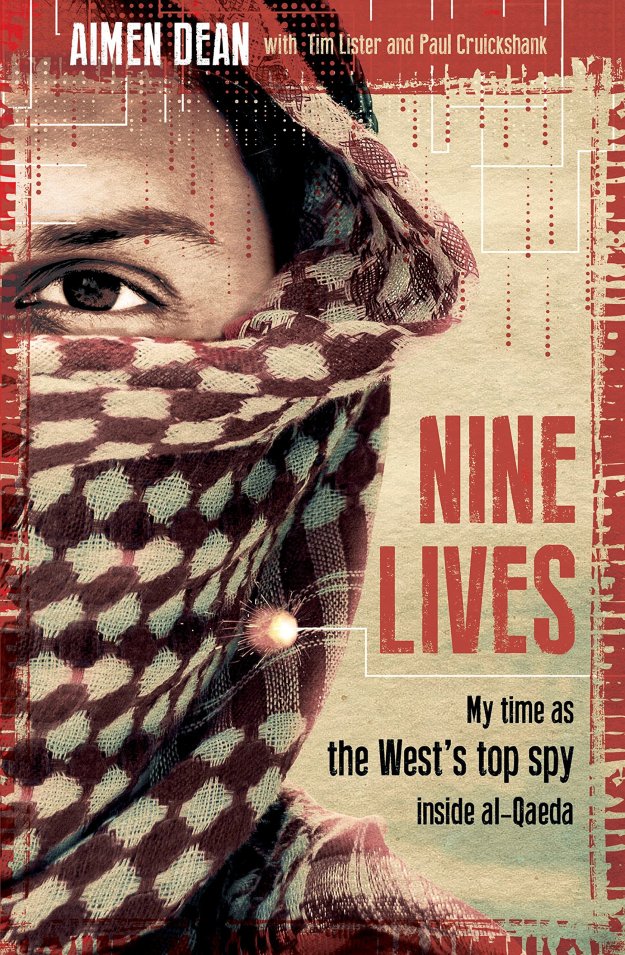
The main issue that Nine Lives has to overcome is the one that has attended Aimen Dean (a pseudonym) since he went public in March 2015 with an interview he gave to the BBC, claiming he had been a British spy within Al-Qaeda between 1998 and 2006. That issue is overcoming the doubts about his story. Nine Lives goes a long way to solving this by bringing in Paul Cruickshank, the editor-in-chief of CTC Sentinel, one of the premier academic resources in the terrorism field, and Tim Lister, a terrorism-focused journalist with CNN, as co-authors. As well as helping structure the book from Dean’s memories, the two co-authors note they had been able to “corroborate key details” that convinced them: “In the years immediately leading up to and following 9/11, Aimen Dean was by far the most important spy the West had inside al-Qaeda”.

Continue reading

The Reappearance of the Caliph

By Kyle Orton (@KyleWOrton) on 10 May 2019

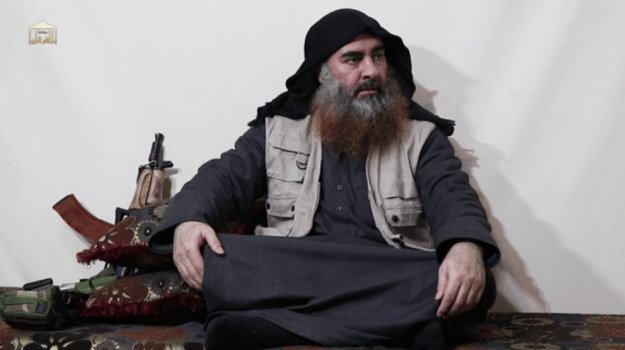
The leader of the Islamic State, Ibrahim al-Badri (Abu Bakr al-Baghdadi) appearing in an Islamic State propaganda video, “In the Hospitality of Amir al-Mu’mineen, 29 April 2019

The leader of the Islamic State (IS), Ibrahim al-Badri (Abu Bakr al-Baghdadi), appeared in an eighteen-minute video on 29 April, the first time Al-Ibrahim has appeared since 4 July 2014 when he gave the Friday prayer at the Nuri Mosque in Mosul, days after IS had announced the restoration of the caliphate. Al-Ibrahim has given semi-regular speeches over the years, but with these two exceptions they have been audio addresses. The video was released by IS’s premier media outlet, Al-Furqan Media Foundation, which is also the group’s oldest media platform. An English translation was released by IS’s Halummu outlet and is republished below with some interesting and/or important sections, plus names of IS operatives, highlighted in bold. Continue reading