Tag Archives: Persia

Saddam Hussein Prepared the Ground for the Islamic State

By Kyle Orton (@KyleWOrton) on April 26, 2016
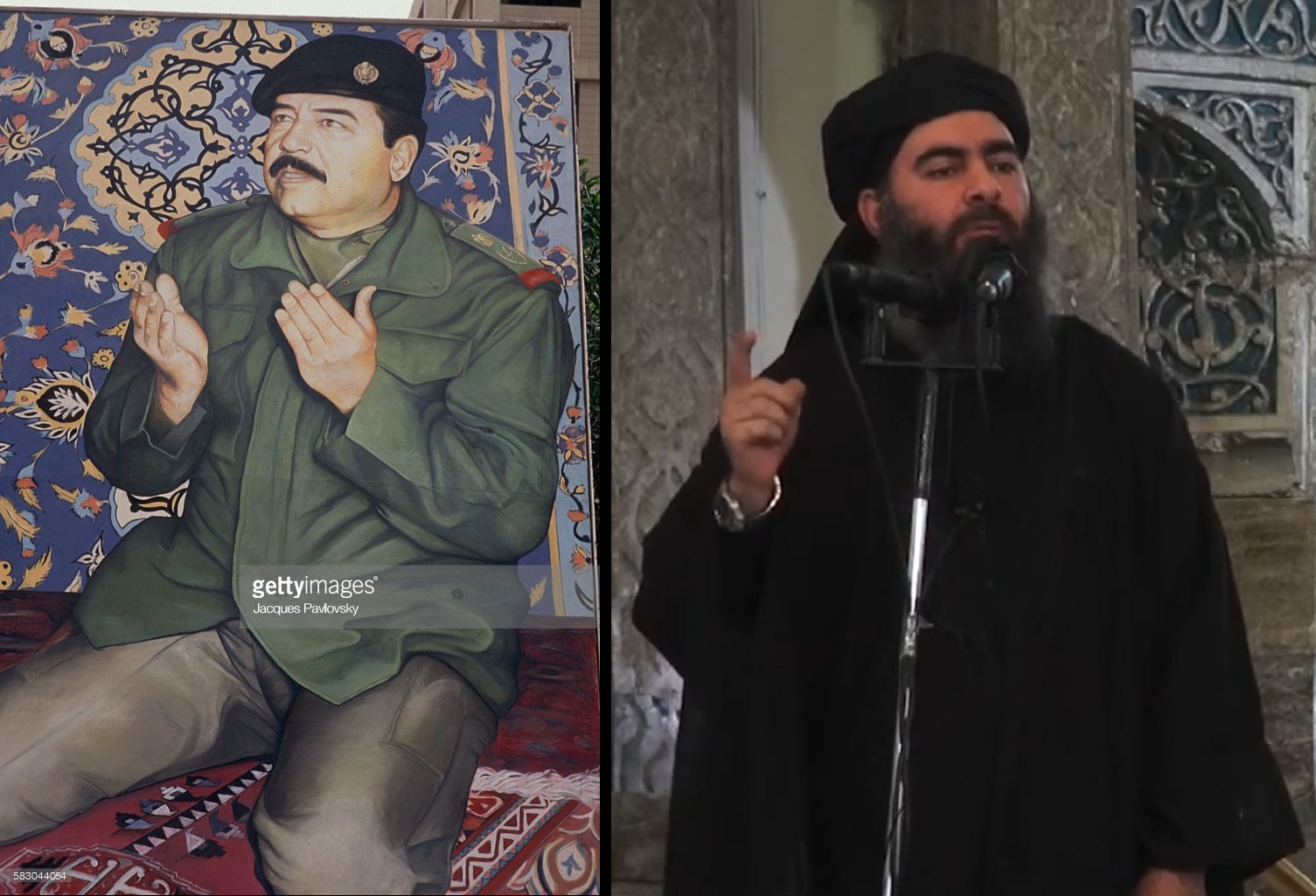
This essay, written to tie together my work on the relationship between the Saddam Hussein regime and the Islamic State, was completed last summer and submitted to an outlet, where it entered a form of development hell. After giving up on that option late last year, the opportunity arose to get a shorter version published in The New York Times in December. But I procrastinated too long over what to do with the full essay and a recent change in my work situation means I no longer have the bandwidth to go through the process of finding it a new home, so here it is.

“Abu-Bakr al Baghdadi is a product of the last decade of Saddam’s reign,” argues Amatzia Baram, a scholar of Iraq. He is correct in at least three ways. First, in its last decade in power, the Iraqi Ba’ath regime transformed into an Islamist government, cultivating a more religious, sectarian population on which the Islamic State (ISIS) could draw. Part of Saddam Hussein’s “Faith Campaign” also involved outreach to Islamist terrorists, including al-Qaeda, which meant that the synthesis of Ba’athism and Salafism that fused into the Iraqi insurgency after the fall of Saddam was already well advanced by the time the Anglo-American forces arrived in Baghdad in 2003. Second, the ISIS leadership and military planning and logistics is substantially reliant on the intellectual capital grown in the military and intelligence services of the Saddam regime. And finally, the smuggling networks on which ISIS relies, among the tribes and across the borders of Iraq’s neighbours, for the movement of men and materiel, are directly inherited from the networks erected by the Saddam regime in its closing decade to evade the sanctions. The advantages of being the successor to the Saddam regime make ISIS a more formidable challenge than previous Salafi-jihadist groups, and one that is likely to be with us for some time.

Continue reading

Islam’s First Terrorists

By Kyle Orton (@KyleWOrton) on August 24, 20151. The Assassins (book)

Book Review: The Assassins: A Radical Sect in Islam (1967) by Bernard Lewis

This review can be read in six parts: one, two, three, fourfive, and six.

Abstract

The fourth Caliph, Ali, was assassinated during a civil war that his supporters, Shi’atu Ali (Followers of Ali), lost to the Umayyads, who thereafter moved the capital to Damascus. The Shi’a maintained that the Caliphate should have been kept in the Prophet’s family; over time this faction evolved into a sect unto themselves, which largely functioned as an official opposition, maintaining its claim to the Caliphate, but doing little about it. Several ghulat (extremist) Shi’a movements emerged that did challenge the Caliphate. One of them was the Ismailis. Calling themselves the Fatimids, the Ismailis managed to set up a rival Caliphate in Cairo from the mid-tenth century until the early twelfth century that covered most of North Africa and western Syria. A radical splinter of the Ismailis, the Nizaris, broke with the Fatimids in the late eleventh century and for the next century-and-a-half waged a campaign of terror against the Sunni order from bases in Persia and then Syria. In the late thirteenth century the Nizaris were overwhelmed by the Mongols in Persia and by the Egyptian Mameluke dynasty which halted the Mongol invasion in Syria. The Syrian-based branch of the Nizaris became known as the Assassins, and attained legendary status in the West after they murdered several Crusader officials in the Levant. Attention has often turned back to the Assassins in the West when terrorist groups from the Middle East are in the news, but in the contemporary case of the Islamic State (ISIS) the lessons the Nizaris can provide are limited. Continue reading

Islam’s First Terrorists, Part 5

By Kyle Orton (@KyleWOrton) on August 21, 2015

This is the fifth of a six-part series. Read parts one, two, three, and four.

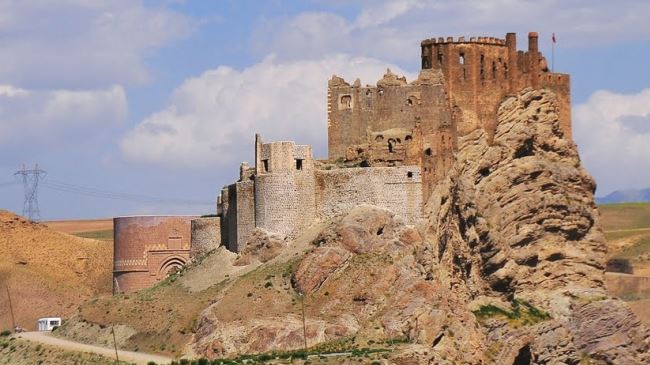
Lamsar fortress, the Nizaris' second castle near their Alamut headquarters in northern Iran

Lamsar fortress, the Nizaris’ second castle near their Alamut headquarters in northern Iran

The End of the Nizaris

In 1218, the Mongols reached the Jaxartes River, becoming immediate neighbours of the Khorazmshah. By 1219, Genghis Khan had crossed the river and entered the Islamic world. By 1240 the Mongols had overrun Iran and were invading Georgia, Armenia, and northern Mesopotamia.

In this period, the Nizaris—who never forgot their mission—had dispatched envoys from Alamut to convert the Ismailis of the Gujerati coast from the “old preaching” to the “new preaching”. In time, India would become a main centre of Ismailism.

There is one final documented episode—albeit hazily—from the Nizaris in Syria around this time. The stories of the Assassins’ attempts to kill France’s King (now Saint) Louis IX as an infant can, like all stories of the Assassins operating on European soil, be dismissed as invention. But after King Louis arrived in Palestine in June 1249, there is every indication that he reached a compact with the Assassins, which involved paying them tribute. Continue reading

Islam’s First Terrorists, Part 3

By Kyle Orton (@KyleWOrton) on August 19, 2015

This is the third of a six-part series. Read parts one and two.

Masyaf fortress, eastern Hama, the headquarters of the Assassins (1141-1270)

Masyaf fortress, eastern Hama, the headquarters of the Assassins (1141-1270)

The death of Hassan-i Sabbah and The Resurrection

Rashid ad-Din Sinan

Rashid ad-Din Sinan

Hassan-i Sabbah, the Nizaris’ first and most successful leader, died in May 1124. Hassan-i Sabbah was a fanatic who sternly imposed the Holy Law—even executing one of his own sons for drinking wine and another son (mistakenly) for an unauthorized assassination. An extreme ascetic and recluse, Hassan-i Sabbah left his house twice in the thirty-five years after taking Alamut. Hassan-i Sabbah’s great skill was in weaponizing the discontents of the dispossessed and refining the doctrine of al-dawa jadida (the new preaching).

Hassan-i Sabbah never claimed to be the Imam, merely the only one who knew what the Imam wanted. Hassan-i Sabbah confirmed the Ismaili doctrine as essentially authoritarian, where the believer must follow an Imam, the only source of truth, who has been appointed by god (unlike the Sunni view where the believer can choose an Imam).

The Nizaris’ history divides into essentially four parts after this: Continue reading

Islam’s First Terrorists, Part 2

By Kyle Orton (@KyleWOrton) on August 18, 2015

This is the second of a six-part series. For part one, see here

2. Alamut

Alamut fortress, northern Iran, the headquarters of the Nizaris

The Origins of the Nizaris in Persia

Hassan-i Sabbah would lead the Nizaris in Persia. Recruited in Rayy, near Tehran, by the chief dawa (missionary) of the Fatimids in 1072, Hassan-i Sabbah went to Egypt between 1078 and 1081, before returning to Iran to proselytize. In 1090, Hassan-i Sabbah won control of the fortress of Alamut in north-west Iran, which would become the headquarters of the Nizaris. Throughout the 1090s, the Nizaris gained control of further castles in Daylam, specifically the Rudbar area; in the southwest of Iran between Khuzestan and Fars; and in the east in Quhistan. Most impressive was the capture of the fortress at Shahdiz, near Isfahan, in 1096-7.

The Daylamis were a notoriously rebellious and hardy people; one of the last to convert to Islam, they were then among the first to assert their independence within it, first politically by forming a separate dynasty and then religiously by converting to Shi’ism. Continue reading

Islam’s First Terrorists, Part 1

By Kyle Orton (@KyleWOrton) on August 17, 20151

Book Review: The Assassins: A Radical Sect in Islam (1967) by Bernard Lewis

Abstract

The fourth Caliph, Ali, was assassinated during a civil war that his supporters, Shi’atu Ali (Followers of Ali), lost to the Umayyads, who thereafter moved the capital to Damascus. The Shi’a maintained that the Caliphate should have been kept in the Prophet’s family; over time this faction evolved into a sect unto themselves, which largely functioned as an official opposition, maintaining its claim to the Caliphate, but doing little about it. Several ghulat (extremist) Shi’a movements emerged that did challenge the Caliphate. One of them was the Ismailis. Calling themselves the Fatimids, the Ismailis managed to set up a rival Caliphate in Cairo from the mid-tenth century until the early twelfth century that covered most of North Africa and western Syria. A radical splinter of the Ismailis, the Nizaris, broke with the Fatimids in the late eleventh century and for the next century-and-a-half waged a campaign of terror against the Sunni order from bases in Persia and then Syria. In the late thirteenth century the Nizaris were overwhelmed by the Mongols in Persia and by the Egyptian Mameluke dynasty which halted the Mongol invasion in Syria. The Syrian-based branch of the Nizaris became known as the Assassins, and attained legendary status in the West after they murdered several Crusader officials in the Levant. Attention has often turned back to the Assassins in the West when terrorist groups from the Middle East are in the news, but in the contemporary case of the Islamic State (ISIS) the lessons the Nizaris can provide are limited. Continue reading