Tag Archives: provocation

From Kessab to Cannibals: Syria’s Media War

By Kyle Orton (@KyleWOrton) on January 5, 2015

Mother Agnes Mariam on RT. An agent of the regime, she dismissed Syria's rebels as a foreign conspiracy.

Mother Agnes Mariam on RT. An agent of the regime, she dismissed Syria’s rebels as a foreign conspiracy.

Fouad Ajami once said Syria was the “first YouTube war“. An academic study called Syria “the most socially mediated civil conflict in history“. From the start of the Syrian war, the media and propaganda dimension has been of immense importance, impacting the course of the war on the ground and affecting the policy of foreign States who could make a decisive difference in the conflict. Continue reading

Iran Tries To Get American Support For Its Takeover Of Lebanon

By Kyle Orton (@KyleWOrton) on December 31, 2014

In early August, the Lebanese Armed Forces (LAF) arrested Abu Ahmad Jumaa, the leader of Liwa Fajr al-Islam (Islamic Dawn Brigade), which had been loyal to al-Qaeda’s Syrian branch, Jabhat an-Nusra but which had then-recently defected to the Islamic State (I.S.). In response, Nusra and I.S. fighters poured across the border into Arsal, Lebanon, where Jumaa was being held, and after five days of clashes the Salafi jihadists withdrew, taking with them thirty Lebanese security personnel. Five of the thirty are now dead: one from his injuries, the other four murdered—at least two of them beheaded. Continue reading

What To Do About Syria: Sectarianism And The Minorities

By Kyle Orton (@KyleWOrton) on December 24, 2014

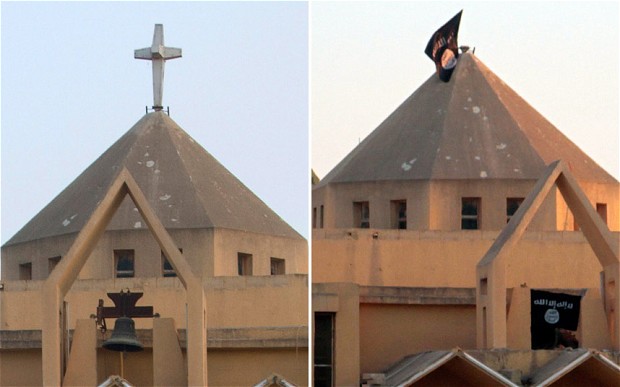
The Armenian Catholic Church of the Martyrs in Raqqa City

The Armenian Catholic Church of the Martyrs in Raqqa City

In the last few days I’ve been asked a lot about my longstanding view that the beginning of a Western strategy in Syria is the removal of Bashar al-Assad. The question has come from various angles and been phrased in various ways but it always boils down to: “What comes next?”

The best response I have seen to this comes from Thomas Nichols: “When someone says ‘tell me how it ends,’ it’s another way of saying: ‘I just don’t happen to like this particular case for intervention,’ for whatever reason.” Continue reading

If Assad Murdered His Own Brother-In-Law To Survive, What Wouldn’t He Do?

By Kyle Orton (@KyleWOrton) on December 19, 2014
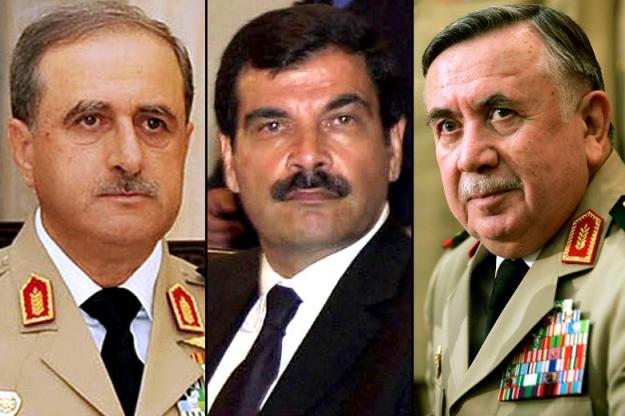
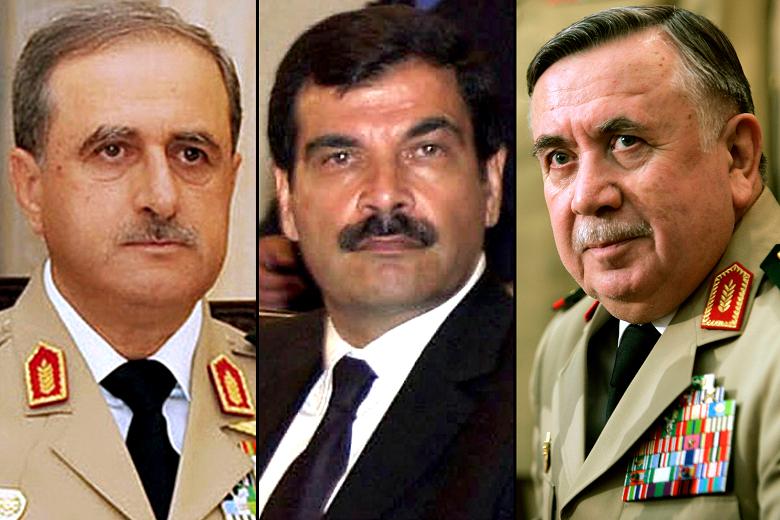
Defence Minister Daoud Rajha, General Assef Shawkat and General Hassan Ali Turkmani

Defence Minister Daoud Rajha, General Assef Shawkat and General Hassan Ali Turkmani

Sam Dagher at the Wall Street Journal has identified the July 18, 2012, bombing, which killed four senior Assad regime officials, most seriously Assef Shawkat, as the turning point in Syria, reversing the rebellion’s momentum, bringing the scale of the killing above where it had been before, closing the ranks of the minorities around the regime, and opening the country up to Iran.

Dagher certainly has the timing correct. It was the late summer, and most noticeably the fall of 2012, when the death toll in Syria markedly increased. 5,000 people had been killed in all of 2011, and another 5,000 by May 2012. By September 2012, 30,000 people were dead, the kill-rate now reaching 5,000-per-month. By January 2013, 60,000 people were dead, a kill-rate of 10,000-per-month. Nobody really knows what the total, let alone the rate, is now, but this was when it spiked. This period is also concurrent with the massive operation mounted by Clerical Iran to rescue the Bashar dictatorship.

Given how beneficial this bombing was to the regime, there have long been rumours it was an inside job. A recent report by Naame Shaam said exactly this, that this was an Iranian-orchestrated counter-intelligence operation to snuff-out the softliners within the regime who were trying to reach a deal with the protesters and rebels inside the country and their Gulf Arab patrons, which would have involved some concessions from the regime on its absolute control. Continue reading

How Dictators Manipulate Jihadists To Defeat The Opposition

By Kyle Orton (@KyleWOrton) on November 9, 2014

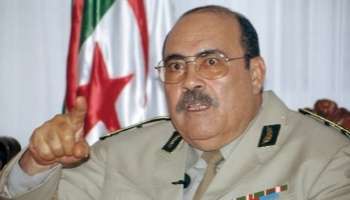
Smain Lamari (1941-2007)

Smain Lamari (1941-2007)

This Arab regime claims to be a one-party system but in reality a small Mafia-like cabal of military and intelligence officers have dispensed power for decades. Finally a democratic challenge erupts; people take to the streets demanding first reforms and, when the regime responds with pseudo-reforms and lethal violence, the fall of the government. Eventually the people fight back and an armed struggle breaks out. The regime builds its strategy around provocation, arresting and killing the liberals and democrats, infiltrating the insurgent groups and having the extremists attack the moderates, directing infiltrated groups to commit atrocities that discredit the whole insurgency, and using Iran’s international terrorist networks to lure Salafi-jihadists into the country who can help discredit the opposition’s cause in the eyes of the world. By presenting a binary picture—the regime or a terrorist takeover—the state tries to secure at least tacit support, if not direct intervention, from the West to defeat the insurgency.

No I’m not talking about Syria. This is Algeria. Continue reading

Russian Intelligence and the War In Syria

By Kyle Orton (@KyleWOrton) on October 21, 2014

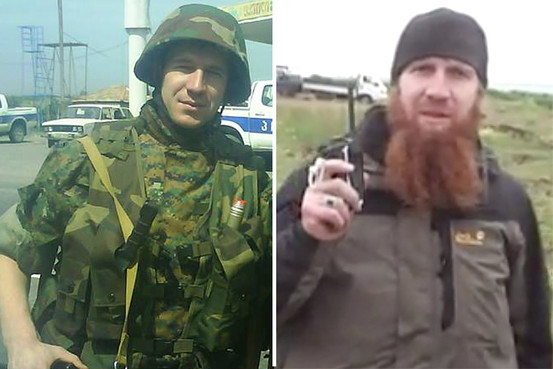
Abu Omar a-Shishani, while in Georgian military, now as I.S. leader in Syria/Iraq

Abu Omar a-Shishani, while in Georgian military, now as I.S. leader in Syria/Iraq

The Syrian rebellion, on Oct. 5, took over areas of Tel al-Hara, near Nawa, a major town twenty miles north of Deraa City, which is a strategic gateway to the road networks that keep the Assad regime alive in Deraa Province. The videos (1/2/3) showed FSA-branded rebels like Liwa al-Furqan and Jabhat Thuwar as-Suriya (the Syrian Revolutionaries’ Front) in control. Jabhat an-Nusra, the Syrian branch of al-Qaeda, had an important presence, but it was not dominant. So this seemed like good news on its own terms.

Two days later the plot thickened when a further video was uploaded to YouTube, showing the rebels touring a captured regime intelligence station in Tel al-Hara: Continue reading

Will The Alawis Break With Assad?

By Kyle Orton (@KyleWOrton) on October 12, 2014

A grisly brood: The Assad family

A grisly brood: The Assad family

Last Thursday, in Akrama, an Alawi section of Homs City, there was the most extraordinary scene: Alawite anti-Assad protests. A twin bombing at a local school—reported as a suicide bombing by the regime, though there is no evidence for this—had massacred fifty Alawi civilians, most of them pupils. Annexing the slogans of the revolution, the Alawis took to the streets to demand the removal of Homs Governor Talal al-Barazi. “The people want to topple the governor,” people shouted, a conscious echo of the “Arab Spring” chant, a-shab yurid izkat an-nizam (the people want to topple the regime). Continue reading

Provocation and the Islamic State: Why Assad Strengthened the Jihadists

By Kyle Orton (@KyleWOrton) on September 3, 2014

An opposition poster showing Assad and the Islamic State as two sides of the same coin

An opposition poster showing Assad and the Islamic State as two sides of the same coin

On August 25, Bashar al-Assad’s Foreign Minister, Walid al-Muallem, said: “Syria is ready for co-operation … to fight terrorism.” The week before Assad’s PR guru, Bouthaina Shaaban, told CNN that an “international coalition,” including Russia, China, America, and Europe, should intervene to defeat the “terrorists,” whom she says make up the rebellion in Syria.

Back in March I wrote a long post laying out the evidence that the Assad regime was deliberately empowering then-ISIS, now the Islamic State (IS), helping it destroy moderate rebels and even Salafist and Salafi-jihadist forces, with the intention of making-good on its propaganda line that the only opposition to the regime came from takfiris, which would frighten the population into taking shelter behind the State, seeing this madness as the only alternative, and would at the very least keep the West from intervening to support the uprising and might even draw the West in to help defeat the insurgency. These statements represent the culmination of that strategy. Continue reading

From Syria To Ukraine, Obama Has Conceded To Putin

By Kyle Orton (@KyleWOrton) on April 22, 2014

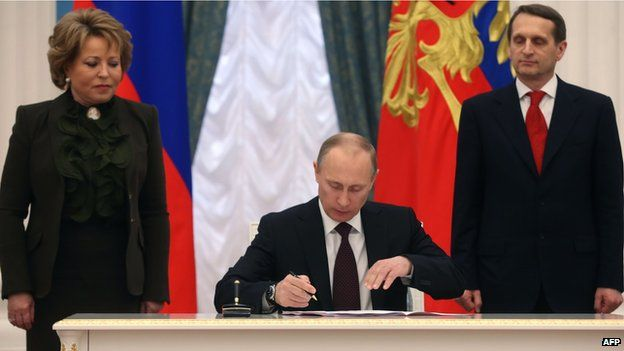
In the wake of Russia’s annexation of Crimea last month, The New York Times has reported on the tactics of subversion and provocation the Kremlin used to destabilise and ultimately conquer parts of Ukraine:

Continue reading

The Assad Regime’s Collusion With ISIS and al-Qaeda: Assessing The Evidence

By Kyle Orton (@KyleWOrton) on March 24, 2014

1

There has long been speculation in Syrian oppositionist circles that the regime was colluding with the Qaeda-type forces in the insurgency, to shore-up its own base by frightening the minorities and to ward off external help to the rebellion from the West. Continue reading