Tag Archives: Qatar

Coalition Policy Risks Replacing Islamic State With Other Islamists

By Kyle Orton (@KyleWOrton) on 7 July 2017
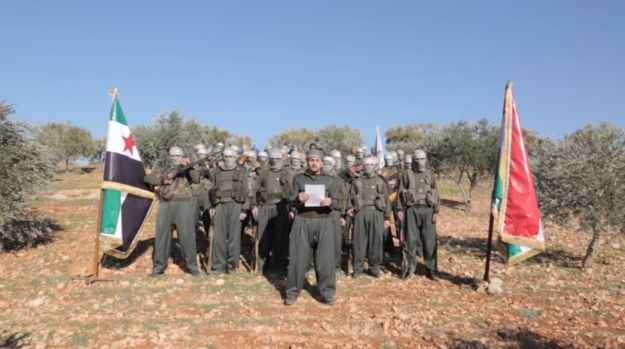
Announcement of the Kurdish Salvation Movement, 12 March 2017

As the operation proceeds to expel the Islamic State (IS) from its last major Syrian urban stronghold, Raqqa city, a statement was published on 5 July by a number of clerics, which points to the danger that the Coalition campaign, by partnering exclusively with Kurdish forces, is preparing conditions that will allow other Islamists to fill the vacuum after IS loses overt control of eastern Syria.
Continue reading
Al-Qaeda-Linked Jihadi in Syria Comments on the Gulf Crisis

By Kyle Orton (@KyleWOrton) on 6 June 2017

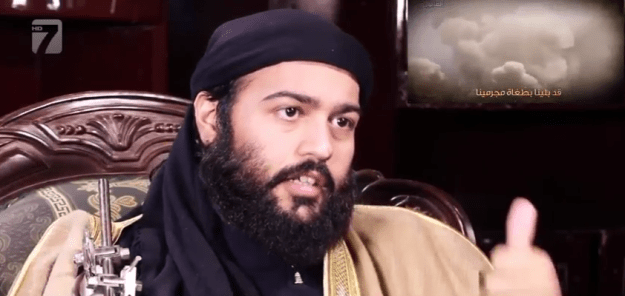
Abdallah al-Muhaysini

A major diplomatic crisis has erupted between the Gulf states, pitting Saudi Arabia, Bahrain, and the United Arab Emirates against Qatar because of what these states claim is Qatar’s destabilizing behaviour.[1] On 5 June, Abdallah al-Muhaysini, identified last year by the U.S. government as a senior member of al-Qaeda in Syria, put out a message on Telegram effectively taking Qatar’s side, arguing that the campaign against Qatar was an American-orchestrated conspiracy against a government that had supported Muslims, i.e. Islamists.[2] The message is republished below with some syntactical and spelling edits. Continue reading

State Department Designates Two Canadian Jihadists in Syria

By Kyle Orton (@KyleWOrton) on 14 April 2017

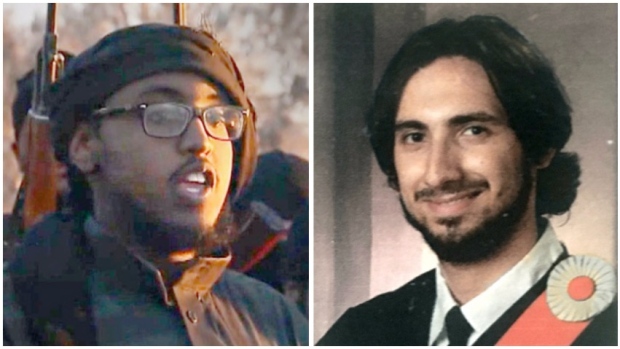
Farah Mohamed Shirdon, Tarek Sakr (image source)

The U.S. State Department added two Canadians to the list of Specially Designated Global Terrorists (SDGT) on 13 April. One of them, Tarek Sakr, of Syrian descent, is associated with Jabhat al-Nusra, al-Qaeda’s Syrian branch, which has since been through two rebrands to Jabhat Fatah al-Sham (JFS) and currently Hay’at Tahrir al-Sham (HTS). The other, Farah Mohamed Shirdon, of Somali background, is a member of the Islamic State (IS). Continue reading

The End of the Beginning for the Islamic State in Libya

By Kyle Orton (@KyleWOrton) on December 7, 2016

The “capital” of the Islamic State (IS) in Libya, Sirte, has fallen to pro-government militias. “Our forces have total control of Sirte,” claimed one spokesman on Monday. “Islamic State’s rule over Sirte is now over,” said another. That was slightly premature, though it does appear that the city fell entirely around mid-afternoon yesterday. Regardless, it is clear that IS’s hold on Sirte is soon to be at an end. Positive as this development is, it is what happens after IS’s grip on urban areas is broken that will determine the durability of this victory. IS will remain a disruptive force for some time no matter what happens next, and for that reason it is important to continue military operations in pursuit of IS in its rural sanctuaries. But IS is a symptom of Libya’s political problems, not their cause. Without a government that solves some of those original problems, and has the legitimacy and capacity to keep IS out, the group will rise again. Continue reading

Is Turkey Responsible for the Islamic State?

By Kyle Orton (@KyleWOrton) on December 20, 2015

1

Turkey concluded its biggest investigation to date into Islamic State (IS) operatives on its territory on Friday, and blacklisted sixty-seven people. This provides a good moment to review what Turkey’s role has been in the rise of IS, especially amid the escalating accusations from Russia that Turkey is significantly responsible for financing IS. The reality is that while Turkish policy has, by commission and omission, made IS stronger than it would otherwise have been, so has Russia’s policy—and Russia’s policy was far more cynical than Turkey’s, deliberately intended empower extremists to discredit the rebellion against Bashar al-Assad. Turkey’s focus on bringing down Assad and Ankara’s fear of Kurdish autonomy led it into these policies and now—having seemingly found the will to act to uproot IS’s infrastructure on Turkish territory—there is the problem of actually doing so, when IS can (and has) struck inside Turkey. The concerns about these external funding mechanisms for IS, while doubtless important, obscure the larger problem: IS’s revenue is overwhelmingly drawn from the areas it controls and only removing those areas of control can deny IS its funds. Continue reading

In View of Vienna

By Kyle Orton (@KyleWOrton) on December 15, 2015

Published at NOW Lebanon.

1

So the Syrian opposition can unite. Foreign powers have been the major cause of rebel discord. Previous rebel unity initiatives like the Joint Command were pulled apart by the competition between the insurgency’s sponsors—Saudi Arabia and Qatar primarily—and the last rebel umbrella group, the Supreme Military Council, which was identified with Western power, collapsed after President Barack Obama decided not to punish Bashar al-Assad for the massive chemical weapons attack on the population of Ghouta. But under Saudi auspices, an opposition “team” was announced on December 10 after a three-day conference in Riyadh, which includes the political and military opposition and groups with varying ideologies and patrons. This is an achievement. Unfortunately, this team’s task is an impossible one: intended to partake in the Vienna process begun in October, ostensibly to negotiate an end to the war, Syria is not, at present, in a condition where a political agreement can be made and implemented, not least because the Assad regime and its supporters in Iran and Russia have doubled down, and the opposition continues to receive insufficient support to pressure the regime enough to force an agreement. Continue reading

As Syria’s Opposition Tries To Unite, Prospects For Peace Recede

By Kyle Orton (@KyleWOrton) on December 9, 2015

A version of this article was published at Middle East Eye.

A rebel fighter from the Free Syrian Army's

A rebel fighter from the Free Syrian Army’s “First Battalion” takes part in military training on May 4, 2015, in rebel-held northern Rif Aleppo. (AFP, Baraa al-Halabi)

The Syrian opposition is meeting in Saudi Arabia between December 8 and 10 in an attempt to create a unified structure that can credibly sit across the table from the Bashar al-Assad regime in the internationally-organised peace talks in Vienna, and make a binding commitment on the path forward for Syria. Continue reading

The Islamic State’s Strategy Is Working, Its Enemies Are Failing

By Kyle Orton (@KyleWOrton) on May 23, 2015

1

To hear President Obama tell it, his announced program to defeat the Islamic State (ISIS), which began with airstrikes into Iraq last August that were extended into Syria in September, is working, albeit with some tactical setbacks. The implication is that the setbacks of the U.S.-led anti-ISIS campaign are not strategic.

As J.M. Berger phrased it:

In the Washington vernacular, the act of Being Strategic implies a near mystical quality of superior thinking possessed by some, and clearly lacking amongst the vulgarians of the world—heedless brutes such as ISIL. Tactics are short-term ploys, easy to dismiss. Strategy is for winners.

Unfortunately, this soothing view is almost exactly wrong: it is the United States that is relying on various short-term methods—commando raids into the Syrian desert, for example—while ISIS has a long-term goal fixed in mind and is working assiduously to achieve it. The U.S.-led Coalition is losing, in short, and ISIS is winning. Continue reading

The Gulf States Push Back Against Obama’s Iran Policy

By Kyle Orton (@KyleWOrton) on May 12, 2015

1

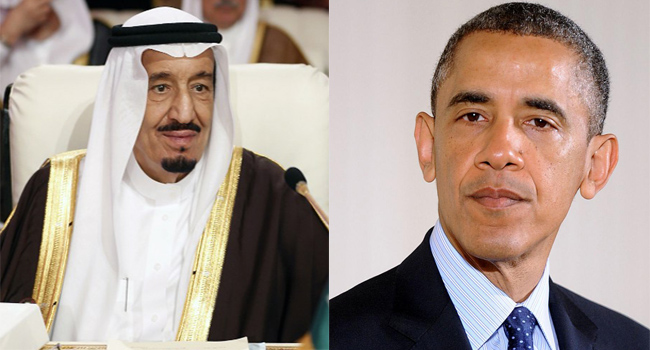
President Obama invited the leaders of the Gulf Cooperation Council (GCC) to a meeting at Camp David on Thursday to clear the air as the President looks to finalize his nuclear deal with Iran. But on Sunday, Saudi King Salman said he was not attending, and soon after the Bahraini monarch followed. The only Gulf leaders in attendance will be the Emirs of Qatar and Kuwait. Since leaders do not just have other things to do when they are scheduled for a private meeting with the President of the United States, this can be taken as a pointed snub to President Obama, and no amount of administration spin about Salman’s absence having nothing to do with political substance will change that. Continue reading

Turkey and Saudi Arabia Move Against Assad

By Kyle Orton (@KyleWOrton) on May 5, 2015

1

Zahran Alloush, Abu Issa, Hashem al-Sheikh

An effort is underway, led by Saudi Arabia and Turkey, mediated by Qatar, to unify the largest Syrian Islamist rebel brigades. With these regional powers now seemingly reading from the same script after years of internecine competition that has fractured the Syrian rebellion, there is also talk of a direct Saudi-Turkish intervention in Syria to overthrow Bashar al-Assad. While increased support to the Syrian insurgency from the Gulf and Turkey is already arriving, a direct intervention seems unlikely, though not, in the current context after the Saudi-led coalition went it alone in Yemen, impossible.  Continue reading