Tag Archives: Russia

A Counterterrorism Policy in Syria That Helps Terrorists

Originally published at The Henry Jackson Society

By Kyle Orton (@KyleWOrton) on January 5, 2017

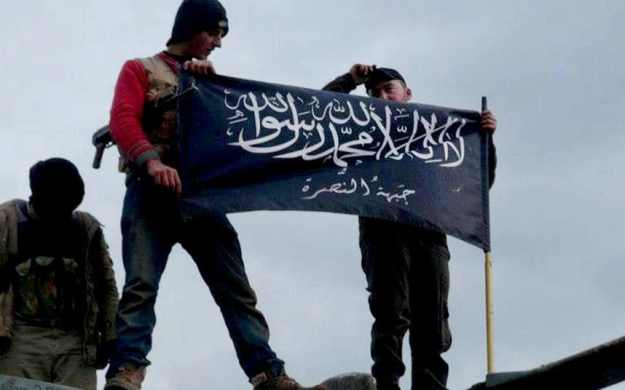
Jabhat al-Nusra jihadists wave their flag in Syria (Associated Press picture, source)

In the last week, the American-led Operation INHERENT RESOLVE, whose primary mission is to “degrade and ultimately destroy” the Islamic State (IS), has apparently conducted two airstrikes against senior members of Jabhat Fatah al-Sham (JFS), once known as Jabhat al-Nusra, al-Qaeda’s rebranded presence in Syria. In late 2016, the U.S. began an intensified targeting campaign against al-Qaeda and associated individuals; this appears to be a continuation of that policy, which provides some guidance about Western policy on Syria more broadly. Continue reading

Insurgent Leader Explains Why Aleppo Fell to Assad

By Kyle Orton (@KyleWOrton) on December 31, 2016

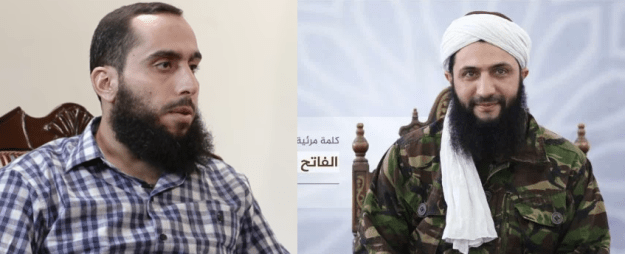
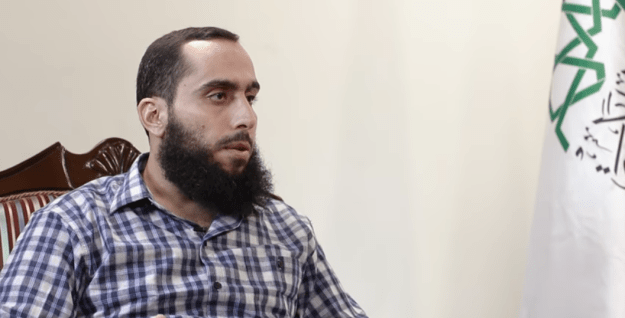
Abu al-Abed Ashidaa

Abu al-Abed Ashidaa

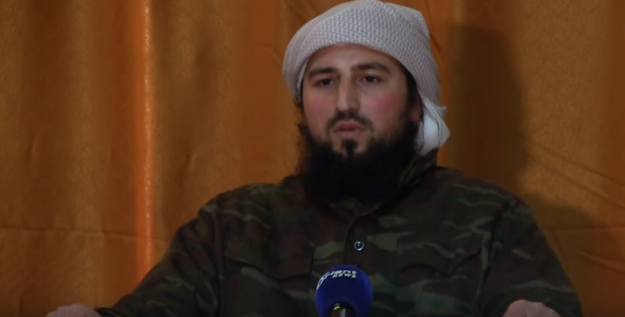
Abu al-Abed Ashidaa was, on 1 December 2016, appointed to lead all insurgent forces, under the banner of al-Jaysh al-Halab (The Army of Aleppo), in the besieged enclave of eastern Aleppo City. The city’s defences collapsed to the coalition of forces—namely Russia and Iran—supporting the regime of Bashar al-Assad on 12 December, and on 22 December the deportation of 40,000 people from the enclave to Idlib was completed. On 29 December, Abu al-Abed gave a speech explaining the reasons as he saw them for the fall of Aleppo City. Today, insurgent channels in Syria circulated an English summary, which is reproduced below with some editions in transliterations and some interesting sections highlighted in bold. Continue reading

President Obama Defends His Syria Policy to the Last

Originally published at The Henry Jackson Society

By Kyle Orton (@KyleWOrton) on December 17, 2016

At a rally in Pennsylvania as part of his “Thank You Tour” on Thursday, President-elect Donald Trump said:

We’ll build safe zones in Syria. When I look at what’s going on in Syria it’s so sad. It’s so sad, and we’ve got to help people. And we have the Gulf states; they have nothing but money. We don’t have money. We owe twenty trillion dollars. I will get the Gulf states to give us lots of money, and we’ll build and help build safe zones in Syria so people can have a chance.

Trump’s previous statements on Syria have actually demonstrated some consistency, and Trump has expressed support for safe zones before.

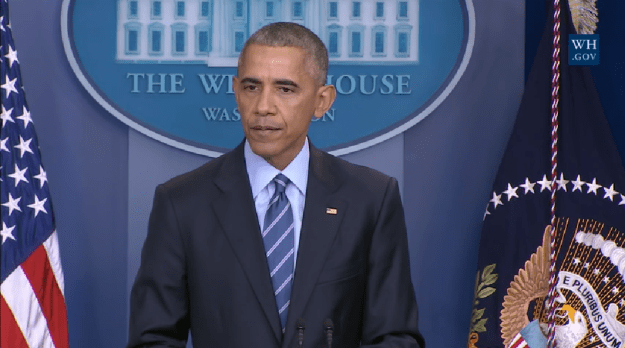
Taking Trump’s statement as a jumping-off point, the next day, at this final press conference of 2016, President Barack Obama was asked about the idea of safe zones in Syria and if he felt responsible for the horrors now unfolding in Aleppo. Obama responded: Continue reading

Syria Is Only Going to Get Worse After the Fall of Aleppo

Published at The New Arab

By Kyle Orton (@KyleWOrton) on December 14, 2016

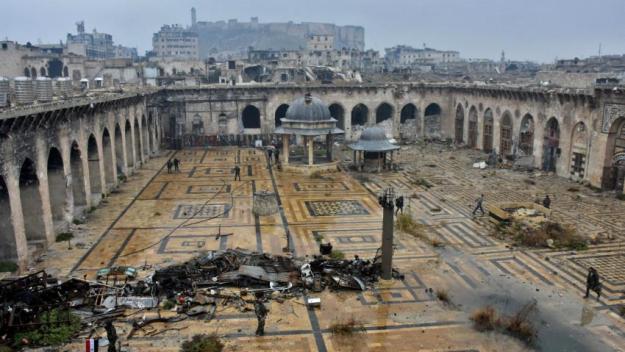
Syrian pro-government forces recapture the old city of Aleppo, December 13, 2016 [Getty]

In May 2016, the Roman Theatre in Palmyra was the site of a Russian orchestra performance, led by Valery Gergiev, a supporter of Russian ruler Vladimir Putin. The event was broadcast widely on RT (formerly Russia Today), the state-run English-language propaganda channel, and images and clips of the event were disseminated worldwide. The concert crowned Putin’s eight-month intervention in Syria, reinforcing the Kremlin’s messaging: Moscow and its blood-drenched client, Bashar al-Assad, were staffing the front line for civilisation against the barbarous hordes of the Islamic State group—and they were winning. What a difference seven months has made. Continue reading

Assad and Russia Losing Palmyra is No Surprise: They Cannot Defeat Jihadism in Syria

Published at The International Business Times

By Kyle Orton (@KyleWOrton) on December 12, 2016

Syrian regime army soldiers stands on the ruins of the Temple of Bel in Palmyra, 1 April 2016 (REUTERS/Omar Sanadiki)

The Islamic State (IS) is supposed to be on its way to defeat. IS is under assault in Mosul and the operation to evict it from Raqqa began a month ago. Just this morning, Turkish-backed rebel forces in Syria have reportedly pierced IS’s defences in al-Bab, IS’s most important city outside of its twin capitals. But on Sunday, after a four-day offensive, IS seized Palmyra. How to explain this? Continue reading

The End of the Beginning for the Islamic State in Libya

By Kyle Orton (@KyleWOrton) on December 7, 2016

The “capital” of the Islamic State (IS) in Libya, Sirte, has fallen to pro-government militias. “Our forces have total control of Sirte,” claimed one spokesman on Monday. “Islamic State’s rule over Sirte is now over,” said another. That was slightly premature, though it does appear that the city fell entirely around mid-afternoon yesterday. Regardless, it is clear that IS’s hold on Sirte is soon to be at an end. Positive as this development is, it is what happens after IS’s grip on urban areas is broken that will determine the durability of this victory. IS will remain a disruptive force for some time no matter what happens next, and for that reason it is important to continue military operations in pursuit of IS in its rural sanctuaries. But IS is a symptom of Libya’s political problems, not their cause. Without a government that solves some of those original problems, and has the legitimacy and capacity to keep IS out, the group will rise again. Continue reading

Defeating the Islamic State for Good

Originally published at The Henry Jackson Society

By Kyle Orton (@KyleWOrton) on December 2, 2016

Islamic State fortifications in Deir Ezzor (from an IS video, 11 July 2016)

The Islamic State (IS) is nominally under attack now in its twin capitals, Mosul in Iraq and Raqqa in Syria. This is necessary task, of course, but, as I’ve written repeatedly over the last few months, clearing IS from its urban centres is not sufficient. IS lost its overt urban holdings once before and nonetheless rebuilt in the deserts between 2008 and 2013, rising again to seize increasingly-large tracts of territory that were eventually declared a caliphate. IS was able to do this because of the success of its long-term method of war-making, and political changes in Baghdad—toward greater sectarianism and authoritarianism—that gave it more space to manoeuvre. The flaws in the strategy and partners the U.S.-led international Coalition have chosen to eliminate IS are creating a situation in which what will be called “victory” is really the resetting of the cycle. More evidence of this has recently come to the fore. Continue reading

The “Syrian Kurds” Helped Assad Take Aleppo City

By Kyle Orton (@KyleWOrton) on November 30, 2016

YPG flags flying with the Assad regime’s over Bustan al-Basha, Aleppo city, 28 November 2016

The Syrian Observatory for Human Rights (SOHR) reported on 28 November 2016 about the assistance provided by the Kurdistan Workers’ Party (PKK)—which operates in Syria under the banners of the People’s Protection Units (YPG) and Syrian Democratic Forces (SDF)—to the forces fighting in the name of Bashar al-Assad’s regime, led by Iran on the ground and supported by Russian airstrikes, to crush the Syrian rebellion in Aleppo city: Continue reading

Film Review: Snowden (2016)

By Kyle Orton (@KyleWOrton) on November 29, 2016

1

Snowden never, ever recovers from its premise: that Edward Snowden, a super-capable, pure-hearted all-American, found terrible government crimes against the American population while working at the National Security Agency, and was moved to disclose them to the world after being stymied in official channels.

Literally none of that is true. The Snowden revelations found mistakes that were generally cleared up by an efficient and functional bureaucratic oversight mechanism. Snowden did not try to go official channels in the way he described, and the bulk of what Snowden revealed was nothing to do with the privacy of Americans but was related to foreign intelligence, where the legal and practical situation is that everyone hoovers up as much data as they can. The capabilities of the Snowden presented here, personal and professional—to say nothing of Joseph Gordon-Levitt’s Snowden’s motives—would not withstand scrutiny for a single second against the actual historical record. This could be said fairly generally of the whole film. Continue reading

What To Expect After the Fall of Aleppo

Published at TRT World

By Kyle Orton (@KyleWOrton) on November 29, 2016

The pro-Assad coalition in Syria has conquered more than a third of the rebel-held enclave in eastern Aleppo City, the last urban stronghold of the mainstream armed opposition. Without significant external assistance, it is difficult to imagine the rebels can hold off, and in the coming days or weeks will likely be forced out entirely. This will not end the war, nor will it suppress the opposition, but it will end the rebellion as a strategic threat to the regime of Bashar al-Assad and push the insurgency into a greater reliance on extremists, creating more space for international terrorists and protracting the war. Continue reading