Tag Archives: Russia

Russian Influence on the Nazis

By Kyle Orton (@KyleWOrton) on 10 December 2021

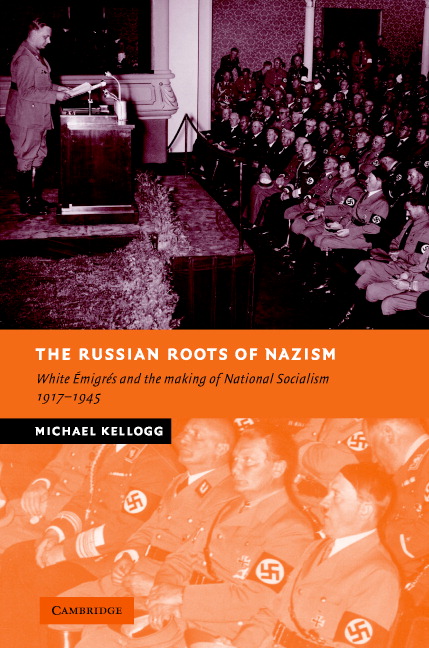
Michael Kellogg’s 2005 book, The Russian Roots of Nazism, argues that Russian “White émigrés” exerted financial, political-military, and ideological influences that “contributed extensively to the making of German National Socialism”. As such, argues Kellogg, Nazism “did not develop merely as a peculiarly German phenomenon”, but within an “international radical right milieu”. The book is interesting but deeply flawed, overstating its case by failing to set the facts it gathers in a proper context and for similar reasons misunderstanding where some of the Russian elements under discussion fit within the politics of the revolutionary upheaval after 1917, both within the borders of Russia and in exile in Europe. Continue reading

Unravelling the “Kornilov Affair”: The Last Stop Before the Bolshevik Takeover of Russia

By Kyle Orton (@KyleWOrton) on 8 December 2021

General Lavr Kornilov, 27 August 1917

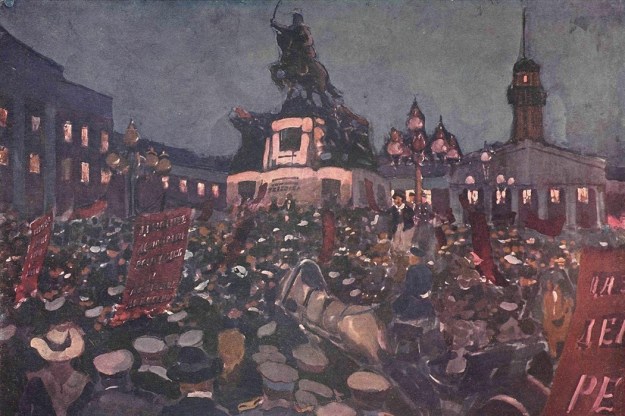
The final key event on the road to the Bolshevik takeover of Russia in November 1917 was the “Kornilov Affair” that took place about two months earlier. Alexander Kerensky had become Prime Minister of the Provisional Government in July 1917 and around the same time General Lavr Kornilov had become Commander-in-Chief. A lot of accounts portray the “Kornilov Affair” as a “reactionary” coup attempt by Kornilov against Kerensky. The reality is very nearly the exact opposite. As historian Robert Pipes summarises: “All the available evidence, rather, points to a ‘Kerensky plot’ engineered to discredit the general as the ringleader of an imaginary but widely anticipated counterrevolution, the suppression of which would elevate the Prime Minister to a position of unrivaled popularity and power, enabling him to meet the growing threat from the Bolsheviks.”[1] Continue reading

The Taliban Supreme Leader Emerges—Maybe

By Kyle Orton (@KyleWOrton) on 1 November 2021

Hibatullah Akhundzada

A ten-minute audio tape attributed to the Taliban’s Supreme Leader Hibatullah Akhundzada appeared on 30 October, the first such communication since the jihadist takeover of Afghanistan in August. Hailed as Akhundzada’s “first public appearance” or his decision to step into “the limelight”, the reality is more complicated. Continue reading

India’s Options in Afghanistan

By Kyle Orton (@KyleWOrton) on 6 October 2021

Army Jawans hold the National Flag near the snow-covered border on the 71st Republic Day (ANI Photo)

The U.S. Deputy Secretary of State Wendy Sherman arrived in India today for a three-day visit. Afghanistan will be high on the agenda. Continue reading

Tajikistan and the Afghan Resistance

By Kyle Orton (@KyleWOrton) on 1 October 2021

Since the takeover of Afghanistan by a coalition of jihadists controlled by Pakistan, the one neighbouring state to vocally object is Tajikistan, which has extended support to the remaining anti-Taliban resistance. This is a reprise of Tajikistan’s role in the 1990s, when it provided a rear base to the United Islamic Front (UIF) or “Northern Alliance”, and was the gateway for the states supporting the UIF, notably Pakistan’s great rival India. Continue reading

The Islamic State Benefits From the Taliban Takeover of Afghanistan

By Kyle Orton (@KyleWOrton) on 1 September 2021

In his speech last night announcing the end of the American presence in Afghanistan and what happens next, Secretary of State Blinken said: “The Taliban seeks international legitimacy and support”, and “the Taliban can do that by meeting commitments and obligations”, which include “counter-terrorism”.

To most people it will seem strange that the Taliban could be regarded as a counter-terrorism partner, and it is. Despite the U.S. never formally listing the Taliban as a Foreign Terrorist Organization (FTO), the Taliban is fully integrated in a jihadist network under the control of Pakistan’s Inter-Services Intelligence (ISI) that includes Al-Qaeda. Continue reading

A Historical Look at the Taliban’s Capabilities and Popularity

By Oved Lobel on 1 September 2021

Ahmad Shah Massoud meeting with his fighters in Afghanistan | IMAGE CREDIT: Sandy Gall

Below is a translation of a report by the Russian outlet Kommersant on 20 June 1997 by Oved Lobel, an analyst focused on inter alia Russia’s role in the Islamic world and who recently wrote a report on the history of Afghanistan’s war dating back to the early 1970s. The article is interesting in many respects, perhaps most of all in showing the very limited military capacity of the Taliban, intimately linked to its overwhelming unpopularity among Afghans. The article discusses some of the draconian practices of the Taliban that made it so despised, as well as its governing structure, and focuses on the situation in the summer of 1997, when the Northern Alliance broke the Taliban’s hold on Pul-i-Khumri and halted their offensive on Mazar-i-Sharif. As we now know with hindsight, Pakistan’s Inter-Services Intelligence (ISI) and Army would rescue the Taliban from this predicament. The Pakistani role in underwriting the Taliban’s military advances is covered in the article, and this pattern of Taliban retreats that forced an escalation of Pakistani intervention was a repetitive one during the late 1990s. Ultimately, indeed, as covered in Oved’s report, the Taliban enterprise would basically crumble in 2000 and the Pakistan Army had to overtly invade to allow the jihadists to conquer Taloqan. This history remains relevant at the present. As Afghan President Ashraf Ghani told U.S. President Joe Biden three weeks before his government was overwhelmed by the Taliban on 15 August: “We are facing a full-scale invasion, composed of Taliban [with] full Pakistani planning and logistical support”. Continue reading

Joe Biden Chose Disaster in Afghanistan

By Kyle Orton (@KyleWOrton) on 16 August 2021

The Taliban took over Afghanistan’s capital on Sunday after a nine-day offensive captured one provincial capital after another. The United States had already decided to abandon the country, and without the US the other NATO states had no choice but to leave. It was quite clear that the Afghan state would crumble in the absence of a Western presence, though it seems President Joe Biden thought he would have a longer “decent interval” before the Saigon evacuation scenes and the massacres began. Continue reading

The Trouble With “Ending Forever Wars”

By Kyle Orton (@KyleWOrton) on 12 August 2021

In early July, President Joe Biden confirmed his intention to withdraw all American troops from Afghanistan by September 2021. Biden cited a February 2020 U.S. “agreement” with the Taliban that he had “inherited” from the Trump administration. In truth, President Donald Trump had made no agreement. He had already begun pulling troops out by October 2019 and signed a fig leaf to cover his unconditional withdrawal.

Biden reassessed other Trump policies and could have reassessed this one, not least since the Taliban were in violation even of their vague paper promises — most notably on their commitment to deny space to al Qaeda and negotiate peace in good faith. The truth is that Biden is ideologically committed, as Barack Obama and Trump were, to ending American involvement in “forever wars.” Regardless, this does not mean those wars end or the threats that drew the United States in actually go away. Continue reading

Spywar and Strategy: The Israel-Iran Contest in the Middle East

By Kyle Orton (@KyleWOrton) on 29 June 2021

Members of the Ezzedine al-Qassam Brigades, the military wing of Hamas, at a memorial in Gaza, 31 January 2017. Photo by Abed Rahim Khatib, Flash90.

The May 2021 round of fighting in Gaza brought with it the upending of the unspoken understanding between Israel and Hamas and a level of intercommunal violence within Israel that has not been seen in quite some time. The scale of the rocket attacks on the Jewish state must also be counted among the unusual elements of this latest flare-up, with Iran clearly identifiable as the enabling state behind Hamas and Palestinian Islamic Jihad (PIJ), the two primary factions behind these attacks. Continue reading