Tag Archives: Russia

Islamic State Describes Running an Insurgency From the Syrian Desert

By Kyle Orton (@KyleWOrton) on 1 September 2022

Al-Naba 349, p. 8

Continue reading

United Nations Report Finds Al-Qaeda and Islamic State Reduced, But Reviving

By Kyle Orton (@KyleWOrton) on 30 July 2022

Islamic State in Palmyra, December 2016

Continue reading

The Islamic State is Taking Advantage of the Mess in Northern Syria

By Kyle Orton (@KyleWOrton) on 22 July 2022

The United States announced on 12 July that it had killed the Islamic State’s (ISIS) governor of Syria in a drone strike in the village of Galtan in the Jinderes district of the north-western Syrian province of Efrin on the border with Turkey. The U.S. Central Command (CENTCOM) statement identified the slain man as “Maher al-Agal”, though a more precise transliteration is Maher al-Aqal (ماهر العقال). Riding on the motorcycle alongside Al-Aqal when he was killed was a “senior ISIS official” with whom he was “closely associated”. This ISIS official was “seriously injured during the strike”, CENTCOM notes, adding that the Jinderes strike caused no civilian casualties. Continue reading

Islamic State Spokesman Announces a New Global Campaign

By Kyle Orton (@KyleWOrton) on 2 May 2022

Continue reading

Islamic State Won’t Take Sides With Russia or Ukraine, Hopes For More ‘Crusader-Crusader Wars’

By Kyle Orton (@KyleWOrton) on 22 February 2022

Al-Naba 328, p. 3

Continue reading

The Fall of Afghanistan and Western Foreign Fighters

By Kyle Orton (@KyleWOrton) on 22 February 2022

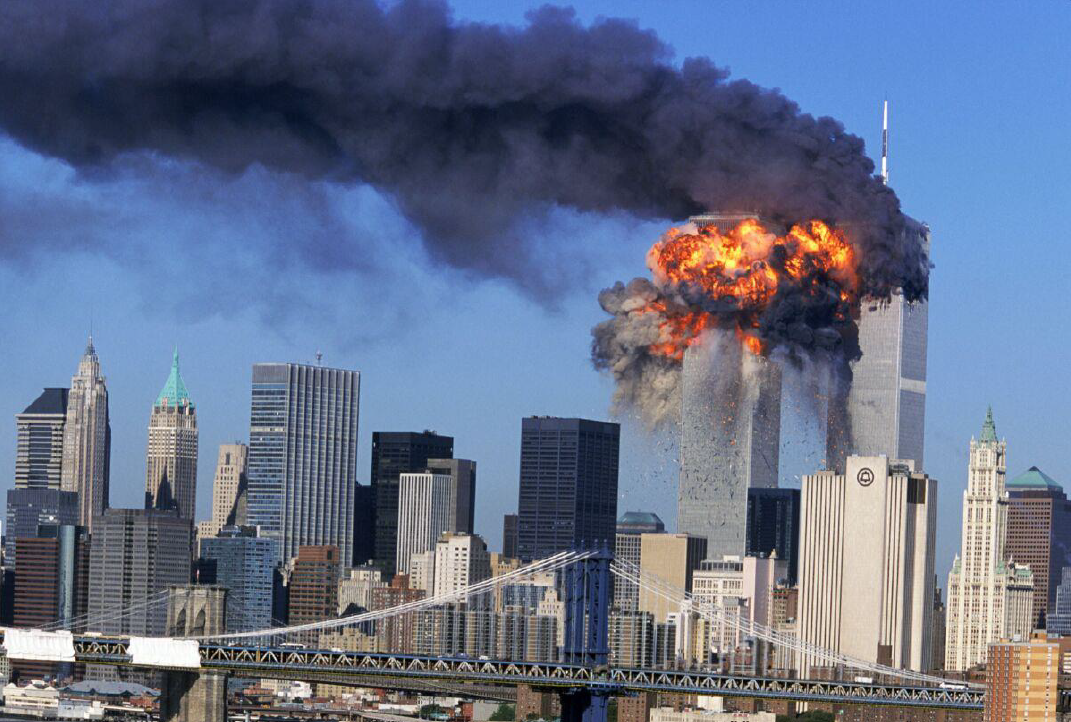
Kabul, the capital of Afghanistan, fell to jihadists on 15 August 2021, and this has emboldened the jihadist movement across the world, providing it with a morale boost and a model, as well as renewing the terrorist safe haven that incubated 9/11. Continue reading

The Last Tsar and the Duty of Monarchy

By Kyle Orton (@KyleWOrton) on 30 December 2021

Grand Duke Alexander Mikhailovich in exile in France, February 1929

Grand Duke Alexander Mikhailovich (1866-1933), the brother-in-law of Tsar Nicholas II (r. 1894-1917), gives an interesting anecdote in the second volume of his memoirs, Always a Grand Duke, published in the year he died, 1933, showing how the last Russian Emperor conceived of the duties of his office. Continue reading

The February Revolution: The End of the Russian Monarchy

By Kyle Orton (@KyleWOrton) on 19 December 2021

Skobelev Square during the February Revolution, painting by Aleksandr Gerasimov, 1917

The “February Revolution” is so-called because Russia at the time was on the Julian (Old Style (O.S.)) calendar. By the Gregorian (New Style (N.S.)) calendar, which Russia adopted in February 1918, these events take place in March 1917. And momentous events they were, leading to the abdication of the last Tsar, the end of a monarchy and an entire system of power and authority that dated back more than 350 years. For eight months in 1917, Russia struggled to extend the constitutionalist reforms that had begun under the Tsardom within a more liberal framework. The liberals never did gain the upper hand over the radicals, not even after the September 1917 de facto return to autocracy. In November 1917, a coup by the most extreme Leftist faction, the Bolsheviks, terminated the experiment, burying for seven decades even the aspirations in Russia for liberalism and democracy. Continue reading

Russia and the Outbreak of the Great War

By Kyle Orton (@KyleWOrton) on 15 December 2021

Tsar Nicholas II and Kaiser Wilhelm II aboard a ship in the Gulf of Finland, 1905

In the early historiography of the Great War, it was accepted that Germany was chiefly responsible, with debates on the margins about the degree of intentionality and premeditation. Of late, however, “It has become fashionable to spread the guilt of the First World War liberally around Europe”, as one prominent historian noted.[1] Some revisionists go even further and try to find another state that is not only equally as culpable as Germany but more so. In this post, I want to, without in any way pretending to be comprehensive, deal with the argument that blames Russia for the 1914-18 War. Continue reading

Rasputin and the Empress

By Kyle Orton (@KyleWOrton) on 13 December 2021

Grigori Rasputin

Grigori Rasputin, a Siberian peasant holy man, was a presence at the Russian Court between 1908 and his murder in 1916. Even so, Rasputin would only have been one figure among many and not be so notable in history, except for the fact that he gained significant political influence in his last couple of years due to his friendship with the Tsar’s wife. The degree of influence Rasputin exerted and the stories of his debauched behaviour have often been wildly exaggerated—at the time and since. But the stories did have a basis in fact—the Tsarina had fused together her personal forays in mysticism with her political role—and the stories themselves, lurid and defamatory as many of them were, had a concrete effect in damaging the monarchy as Revolution loomed. Continue reading