Tag Archives: Salafi-jihadists

Islamic State: The Afterlife of Saddam Hussein’s Regime

By Kyle Orton (@KyleWOrton) on July 4, 2015

Published at Baghdad Invest

1

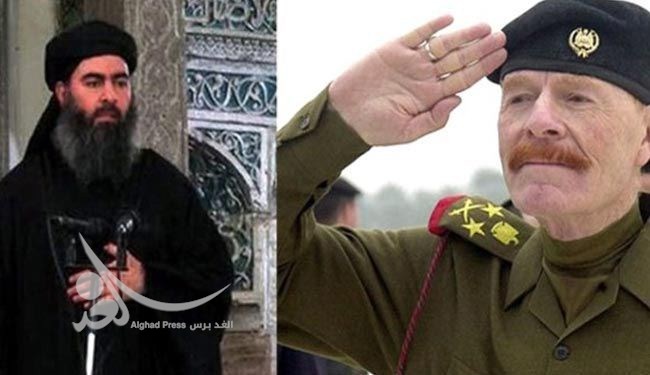
Izzat Ibrahim ad-Douri, Saddam Hussein’s long-time deputy, was reported dead (again) on April 17. An audio message on May 15 disproved this. Douri was the implementer of the Saddam regime’s Islamization program in its later years and a key architect of the insurgency after the regime was overthrown, which helped pave the way for the Islamic State (ISIS). ISIS has now turned on Douri and his associates, but ISIS could not have risen to its current stature without Douri’s help. Continue reading

A Postscript on the Relationship Between Saddam Hussein and Al-Qaeda

By Kyle Orton (@KyleWOrton) on June 26, 2015

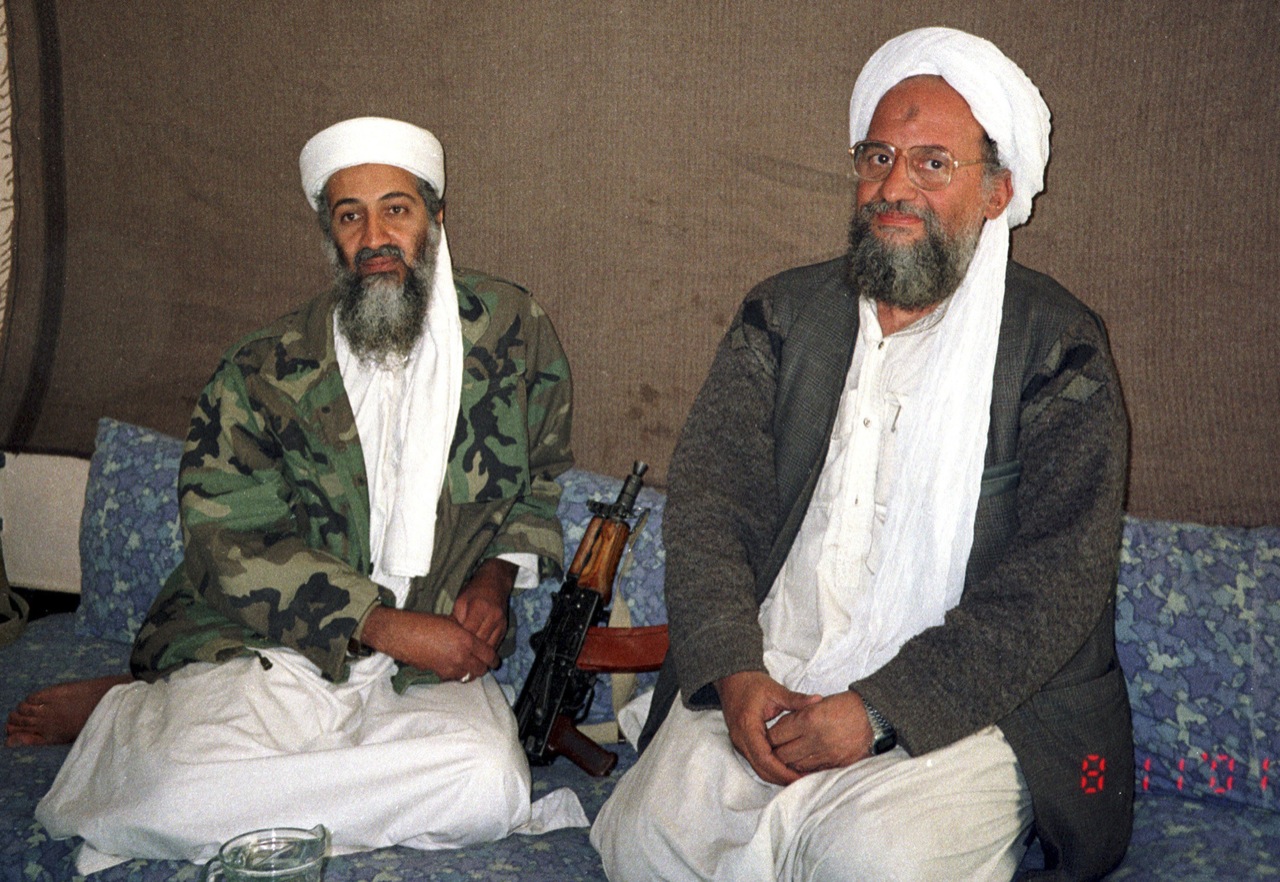
Osama bin Laden (L) and Ayman az-Zawahiri (R)

Osama bin Laden (L) and Ayman az-Zawahiri (R)

The myth that Saddam Hussein’s regime had nothing to do with al-Qaeda is persistent. Stephen Hayes’ book, The Connection, ably debunks this notion. There are some additional details that one can add to this. Continue reading

Does Iran Support The Islamic State?

By Kyle Orton (@KyleWOrton) on May 26, 2015

Qassem Suleimani, Iran's spymaster, believed in some MidEast conspiracy theories to control ISIS

Qassem Suleimani, Iran’s spymaster, believed in some Mid-East conspiracy theories to control ISIS

In 2010, Farzad Farhangian, an Iranian diplomat based in Belgium, defected to Norway. Farhangian has now emerged with the extraordinary accusation that the Islamic Republic of Iran is controlling the Islamic State (ISIS) and using it as part of Tehran’s war against the Gulf States, especially Saudi Arabia. Farhangian’s accusations are lurid and (literally) incredible, but the question of Iran’s role in ISIS’ creation and growth, and Iran’s manipulation of ISIS to further its own ends, is one well worth asking. Continue reading

Book Review: The Consequences of Syria (2014) by Lee Smith

By Kyle Orton (@KyleWOrton) on May 9, 2015

1

Lee Smith’s The Consequences of Syria is part of the Hoover Institution’s “The Great Unravelling” series, which also included The Struggle for Mastery in the Fertile Crescent by the late Fouad Ajami (which I reviewed here.) You can purchase a copy here.

Published in June 2014, Smith narrates Syria’s terrible war to the opening months of 2014, the innumerable excuses made by the Obama administration for letting it run, and the theoretical framework behind the administration’s decision. The book is relatively short and the prose is direct; it takes very complex discussions of ideas and puts them in easily-digestible terms—all while keeping the reader’s eye on the practical implications.

Smith starts with the 2003 invasion of Iraq, the central event in President Obama’s thinking about the Middle East. Continue reading

CAGE Still Has Questions To Answer About Mohammed Emwazi (“Jihadi John”)

By Kyle Orton (@KyleWOrton) on April 3, 2015
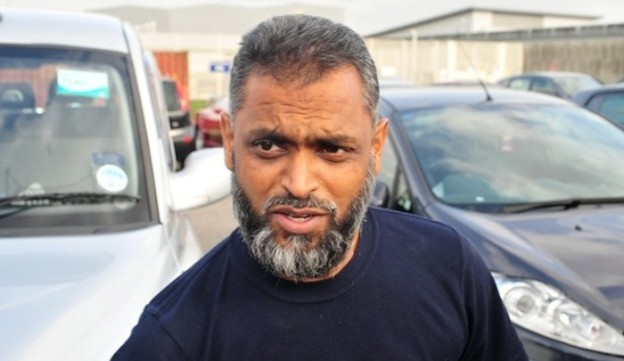
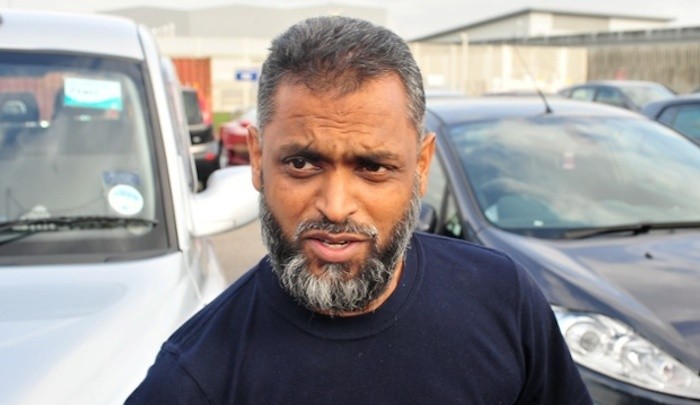
Moazzam Begg

Moazzam Begg

The outreach director of CAGE (formerly Cageprisoners), Moazzam Begg, went to Syria between October 2012 and April 2013. Begg was arrested in Britain on Feb. 25, 2014, on terrorism-related charges because while in Syria, Begg attended a terrorist training camp. Begg was held in Belmarsh until Oct. 1, 2014. Begg had been due to begin trial on Oct. 5, 2014, but that trial was abandoned because of new evidence that meant there was “no longer a realistic prospect of gaining a conviction,” and Begg was released.

Begg is on record as having said that he “help[ed] to run a training camp in the countryside near Idlib … where opponents of the [Assad] regime could undergo physical exercise and acquire the rudiments of first aid and military training, with fake wooden guns.” There is certainly an ambiguity here: the only real defensive policy for Syria’s civilians is one that overthrows Assad, so Begg’s claim that what he did “was not an act of terrorism, but an attempt to help people defend themselves,” is not, on its face, ridiculous. Begg’s problem is that this was not a camp for Syrians; the camp he “help[ed] to run” was for foreign al-Qaeda members, who have done immense damage to the anti-Assad cause, associating it with fanaticism and atrocity and warding off necessary international support that could have toppled the dictator. Continue reading

The Local And Regional Implications From The Fall Of Idlib

By Kyle Orton (@KyleWOrton) on March 31, 2015

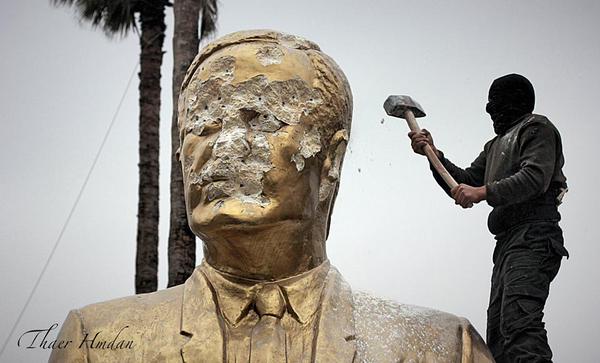
Statue of Hafez al-Assad defaced after Idlib City falls, March 29, 2015

Statue of Hafez al-Assad defaced after Idlib City falls, March 29, 2015

After an insurgent offensive began on March 24, Idlib City fell on March 29, making it only the second—of Syria’s fourteen—provincial capitals to slip from the control of Bashar al-Assad’s regime, the last one being Raqqa City on March 4, 2013. The regime has been on borrowed time in Idlib City since Wadi al-Deif to the south, near Maarat an-Numan, fell in mid-December.

In a scene reminiscent of Raqqa—and indeed the fall of Baghdad—a statue of Hafez al-Assad was destroyed. The insurgents broke open some secret prisons, while finding that in a final act of needless cruelty the regime had murdered other prisoners in the cells before retreating.

An operations room, Jaysh al-Fatah (Army of Conquest), organised this offensive, and is composed of: Faylaq a-Sham (Sham Legion), Liwa al-Haq, Ajnad a-Sham, Jaysh al-Sunna, Ahrar a-Sham, Jund al-Aqsa (JAA), and al-Qaeda’s Syrian branch, Jabhat an-Nusra. Continue reading

Obama’s Syria Policy Protects Assad

By Kyle Orton (@KyleWOrton) on February 22, 2015

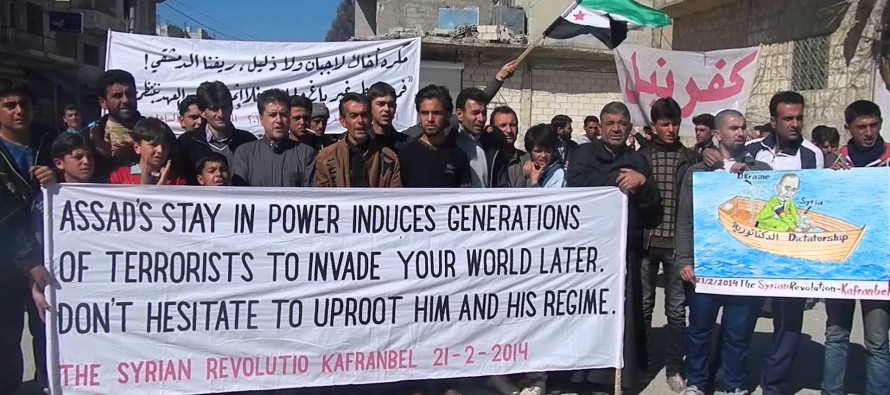
Kafranbel gets it

Kafranbel gets it

The United States is about to begin training some Syrian rebels, and giving them the ability to call in U.S. airstrikes, the Wall Street Journal reports. Continue reading

From Kessab to Cannibals: Syria’s Media War

By Kyle Orton (@KyleWOrton) on January 5, 2015

Mother Agnes Mariam on RT. An agent of the regime, she dismissed Syria's rebels as a foreign conspiracy.

Mother Agnes Mariam on RT. An agent of the regime, she dismissed Syria’s rebels as a foreign conspiracy.

Fouad Ajami once said Syria was the “first YouTube war“. An academic study called Syria “the most socially mediated civil conflict in history“. From the start of the Syrian war, the media and propaganda dimension has been of immense importance, impacting the course of the war on the ground and affecting the policy of foreign States who could make a decisive difference in the conflict. Continue reading

What To Do About Syria: Sectarianism And The Minorities

By Kyle Orton (@KyleWOrton) on December 24, 2014

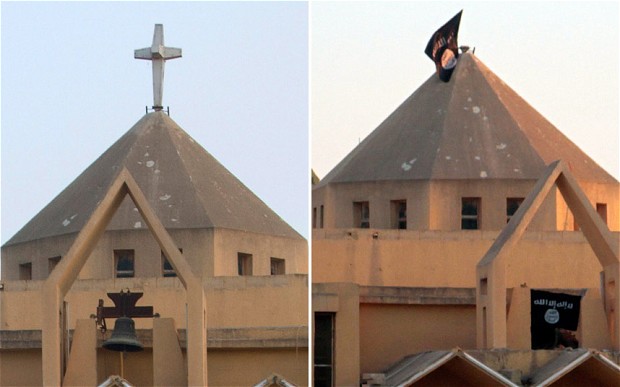
The Armenian Catholic Church of the Martyrs in Raqqa City

The Armenian Catholic Church of the Martyrs in Raqqa City

In the last few days I’ve been asked a lot about my longstanding view that the beginning of a Western strategy in Syria is the removal of Bashar al-Assad. The question has come from various angles and been phrased in various ways but it always boils down to: “What comes next?”

The best response I have seen to this comes from Thomas Nichols: “When someone says ‘tell me how it ends,’ it’s another way of saying: ‘I just don’t happen to like this particular case for intervention,’ for whatever reason.” Continue reading

A Freeze In Aleppo Won’t Help Save Syria—But It Might Help Assad

By Kyle Orton (@KyleWOrton) on December 15, 2014

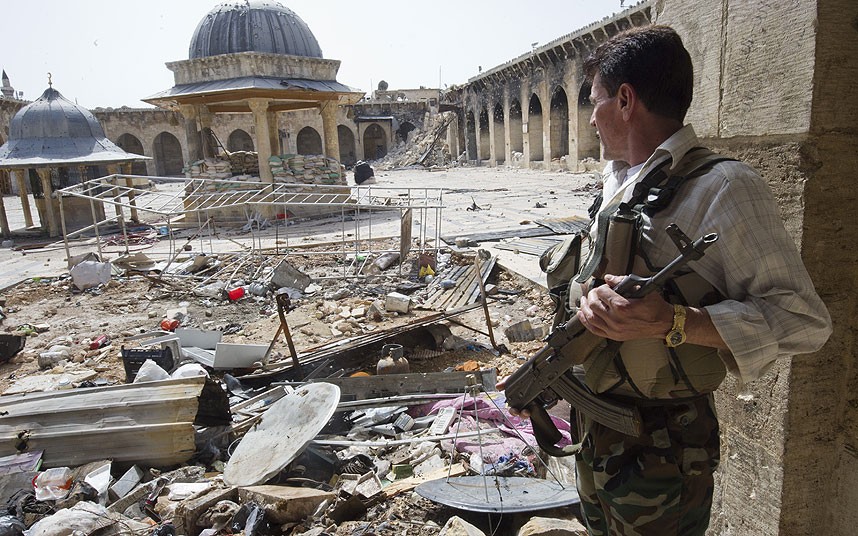
Great Mosque in Aleppo


On October 30, the United Nations peace envoy Staffan de Mistura presented an “action plan” for Syria, which included a plan for a “freeze zone” in Aleppo to give “an opportunity for some type of humanitarian improvement”. De Mistura wanted this to re-focus efforts of fighting units on all sides against the Salafi-jihadists of the Islamic State and Jabhat an-Nusra (al-Qaeda). Small wonder then that Assad’s U.N. envoy, Bashar Jafaari, said the regime was giving the proposal “due consideration”.

This freeze idea had emerged just after the Obama administration had, through surrogates, said it was sympathetic to the idea of trying to use local “ceasefires” Continue reading