Tag Archives: Samir al-Khlifawi

Propaganda and the War Against Independent Media in Syria

By Kyle Orton (@KyleWOrton) on December 29, 2015
In the last month, the Islamic State (IS) has been waging a concerted campaign to shut down all independent sources of information emanating from its statelet. IS’s focus has been on Raqqa is Being Slaughtered Silently (RBSS), an activist group that began in April 2014 in IS’s de facto capital in northern Syria. RBSS has published information—including pictures and videos, much of it via Twitter—on the crimes of the “caliphate”. IS has now murdered at least five RBSS journalists and activists, two of them on foreign soil in Turkey, plus the father of one of RBSS’s founders. (The sixth case, also in Turkey, is more murky.) The suppression of independent media by IS is necessary to allow the group to maintain social control of the areas it rules and to sustain the narrative that it is building utopia on earth, which attracts in the foreign fighters that help IS maintain and expand its territory.
Continue reading

How Saddam Hussein Gave Us ISIS

By Kyle Orton (@KyleWOrton) on December 23, 2015

Published in The New York Times.

1

Whom should we blame for the Islamic State? In the debate about its origins, many have concluded that it arose from the American-led coalition’s errors after the 2003 invasion of Iraq. In fact, the groundwork for the emergence of the militant jihadist group was laid many years earlier by the government of Saddam Hussein.

The Arab nationalist Baath Party, which seized power in 1968 in a coup in which Mr. Hussein played a key role, had a firmly secular outlook. This held through the 1970s, even as religiosity rose among the Iraqi people. But soon after Mr. Hussein invaded Iran in 1980, it began to change.

Continue reading

The Islamic State Was Coming Without the Invasion of Iraq

By Kyle Orton (@KyleWOrton) on December 12, 2015

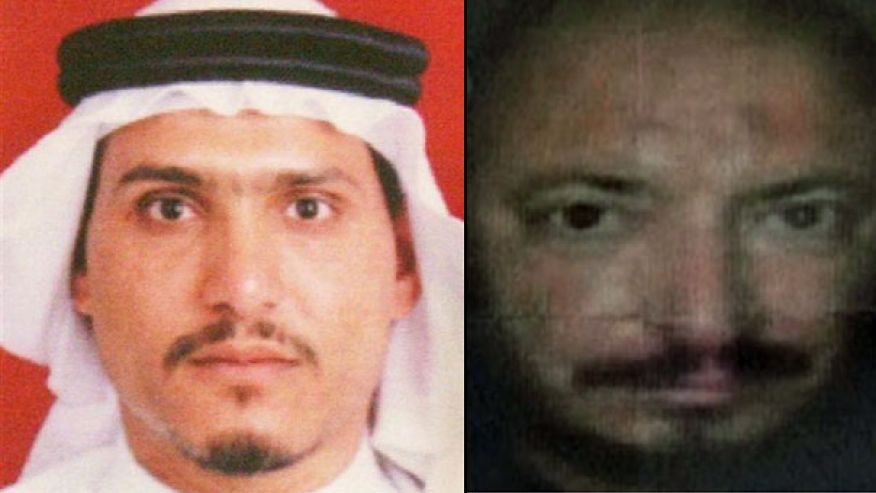
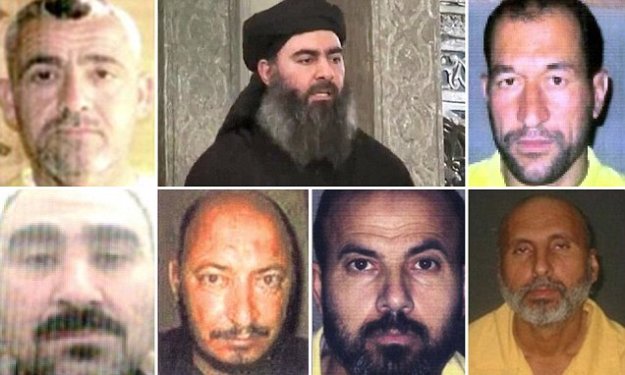
From top left clockwise: Fadel al-Hiyali, Ibrahim al-Badri (Abu Bakr al-Baghdadi), Adnan al-Bilawi, Samir al-Khlifawi (Haji Bakr), Adnan as-Suwaydawi (Abu Ayman al-Iraqi), Hamid az-Zawi (Abu Omar al-Baghdadi), Abu Hajr as-Sufi

From top left clockwise: Fadel al-Hiyali, Ibrahim al-Badri (Abu Bakr al-Baghdadi), Adnan al-Bilawi, Samir al-Khlifawi (Haji Bakr), Adnan as-Suwaydawi (Abu Ayman al-Iraqi), Hamid az-Zawi (Abu Omar al-Baghdadi), Abu Hajr as-Sufi

Yesterday, Reuters had an article by Isabel Coles and Ned Parker entitled, “How Saddam’s men help Islamic State rule“. The article had a number of interesting points, but in its presentation of the movement of former (Saddam) regime elements (FREs) into the leadership structure of the Islamic State (IS) as a phenomenon of the last few years, it was a step backward: the press had seemed to be recognizing that the Salafization of the FREs within IS dates back to the Islamization of Saddam Hussein’s regime in its last fifteen years, notably in the 1990s after the onset of the Faith Campaign. Continue reading

Destroying Islamic State, Defeating Assad: A Strategy for Syria

By Kyle Orton (@KyleWOrton) on November 25, 2015

1

Today, my first report with The Henry Jackson Society was published: “Destroying Islamic State, Defeating Assad: A Strategy for Syria“. Continue reading

The Riddle of Haji Bakr

By Kyle Orton (@KyleWOrton) on November 10, 2015

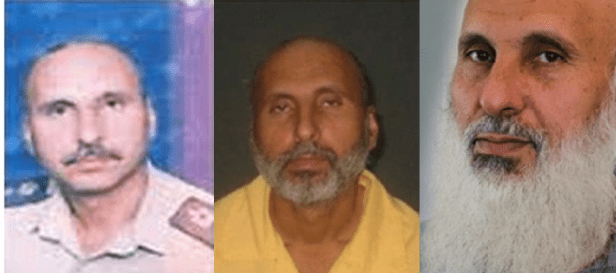
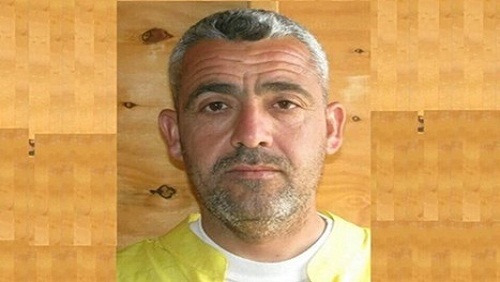
Samir al-Khlifawi (Haji Bakr): in Saddam's army, in American prison, as a commander of the Islamic State

Samir al-Khlifawi (Haji Bakr): in Saddam’s intelligence service, in American prison, as a commander of the Islamic State

In the last few months I’ve increasingly focussed on the former (Saddam) regime elements (FREs) within the Islamic State (IS). There’s now an entire section on this blog about it, and Aaron Zelin over at Jihadology recently gave me time to elaborate in a podcast.

In studying this topic there is one inescapable name: Samir Abd Muhammad al-Khlifawi, better-known by his pseudonym Haji Bakr, and sometimes by his kunya, Abu Bakr al-Iraqi. Al-Khlifawi is a former colonel in an elite intelligence unit of the Saddam Hussein regime—focussed on air defence at Habbaniya airbase, though what exactly that entails is murky. Al-Khlifawi was also apparently involved in weapons development.

Al-Khlifawi came to international attention in April when Christoph Reuter published an article in Der Spiegel naming al-Khlifawi as the “architect” of IS’s expansion into Syria, and the man who had been “pulling the strings at IS for years.” Continue reading

Kamel Sachet and Islamism in Saddam’s Security Forces

1Book Review: The Weight of a Mustard Seed: The Intimate Life of an Iraqi Family During Thirty Years of Tyranny (2009) by Wendell Steavenson

By Kyle Orton
(@KyleWOrton) on October 24, 2015

Wendell Steavenson’s The Weight of a Mustard Seed—the title drawn from a verse of the Qur’an about the difference between attaining heaven and hell—comprises five years of research about Kamel Sachet Aziz al-Janabi, one of Saddam Hussein’s favourite and most senior generals.

Born in 1947, Kamel Sachet joined the Iraqi police straight from school in the mid-1960s and joined the army in 1975. Sachet was soon in the Special Forces, training in mountain warfare in Germany in 1978, taking part in joint exercises with Iranian Special Forces during the time of the Shah—learning Farsi along the way—and then being part of the Iraqi Special Forces advanced party sent to invade Iran after Ruhollah Khomeini’s takeover. Sachet would later be part of the elite forces sent to secure Saddam’s occupation of Kuwait. After Saddam was evicted from Kuwait, Sachet, who had been slipping deeper and deeper into religious zeal from the early 1980s, was made governor of Maysan where he ran a de facto Salafi commune. Sachet was eventually removed from this post by regime internal intrigue, and was moved to a job in the office of the president. For reasons never definitively established, Sachet was murdered on Saddam Hussein’s orders on the first day of Operation DESERT FOX in December 1998.

Kamel Sachet’s story is an interesting one for what it says about the Saddam regime’s changing attitude toward Islamism as it ran its course, reversing the hard-secular outlook that prevailed at varying degrees of intensity from the late 1960s to the early 1980s, and transforming into an Islamist State in the last fifteen years of the regime. Continue reading

Saddam’s Faith Campaign and the Islamic State

By Kyle Orton (@KyleWOrton) on September 28, 2015

A version of this article was published at NOW Lebanon and syndicated at Business Insider

1

American intelligence analysts have been pressured into giving a more positive assessment of the progress of the war against the Islamic State (ISIS), it has been reported, confirming what was obvious to everyone not subject to influence from the White House: the anti-ISIS campaign is failing. To devise an effective strategy involves understanding where ISIS came from, and that involves examining the Saddam Hussein regime.

Saddam is commonly regarded as the quintessential secularist, and he was initially. But over its last fifteen years the Saddam regime Islamized, effectively creating a religious movement under Saddam’s leadership, giving additional space and power to the non-governmental Salafi Trend, and hardening the sectarian differences in Iraq—paving the way for something like ISIS in its aftermath. Continue reading

The Islamic State: Between Al-Qaeda and Saddam Hussein

By Kyle Orton (@KyleWOrton) on September 22, 2015

Abu Musab az-Zarqawi

Abu Musab al-Zarqawi

In August 2015’s Perspectives on Terrorism, Truls Tønnessen writes about the evolution of the leadership of what is now the Islamic State (I.S.) from its origins in al-Qaeda in Iraq (AQI) under the heading, “Heirs of Zarqawi or Saddam?” Tonnessen makes the obvious point that AQI’s leadership was largely comprised of foreign Salafi-jihadists with al-Qaeda histories, while I.S. is led by Iraqis, most of them former (Saddam) regime elements (FREs). But Tonnessen’s argument that I.S.’s leaders had not been AQI members is mistaken (they had), which erodes his arguments that AQI’s influence diminished over time as I.S. formed from various mergers, and that this diminution of influence came about because I.S.’s post-2010 leadership purged the veteran AQI elements within I.S. (I.S.’s leaders are veteran AQI elements.) The main difference between AQI’s leaders and I.S.’s is that AQI’s leaders had background connections to al-Qaeda Central (AQC) networks, and I.S.’s largely do not. While Tonnessen sees Jabhat al-Nusra as linked to these shifting dynamics, this argument does not stack up. Ultimately, Tonnessen’s contention that I.S.’s leaders are more heirs of Saddam than Zarqawi fails in the terms Tonnessen presents it. Continue reading

The Islamic State’s Deputy and the Ghost of Saddam Hussein

By Kyle Orton (@KyleWOrton) on August 22, 2015

Fadel al-Hiyali

Fadel Ahmad Abdullah al-Hiyali (a.k.a. Abu Muslim al-Turkmani a.k.a. Haji Mutazz)

Fadel Ahmad Abdullah al-Hiyali, the overall deputy to the “caliph” Abu Bakr al-Baghdadi, who heads the Military Council of the Islamic State (ISIS) and is the direct commander of ISIS’s forces in Iraq, was killed in a drone strike in Mosul on August 18, according to a U.S. spokesman for the National Security Council yesterday. Al-Hiyali, who also goes by the pseudonyms Abu Muslim al-Turkmani, Abu Mutaz al-Qurayshi, and Haji Mutaz, was reported to have been travelling in a car with a media operative named Abu Abdullah when he was killed.
Continue reading

A Response to Criticism: Why the Ex-Saddamists in the Islamic State Matter

By Kyle Orton (@KyleWOrton) on August 10, 2015

Abu Ayyub al-Masri and Abu Omar al-Baghdadi: ISIS's co-leaders, 2006-10

Abu Ayyub al-Masri and Abu Omar al-Baghdadi: ISIS’s co-leaders, 2006-10

In the Jerusalem Post on Sunday, Seth Frantzman wrote in opposition to the idea that the ex-military-intelligence officials of the Saddam Hussein regime had contributed significantly to the success of the Islamic State (ISIS) in taking over large swathes of Syria and Iraq. Much of what Frantzman says, about the overestimation of ISIS and Iran’s growing Imperium pushing Sunnis into ISIS’s camp, is unarguable, but he is in error about the time-frame of the ex-Saddamists’ migration into ISIS and underestimates their impact. Continue reading