Tag Archives: Saudi Arabia

From Bosnia to Guantanamo

By Kyle Orton (@KyleWOrton) on January 23, 2016

War cemetery in Sarajevo (personal picture, July 2011)

War cemetery in Sarajevo (personal photograph, July 2011)

It was announced on Thursday that Guantanamo inmates Tariq Mahmoud Ahmed as-Sawah and Abd al-Aziz Abduh Abdallah Ali as-Suwaydi had been transferred to Bosnia and Montenegro respectively. Sawah’s path to jihadi-Salafism allows a window into the Bosnian jihad, a much-underestimated factor in shaping al-Qaeda, its offshoots, and the wider jihadist movement. In that story is an examination of the role certain States have played in funding and otherwise helping the jihadists. It also leaves some questions about whether emptying Guantanamo of its dangerous inhabitants is the correct policy.
Continue reading

Islamic State Leader Threatens Saudi Arabia and Israel

By Kyle Orton (@KyleWOrton) on December 28, 2015

Ibrahim al-Badri (Abu Bakr al-Baghdadi), the leader of the Islamic State, gave a speech, “So Wait, We Too are Waiting with You” (or “We, Too, Will Wait With You”), on December 26, 2015. The title is drawn from Qur’an 9:52. This is al-Badri’s fifth speech since the declaration of the caliphate in June 2014, and his tenth speech since becoming leader in 2011. The speech acknowledged some struggles for the “caliphate” and made a rare threat against Israel. Al-Furqan Media released a transcript of the speech, which is reproduced below. Continue reading

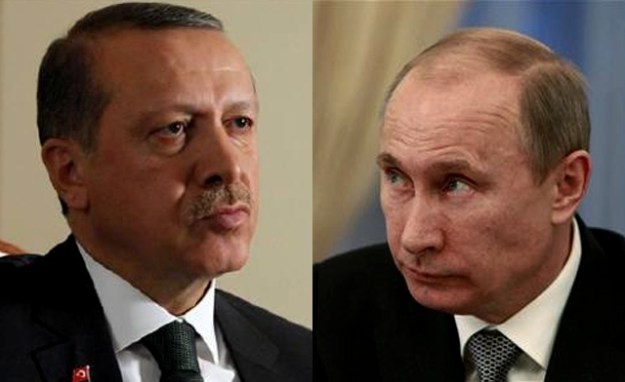
Is Turkey Responsible for the Islamic State?

By Kyle Orton (@KyleWOrton) on December 20, 2015

1

Turkey concluded its biggest investigation to date into Islamic State (IS) operatives on its territory on Friday, and blacklisted sixty-seven people. This provides a good moment to review what Turkey’s role has been in the rise of IS, especially amid the escalating accusations from Russia that Turkey is significantly responsible for financing IS. The reality is that while Turkish policy has, by commission and omission, made IS stronger than it would otherwise have been, so has Russia’s policy—and Russia’s policy was far more cynical than Turkey’s, deliberately intended empower extremists to discredit the rebellion against Bashar al-Assad. Turkey’s focus on bringing down Assad and Ankara’s fear of Kurdish autonomy led it into these policies and now—having seemingly found the will to act to uproot IS’s infrastructure on Turkish territory—there is the problem of actually doing so, when IS can (and has) struck inside Turkey. The concerns about these external funding mechanisms for IS, while doubtless important, obscure the larger problem: IS’s revenue is overwhelmingly drawn from the areas it controls and only removing those areas of control can deny IS its funds. Continue reading

As Syria’s Opposition Tries To Unite, Prospects For Peace Recede

By Kyle Orton (@KyleWOrton) on December 9, 2015

A version of this article was published at Middle East Eye.

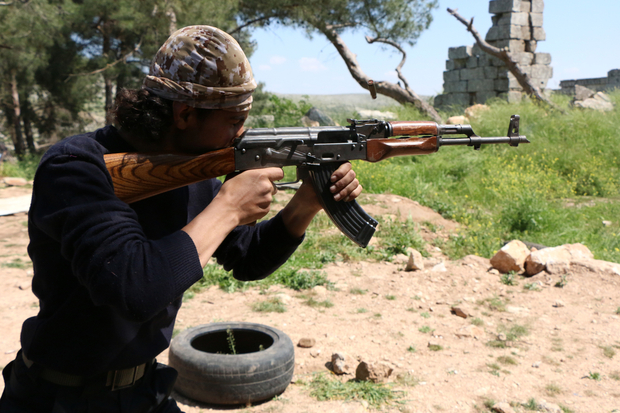
A rebel fighter from the Free Syrian Army's

A rebel fighter from the Free Syrian Army’s “First Battalion” takes part in military training on May 4, 2015, in rebel-held northern Rif Aleppo. (AFP, Baraa al-Halabi)

The Syrian opposition is meeting in Saudi Arabia between December 8 and 10 in an attempt to create a unified structure that can credibly sit across the table from the Bashar al-Assad regime in the internationally-organised peace talks in Vienna, and make a binding commitment on the path forward for Syria. Continue reading

Reassessing the Saudi-led Intervention in Yemen

By Kyle Orton (@KyleWOrton) on July 24, 2015

1

The Saudi-led Operation DECISIVE STORM began in Yemen on March 25 as a campaign of airstrikes against the Iran-backed Houthis, to weaken them and re-install the president, Abd Rabbo Mansour Hadi, who was overthrown by the Houthis last September.

In April, I wrote in support of the Saudi-led operation for: (1) having drawn a line against Iran’s imperialism after Lebanon, Syria, and Iraq; (2) potentially decreasing the growth of the Islamic State (ISIS) by providing Sunnis, in Yemen and beyond, with an alternative form of resistance to Iran’s encroachments; and (3) offering a chance for more stability in Yemen, which was then in free fall with Iran, al-Qaeda, and ISIS capitalizing on the chaos. Continue reading

A Myth Revisited: “Saddam Hussein Had No Connection To Al-Qaeda”

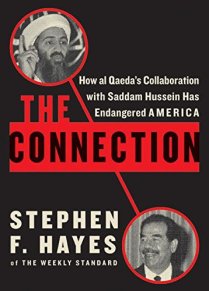
Book Review: The Connection: How al-Qaeda’s Collaboration With Saddam Hussein Has Endangered America (2004) by Stephen Hayes
By Kyle Orton(@KyleWOrton) on June 21, 2015


More than twelve years after the fall of Saddam Hussein, the conventional wisdom is that Saddam’s regime had no connection with al-Qaeda, and such “evidence” as was adduced was tortured out of Ibn al-Shaykh al-Libi in the Bush administration’s desperation to cobble together a casus belli. But if one puts ideology on hold, and considers the evidence of Stephen Hayes’ The Connection, a rather different picture emerges. Continue reading

Does Iran Support The Islamic State?

By Kyle Orton (@KyleWOrton) on May 26, 2015

Qassem Suleimani, Iran's spymaster, believed in some MidEast conspiracy theories to control ISIS

Qassem Suleimani, Iran’s spymaster, believed in some Mid-East conspiracy theories to control ISIS

In 2010, Farzad Farhangian, an Iranian diplomat based in Belgium, defected to Norway. Farhangian has now emerged with the extraordinary accusation that the Islamic Republic of Iran is controlling the Islamic State (ISIS) and using it as part of Tehran’s war against the Gulf States, especially Saudi Arabia. Farhangian’s accusations are lurid and (literally) incredible, but the question of Iran’s role in ISIS’ creation and growth, and Iran’s manipulation of ISIS to further its own ends, is one well worth asking. Continue reading

The Islamic State’s Strategy Is Working, Its Enemies Are Failing

By Kyle Orton (@KyleWOrton) on May 23, 2015

1

To hear President Obama tell it, his announced program to defeat the Islamic State (ISIS), which began with airstrikes into Iraq last August that were extended into Syria in September, is working, albeit with some tactical setbacks. The implication is that the setbacks of the U.S.-led anti-ISIS campaign are not strategic.

As J.M. Berger phrased it:

In the Washington vernacular, the act of Being Strategic implies a near mystical quality of superior thinking possessed by some, and clearly lacking amongst the vulgarians of the world—heedless brutes such as ISIL. Tactics are short-term ploys, easy to dismiss. Strategy is for winners.

Unfortunately, this soothing view is almost exactly wrong: it is the United States that is relying on various short-term methods—commando raids into the Syrian desert, for example—while ISIS has a long-term goal fixed in mind and is working assiduously to achieve it. The U.S.-led Coalition is losing, in short, and ISIS is winning. Continue reading

Islamic State Leader Attacks Saudi Arabia, Claims to Be the Sunni Vanguard

By Kyle Orton (@KyleWOrton) on May 15, 2015

The Islamic State’s “caliph”, Ibrahim al-Badri (Abu Bakr al-Baghdadi), gave his ninth speech on May 14, 2015. The speech was entitled, “March Forth Whether Light or Heavy”, based on the 41st verse of the ninth sura of the Qur’an, Al-Tawba. A transcript of this speech was released and is reproduced below. Continue reading

The Gulf States Push Back Against Obama’s Iran Policy

By Kyle Orton (@KyleWOrton) on May 12, 2015

1

President Obama invited the leaders of the Gulf Cooperation Council (GCC) to a meeting at Camp David on Thursday to clear the air as the President looks to finalize his nuclear deal with Iran. But on Sunday, Saudi King Salman said he was not attending, and soon after the Bahraini monarch followed. The only Gulf leaders in attendance will be the Emirs of Qatar and Kuwait. Since leaders do not just have other things to do when they are scheduled for a private meeting with the President of the United States, this can be taken as a pointed snub to President Obama, and no amount of administration spin about Salman’s absence having nothing to do with political substance will change that. Continue reading