By Kyle Orton (@KyleWOrton) on 30 January 2022
Review of ‘The King’s Spy’ (2021), by Mark Turnbull

By Kyle Orton (@KyleWOrton) on 19 December 2021
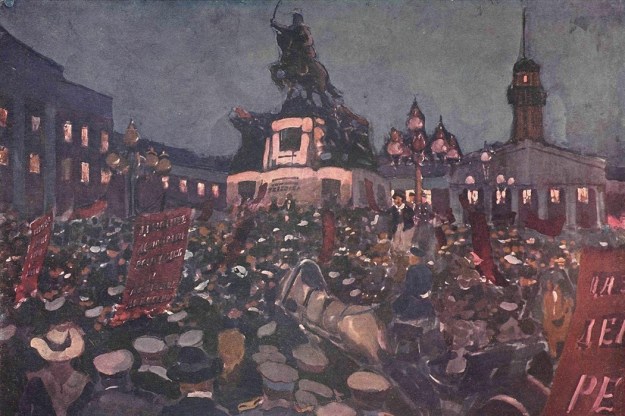
Skobelev Square during the February Revolution, painting by Aleksandr Gerasimov, 1917
The “February Revolution” is so-called because Russia at the time was on the Julian (Old Style (O.S.)) calendar. By the Gregorian (New Style (N.S.)) calendar, which Russia adopted in February 1918, these events take place in March 1917. And momentous events they were, leading to the abdication of the last Tsar, the end of a monarchy and an entire system of power and authority that dated back more than 350 years. For eight months in 1917, Russia struggled to extend the constitutionalist reforms that had begun under the Tsardom within a more liberal framework. The liberals never did gain the upper hand over the radicals, not even after the September 1917 de facto return to autocracy. In November 1917, a coup by the most extreme Leftist faction, the Bolsheviks, terminated the experiment, burying for seven decades even the aspirations in Russia for liberalism and democracy. Continue reading
By Kyle Orton (@KyleWOrton) on 15 December 2021

Tsar Nicholas II and Kaiser Wilhelm II aboard a ship in the Gulf of Finland, 1905
In the early historiography of the Great War, it was accepted that Germany was chiefly responsible, with debates on the margins about the degree of intentionality and premeditation. Of late, however, “It has become fashionable to spread the guilt of the First World War liberally around Europe”, as one prominent historian noted.[1] Some revisionists go even further and try to find another state that is not only equally as culpable as Germany but more so. In this post, I want to, without in any way pretending to be comprehensive, deal with the argument that blames Russia for the 1914-18 War. Continue reading
By Kyle Orton (@KyleWOrton) on 13 December 2021

Grigori Rasputin
Grigori Rasputin, a Siberian peasant holy man, was a presence at the Russian Court between 1908 and his murder in 1916. Even so, Rasputin would only have been one figure among many and not be so notable in history, except for the fact that he gained significant political influence in his last couple of years due to his friendship with the Tsar’s wife. The degree of influence Rasputin exerted and the stories of his debauched behaviour have often been wildly exaggerated—at the time and since. But the stories did have a basis in fact—the Tsarina had fused together her personal forays in mysticism with her political role—and the stories themselves, lurid and defamatory as many of them were, had a concrete effect in damaging the monarchy as Revolution loomed. Continue reading
By Kyle Orton (@KyleWOrton) on 8 December 2021

General Lavr Kornilov, 27 August 1917
The final key event on the road to the Bolshevik takeover of Russia in November 1917 was the “Kornilov Affair” that took place about two months earlier. Alexander Kerensky had become Prime Minister of the Provisional Government in July 1917 and around the same time General Lavr Kornilov had become Commander-in-Chief. A lot of accounts portray the “Kornilov Affair” as a “reactionary” coup attempt by Kornilov against Kerensky. The reality is very nearly the exact opposite. As historian Robert Pipes summarises: “All the available evidence, rather, points to a ‘Kerensky plot’ engineered to discredit the general as the ringleader of an imaginary but widely anticipated counterrevolution, the suppression of which would elevate the Prime Minister to a position of unrivaled popularity and power, enabling him to meet the growing threat from the Bolsheviks.”[1] Continue reading
By Kyle Orton (@KyleWOrton) on 9 August 2021
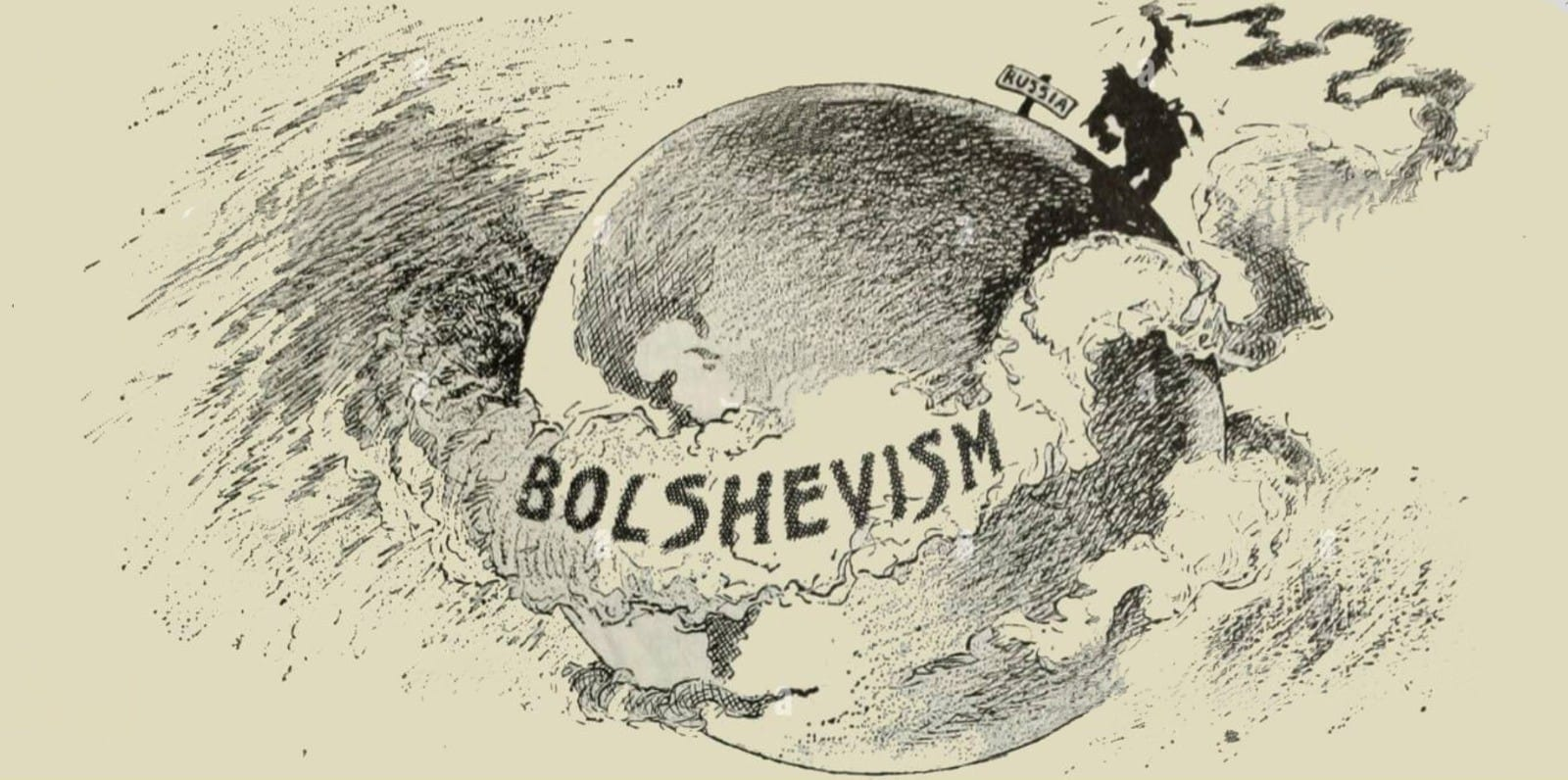
After the post looking at the relationship of Reuben Falber and the Communist Party of Great Britain (CPGB) to the Soviet Union—namely the total subservience of the former to the latter—a follow-up was intended on the broader issue of the how the KGB and its predecessors interacted with the “fraternal” Parties around the world. Eighteen months later, this is that post. Let’s blame COVID.
The accusation that the Communist Parties around the world were fronts for the KGB was often derided as “McCarthyism” while the Cold War was going on. Arguments about that term in general to one side,[1] it certainly did not apply in this case. The accusations as stated were entirely factual. Continue reading
By Kyle Orton (@KyleWOrton) on 29 June 2021
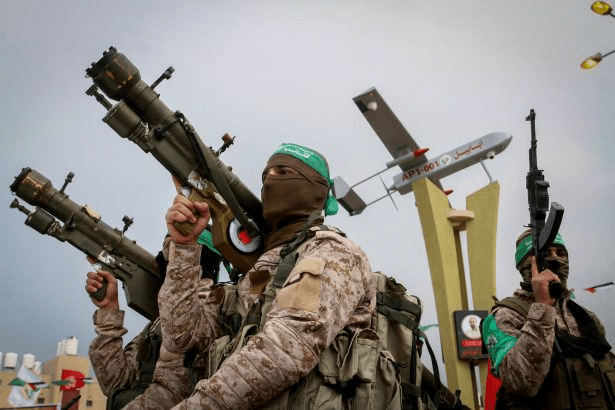
Members of the Ezzedine al-Qassam Brigades, the military wing of Hamas, at a memorial in Gaza, 31 January 2017. Photo by Abed Rahim Khatib, Flash90.
The May 2021 round of fighting in Gaza brought with it the upending of the unspoken understanding between Israel and Hamas and a level of intercommunal violence within Israel that has not been seen in quite some time. The scale of the rocket attacks on the Jewish state must also be counted among the unusual elements of this latest flare-up, with Iran clearly identifiable as the enabling state behind Hamas and Palestinian Islamic Jihad (PIJ), the two primary factions behind these attacks. Continue reading
By Kyle Orton (@KyleWOrton) on 8 June 2021
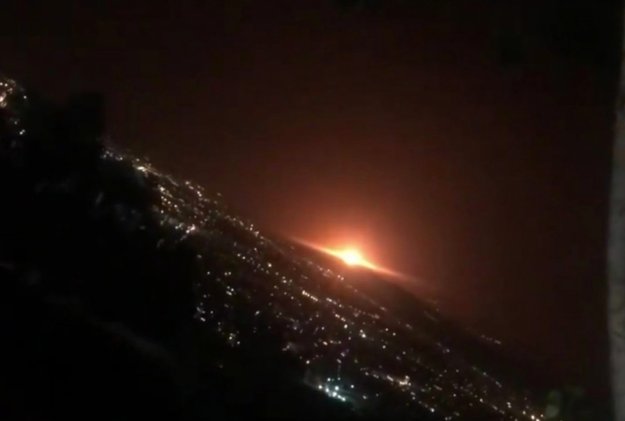
Massive explosion at Khojir in eastern Tehran lights up the night sky, 25 June 2021 [image source]
By Kyle Orton (@KyleWOrton) on 29 May 2021
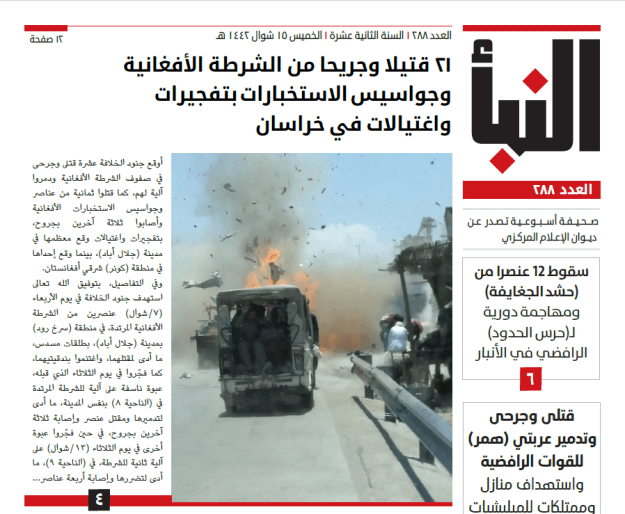
Al-Naba 288, front page
The Islamic State (IS) released the 288th edition of Al-Naba yesterday, and amid the commonplace items—insurgent reports from Iraq and Syria, Egypt and Africa, its main editorial and the ideological essay(s)—the two items on its front page were most interesting. The top item was a series of reports from Afghanistan about the ongoing progress of IS as NATO draws down. The second item down was from Nigeria, about the imposition of zakat, the tax for the needy, which had some suggestive details about IS’s procurement of territory in Africa. Continue reading
By Kyle Orton (@KyleWOrton) on 20 June 2020
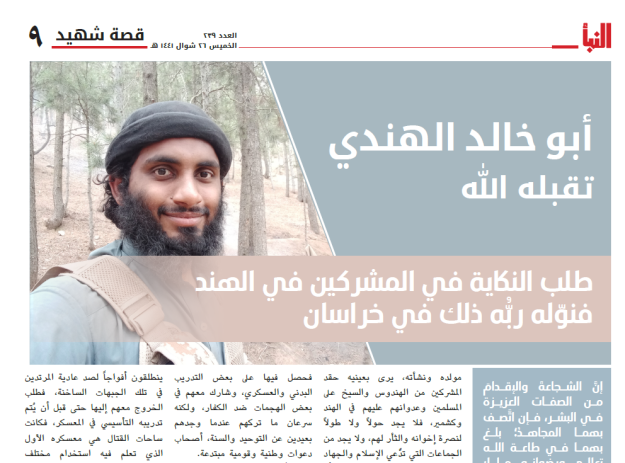
Al-Naba 239, page 9
The Islamic State (IS) released the 239th edition of its newsletter, Al-Naba, on 18 June. Pages 9 and 10 of this twelve-page document were given over to a profile of Abu Khaled al-Hindi, the jihadist elsewhere named as Mohammad Sajid Kuthirummal who massacred twenty-five worshippers at a Sikh gurdwara or temple in Kabul three months ago, on 25 March 2020, during an hours-long siege. The details of Abu Khaled’s life—finding IS after being repelled by “nationalist” jihadist groups, fighting while injured, his obedience to IS’s leaders, and thirst for “martyrdom”—are relatively standard hagiography from IS. What is really worth noting is that such an extensive focus on him, and through him on Afghanistan, underlines the importance IS has placed on its Afghan branch, Wilayat Khorasan. Continue reading
 Kyle Orton's Blog