Tag Archives: spies

What Questions Remain About 9/11?

By Kyle Orton (@KyleWOrton) on 5 September 2018

In less than a week, it will be the seventeenth anniversary of al-Qaeda’s “Plane’s Operation”, the assault on the United States. It is a vertiginous enough reflection that many of us have been alive more years since 11 September 2001 than before it, and positively alarming that many of those who will soon move into the government, media, and other leading societal institutions will have been born after an event that still shapes so much of the international scene. As Anthony Summers and Robbyn Swan put it in The Eleventh Day: The Ultimate Account of 9/11 (2011), we are left with “the brief name ‘9/11’,” the context and meaning stripped away all this time later. The book is a useful overview of an event that should always be to some degree fresh in mind, though it is not without its problems in its analytical sections. Continue reading

The Left’s Extremism Problem

By Kyle Orton (@KyleWOrton) on 3 August 2018

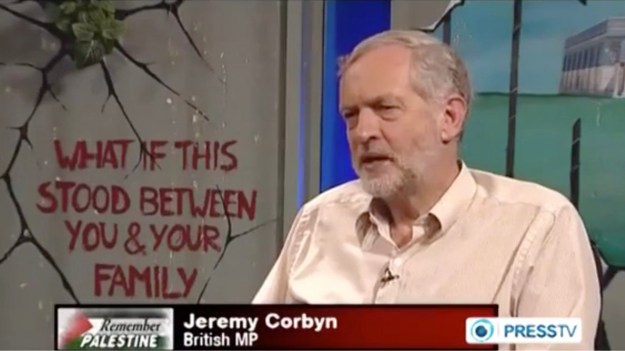
Jeremy Corbyn’s on Iran’s state television station, Press TV, 2012 (source)

The unexpected victory of Alexandria Ocasio-Cortez in the Democratic primary in The Bronx in June caused quite a stir, given her membership of the Democratic Socialists of America and her controversial policy positions. Nonetheless, she has been enthusiastically embraced as “the future” by the chairman of the Democratic National Committee. Events in Britain suggest Democrats might want to exercise some caution here before they go all in. Continue reading

The Russian-Orchestrated Fall of Deraa Sets the Stage to Push the U.S. Out of Syria and Enable Assad’s Reconquest

This article was published at Ahval under the headline, “Russia to Pick Apart NATO Allies to Reconquer All of Syria”.

By Kyle Orton (@KyleWOrton) on 31 July 2018

An Israeli solider hands out water on a bus, during the Syria Civil Defence extraction from the Golan Heights // 22 July 2018, provided by Israeli Army to Reuters

The collapse of the opposition in southern Syria is the final destruction of the originally constituted rebellion against President Bashar Assad. It is also a demonstration that the United States under President Donald Trump is no more invested in shaping the outcome in Syria than his predecessor, and marks the potential end of the diplomatic pact that had allowed Turkey to retain some sphere of influence unmolested by the pro-Syrian government coalition. Continue reading

As its Insurgency Gathers Pace, Islamic State Wants to Further Intensify Operations

By Kyle Orton (@KyleWOrton) on 26 April 2018

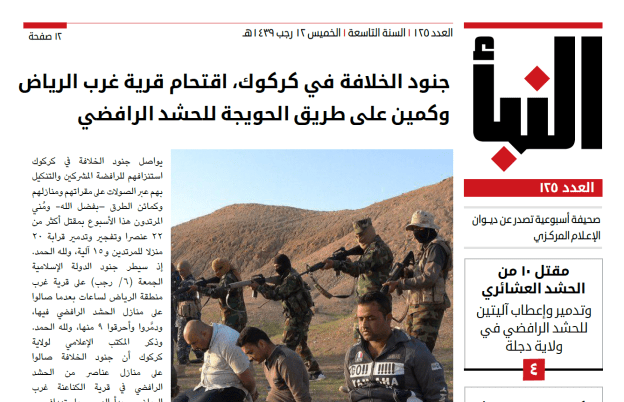
A-Naba 125

The Islamic State (IS) formally turned from statehood to insurgency last October. The 125th edition of Al-Naba, IS’s weekly newsletter, released on 29 March 2018, contained a number of indicators that the jihadists’ guerrilla warfare is gaining considerable steam—and that IS thinks it should gain more. Continue reading

The Islamic State’s Shadow War With Israel

By Kyle Orton (@KyleWOrton) on March 5, 2017

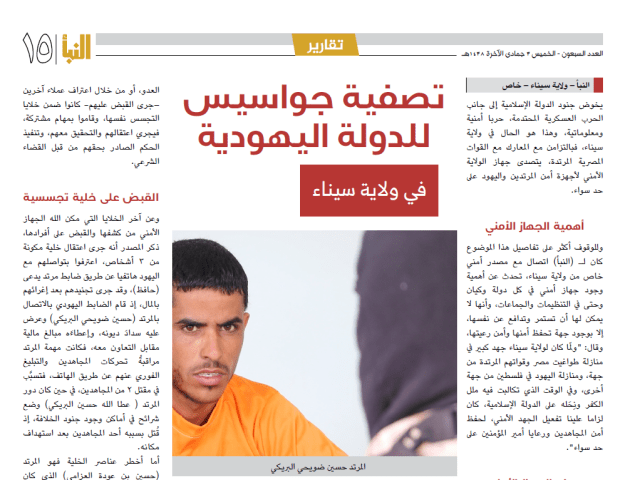
Al-Naba 70, released on 2 March 2017, p. 15. The caption under the picture says: “The apostate Husayn Duwayhi al-Bareeki”

In the 70th edition of Al-Naba, the weekly newsletter of the Islamic State (IS), entitled, “The Liquidation of Spies for the Jewish State” (tasfiya juwasees lil-dawla al-yahudiya), which did include a description of IS’s Wilayat Sinai having eliminated an Israeli spy network, but also included more general information about the IS security structure in Egypt. Continue reading

Chelsea Manning is a Traitor, Not a Hero

Published at The International Business Times

By Kyle Orton (@KyleWOrton) on January 18, 2017

Chelsea Manning (REUTERS/U.S. Army)

It might have been thought that a consistent opposition to treason was not all that difficult. But President Barack Obama’s surprise decision last night to commute the sentence of Bradley, now Chelsea, Manning, showed how deeply political partisanship has penetrated into areas like national security, where ideally country would be put before party or ideology. Continue reading

Ahrar al-Sham and Al-Qaeda

By Kyle Orton (@KyleWOrton) on August 12, 2016

The Islamic State’s (IS) weekly newsletter, al-Naba, interviewed a high-ranking al-Qaeda defector, Abu Ubayda al-Lubnani, across two issues in February and March 2016. Abu Ubayda announced his defection from al-Qaeda to IS in April 2014 via al-Battar and Abu Ubayda’s name appeared on a list of prominent clerics supporting IS’s caliphate declaration that was circulated not long after the declaration. Abu Ubayda is described by al-Naba—as best as can be told accurately—as having been a member of al-Qaeda’s Shura or Consultation Council, a training officer in its Military Committee, and a counter-intelligence officer. Abu Ubayda is advertised as speaking about many secret aspects of al-Qaeda.

Among the topics Abu Ubayda covers is the alleged infiltration and manipulation of al-Qaeda by foreign intelligence services, specifically Pakistan’s Inter-Services Intelligence (ISI), which is not only a violation of jihadist doctrine by collaborating with an “infidel” and illegitimate state but led to the deaths of a number of senior al-Qaeda leaders.

Perhaps the most intriguing aspect of what Abu Ubayda has to say relates to al-Qaeda’s attempt to take advantage of the Syrian revolution. This persistent campaign has followed a pattern of disguising al-Qaeda’s presence and attempting to influence and eventually co-opt the rebellion against Bashar al-Assad’s regime. One lever al-Qaeda relied upon, according to Abu Ubayda, was Ahrar al-Sham, an organization that disclaims all connections to al-Qaeda and dissimulates about its ideology. Whatever Ahrar’s dominant ideology, it is simply a fact that it has served as the bridge between the foreign-led jihadists and Syrian Islamists, and its connections to al-Qaeda are evident enough. Abu Ubayda suggests Ahrar’s connections to al-Qaeda are even deeper than they appear. Continue reading

Profile of the Islamic State Caliph: Abu Bakr al-Baghdadi

By Kyle Orton (@KyleWOrton) on August 7, 2016

This post is drawn from a recent report I published profiling the leadership of the Islamic State.

The leader of the Islamic State (IS) since 2010 has been Abu Bakr al-Baghdadi, previously known as Abu Dua or Abu Awad, and his real name—acknowledged by IS itself since the declaration of the so-called Caliphate in 2014—is Ibrahim Awwad Ibrahim Ali Muhammad al-Badri al-Samarrai.

Continue reading

Saddam Hussein Prepared the Ground for the Islamic State

By Kyle Orton (@KyleWOrton) on April 26, 2016

This essay, written to tie together my work on the relationship between the Saddam Hussein regime and the Islamic State, was completed last summer and submitted to an outlet, where it entered a form of development hell. After giving up on that option late last year, the opportunity arose to get a shorter version published in The New York Times in December. But I procrastinated too long over what to do with the full essay and a recent change in my work situation means I no longer have the bandwidth to go through the process of finding it a new home, so here it is.

“Abu-Bakr al Baghdadi is a product of the last decade of Saddam’s reign,” argues Amatzia Baram, a scholar of Iraq. He is correct in at least three ways. First, in its last decade in power, the Iraqi Ba’ath regime transformed into an Islamist government, cultivating a more religious, sectarian population on which the Islamic State (ISIS) could draw. Part of Saddam Hussein’s “Faith Campaign” also involved outreach to Islamist terrorists, including al-Qaeda, which meant that the synthesis of Ba’athism and Salafism that fused into the Iraqi insurgency after the fall of Saddam was already well advanced by the time the Anglo-American forces arrived in Baghdad in 2003. Second, the ISIS leadership and military planning and logistics is substantially reliant on the intellectual capital grown in the military and intelligence services of the Saddam regime. And finally, the smuggling networks on which ISIS relies, among the tribes and across the borders of Iraq’s neighbours, for the movement of men and materiel, are directly inherited from the networks erected by the Saddam regime in its closing decade to evade the sanctions. The advantages of being the successor to the Saddam regime make ISIS a more formidable challenge than previous Salafi-jihadist groups, and one that is likely to be with us for some time.

Continue reading

Film Review: The Falcon and the Snowman (1985)

By Kyle Orton (@KyleWOrton) on August 25, 2015

1

In 1974, former Catholic seminary student Christopher Boyce (played by Timothy Hutton) takes a job at TRW, a Southern California aerospace firm, where he is read on to highly classified programs related to the then-new technology of satellites. Through a childhood friend, drug dealer, and minor smuggler, Andrew Daulton Lee (played by Sean Penn), Boyce begins selling secrets to Soviet intelligence based in the Embassy in Mexico.

Credit should be given for the graphics. While released in the mid-1980s, the clothing (and hair) is clearly of 1970s vintage. But the film’s narrative is direly flawed—both in what it does say and what it doesn’t.
Continue reading