Tag Archives: Syria

By Strengthening Iran, the Coalition Has Ensured the Islamic State’s Survival

Published at The Telegraph

By Kyle Orton (@KyleWOrton) on 6 October 2017

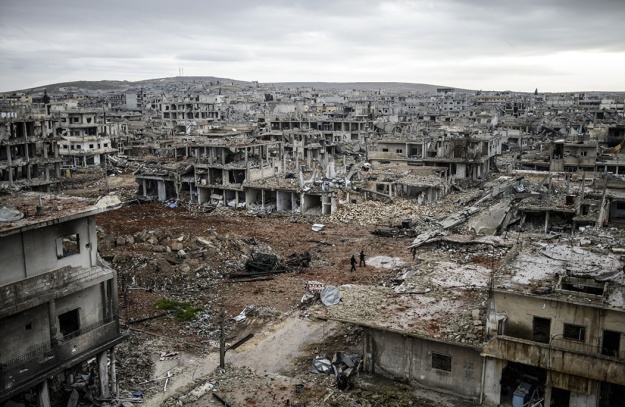
The “defeat” of the Islamic State (ISIL), signified by its eviction from Mosul in July, its impending loss of Raqqa, and an apparent resurgence of Bashar al-Assad’s regime in Syria, seemed to augur a new era of stability for the Middle East. The jihadists would be gone and Iranian-backed governments in Syria and Iraq consolidated.

True, Assad murdering those who resisted him with poison gas and concentration camps, and hiding the evidence by installing crematoria, would nag at our conscience. But foreign policy is a cold-blooded business and it has been decreed that ISIL is the greatest—really the only—threat emanating from the region.

It would not be justice, but it would be peace. Or something like that. Continue reading

Al-Qaeda’s Leader Calls for Muslim Unity Against a Global Conspiracy

By Kyle Orton (@KyleWOrton) on 5 October 2017

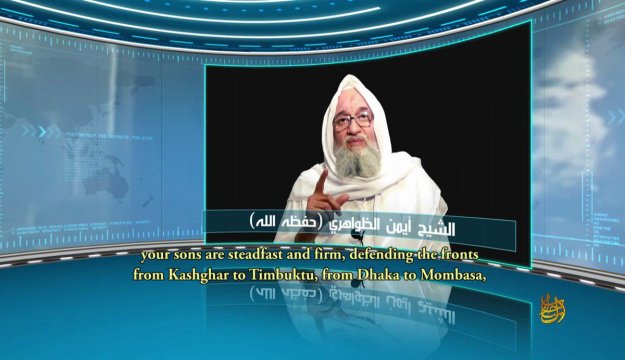
A speech by al-Qaeda’s leader, Ayman al-Zawahiri, was released on 4 October 2017, entitled “We Shall Fight You Until There Is No More Fitna”. An English transcript was released by al-Qaeda’s media apparatus and is reproduced below, with some editions in transliteration and syntax. Some interesting sections have been highlighted in bold. Continue reading

The Islamic State Adapts to the Coalition Campaign

By Kyle Orton (@KyleWOrton) on 3 October 2017

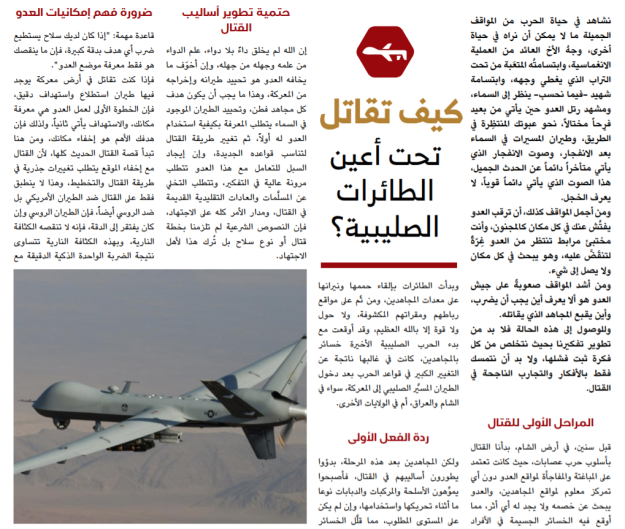
Hassan Hassan wrote in The National on 20 September 2017 about the Islamic State (IS) having issued a public statement on its adaptions to the U.S.-led Coalition air campaign against it in Iraq and Syria. This statement appeared on pages eight and nine of the ninety-seventh issue of Al-Naba, IS’s newsletter, on 14 September. A rough translation is republished below. Continue reading

Russia’s Unreliable Claims About the Islamic State

By Kyle Orton (@KyleWOrton) on 1 October 2017

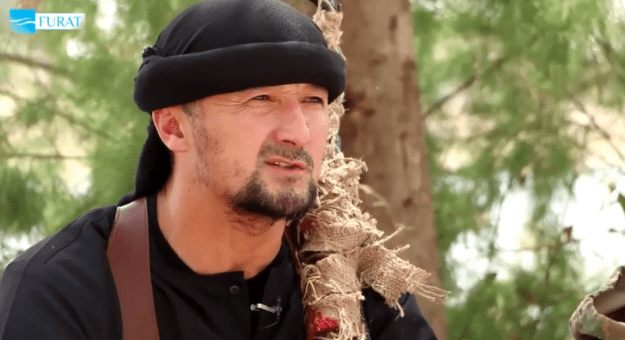
Gulmurod Khalimov

The Islamic State’s (IS) caliph, Ibrahim al-Badri (Abu Bakr al-Baghdadi), appeared on Thursday to deliver his first speech in nearly a year. Other than the contents of the speech, al-Badri’s re-appearance was confirmation that the claim by the Russian government, on 16 June, to have killed al-Badri and 330 other IS jihadists in a 28 May airstrike in Syria, was false.[1] This is far from the first mendacious claim Moscow has made on this topic.

On 8 September, the Russian Ministry of Defence claimed it had killed “four influential field commanders”, one of whom was Tarad al-Jarba (Abu Muhammad al-Shimali), and forty other IS jihadists, in an airstrike near Deir Ezzor city. Later in the day, the Russians claimed day that another of the four commanders was Gulmurod Khalimov (Abu Umar al-Tajiki), named by the U.S.-led coalition as IS’s War Minister. In fact, it is likely that Khalimov was already dead and that al-Jarba is still alive. Continue reading

The Coalition Kills Three Islamic State Drone Developers

By Kyle Orton (@KyleWOrton) on 29 September 2017

The international coalition against the Islamic State (IS) announced that it has killed “three senior and highly skilled ISIS officials” near Mayadeen in eastern Syria between 12 and 14 September. Continue reading

Fresh Wave of Repression in the Syrian Kurdish Areas

By Kyle Orton (@KyleWOrton) on 15 September 2017

Kurdish opposition figures arrested by the PYD/PKK on 14 September 2017, NORTHERN SYRIA OBSERVER

The Kurdistan Workers’ Party (PKK), an internationally-designated terrorist entity, currently controls about a fifth of Syria’s territory in the northeast, an area it calls “Rojava”. The PKK works, as I explained in a recent report for The Henry Jackson Society, under the banner of the People’s Protection Units (YPG) and the Democratic Union Party (PYD) while on Syrian territory, and has sought—with Western complicity—to obscure its activities even further by attaching some subordinate Arab units to its forces and calling this supposed-umbrella organization the Syrian Democratic Forces (SDF). The SDF is the principle partner of the seventy-three-member coalition, led by the United States, that seeks to destroy the Islamic State (IS). On 14 September, the PYD/PKK launched a fresh crackdown on the Kurdish opposition, which has been viciously persecuted by the PKK back to 2011 and assaulted with an especial vigour since the spring of this year. The Kurds arrested by the PKK yesterday, and whose demonstration was attacked and dispersed by the PKK this afternoon, were voicing their support for the independence referendum to be held on 25 September by the Kurdistan Regional Government (KRG) in northern Iraq. Continue reading

Coalition Risks Replacing the Islamic State With the Islamic Republic

By Kyle Orton (@KyleWOrton) on 14 September 2017

By recent reports, one could easily come away with the impression that war and instability across the Fertile Crescent are winding down. Predictions about what comes next, always a risky enterprise in the Middle East, are at a point of unique vulnerability. Chaos and violence for some considerable time to come look like a safe bet, though the timing and scale look more uncertain. Nonetheless, certain trendlines are visible, most clearly the emergence of a regional order, abetted by the international coalition’s campaign against the self-proclaimed Islamic State (ISIS), dominated by the Islamic Republic of Iran. Continue reading

Russia Tries To Succeed Where the West Fails in Libya

By Kyle Orton (@KyleWOrton) and Lincoln Pigman on 14 September 2017

Libya, which has been wracked by instability and violence since 2011, is re-emerging as a geopolitical hotspot. With opposing forces fighting for control of the war-torn country—the main two being the U.N.-backed Government of National Accord (GNA) and the Libyan National Army (LNA)—foreign powers have begun taking sides, internationalizing the conflict. For Western observers, the growing involvement of Russia, a major ally of LNA commander Khalifa Haftar, represents a particular concern.

Coming on the heels of the Russian military intervention in Syria, Moscow’s role in Libya’s civil war may seem, at first glance, like déjà vu. Once again, it appears that the Kremlin is working to consolidate the power of a pro-Russian regional strongman and establish a “crescent of Russian influence” across the Middle East. And given the similarities between Haftar and Syrian President Bashar al-Assad, some degree of anxiety is understandable. Like Assad, who has long appealed to foreign governments by referring to Syrian rebels as terrorists, Haftar often frames himself as a bulwark against violent extremism in Libya, where the Islamic State remains active and Islamists have formed powerful militias and entered mainstream politics. Continue reading

Hamza bin Ladin Uses Syria’s Suffering to Rally Muslims to Al-Qaeda’s Cause

By Kyle Orton (@KyleWOrton) on 14 September 2017

Hamza bin Ladin, son of the late Usama, released an audio message today on behalf of al-Qaeda that placed Syria at the centre of the jihadists’ cause. An English transcript of Hamza’s message, entitled, “The Cause of al-Sham is the Cause of Islam” (or “The Cause of Syria is the Cause of Islam”)—echoing a statement in April by al-Qaeda’s leader, Ayman al-Zawahiri, that “The cause of Syria is the cause of the entire umma (Muslim community”—was produced by As-Sahab Media, and is reproduced below, with some important sections highlighted in bold. Continue reading

Statement by Al-Qaeda Bomb-Maker Ibrahim al-Asiri on 9/11

By Kyle Orton (@KyleWOrton) on 13 September 2017

Ibrahim al-Asiri

Al-Malahim Media Institute, the affiliated media outlet for al-Qaeda in the Arabian Peninsula (AQAP), released a statement on 13 September 2017, “The March of Victory and the Defeat of America”, as part of al-Qaeda’s “In Remembrance of the Blessed September 11 Raids” series. The statement, attributed to Ibrahim Hassan bin Tali al-Asiri, the infamous AQAP bomb-maker, is reproduced below with some editions for syntax and spelling. Continue reading