By Kyle Orton (@KyleWOrton) on 17 August 2017
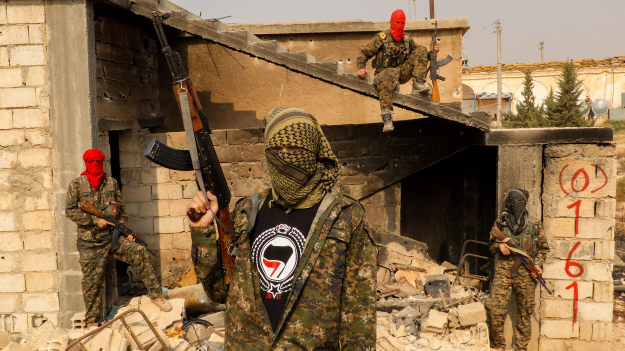
I released a report today, published by the Henry Jackson Society, The Forgotten Foreign Fighters: The PKK in Syria. Continue reading
By Kyle Orton (@KyleWOrton) on 17 August 2017
I released a report today, published by the Henry Jackson Society, The Forgotten Foreign Fighters: The PKK in Syria. Continue reading
By Kyle Orton (@KyleWOrton) on 6 August 2017

A year ago, I wrote a report documenting the biographies of Islamic State (IS) leaders and something of the structure of the organisation. Since then, the intricacies of the structure have been further revealed, even as it has somewhat crumbled in practice. The caliphate—the statelet built by IS—has been significantly degraded: the Iraqi “capital”, Mosul, has fallen, and operation to clear the Syrian “capital”, Raqqa, is underway. More significantly, upwards of 40% of those profiled have been killed, so it seemed an opportune moment for an update on who currently leads the world’s most infamous terrorist movement.
Continue reading
By Kyle Orton (@KyleWOrton) on 5 August 2017
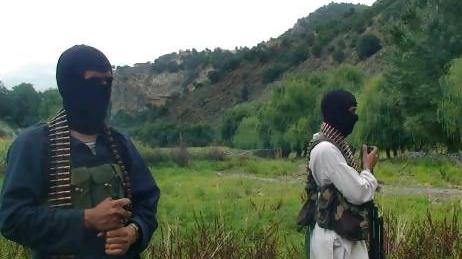
Taliban jihadists (image source)
The New York Times reported on the growing closeness of relations between the governments in Iran and Russia, and the Taliban movement in Afghanistan, something that became especially salient earlier this year and which has been visible for at least two years. Continue reading
By Kyle Orton (@KyleWOrton) on 4 August 2017
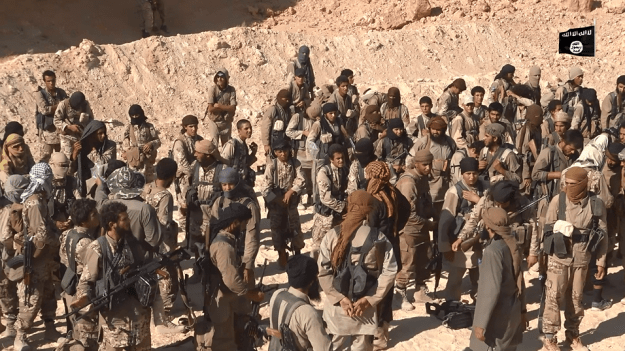
The Coalition announced yesterday that it had killed eight Islamic State (IS) “leaders involved in directing external operations, as well as bomb-making, directed at regional and Western targets”. Continue reading
By Kyle Orton (@KyleWOrton) on 31 July 2017

Earlier this month, it was announced that an LGBT military unit had been formed to fight the Islamic State (IS) in its Syrian “capital”, Raqqa city. There does appear to be such a unit in existence, though it is militarily inconsequential and likely has fewer than a dozen members, all of them foreign. The unit’s primary intention was to bolster the ongoing media-political campaign of the Kurdistan Workers’ Party (PKK), which is selling itself to Western audiences as a “progressive” ideological ally in the Middle East. This is the latest chapter in a conflict where the significance of the media war has few precedents. Continue reading
By Kyle Orton (@KyleWOrton) on 29 July 2017
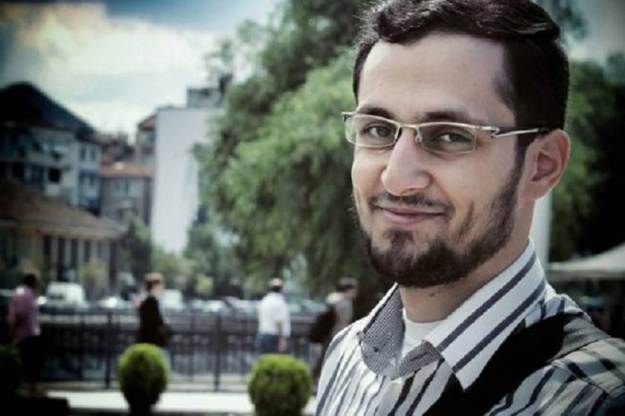
Baraa Kadek (Riyan Meshal) [image source]
By Kyle Orton (@KyleWOrton) on 28 July 2017
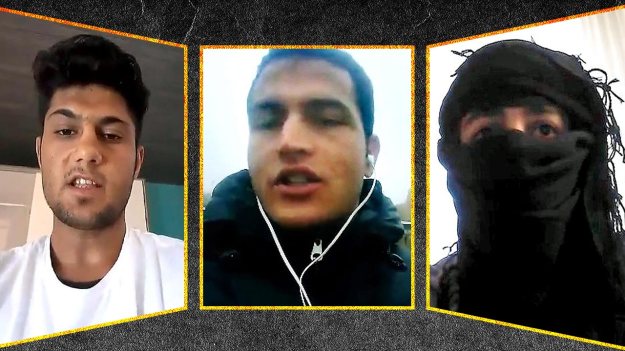
Screenshots from the bay’a-martyrdom videos of: Riaz Khan Ahmadzai (Muhammad Riyad), Anis Amri, Mohammad Daleel (source)
The Islamic State (IS) has escalated a campaign of global terrorism over the past few years, exactly as it was losing overt control of territory. In 2016, IS consolidated a model of guiding and claiming attacks in the West and elsewhere via is media channel, Amaq. The outlines of this have long been known. Now there is significant new detail thanks to a four part reporting series in the German newspaper BILD by Björn Stritzel, who contacted Amaq and posed over many months—in consultation with Germany security agencies—as a potential terrorist. Continue reading
By Kyle Orton (@KyleWOrton) on 30 June 2017

Abdirahman Sheik Mohamud (source)
In April 2015, a United State Federal Grand jury in Ohio charged Abdirahman Sheik Mohamud, also known as “Ayanle”, with three terrorism-related offences. Yesterday, court records were unsealed that revealed that Mohamud pleaded guilty to all charges, admitting to having fought with a terrorist organization in Syria and returned to the United States with the intention of carrying out an act of domestic terrorism. Mohamud was in contact with foreign terrorist operatives throughout the period he was plotting an attack within the United States. But—and this is the most significant aspect of the case—Mohamud was not in contact with one of the Islamic State’s intelligence operatives, who guide attacks in a manner now relatively well-understood. Instead, Mohamud was in contact with Jabhat al-Nusra, at that time al-Qaeda’s declared branch in Syria. Al-Nusra is now known as Hay’at Tahrir al-Sham (HTS) and claimed in July 2016 to have disaffiliated from al-Qaeda’s “central”, not that this has (nor will nor should) remove HTS from the terrorism list. Regardless of its formal status within al-Qaeda’s command structure, HTS retains significant links with al-Qaeda’s global networks, and a breakaway group from HTS in Syria has reaffirmed its loyalty to al-Qaeda. Mohamud’s case is an extremely important data point in assessing the risk these overlapping and mutually reinforcing entities pose to the West and the wider world. Continue reading
By Kyle Orton (@KyleWOrton) on 29 June 2017
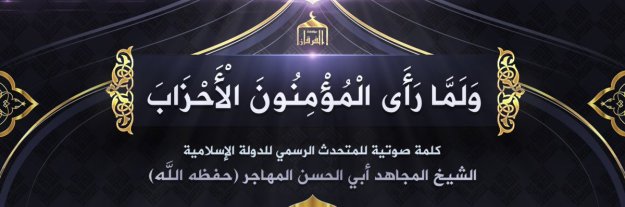
The spokesman of the Islamic State (IS), Abu Hassan al-Muhajir, made his third speech on 12 June 2017, entitled, “And When The Believers Saw The Companies”. Abu Hassan’s first speech was in December 2016 and his second was in April 2017. The primary message of Abu Hassan’s speech was for IS’s troops to resist to the end in what is left of the caliphate’s grip on its Iraqi capital Mosul as that offensive, begun last October, draws to a close, and to hold similarly firm as the operation to evict IS from its Syrian capital Raqqa, launched on 6 June, gets underway. The main editorial of Al-Naba 84 a few days before Abu Hassan spoke laid out IS’s intention, somewhat contrary to its general practice, to resist fiercely in Raqqa. Abu Hassan continues the messaging, consistent since the U.S.-led coalition began its countermeasures against IS, that “patience” will lead to victory. IS has not wavered from this strategy in more than ten years, and it is showing signs of bearing fruit already, a trendline likely to continue unless there is a change of Coalition strategy. In crude, practical terms, Abu Hassan means to say that the terrorism and guerrilla campaign will continue after IS is uprooted from the urban areas.
Continue reading
By Kyle Orton (@KyleWOrton) on 16 June 2017

Usama Atar, older picture and most recent (picture via CNN)
Just three days after the U.S. government sanctioned two Islamic State (IS or ISIS) operatives for their role in helping the jihadists develop chemical weapons of mass destruction, another raft of sanctions were issued on 15 June against four IS members occupying varying positions within the organization from finance to propaganda to orchestrating the foreign attacks. Continue reading

