By Kyle Orton (@KyleWOrton) on August 22, 2016
![Normandy church killers, Adel Kermiche and Abdelmalik Petitjean, swear allegiance to the Islamic State [video, 27 July 2016]](https://kyleorton.co.uk/wp-content/uploads/2017/02/abdelmalik-petitjean-and-adel-kermiche.jpg?w=625&h=365)
Normandy church killers, Adel Kermiche and Abdelmalik Petitjean, swear allegiance to the Islamic State [video, 27 July 2016]
By Kyle Orton (@KyleWOrton) on August 22, 2016
Normandy church killers, Adel Kermiche and Abdelmalik Petitjean, swear allegiance to the Islamic State [video, 27 July 2016]
By Kyle Orton (@KyleWOrton) on August 7, 2016
This post is drawn from a recent report I published profiling the leadership of the Islamic State.
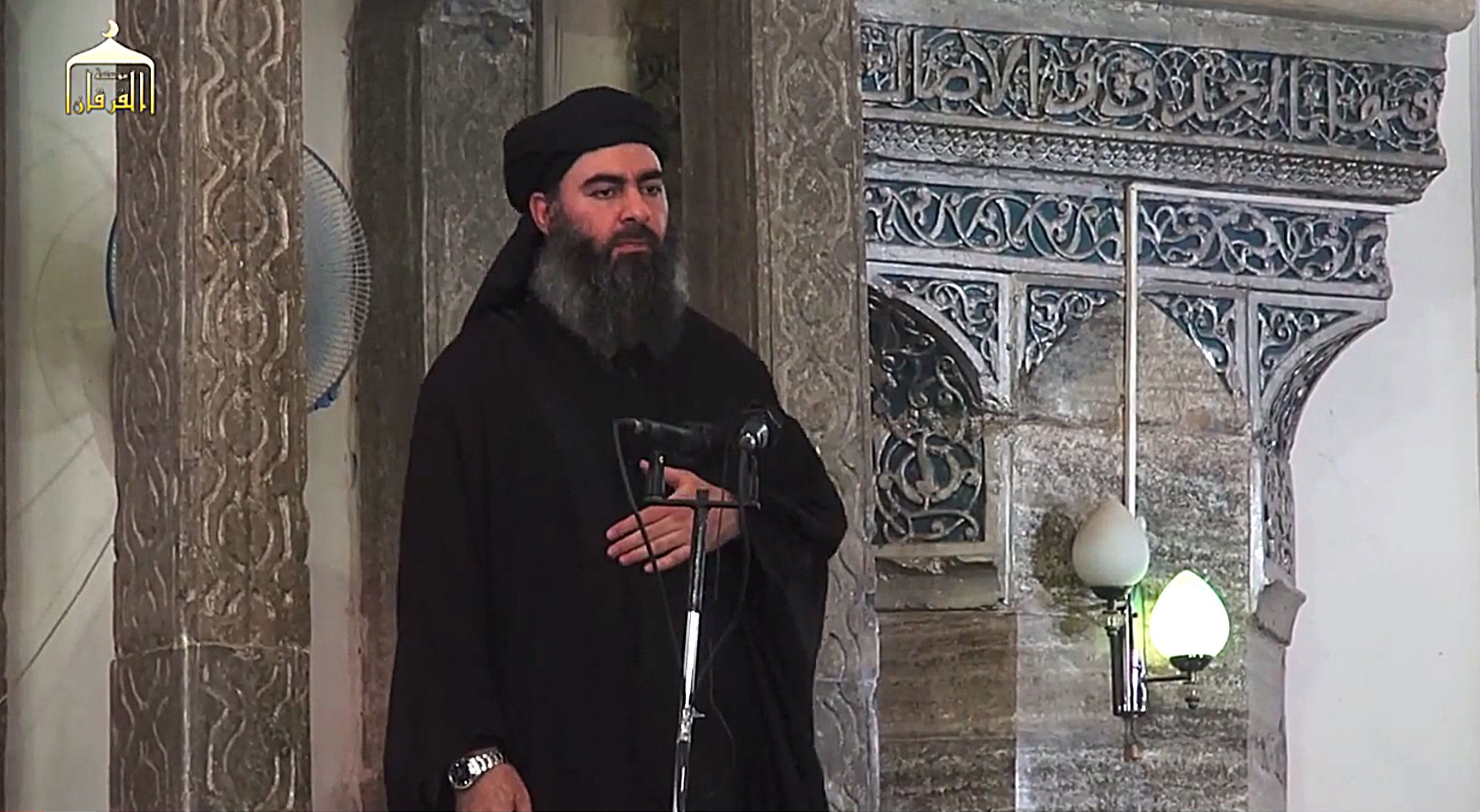
The leader of the Islamic State (IS) since 2010 has been Abu Bakr al-Baghdadi, previously known as Abu Dua or Abu Awad, and his real name—acknowledged by IS itself since the declaration of the so-called Caliphate in 2014—is Ibrahim Awwad Ibrahim Ali Muhammad al-Badri al-Samarrai.
By Kyle Orton (@KyleWOrton) on August 1, 2016

The Islamic State (IS) published its fifteenth edition of ‘Dabiq,’ its English-language magazine, on 31 July 2016. The magazine was entitled, “Break the Cross”. The magazine contained two important articles outlining why IS hates and fights against the West. The most important article, an unsigned piece by an IS operative, simply titled, “Why We Hate You and Why We Fight You”. The second, “How I Came to Islam,” was written by Umm Khalid al-Finlandiyyah, a female Finnish foreign fighter who has joined IS. Those articles are reproduced below with some editions to transliteration and some interesting sections highlighted in bold. Continue reading
By Kyle Orton (@KyleWOrton) on July 30, 2016
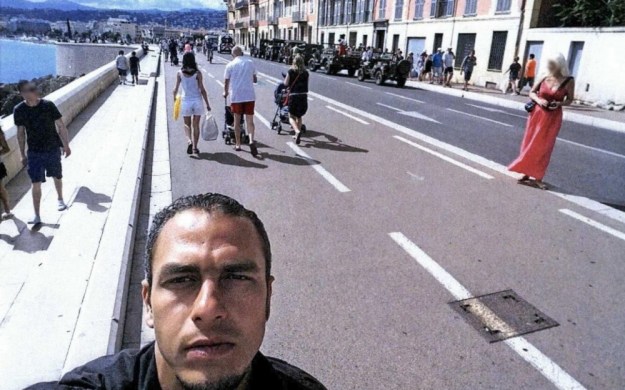
Mohamed Lahouaiej Bouhlel on the promenade in Nice on 14 July 2016
On 14 July 2016, Bastille Day, a lorry zig-zagged along the seafront Promenade des Anglais in Nice for two kilometres (1.25 miles) during a fireworks display. Eighty-four people, including ten children, were murdered instantly and two-hundred-plus wounded, nearly two-dozen critically. Below is a compilation of the evidence so far, which indicates that the killer was a part of a substantial network acting on behalf of the Islamic State, though there is not yet any evidence of a direct contact with the terrorist state headquartered in Raqqa. Continue reading
By Kyle Orton (@KyleWOrton) on July 28, 2016
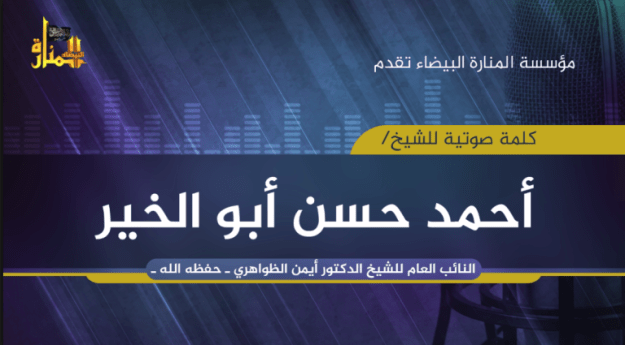
Graphic released with the speech of Ahmad Hassan (Abu Khayr al-Masri) about Jabhat al-Nusra and relations with al-Qaeda
In advance of Jabhat al-Nusra rebranding as Jabhat Fatah al-Sham (JFS) on 28 July 2016, there were carefully coordinated media releases between al-Qaeda “central” (AQC) and al-Nusra. First, al-Manara al-Bayda (The White Minaret), al-Nusra’s media arm, released a six-minute audio speech by Abdullah Muhammad Rajab Abd al-Rahman (Abu Khayr al-Masri),[1] identified as the deputy to al-Qaeda’s leader Ayman al-Zawahiri; then there was the first ever picture of al-Nusra’s leader, Abu Muhammad al-Jolani, whose real name is Ahmad Husayn al-Shara, and shortly thereafter a video of al-Shara ostensibly severing ties with al-Qaeda; and finally the founding document for JFS was published. Continue reading
By Kyle Orton (@KyleWOrton) on May 13, 2016

Junead Khan (left) and Shazib Khan (right)
Junead Khan, 25, of Marlow Avenue, Luton, was sentenced to life imprisonment—to serve a minimum of twelve years—today for using his job as a delivery driver to scout out an attack on American troops stationed at Lakenheath in Britain. Khan had gathered materials on bomb-making and browsed Amazon for a knife like that used by Mohammed Emwazi (Abu Muharib al-Muhajir), the Islamic State’s British video butcher, widely known as “Jihadi John,” who was killed in a drone strike in November 2015. Khan, who was arrested on 14 July 2015 with his younger uncle, Shazib Khan, 23, intended to fake a road accident and then attack those who came to assist. Junead and Shazib were found guilty of terrorism offences for their plans to travel to Syria and sentenced to seven years each, with an extended period of five years on licence. Continue reading
By Kyle Orton (@KyleWOrton) on May 8, 2016
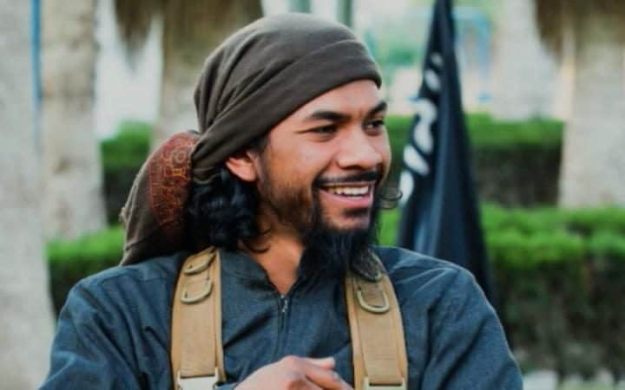
Neil Prakash
Neil Prakash has become Australia’s most visible recruiter for the Islamic State, following in the footsteps of Mohammad Ali Baryalei. Continue reading
By Kyle Orton (@KyleWOrton) on April 26, 2016
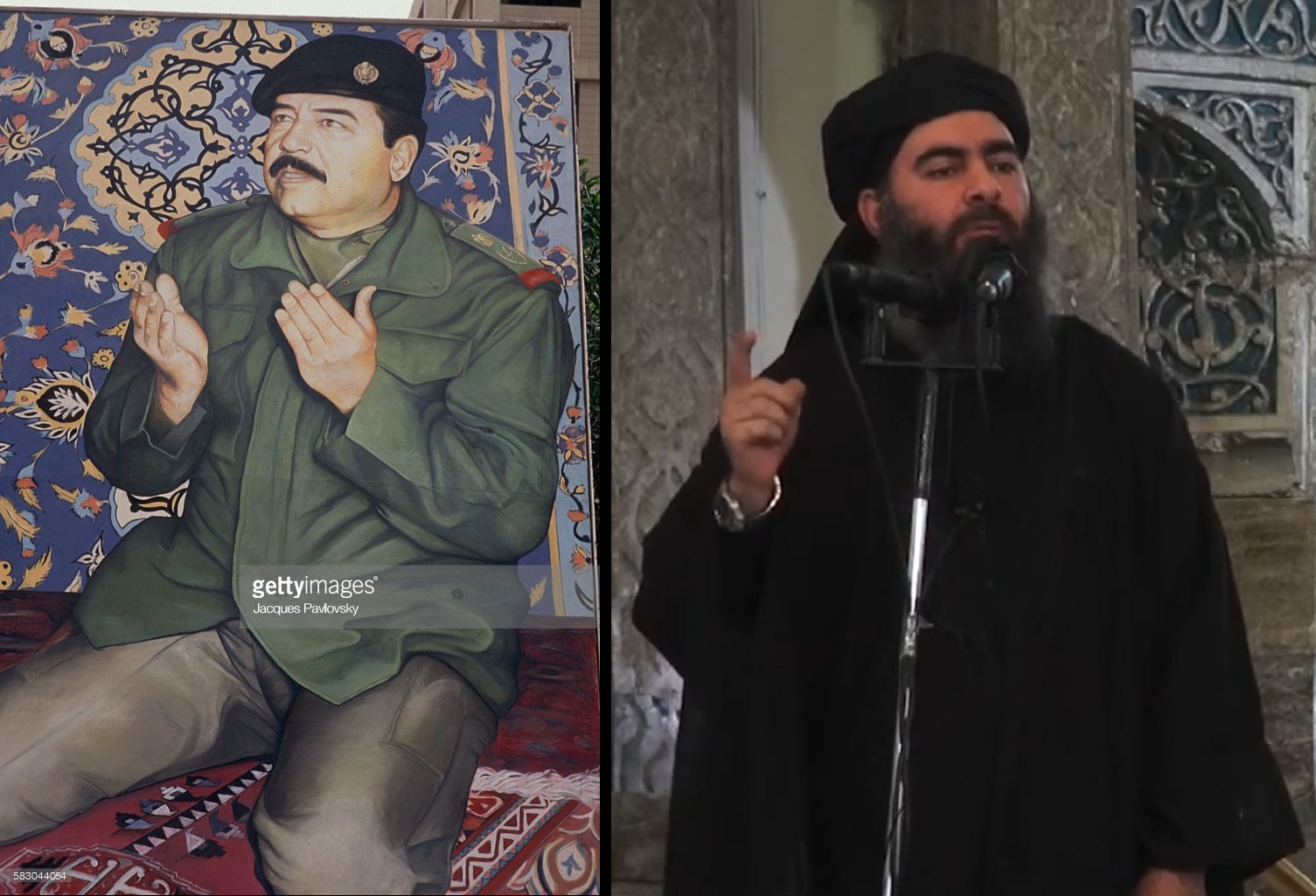
This essay, written to tie together my work on the relationship between the Saddam Hussein regime and the Islamic State, was completed last summer and submitted to an outlet, where it entered a form of development hell. After giving up on that option late last year, the opportunity arose to get a shorter version published in The New York Times in December. But I procrastinated too long over what to do with the full essay and a recent change in my work situation means I no longer have the bandwidth to go through the process of finding it a new home, so here it is.
“Abu-Bakr al Baghdadi is a product of the last decade of Saddam’s reign,” argues Amatzia Baram, a scholar of Iraq. He is correct in at least three ways. First, in its last decade in power, the Iraqi Ba’ath regime transformed into an Islamist government, cultivating a more religious, sectarian population on which the Islamic State (ISIS) could draw. Part of Saddam Hussein’s “Faith Campaign” also involved outreach to Islamist terrorists, including al-Qaeda, which meant that the synthesis of Ba’athism and Salafism that fused into the Iraqi insurgency after the fall of Saddam was already well advanced by the time the Anglo-American forces arrived in Baghdad in 2003. Second, the ISIS leadership and military planning and logistics is substantially reliant on the intellectual capital grown in the military and intelligence services of the Saddam regime. And finally, the smuggling networks on which ISIS relies, among the tribes and across the borders of Iraq’s neighbours, for the movement of men and materiel, are directly inherited from the networks erected by the Saddam regime in its closing decade to evade the sanctions. The advantages of being the successor to the Saddam regime make ISIS a more formidable challenge than previous Salafi-jihadist groups, and one that is likely to be with us for some time.
By Kyle Orton (@KyleWOrton) on March 24, 2016
Article published at NOW Lebanon
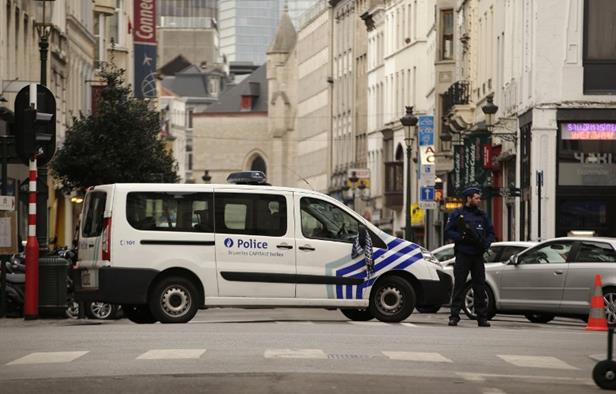
The long arm of the Islamic State (ISIS) has struck again. Tuesday morning, Zaventem airport in Brussels was hit by two suicide bombers and soon after a third man detonated at Maelbeek metro station, not far from the headquarters of the European Union. At least 31 people were slaughtered and around 270 were injured. Belgium has a long history as a hub of global jihadism and some of its citizens were key in forming ISIS’s statelet. In the wake of the attack, as Western governments look for ways to hasten the demise of ISIS, it will likely be said—again—that the quickest way to do that is by striking a devil’s bargain with the regime of Bashar al-Assad in Syria. From Assad’s role in helping ISIS lay its groundwork in Iraq even before the U.S. invasion to Assad’s help, by omission and commission, in nurturing ISIS in the years since the uprising against him began as a means of defeating the opposition to Assad’s deliberate incitement of a sectarian war, there is nothing that could be further from the truth. While Assad remains in power, ISIS will remain alive. Continue reading
By Kyle Orton (@KyleWOrton) on February 12, 2016
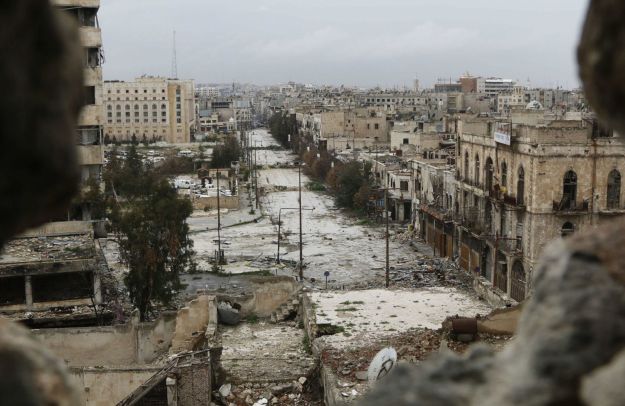
This morning, Russia ostensibly agreed to help the U.S. impose a ceasefire in Syria within a week—on the way to a negotiated settlement. This could not work right now, even if Russia intended it to. But Russia does not. Russia’s role since intervening in Syria in late September 2015 has been to bolster the regime of Bashar al-Assad and a primary tactic in that overarching strategic aim has been the attempt to destroy all opposition to Assad that the international community could possibly deal with, and to create a binary situation where there is only the regime and jihadi-Salafist terrorists, primarily the Islamic State (IS), and secondarily—in areas where they do not threaten key regime interests—Jabhat an-Nusra (al-Qaeda). Moscow will eventually turn on IS, but in the short-term Russia has engaged in indirect coordination with IS to weaken the rebels and push them out of key strategic areas, notably in eastern Aleppo where Russia bombed rebels out of the way who had been holding IS out for years. On Tuesday, Foreign Policy reported on another aspect of this Russia-IS collaboration that aims to empower the takfiris in the short-term as part of the long-term plan, also supported by Iran, to secure the Assad regime in power. Continue reading
 Kyle Orton's Blog