Tag Archives: Turkey

State Department Designates Two Canadian Jihadists in Syria

By Kyle Orton (@KyleWOrton) on 14 April 2017

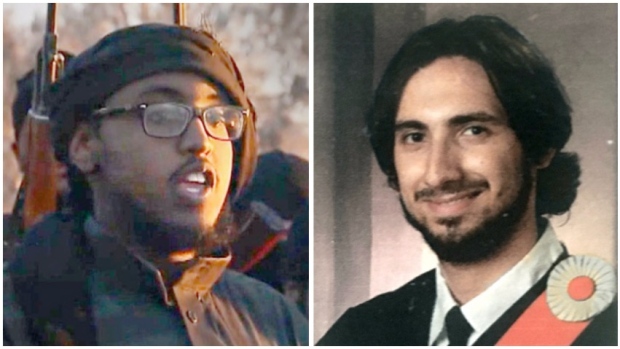
Farah Mohamed Shirdon, Tarek Sakr (image source)

The U.S. State Department added two Canadians to the list of Specially Designated Global Terrorists (SDGT) on 13 April. One of them, Tarek Sakr, of Syrian descent, is associated with Jabhat al-Nusra, al-Qaeda’s Syrian branch, which has since been through two rebrands to Jabhat Fatah al-Sham (JFS) and currently Hay’at Tahrir al-Sham (HTS). The other, Farah Mohamed Shirdon, of Somali background, is a member of the Islamic State (IS). Continue reading

The West’s Inconsistent Approach To Foreign Fighters in Syria

Originally published at The Henry Jackson Society

By Kyle Orton (@KyleWOrton) on 10 April 2017

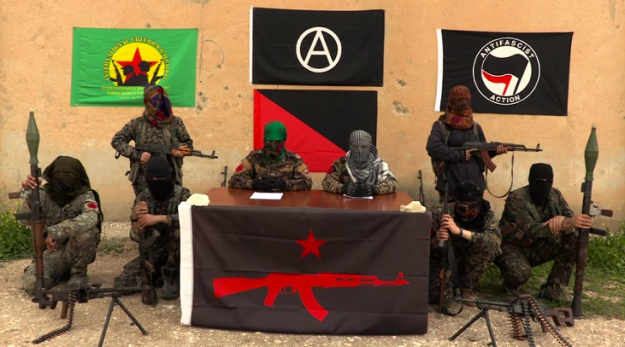
The Kurdistan Workers’ Party (PKK), the Turkey-based Kurdish Marxist-nationalist insurgent group, which is listed as a terrorist organization by Britain, the United States, NATO, and Turkey, created a new foreign fighter unit in Syria on 31 March. In Syria, the PKK uses the name People’s Protection Units (YPG), and the new organization, mostly composed of Europeans, is called the International Revolutionary People’s Guerrilla Forces (IRPGF). In addition to underlining some interesting points about the PKK and Western strategy in the fight against the Islamic State (IS), the IRPGF also underlines the different approach the West has taken to foreign fighters flowing to various groups during the Syrian war. Continue reading

Islamic State Expands its Foreign Attacks Capacity As the Caliphate Collapses

Published at The International Business Times

By Kyle Orton (@KyleWOrton) on 23 March 2017

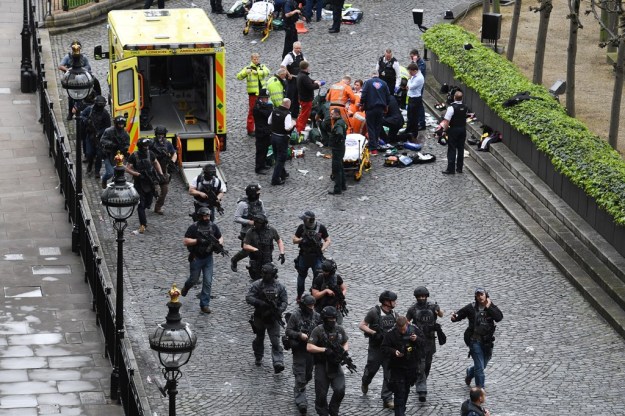
Aftermath of the Islamic State terrorist attack in Westminster, March 2017 (image source)

Just after 2:30pm yesterday afternoon, a terrorist mowed down pedestrians with a car on Westminster Bridge before jumping out near Parliament and stabbing a police officer to death. Three people were murdered, forty were injured, and the attacker was shot dead. The Islamic State (ISIS) has now claimed the attack.

The most important question is whether the terrorist had co-conspirators. Prime Minister Theresa May told Parliament this morning that it is “believed that this attacker acted alone”. It is crucial that this is not misread as saying that the attacker was a ‘lone wolf’. The arrests in Birmingham overnight suggest that this killer could have been part of a broader network, which would be consistent with the pattern of ISIS behaviour.

In a new report for the Henry Jackson Society, documents 152 foreign ISIS attacks in 34 countries since 2002, the vast majority in the past two years. In nearly three-quarters of the cases the attacks have a direct link to the organisation, and those without often have accomplices who assist in the atrocities in some way. Just 15% of the attacks have been by inspired individuals, who had no demonstrated connection to ISIS or anyone else in planning or executing their attack. Continue reading

Repression Increases in the Syrian Kurdish Areas

By Kyle Orton (@KyleWOrton) on March 16, 2017

Kurds protesting against the PYD in Hasaka, 16 August 2016

The Democratic Union Party (PYD), the Syrian front of the Turkey-based Kurdistan Workers’ Party (PKK), is the leading group in the administration of the Kurdish areas in north-eastern Syria. The PYD and its armed wing, the People’s Protection Units (YPG), have become the preferred instrument of the U.S.-led Coalition against the Islamic State (IS) and as a by-product have been assisted in conquering some Arab-majority zones of northern Syria—and perhaps soon of eastern Syria. The PYD/PKK has always treated all dissent harshly and the Kurdish opposition in recent days has reported an escalation in repression by the PYD, which the West—as has become a habit in cases of PYD misbehaviour—has made no public protest about. Continue reading

Al-Qaeda in Syria Denounces America, Claims to Be the Revolution

By Kyle Orton (@KyleWOrton) on March 13, 2017

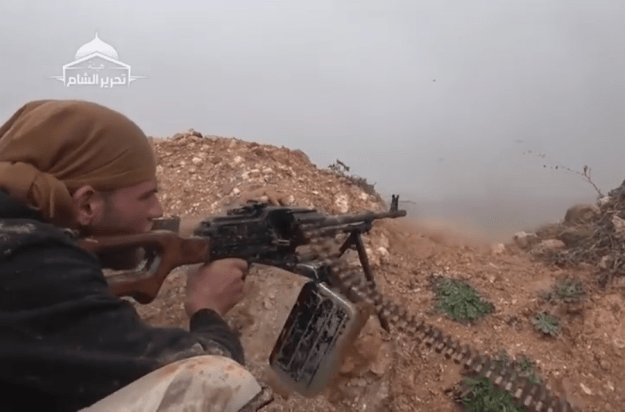
Hay’at Tahrir al-Sham fighter engaging the Assad regime

Michael Ratney, who has been the United States Special Envoy for Syria since July 2015, wrote a public letter , released on 11 March 2017, which labelled all constituent parts of Hay’at Tahrir al-Sham (HTS) as members of al-Qaeda and therefore as terrorists.[1] On 12 March, HTS’s “Administration of Political Affairs”—its newly-minted political office, perhaps evidence of an evolution in HTS’s thinking about an endgame in Syria—issued a statement in reply, which is reproduced below.
Continue reading

Outcome Uncertain as American Involvement in Syria Deepens

By Kyle Orton (@KyleWOrton) on March 10, 2017

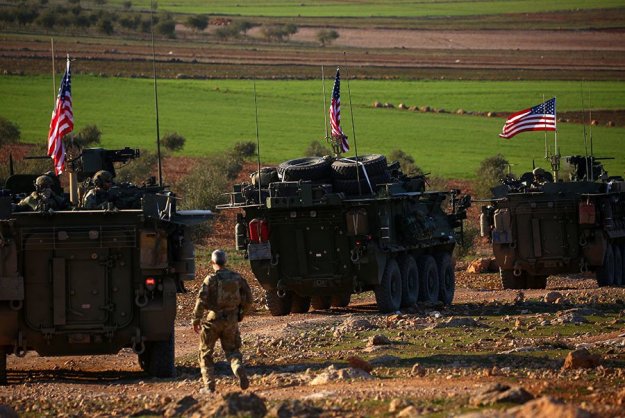
American ground forces are getting more deeply entangled in Syria as the offensive to push the Islamic State (IS) out of its de facto capital city, Raqqa, approaches. It remains unclear exactly which actors in Syria these troops will be assisting, though there are more and more indications that their mission will redound to the benefit of the regime of Bashar al-Assad and his allies, Iran and Russia. Continue reading

Islamic State Has Been Defeated in Al-Bab, But America Needs a New Direction in Syria

Published at The International Business Times and subsequently discussed on the IBTimes podcast

By Kyle Orton (@KyleWOrton) on February 27, 2017

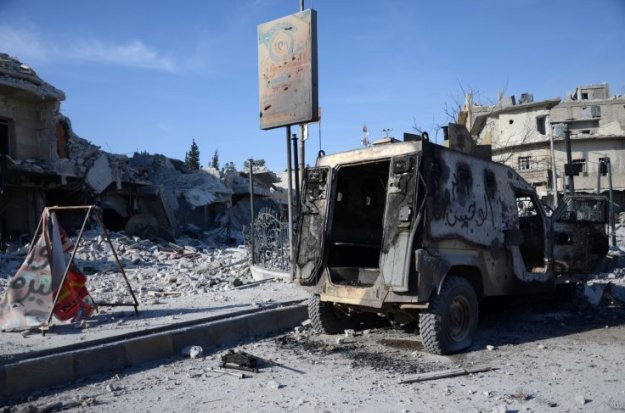
A burnt-out vehicle on a destroyed street in al-Bab on 23 February 2017 (Nazeer al-Khatib/AFP/Getty Images)

Turkey intervened in Syria in August 2016 with Operation Euphrates Shield (OES), which involved special forces, some regular troops, and the mobilisation of Syrian rebels to clear its border of terrorist threats by pushing ISIS (the Islamic State) away from the frontier and preventing the Syrian branch of the Kurdistan Workers’ Party (PKK) creating a state-let on its border that could be used as a harbour and launch-pad for attacks inside Turkey.

To secure this mission, on 13 November 2016 OES began an assault on al-Bab in the eastern countryside of Aleppo Province, just 15 miles from Turkey’s border and ISIS’ last major urban centre in Syria outside its capital, Raqqa. Some 102 days of combat later, on 23 February, al-Bab fell. What happens next could determine the course of the war as Turkey competes with the PKK to be the U.S.-led Coalition’s partner in clearing ISIS from Raqqa. Continue reading

The Need for Caution in Releasing Guantanamo Inmates

Originally published at The Henry Jackson Society.

By Kyle Orton (@KyleWOrton) on February 21, 2017

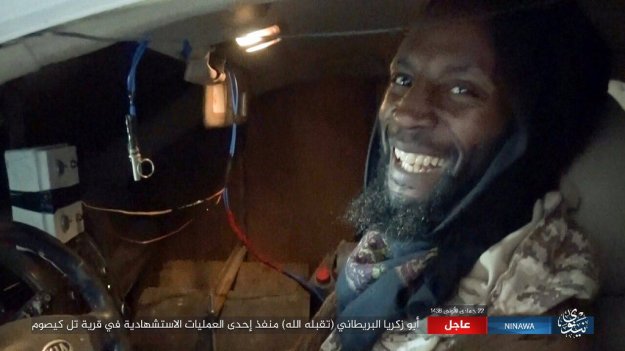
Ronald Fiddler (Abu Zakariya al-Britani)

Ronald Fiddler (Abu Zakariya al-Britani)

Since the offensive against Mosul, the Iraqi capital of the Islamic State (IS), began five months ago, IS has expended a high number of lives quite deliberately in suicide attacks. One of the suicide-attacks conducted on 20 February 2017, a car bombing against an Iraqi base, was by Abu Zakariya al-Britani, a British citizen now identified as Ronald Fiddler from Manchester. In 2002, Fiddler, then calling himself Jamal Udeen al-Harith, was sent to Guantanamo Bay, before being released in 2004 while still protesting his innocence. After suing the British government over his imprisonment, Fiddler received a substantial cash settlement in order to avoid compromising state secrets. Fiddler’s demise invites some revisiting of widely-held assumptions surrounding Guantanamo. Continue reading

Liberating Raqqa from the Islamic State

By Kyle Orton (@KyleWOrton) on February 17, 2017
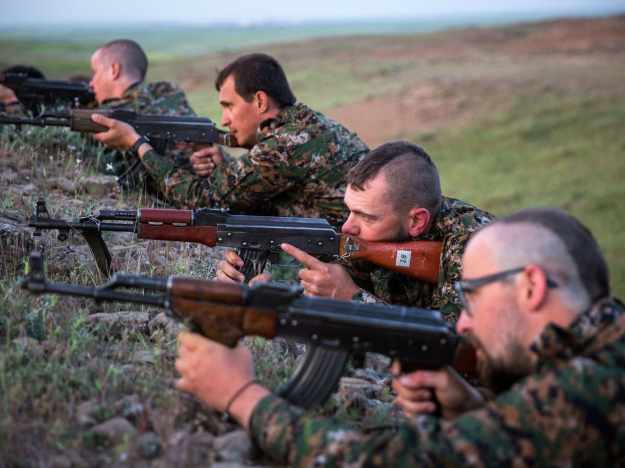
As the new administration of Donald Trump works through the United States’ options in dealing with Syria, and the Islamic State (IS) specifically, one option apparently under consideration is the use of greater numbers of combat troops to accelerate the expulsion of IS from its Syrian capital, Raqqa. While more U.S. troops would undoubtedly hasten the collapse of IS’s grip on its urban strongholds in Syria, such a policy risks continuing the failed U.S. policies of the past six years in Syria that have tackled symptoms of the conflict, rather than its causes, have tried to tackle elements in isolation from the wider conflict, and have placed too great an emphasis on military progress over politics. Continue reading

Life under the Kurdish YPG in Syria

By Kyle Orton (@KyleWOrton) on February 17, 2017

Uygar Onder Simseki/AFP/Getty Images

Uygar Onder Simseki/AFP/Getty Images

Four days ago, Chapo Trap House, a Left-wing politics and humour podcast, hosted Brace Belden, known to Twitter as “PissPigGranddad,” a 27-year-old from San Francisco who has joined the Syrian Kurdish militia, the People’s Protection Units (YPG). It was very interesting and informative on the state of play in northern Syria.

The YPG is run by the Democratic Union Party (PYD) front of the Kurdistan Workers’ Party (PKK). The most amusing part of the interview is Belden’s formal maintenance that the YPG, while fraternal comrades to the PKK and admirers of their ideology, have absolutely no organizational links at all, while at the same time letting the audience in on the fact that the YPG and indeed the Syrian Democratic Forces (SDF) coalition that it controls are parts of the PKK structure. Belden describes joining the YPG by first linking up with the PKK at its headquarters in the Qandil Mountains in northern Iraq, before being spirited across the border into Syria.

Belden gives a very interesting glimpse of the YPG’s method of governance. The YPG calls its rule “libertarian socialism,” says Belden, but it’s “pretty much a Stalinist state”. Belden describes the ascetic nature of the true believers in the PKK’s ideology—of which he, clearly, is not one—and the collectivized nature of life. Among other things, everyone is subjected to struggle sessions of the kind associated with Mao or the Khmer Rouge. Continue reading