Tag Archives: Turkey

Islamic State Has Been Defeated in Al-Bab, But America Needs a New Direction in Syria

Published at The International Business Times and subsequently discussed on the IBTimes podcast

By Kyle Orton (@KyleWOrton) on February 27, 2017

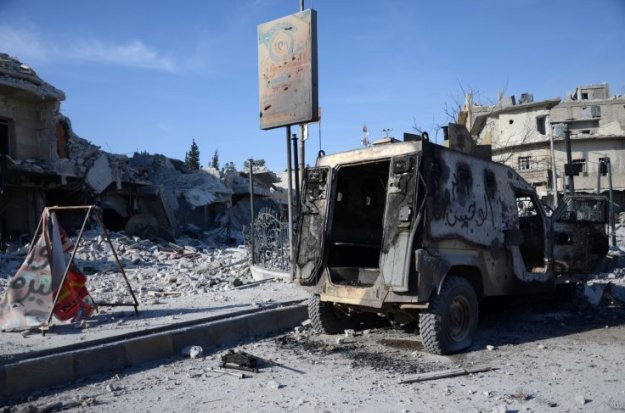
A burnt-out vehicle on a destroyed street in al-Bab on 23 February 2017 (Nazeer al-Khatib/AFP/Getty Images)

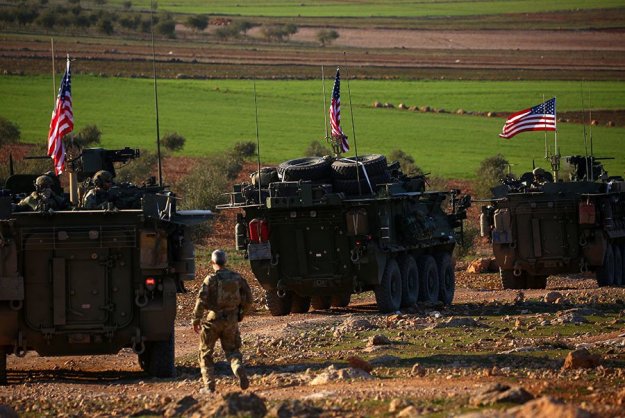
Turkey intervened in Syria in August 2016 with Operation Euphrates Shield (OES), which involved special forces, some regular troops, and the mobilisation of Syrian rebels to clear its border of terrorist threats by pushing ISIS (the Islamic State) away from the frontier and preventing the Syrian branch of the Kurdistan Workers’ Party (PKK) creating a state-let on its border that could be used as a harbour and launch-pad for attacks inside Turkey.

To secure this mission, on 13 November 2016 OES began an assault on al-Bab in the eastern countryside of Aleppo Province, just 15 miles from Turkey’s border and ISIS’ last major urban centre in Syria outside its capital, Raqqa. Some 102 days of combat later, on 23 February, al-Bab fell. What happens next could determine the course of the war as Turkey competes with the PKK to be the U.S.-led Coalition’s partner in clearing ISIS from Raqqa. Continue reading

The Need for Caution in Releasing Guantanamo Inmates

Originally published at The Henry Jackson Society.

By Kyle Orton (@KyleWOrton) on February 21, 2017

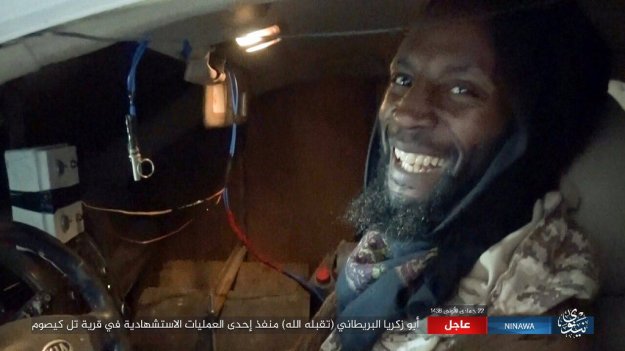
Ronald Fiddler (Abu Zakariya al-Britani)

Ronald Fiddler (Abu Zakariya al-Britani)

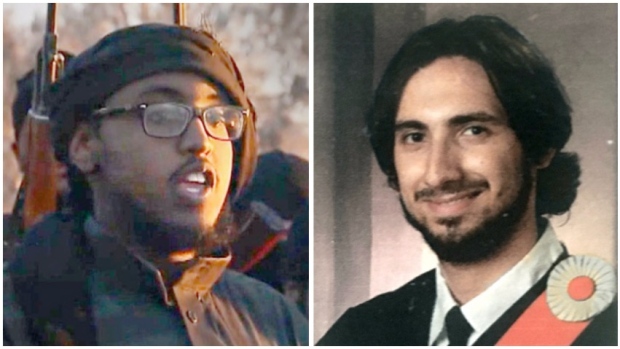
Since the offensive against Mosul, the Iraqi capital of the Islamic State (IS), began five months ago, IS has expended a high number of lives quite deliberately in suicide attacks. One of the suicide-attacks conducted on 20 February 2017, a car bombing against an Iraqi base, was by Abu Zakariya al-Britani, a British citizen now identified as Ronald Fiddler from Manchester. In 2002, Fiddler, then calling himself Jamal Udeen al-Harith, was sent to Guantanamo Bay, before being released in 2004 while still protesting his innocence. After suing the British government over his imprisonment, Fiddler received a substantial cash settlement in order to avoid compromising state secrets. Fiddler’s demise invites some revisiting of widely-held assumptions surrounding Guantanamo. Continue reading

Liberating Raqqa from the Islamic State

By Kyle Orton (@KyleWOrton) on February 17, 2017
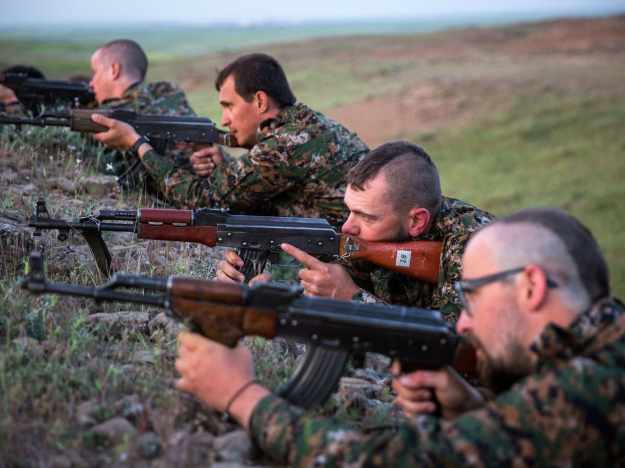
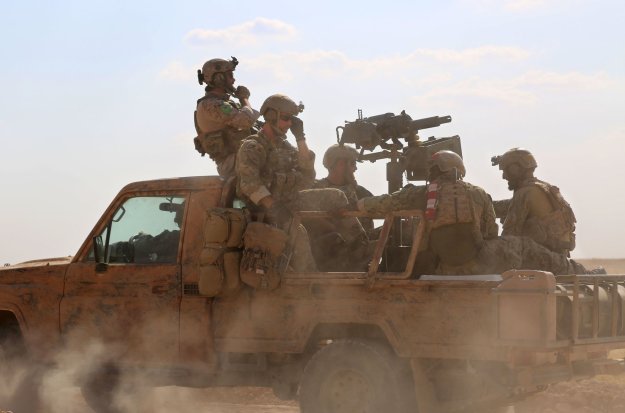
As the new administration of Donald Trump works through the United States’ options in dealing with Syria, and the Islamic State (IS) specifically, one option apparently under consideration is the use of greater numbers of combat troops to accelerate the expulsion of IS from its Syrian capital, Raqqa. While more U.S. troops would undoubtedly hasten the collapse of IS’s grip on its urban strongholds in Syria, such a policy risks continuing the failed U.S. policies of the past six years in Syria that have tackled symptoms of the conflict, rather than its causes, have tried to tackle elements in isolation from the wider conflict, and have placed too great an emphasis on military progress over politics. Continue reading

Life under the Kurdish YPG in Syria

By Kyle Orton (@KyleWOrton) on February 17, 2017

Uygar Onder Simseki/AFP/Getty Images

Uygar Onder Simseki/AFP/Getty Images

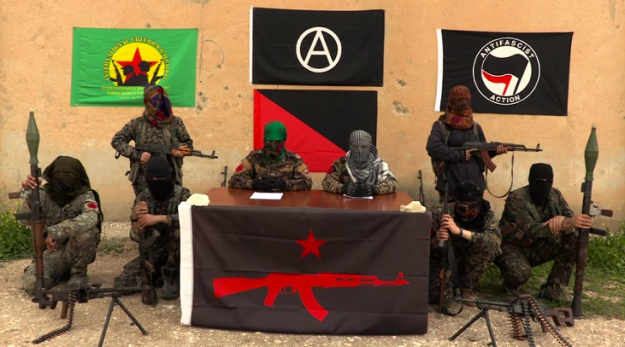
Four days ago, Chapo Trap House, a Left-wing politics and humour podcast, hosted Brace Belden, known to Twitter as “PissPigGranddad,” a 27-year-old from San Francisco who has joined the Syrian Kurdish militia, the People’s Protection Units (YPG). It was very interesting and informative on the state of play in northern Syria.

The YPG is run by the Democratic Union Party (PYD) front of the Kurdistan Workers’ Party (PKK). The most amusing part of the interview is Belden’s formal maintenance that the YPG, while fraternal comrades to the PKK and admirers of their ideology, have absolutely no organizational links at all, while at the same time letting the audience in on the fact that the YPG and indeed the Syrian Democratic Forces (SDF) coalition that it controls are parts of the PKK structure. Belden describes joining the YPG by first linking up with the PKK at its headquarters in the Qandil Mountains in northern Iraq, before being spirited across the border into Syria.

Belden gives a very interesting glimpse of the YPG’s method of governance. The YPG calls its rule “libertarian socialism,” says Belden, but it’s “pretty much a Stalinist state”. Belden describes the ascetic nature of the true believers in the PKK’s ideology—of which he, clearly, is not one—and the collectivized nature of life. Among other things, everyone is subjected to struggle sessions of the kind associated with Mao or the Khmer Rouge. Continue reading

Al-Qaeda Reshapes the Insurgency in Northern Syria

By Kyle Orton (@KyleWOrton) on February 7, 2017

Hay’at Tahrir al-Sham logo

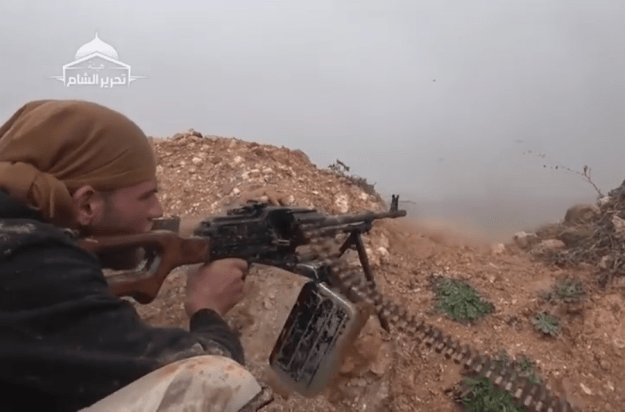
A series of clashes broke out on 19 January between al-Qaeda’s rebranded Syrian branch, Jabhat Fatah al-Sham (JFS), and its heretofore close ally and portal into the Syrian rebellion, Ahrar al-Sham. By 23 January, JFS had expanded its targets, engaging in hostilities with mainstream rebel groups in the “Greater Idlib” area, and specifically trying—and succeeding—in dismantling the positions of Jaysh al-Mujahideen, a moderate group, west of Aleppo. The crisis continued to escalate, forcing many groups to merge with Ahrar al-Sham for protection, until 28 January, when a JFS-led merger was announced under the banner of Hay’at Tahrir al-Sham (HTS), or the Syrian Liberation Committee. HTS announced a ceasefire, and since then individuals and groups—including a significant number from Ahrar—have given allegiance to HTS. This radical reshaping of revolutionary dynamics in northern Syria has undoubtedly created antibodies going forward against al-Qaeda that could be capitalized on by the international community, but the present situation is highly favourable to al-Qaeda. Continue reading

The Flag of the Islamic State

By Kyle Orton (@KyleWOrton) on January 27, 2017

The Islamic State’s June 2014 declaration that the areas it controlled were the restored “Caliphate” was seen by many as a novel development. In fact, “the State” was declared in October 2006. The next month, the predecessor of the Islamic State (IS), Al-Qaeda in Mesopotamia (AQM), dissolved itself, and a month after that the claim to statehood was expanded upon—while being wilfully ambiguous about the caliphal pretensions—in the first speech by the then-emir, Hamid al-Zawi (Abu Umar al-Baghdadi). Similarly, though confusion remains on the point, it was in this same period that the symbol of the Islamic State, its black flag, was established.

Continue reading

Al-Qaeda Says Attacking Syrian Rebel Groups Was Self-Defence Against A ‘Conspiracy’

By Kyle Orton (@KyleWOrton) on January 26, 2017

Ahmad al-Shara (Abu Muhammad al-Jolani)

Ahmad al-Shara (Abu Muhammad al-Jolani)

Violence erupted between Jabhat Fatah al-Sham, the rebranded al-Qaeda branch in Syria, and Ahrar al-Sham, its long-time ally and its bridge into the Syrian rebellion, beginning on 19 January. These clashes expanded to encompass the mainstream armed opposition on 23 January. Today, al-Maqalaat, a pro-JFS outlet, published a long statement explaining the fighting from JFS’s point-of-view. The salient points of the argument and other interesting elements are highlighted in bold. Continue reading

What to Expect in Syria in 2017

By Kyle Orton (@KyleWOrton) on January 25, 2017

Syria has broken down as a functioning entity. There were some who saw in the takeover of Aleppo City last month by the coalition of states and militias that supports Bashar al-Assad’s regime the beginning of the end of the war. The pro-Assad coalition will make further territorial gains in 2017, but peace—even the peace of the graveyard—is still a long way off, and unlikely to ever arrive while Assad remains in power. The West, unwilling and apparently unable to remove him, nonetheless has vital interests in Syria that cannot be outsourced and must be secured by navigating a fragmented state. Continue reading

Clashes Erupt Between Al-Qaeda and the Syrian Rebellion

By Kyle Orton (@KyleWOrton) on January 19, 2017

The leader of Ahrar al-Sham, Ali al-Umar (Abu Ammar); the leader of Jabhat Fatah al-Sham, Ahmad al-Shara (Abu Muhammad al-Jolani)

The leader of Ahrar al-Sham, Ali al-Umar (Abu Ammar); the leader of Jabhat Fatah al-Sham, Ahmad al-Shara (Abu Muhammad al-Jolani)

Clashes have erupted today between al-Qaeda’s Syrian branch, Jabhat Fatah al-Sham (JFS), and its heretofore-inseparable ally, Ahrar al-Sham. For the overall insurgency, the bodes ill, in the short-term, but there might be some long-term political advantages if JFS isolates itself from the wider opposition. Continue reading

An Insurgent Perspective on the Fall of Aleppo

By Kyle Orton (@KyleWOrton) on January 11, 2017

1

On The Ground News (OGN) interviewed Abu al-Abed Ashidaa on 10 January 2017. Abu al-Abed was appointed to lead all insurgents in the besieged areas of eastern Aleppo City on 1 December 2016. Aleppo City fell to the pro-regime coalition after a months-long campaign of siege, bombardment, and atrocity on 12 December, with the final deportation of the insurgency and tens of thousands of civilians—a  crime against humanity in itself—on 22 December.

OGN is an outlet operating inside Syria that is best known for featuring American activist, Bilal Abdul Kareem. The organization claims independence but is clearly within the milieu of the more hardline insurgent forces in northern Syria, and in fact appears to favour the political line of Jabhat Fatah al-Sham (JFS), al-Qaeda’s rebranded presence in Syria, against even other extremist Salafi groups like Ahrar al-Sham.

It was Kareem who interviewed Abu al-Abed. The transcript is below. Continue reading