Tag Archives: Turkey

Obama’s Iran Deal Increases Nukes, Terrorism, and Instability

By Kyle Orton (@KyleWOrton) on April 28, 2015

1

The key thing to understand about the Joint Comprehensive Plan of Action (JCPOA), the nuclear accord announced on April 2 between the P5+1 and Iran, is that it does not exist. The British Foreign Secretary Philip Hammond said at one point, “We envisage being able to deliver a narrative,” adding that this might not be written and—these being forgiving times—Iran’s narrative need not match the West’s. In other words, nothing was signed or agreed to. This is the reason for the wild discrepancies between the American and Iranian JCPOA “factsheets”: both are drawing from a rolling text that is ostensibly to lead to a “final” or “comprehensive” deal and spinning it to their own respective advantage. The administration has as much as said so with its mantra that “nothing is agreed until everything is agreed”.

The purpose of the announcement of the JCPOA therefore was, charitably, to “build political momentum toward a final agreement“. Less charitably it was intended to “demonstrate progress in order to fend off congressional action,” as Obama’s former nuclear adviser Gary Samore put it. In that at least it was successful. Continue reading

Syria’s Jihad Comes Home To The United States

By Kyle Orton (@KyleWOrton) on April 16, 2015

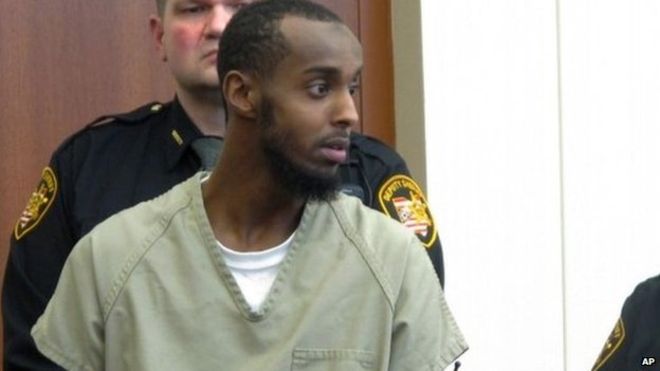
Abdirahman Sheik Mohamud

Abdirahman Sheik Mohamud

A United States Federal grand jury has charged Abdirahman Sheik Mohamud (a.k.a. Ayanle), a 23-year-old from Columbus, with one count of attempting to provide and providing material support to terrorists, one count of attempting to provide and providing material support to a designated foreign terrorist organization (both counts punishable by up to fifteen years in prison each), and one count of making false statements to the FBI in an indictment returned in the Southern District of Ohio (which carries a sentence of eight years).

Some of the press reports have been a little muddled, but the indictment is available to read and provides some intriguing details. Continue reading

The Local And Regional Implications From The Fall Of Idlib

By Kyle Orton (@KyleWOrton) on March 31, 2015

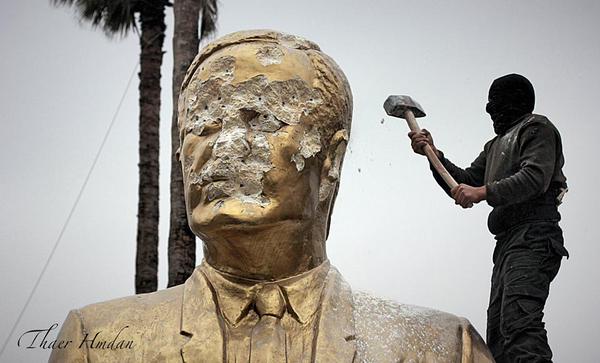
Statue of Hafez al-Assad defaced after Idlib City falls, March 29, 2015

Statue of Hafez al-Assad defaced after Idlib City falls, March 29, 2015

After an insurgent offensive began on March 24, Idlib City fell on March 29, making it only the second—of Syria’s fourteen—provincial capitals to slip from the control of Bashar al-Assad’s regime, the last one being Raqqa City on March 4, 2013. The regime has been on borrowed time in Idlib City since Wadi al-Deif to the south, near Maarat an-Numan, fell in mid-December.

In a scene reminiscent of Raqqa—and indeed the fall of Baghdad—a statue of Hafez al-Assad was destroyed. The insurgents broke open some secret prisons, while finding that in a final act of needless cruelty the regime had murdered other prisoners in the cells before retreating.

An operations room, Jaysh al-Fatah (Army of Conquest), organised this offensive, and is composed of: Faylaq a-Sham (Sham Legion), Liwa al-Haq, Ajnad a-Sham, Jaysh al-Sunna, Ahrar a-Sham, Jund al-Aqsa (JAA), and al-Qaeda’s Syrian branch, Jabhat an-Nusra. Continue reading

Al-Qaeda Issues Strategic Guidelines for Jihadist Warfare

By Kyle Orton (@KyleWOrton) on January 7, 2015

Al-Qaeda’s emir, Ayman al-Zawahiri, released a document on 14 September 2013, entitled, Tawjihat ‘Amma lil-Amal al-Jihadi (توجيهات عامة للعمل الجهادي), variously translated as: “General Guidelines for the Work of Jihad” or “General Guidelines for Jihadist Action”. Al-Zawahiri’s document is reproduced below. Continue reading

From Kessab to Cannibals: Syria’s Media War

By Kyle Orton (@KyleWOrton) on January 5, 2015

Mother Agnes Mariam on RT. An agent of the regime, she dismissed Syria's rebels as a foreign conspiracy.

Mother Agnes Mariam on RT. An agent of the regime, she dismissed Syria’s rebels as a foreign conspiracy.

Fouad Ajami once said Syria was the “first YouTube war“. An academic study called Syria “the most socially mediated civil conflict in history“. From the start of the Syrian war, the media and propaganda dimension has been of immense importance, impacting the course of the war on the ground and affecting the policy of foreign States who could make a decisive difference in the conflict. Continue reading

A Freeze In Aleppo Won’t Help Save Syria—But It Might Help Assad

By Kyle Orton (@KyleWOrton) on December 15, 2014

Great Mosque in Aleppo


On October 30, the United Nations peace envoy Staffan de Mistura presented an “action plan” for Syria, which included a plan for a “freeze zone” in Aleppo to give “an opportunity for some type of humanitarian improvement”. De Mistura wanted this to re-focus efforts of fighting units on all sides against the Salafi-jihadists of the Islamic State and Jabhat an-Nusra (al-Qaeda). Small wonder then that Assad’s U.N. envoy, Bashar Jafaari, said the regime was giving the proposal “due consideration”.

This freeze idea had emerged just after the Obama administration had, through surrogates, said it was sympathetic to the idea of trying to use local “ceasefires” Continue reading

Obama’s Abandonment of Kobani Isn’t Just A Disaster For The Kurds

By Kyle Orton (@KyleWOrton) on October 9, 2014

Syrian Kurdish refugees at the Turkish frontier

Syrian Kurdish refugees at the Turkish frontier

After three-and-a-half years of resistance, the United States finally intervened in Syria on September 23 with airstrikes against the Islamic State (I.S.). The I.S. had begun an attack on the Kurdish-controlled enclave in northern Aleppo along the Turkish border on September 15/16. By October 5, the Kurdish forces had been driven back into the Kurdish-majority town of Kobani (a.k.a. Ayn al-Arab), and I.S. had them surrounded. The desperate scenes of Syrian Kurds fleeing over the Turkish border in the face of the takfiris’ recalls the Iraqi Kurds making a run for the hills after the March 1991 uprising against Saddam Hussein was crushed. Then as now the Kurds believed they had stronger American backing than turned out to be the case. Continue reading

HAMAS Is Responsible For The War In Gaza But Israel Has Blundered With This Invasion

By Kyle Orton (@KyleWOrton) on July 28, 2014

Rocket damage doesn't only happen in Gaza: Home demolished in Eshkol Regional Council, southern Israel

Rocket damage doesn’t only happen in Gaza: a home demolished in Eshkol Regional Council, southern Israel

To clear a few things up. Whether or not HAMAS’ central command ordered the kidnapping and murder of the three Israeli teens is largely irrelevant: the real trigger for this round of fighting was the escalation in HAMAS’ rocket attacks—more than 450 since January and nearly 100 on the day before Operation PROTECTIVE EDGE began—and HAMAS’ construction of tunnels into Israel designed to enable further atrocities against her civilians.

All rhetoric about the cruel, arbitrary Israeli blockade that would not even allow in cement to the people of Gaza who needed it to create jobs and to reconstruct their schoolrooms and homes is now overthrown and we see the truth: what little cement did get into Gaza was siphoned off by a tyrannical and aggressive elite to build tunnels to murder civilians and bunkers to protect themselves and their weapons. More than that, they used child labour that killed 160 children to construct these tunnels. HAMAS might well have miscalculated, as some have said—it might have intended only for a minor set of Israeli strikes to rally the “resistance”—but that only underlines the recklessness and wickedness of the organization. HAMAS knows it cannot win this war so they intend to get as many Gazans as possible killed to mobilize global political pressure against Jerusalem for concessions on the blockade—that HAMAS can then use to reequip for another war in its never-ending quest to destroy the Jewish State.

The key aspect of this war that has gotten nothing like the attention it deserves is Clerical Iran. Continue reading

In Advancing Turkey Toward Democracy The Army Is Not The Answer

By Kyle Orton (@KyleWOrton) on May 10, 2014

Mustafa Kemal. He added the name Atatürk as part of his reforms of the Turkish language to the Latin script from the Perso-Arabic form.

It’s easy to see why Westerners admire Mustafa Kemal Atatürk. He abolished the Caliphate, led a quixotic campaign for female emancipation (a grizzled soldier at the head of a feminist campaign!), and, in my view correctly, identified the theocratic rule of the Caliphate as the primary cause of the Ottoman Empire’s decline. Continue reading