Tag Archives: Turkey

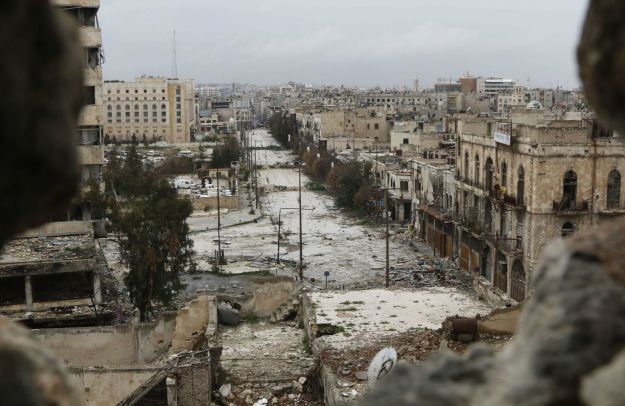
America Abandons the Syrian Revolution

By Kyle Orton (@KyleWOrton) on August 14, 2015

1

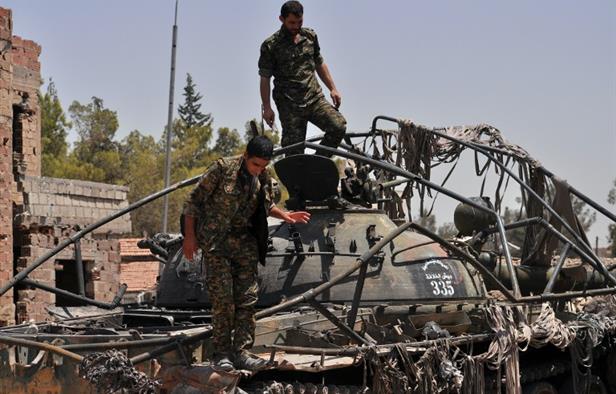
In the last week, two events have provided further evidence that the United States has effectively sided with the Assad regime in Syria, acting effectively as the regime’s air force, and that America’s alliance with Assad is part of the broader policy of détente with Iran, facilitated by the nuclear deal, which has ceded Syria to Iran as a sphere of influence. Continue reading

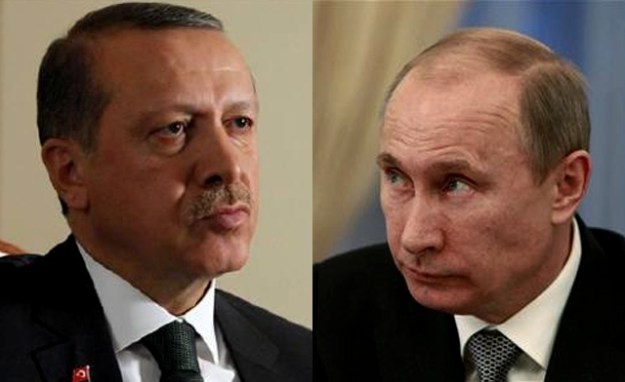
Turkey Fears A Kurdish State More Than The Islamic State

By Kyle Orton (@KyleWOrton) on July 28, 2015

A version of this article was published at NOW Lebanon 

1

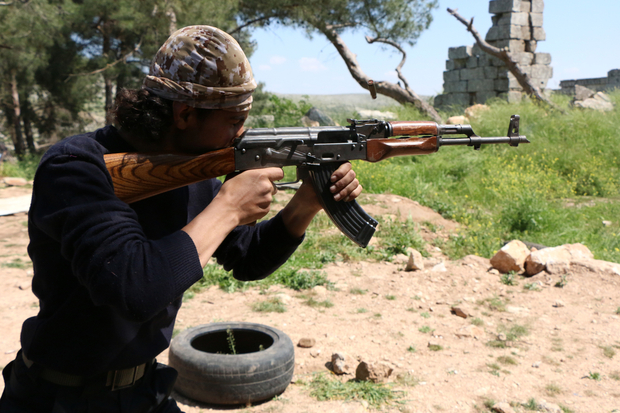
After years of threatening, Turkey directly intervened in Syria on Friday, launching airstrikes against the Islamic State (ISIS), and finally allowed the U.S. to use Incirlik for jet and drone attacks against ISIS. Concurrently, Turkey launched airstrikes into Iraqi Kurdistan against the Kurdistan Workers’ Party (PKK). Ankara is framing this as an equal-opportunities war on terrorists, but Turkey’s actions over the last four years in Syria give a lot of cause for wonder as to which side Ankara is on when it comes to terrorism. Continue reading

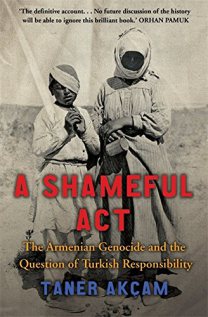
Book Review: A Shameful Act (2006) by Taner Akcam

By Kyle Orton (@KyleWOrton) on June 9, 2015

1

This is the complete review. It has previously been posted in three parts: Part 1 on the question of whether the 1915-16 Armenian massacres constitute genocide; Part 2 on the post-war trials and the Nationalist Movement; and Part 3 gives some conclusions on what went wrong in the Allied efforts to prosecute the war criminals and the implications for the present time, with Turkey’s ongoing denial that genocide took place and the exodus of Christians from the Middle East.

A Question of Genocide

The controversy over the 1915-16 massacres of Armenian Christians in the Ottoman Empire is whether those acts constitute genocide. Those who say they don’t are not the equivalent of Holocaust-deniers in that they do not deny that the massacres happened; what they deny is that the massacres reach the legal definition of genocide. Their case is based on three interlinked arguments:

  • Unlike the Nazi Holocaust where a defenceless population was murdered only for its identity, the Armenians were engaged in a massive armed revolt, and this is why the Ottoman government decided to deport them.
  • The intent of the Ottomans was not massacre but the removal of the Armenians, who had sided with one foreign invading power (Russia) and who were showing signs of collaborating with another (Britain), from the militarily sensitive areas as Turkey suffered a two-front invasion in early 1915.
  • While terrible massacres of Armenians, plus starvation and the cold, took maybe a million lives during the deportations—the numbers are very uncertain, again unlike the Holocaust—when the Armenians reached their destinations in Syria and Iraq, which were also part of the Ottoman Empire, they were well-treated and allowed to rebuild their lives, which would not have been the case had the Ottomans intended their destruction.

Taner Akcam’s A Shameful Act: The Armenian Genocide and the Question of Turkish Responsibility presents evidence to undermine every one of these arguments. Continue reading

Bernard Lewis and the Armenian Genocide Question

By Kyle Orton (@KyleWOrton) on June 7, 2015

In 2012, Bernard Lewis published his memoirs, Notes on a Century: Reflections of a Middle East Historian, which included a chapter on the court case brought against him in France in the 1990s for refusing to agree that the massacres of Armenians in the Ottoman Empire in 1915-16 constitute genocide in the original sense of the term, as applied to the Nazi Holocaust of European Jewry. The chapter is reproduced below.

Continue reading

Book Review: A Shameful Act (2006) by Taner Akcam, Part 3

By Kyle Orton (@KyleWOrton) on June 7, 2015

Part 1 of this review dealt with the question of whether the 1915-16 Armenian massacres constitute genocide. Part 2 was about the post-war trials and the Nationalist Movement. This part gives some conclusions on what went wrong in the Allied efforts to prosecute the war criminals and the implications for the present time. Alternatively, the complete review is available here.

Continue reading

Book Review: A Shameful Act (2006) by Taner Akcam, Part 2

By Kyle Orton (@KyleWOrton) on June 4, 2015

1

Part 1 of this review dealt with the question of whether the 1915-16 Armenian massacres constitute genocide. This part is about the post-war trials and the Nationalist Movement. Part 3 gives some conclusions on what went wrong in the Allied efforts to prosecute the war criminals and the implications for the present time. Alternatively, the complete review is available here.

The First Phase of the Trials

On October 30, 1918, the Ottoman Empire signed its final treaty of defeat. The Ottomans’ long decline began in 1683, and by 1844—not the 1830s, as Akcam slightly strangely says—the Empire was referred to as the “sick man of Europe”. The armistice was a near-total surrender, allowing the occupation of any area the Allies deemed necessary for their security. Unfortunately, it was neither the end of the war nor the end of the massacres against the Armenians.

The Allies—Britain, France, and Russia—issued a declaration on May 24, 1915, saying:

In light of the crimes against humanity and civilisation committed by Turkey, the allied powers warn the Sublime Porte that members of the Ottoman government involved in the mass murder will be held personally responsible for these crimes.

Not coincidentally, Akcam remarks, within days of this the official deportation law was passed through the Ottoman Parliament and would thereafter be issued by the Interior Ministry as legal cover for the CUP’s actions. The Allied statement was a first introduction of the concept of crimes against humanity, and of individual responsibility that extended to senior Generals and Heads of State. The Russians fell to the Communists and for reasons of realpolitik the French and Italians soon dropped their demands for punishing the Turkish war criminals, but the British were relentless. Continue reading

Book Review: A Shameful Act (2006) by Taner Akcam, Part 1

By Kyle Orton (@KyleWOrton) on June 1, 2015

1

This is the first part of a three-part review; it deals with the question of whether the 1915-16 Armenian massacres constitute genocide. Part 2 is about the post-war trials and the Nationalist Movement. Part 3 gives some conclusions on what went wrong in the Allied efforts to prosecute the war criminals and the implications for the present time. Alternatively, the complete review is available here.

A Question of Genocide

The controversy over the 1915-16 massacres of Armenian Christians in the Ottoman Empire is whether those acts constitute genocide. Those who say they don’t are not the equivalent of Holocaust-deniers in that they do not deny that the massacres happened; what they deny is that the massacres reach the legal definition of genocide. Their case is based on three interlinked arguments:

  • Unlike the Nazi Holocaust where a defenceless population was murdered only for its identity, the Armenians were engaged in a massive armed revolt, and this is why the Ottoman government decided to deport them.
  • The intent of the Ottomans was not massacre but the removal of the Armenians, who had sided with one foreign invading power (Russia) and who were showing signs of collaborating with another (Britain), from the militarily sensitive areas as Turkey suffered a two-front invasion in early 1915.
  • While terrible massacres of Armenians, plus starvation and the cold, took maybe a million lives during the deportations—the numbers are very uncertain, again unlike the Holocaust—when the Armenians reached their destinations in Syria and Iraq, which were also part of the Ottoman Empire, they were well-treated and allowed to rebuild their lives, which would not have been the case had the Ottomans intended their destruction.

Taner Akcam’s A Shameful Act: The Armenian Genocide and the Question of Turkish Responsibility presents evidence to undermine every one of these arguments. Continue reading

The Islamic State’s Strategy Is Working, Its Enemies Are Failing

By Kyle Orton (@KyleWOrton) on May 23, 2015

1

To hear President Obama tell it, his announced program to defeat the Islamic State (ISIS), which began with airstrikes into Iraq last August that were extended into Syria in September, is working, albeit with some tactical setbacks. The implication is that the setbacks of the U.S.-led anti-ISIS campaign are not strategic.

As J.M. Berger phrased it:

In the Washington vernacular, the act of Being Strategic implies a near mystical quality of superior thinking possessed by some, and clearly lacking amongst the vulgarians of the world—heedless brutes such as ISIL. Tactics are short-term ploys, easy to dismiss. Strategy is for winners.

Unfortunately, this soothing view is almost exactly wrong: it is the United States that is relying on various short-term methods—commando raids into the Syrian desert, for example—while ISIS has a long-term goal fixed in mind and is working assiduously to achieve it. The U.S.-led Coalition is losing, in short, and ISIS is winning. Continue reading

The Gulf States Push Back Against Obama’s Iran Policy

By Kyle Orton (@KyleWOrton) on May 12, 2015

1

President Obama invited the leaders of the Gulf Cooperation Council (GCC) to a meeting at Camp David on Thursday to clear the air as the President looks to finalize his nuclear deal with Iran. But on Sunday, Saudi King Salman said he was not attending, and soon after the Bahraini monarch followed. The only Gulf leaders in attendance will be the Emirs of Qatar and Kuwait. Since leaders do not just have other things to do when they are scheduled for a private meeting with the President of the United States, this can be taken as a pointed snub to President Obama, and no amount of administration spin about Salman’s absence having nothing to do with political substance will change that. Continue reading

Turkey and Saudi Arabia Move Against Assad

By Kyle Orton (@KyleWOrton) on May 5, 2015

1

Zahran Alloush, Abu Issa, Hashem al-Sheikh

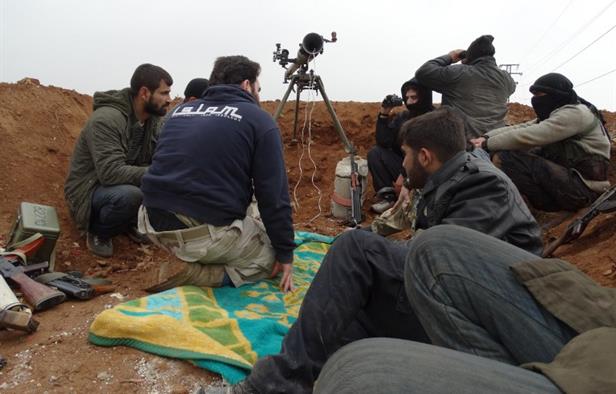
An effort is underway, led by Saudi Arabia and Turkey, mediated by Qatar, to unify the largest Syrian Islamist rebel brigades. With these regional powers now seemingly reading from the same script after years of internecine competition that has fractured the Syrian rebellion, there is also talk of a direct Saudi-Turkish intervention in Syria to overthrow Bashar al-Assad. While increased support to the Syrian insurgency from the Gulf and Turkey is already arriving, a direct intervention seems unlikely, though not, in the current context after the Saudi-led coalition went it alone in Yemen, impossible.  Continue reading