Author Archives: KyleWOrton

Rasputin and the Empress

By Kyle Orton (@KyleWOrton) on 13 December 2021

Grigori Rasputin

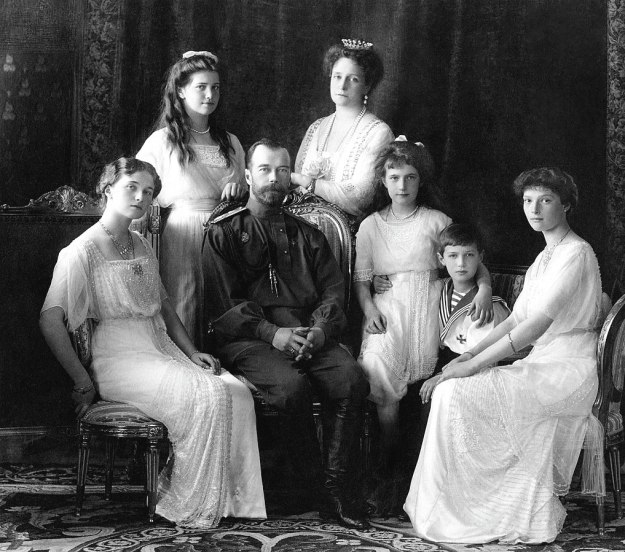
Grigori Rasputin, a Siberian peasant holy man, was a presence at the Russian Court between 1908 and his murder in 1916. Even so, Rasputin would only have been one figure among many and not be so notable in history, except for the fact that he gained significant political influence in his last couple of years due to his friendship with the Tsar’s wife. The degree of influence Rasputin exerted and the stories of his debauched behaviour have often been wildly exaggerated—at the time and since. But the stories did have a basis in fact—the Tsarina had fused together her personal forays in mysticism with her political role—and the stories themselves, lurid and defamatory as many of them were, had a concrete effect in damaging the monarchy as Revolution loomed. Continue reading

Russian Influence on the Nazis

By Kyle Orton (@KyleWOrton) on 10 December 2021

Michael Kellogg’s 2005 book, The Russian Roots of Nazism, argues that Russian “White émigrés” exerted financial, political-military, and ideological influences that “contributed extensively to the making of German National Socialism”. As such, argues Kellogg, Nazism “did not develop merely as a peculiarly German phenomenon”, but within an “international radical right milieu”. The book is interesting but deeply flawed, overstating its case by failing to set the facts it gathers in a proper context and for similar reasons misunderstanding where some of the Russian elements under discussion fit within the politics of the revolutionary upheaval after 1917, both within the borders of Russia and in exile in Europe. Continue reading

Unravelling the “Kornilov Affair”: The Last Stop Before the Bolshevik Takeover of Russia

By Kyle Orton (@KyleWOrton) on 8 December 2021

General Lavr Kornilov, 27 August 1917

The final key event on the road to the Bolshevik takeover of Russia in November 1917 was the “Kornilov Affair” that took place about two months earlier. Alexander Kerensky had become Prime Minister of the Provisional Government in July 1917 and around the same time General Lavr Kornilov had become Commander-in-Chief. A lot of accounts portray the “Kornilov Affair” as a “reactionary” coup attempt by Kornilov against Kerensky. The reality is very nearly the exact opposite. As historian Robert Pipes summarises: “All the available evidence, rather, points to a ‘Kerensky plot’ engineered to discredit the general as the ringleader of an imaginary but widely anticipated counterrevolution, the suppression of which would elevate the Prime Minister to a position of unrivaled popularity and power, enabling him to meet the growing threat from the Bolsheviks.”[1] Continue reading

Eulogy of Abu Musab al-Zarqawi from his Wife

By Kyle Orton (@KyleWOrton) on 26 November 2021

After the founder of the Islamic State movement, Ahmad al-Khalayleh, the infamous Abu Musab al-Zarqawi, was killed on 7 June 2006, an open letter eulogising him was posted by his wife, known only as Umm Muhammad (“the Mother of Muhammad”). The letter dates, it seems, to 6 July 2006, about a month after Zarqawi’s demise.[1] The content is mostly boilerplate: celebrating “the Shaykh of the Slaughterers” for terrorising the Americans and others who wanted constitutional government in Iraq,[2] venomous sectarian incitement against Shi’is, declaring that jihadist victory is near and cannot be derailed by the “martyrdom” of one leader. What is perhaps most notable when reading the letter at this distance is, firstly, that it was published by an Al-Qaeda media outlet, and, secondly, how much space is devoted to praising Usama bin Laden, and declaring the undying fealty of Zarqawi and his men to Bin Laden. Because, of course, the IS movement was at this time nominally a subordinate component of Bin Laden’s network named Al-Qaeda in Mesopotamia (AQM). The Zarqawists’ overt breach with Al-Qaeda still eight years in the future.

Continue reading

The 2007 Islamic State Book “Informing Mankind” of its Justifications for the Caliphate

By Kyle Orton (@KyleWOrton) on 22 November 2021

The Islamic State movement published an 87-page book, “Informing Mankind of the Birth of the Islamic State” or “Informing the People of the Birth of the Islamic State” (I’lam al-Anam bi-Milad Dawlat al-Islam), on 7 January 2007. The document was released by Al-Furqan Media Foundation, the central Islamic State propaganda institution, and first appeared on the World News Network website. A rough translation of the book appears below.

Continue reading

The Taliban Supreme Leader Emerges—Maybe

By Kyle Orton (@KyleWOrton) on 1 November 2021

Hibatullah Akhundzada

A ten-minute audio tape attributed to the Taliban’s Supreme Leader Hibatullah Akhundzada appeared on 30 October, the first such communication since the jihadist takeover of Afghanistan in August. Hailed as Akhundzada’s “first public appearance” or his decision to step into “the limelight”, the reality is more complicated. Continue reading

The Capture of the Islamic State “Finance Minister” and the Impact of Leadership Losses

By Kyle Orton (@KyleWOrton) on 22 October 2021

This article was originally published at European Eye on Radicalization

Sami Jassim al-Jaburi (Haji Hamid) | IMAGE SOURCE

Mustafa al-Khadhemi, the Iraqi Prime Minister, announced on the morning of 11 October that the Iraqi National Intelligence Service (INIS) had arrested Sami Jassim al-Jaburi (Haji Hamid), the effective finance emir of the Islamic State (ISIS), in “a complex external operation”. Continue reading

Hysteria and the Iranian Revolution

By Kyle Orton (@KyleWOrton) on 12 October 2021

Iranian protesters burn an effigy of the Shah outside the American Embassy, 1979 [source]

There were immense political forces at work in the Iranian Revolution of 1978-79, and they have been covered in some depth on this blog before. In this brief piece, I want to look at the social aspect, specifically the social contagion aspect. People who were in Iran during the Islamic Revolution or who have studied it deeply in retrospect describe the country going “temporarily insane”,[1] and tend to use terms like “febrile” and “hysterical” when describing the atmosphere, especially by the summer of 1978, since, as everyone seems to acknowledge, the revolutionary fervour fed on itself the longer it was allowed to continue. Continue reading

A Case of Red Terror in Spain: The Cárcel Modelo Massacre

By Kyle Orton (@KyleWOrton) on 8 October 2021

Cárcel Modelo, 1937 || MINISTERIO DE CULTURA. ESPAÑA

A fire was started at the Cárcel Modelo (Model Jail) in Madrid on 22 August 1936 by “common” criminals displeased with the pace of releases promised by the Republican government. The Republicans convinced themselves that the Carcel Modelo fire was a “fascist” uprising, brought about by conspiracy with General Franco’s forces outside the prison walls, who had initiated their rebellion a month earlier. The fire was used as a pretext by the Republicans to carry out a massacre of prisoners that lasted into the early hours of 23 August, in scenes reminiscent of the French Revolution’s September Massacres in 1792 that signalled the onset of the Terror. There were Rightist among the victims and some military men; there were also many liberals and non-Soviet Leftists. Continue reading

India’s Options in Afghanistan

By Kyle Orton (@KyleWOrton) on 6 October 2021

Army Jawans hold the National Flag near the snow-covered border on the 71st Republic Day (ANI Photo)

The U.S. Deputy Secretary of State Wendy Sherman arrived in India today for a three-day visit. Afghanistan will be high on the agenda. Continue reading