Author Archives: KyleWOrton

Islamist Clerics Give Permission to Work with Turkey Against ISIS and PKK

By Kyle Orton (@KyleWOrton) on August 4, 2015

Just over a week ago, a new clerical body was formed, al-Majlis Shura Ahl al-ilm fil-Sham (Advisory Council of the People of Knowledge in Syria), which includes Islamists from within Syria and from outside. Among the notable foreigners are Umar al-Hadouchi, a Moroccan jihadi-salafist, and Muhammad Ould al-Dedew, a Mauritanian who is more in line with the Sururis. There is also Abdallah al-Muhaysini, the Saudi jihadi cleric who is very close to al-Qaeda’s leadership inside Syria. From among Syrians, there are two Ahrar al-Sham notables, Dr. Ayman al-Harush and Mohamed Ayman Aboul-Tout (Abu Abbas al-Shami); Sa’ad al-Uthman, the son of Abd al-Karim, a major figure in the Hama wing of the Syrian Muslim Brotherhood, and Ahmad al-Salum, a Sururi (an activist/political Salafi).

The Council’s first statement condemned the 25 July assassination of the Faylaq al-Sham commander Mazin al-Qassum by Islamic State (IS) operatives with Jund al-Aqsa, and demanded that all groups clarify their stance on IS and cleanse their ranks of IS agents and sympathizers. Today’s fatwa, “Concerning cooperation and coordination with the Turks in repelling Daesh and the PKK,” licensed Muslims to work with the Turkish government against IS and the PKK. The fatwa is reproduced below. Continue reading

Russia’s Secret Police

By Kyle Orton (@KyleWOrton) on August 1, 20151

Charles Ruud’s and Sergei Stepanov’s Fontanka 16: The Tsar’s Secret Police traces the evolution of political policing in Russia, focusing on the Okhranka, the final incarnation of the secret police before the Russian Revolution in 1917, and along the way puts paid to a whole array of myths about the pre-Bolshevik Russian government, especially as regards the Jewish Question.

The growth of the Russian political police occurred in four major stages. The first phase lasted from the founding of the Russian State by Ivan the Terrible (1533-84) after the expulsion of the Tatars to the opening of the “Third Section” in 1826 as a reaction to the Decembrist revolt the previous year—the first time the Imperial State security services were housed at Fontanka 16 in St. Petersburg—which intended to (and succeeded in, as 1848 would demonstrate) extirpate the liberal spirit that challenged the autocracy. The third phase saw the Third Section become the Department of Police at the onset of a crackdown after the assassination of Alexander II in 1881, who had enacted broad liberal reforms on censorship and serfdom. The elite secret police force grew out of the palace guard, becoming known as the Okhranka (though this is more usually rendered in English as Okhrana). The final phase began in 1906, after the 1905 revolution, when the Okhranka worked to stop a liberal-radical coalition building. Continue reading

Turkey Fears A Kurdish State More Than The Islamic State

By Kyle Orton (@KyleWOrton) on July 28, 2015

A version of this article was published at NOW Lebanon 

1

After years of threatening, Turkey directly intervened in Syria on Friday, launching airstrikes against the Islamic State (ISIS), and finally allowed the U.S. to use Incirlik for jet and drone attacks against ISIS. Concurrently, Turkey launched airstrikes into Iraqi Kurdistan against the Kurdistan Workers’ Party (PKK). Ankara is framing this as an equal-opportunities war on terrorists, but Turkey’s actions over the last four years in Syria give a lot of cause for wonder as to which side Ankara is on when it comes to terrorism. Continue reading

Reassessing the Saudi-led Intervention in Yemen

By Kyle Orton (@KyleWOrton) on July 24, 2015

1

The Saudi-led Operation DECISIVE STORM began in Yemen on March 25 as a campaign of airstrikes against the Iran-backed Houthis, to weaken them and re-install the president, Abd Rabbo Mansour Hadi, who was overthrown by the Houthis last September.

In April, I wrote in support of the Saudi-led operation for: (1) having drawn a line against Iran’s imperialism after Lebanon, Syria, and Iraq; (2) potentially decreasing the growth of the Islamic State (ISIS) by providing Sunnis, in Yemen and beyond, with an alternative form of resistance to Iran’s encroachments; and (3) offering a chance for more stability in Yemen, which was then in free fall with Iran, al-Qaeda, and ISIS capitalizing on the chaos. Continue reading

Demise of an ex-Saddamist in Libya

By Kyle Orton (@KyleWOrton) on July 21, 2015

Abu Nabil al-Anbari

Abu Nabil al-Anbari

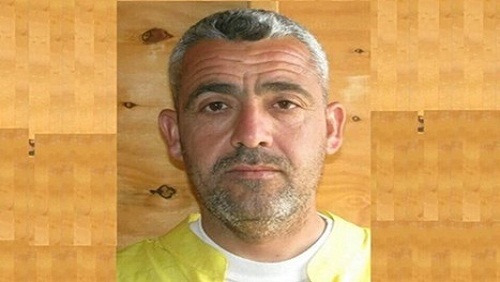
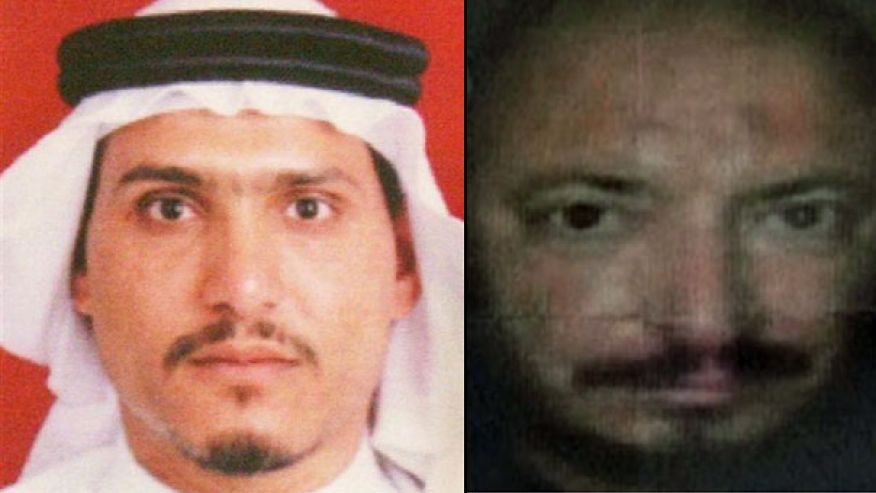
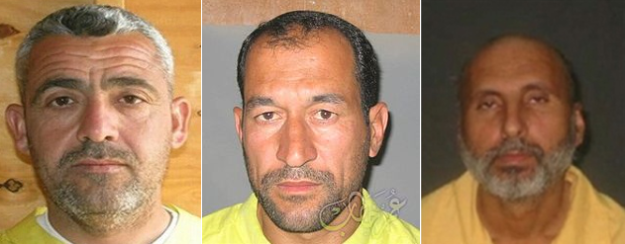
An Islamic State (ISIS) commander was killed in Libya in mid-June, The Daily Beast reported yesterday, after being “paraded … through the streets amid the taunts of onlookers, and then walked … to a gallows, where he was hanged.” [SEE UPDATES] This occurred in the eastern city of Derna, long a hotbed of Islamic militancy. The crucial thing about the “executed” ISIS operative is that he was an Iraqi and an FRE—a former (Saddam) regime element—who had been dispatched to Libya last year to oversee the cultivation of an ISIS branch.

Continue reading

Saddam’s Henchmen Were Fanatics Long Before They Joined The Islamic State

By Kyle Orton (@KyleWOrton) on July 20, 2015

Published at National Review

After long neglect, the media has finally recognized the role of the FREs—former (Saddam) regime elements—within the Islamic State (ISIS). But the pendulum has now swung too far: Some reports are now claiming that the FREs have transformed the leader of the terror army, Abu Bakr al-Baghdadi, into nothing more than a front man for the Baathists.

These suppositions are mistaken. Most FREs within ISIS have not been ideologically Baathists for a long time. Continue reading

The Iran Deal: More Terrorism And An Eventual Bomb—And That’s If It Holds

By Kyle Orton (@KyleWOrton) on July 17, 2015

Published at The Independent

1

With all the leaks and the numerous “interim” deals, the nuclear deal—the Joint Comprehensive Plan of Action (JCPOA)—made with Iran on July 14 contained few surprises. The deal makes Iran a threshold nuclear-weapons regime for its duration and smooths the path to an overt nuclear-weapons capacity afterward. In the meantime, it has given Iran extra resources for the export of terrorism. And that’s just if Iran keeps the deal. Continue reading

America Not Training Syria’s Rebels Isn’t “Failure”; It’s Policy

By Kyle Orton (@KyleWOrton) July 13, 2015

Syrian rebels

President Obama gave a speech on Monday about the progress of the United States-led military campaign against the Islamic State (ISIS) in which he said that America would “do more to train and equip the moderate opposition in Syria.” This is a promise that has been made repeatedly made and repeatedly broken. The President’s strategy of détente with Clerical Iran has given Syria to Tehran as a sphere of influence—which precludes the U.S. building up a viable alternative to both ISIS and the murderous Assad regime, which has been effectively under Iran’s control since late 2012. Continue reading

Is Ahrar a-Sham a “Moderate” Syrian Rebel Group?

By Kyle Orton (@KyleWOrton) on July 12, 2015

Ahrar a-Sham

To answer my headline simply: no, Ahrar a-Sham’s leadership is not what anybody in the West means by “moderate” Syrian rebels that could be supported.

The question is provoked by an op-ed in The Washington Post last night signed by Labib al-Nahhas, Ahrar’s foreign political relations officer, the culmination of a public-relations campaign by Ahrar to rebrand itself as the mainstream alternative to the Islamic State (ISIS) and the Assad tyranny we’ve all been waiting for. Continue reading

Nukes and Empire: The West is on the Brink of Giving Iran Everything it Wants

By Kyle Orton (@KyleWOrton) on July 6, 2015

In this photo released by official website of the Iranian supreme leader's office, Iranian supreme leader Ayatollah Ali Khamenei delivers a speech for the Iranian New Year, Nowruz, in Tehran, Iran, Wednesday, March 20, 2013. Nowruz marks the first day of spring and the beginning of the year on the Iranian calendar. (AP Photo/Office of the Supreme Leader)

The United States and Iran are seemingly days from signing an agreement on Iran’s nuclear program that has been brought about by a series of American concessions. If the deal is signed on the present terms it will effectively dismantle the sanctions against Iran and the international legal regime that recognizes the Iranian regime as an outlaw, will leave Iran on the threshold of nuclear weapons, and will provide legitimacy for, and billions of dollars toward, Iranian hegemony in the Middle East.

Continue reading