Category Archives: Bosnia

Another Legacy of the Bosnian Jihad

By Kyle Orton (@KyleWOrton) on February 5, 2016

Mirsad Bektašević

Mirsad Bektašević (2005)

I recently wrote about the jihad in Bosnia. This much-neglected aspect of the war in the 1990s was crucial in shaping al-Qaeda, and global jihadism more broadly, providing this movement, and Clerical Iran, with a staging post in Europe, not least because Tehran’s spy-terrorist capabilities had been deployed to bring many of the jihadists into the country and train them in the first place. While Islamist militancy and terrorism were brought to Bosnia largely as imports, their entry was facilitated by the Party of Democratic Action (SDA), the ruling party to this day. While the war itself trained many jihadist “graduates,” almost all of whom were allowed to stay (or at least received Bosnian passports that gave them that right), the entry of extremist charities/missionaries to lead the rebuilding, many of them bankrolled by Saudi Arabia, entrenched the jihadists and spread their form of Islam in Bosnia after the war. As such, Bosnia became a hospitable operating environment for Islamist recruitment and training and both veterans of the war and people radicalized in Bosnia since have continued to show up in the ranks of international terrorism. It is of interest, therefore, to have an important old case re-emerge in a new way in the last few days, that of Mirsad Bektašević, which again highlighted Bosnia’s importance in the formulation of the infrastructure that underpins the jihadi-Salafist movement, the less-than-clear division between al-Qaeda and the Islamic State (IS) when it comes to the European facilitation networks, and the dangers of seeing Iran as a partner in stability. Continue reading →
From Bosnia to Guantanamo

By Kyle Orton (@KyleWOrton) on January 23, 2016

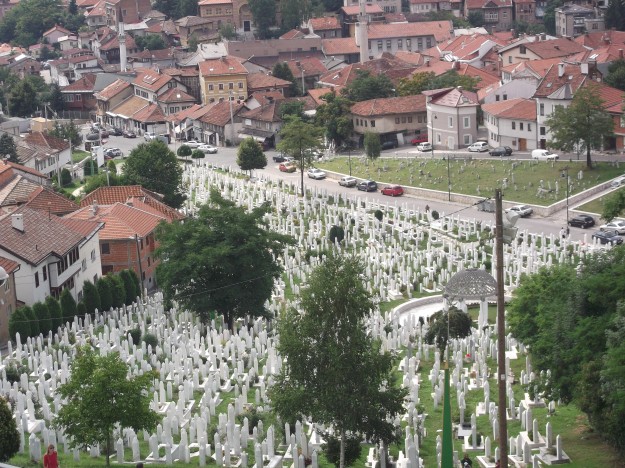
War cemetery in Sarajevo (personal picture, July 2011)

War cemetery in Sarajevo (personal photograph, July 2011)

It was announced on Thursday that Guantanamo inmates Tariq Mahmoud Ahmed as-Sawah and Abd al-Aziz Abduh Abdallah Ali as-Suwaydi had been transferred to Bosnia and Montenegro respectively. Sawah’s path to jihadi-Salafism allows a window into the Bosnian jihad, a much-underestimated factor in shaping al-Qaeda, its offshoots, and the wider jihadist movement. In that story is an examination of the role certain States have played in funding and otherwise helping the jihadists. It also leaves some questions about whether emptying Guantanamo of its dangerous inhabitants is the correct policy.
Continue reading →

The Balkan Front of the Jihad in the Fertile Crescent

By Kyle Orton (@KyleWOrton) on October 14, 2014

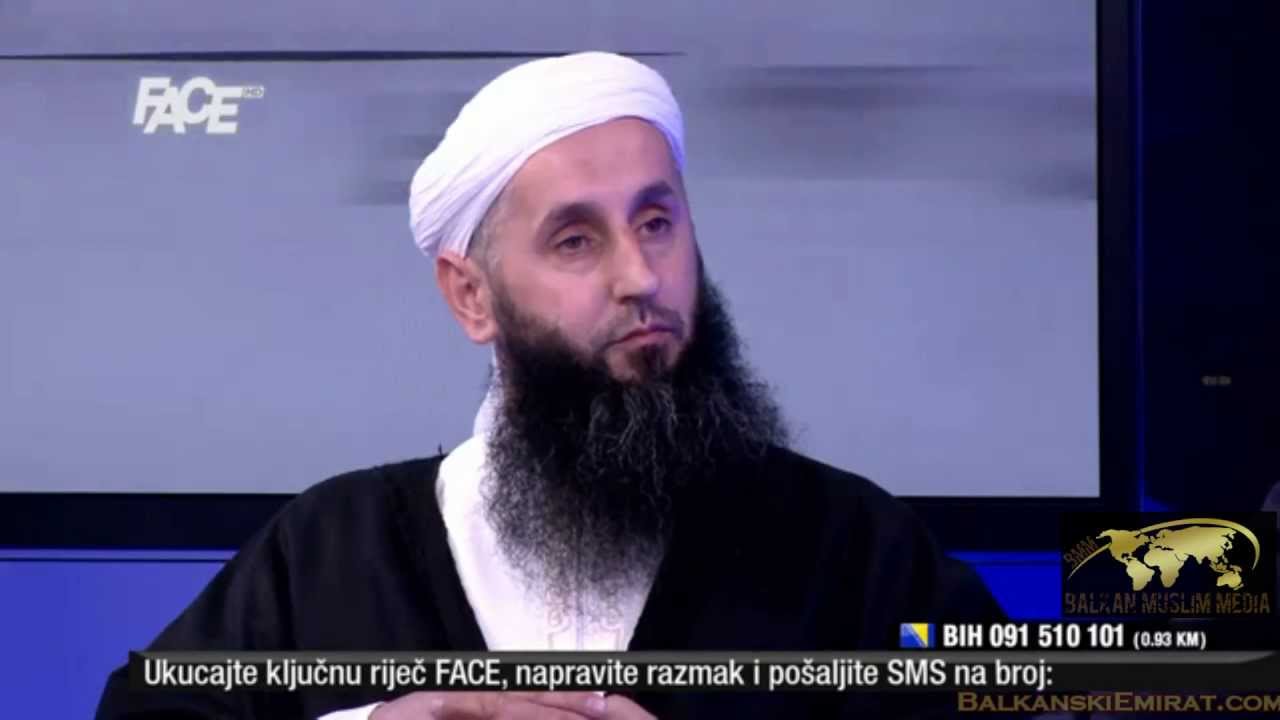
Bilal Bosnić, I.S.'s recruiter in Bosnia

Bilal Bosnić, the Islamic State’s lead recruiter in Bosnia

A week after the American-led airstrikes inside Syria began, it was reported that two women from the Balkans, Dora Bilic and Fatima Mahmutović, had been hit in ar-Raqqa, and that Ms. Mahmutović had been killed. Ms. Bilic, born in Croatia, converted to Islam two years ago and moved to Gornja Maoca, north-east Bosnia, which is in effect a Wahhabi commune, where she met her husband with whom she travelled to Syria for jihad. Ms. Mahmutović is from a village in Bosnia not far from the infamous Srebrenica, and she moved herself and her young son to Syria late last year. As is so often the case, it seems that the Croatian intelligence services were aware of Ms. Bilic but had done little about it. Even less surprising was the follow-up report that Ms. Bilic had been radicalised in London. Continue reading →

Syria’s Forty Months Of Carnage And The Lessons Of Bosnia

By Kyle Orton (@KyleWOrton) on July 15, 2014

A picture I took of Stari Most (Old Bridge) in Mostar, Bosnia, August 2011

A picture I took of Stari Most (Old Bridge) in Mostar, Bosnia, August 2011

Since the Syrian uprising began on March 15, 2011, there have been persistent echoes of Bosnia. There are some critics of the liberal interventionism specifically on the grounds that their worldview is so heavily coloured by Bosnia—and they make some valid points—but the analogy has been inescapable in Syria.
Continue reading →