Category Archives: Soviet Union and the Cold War

A Note on Zhdanovism

By Kyle Orton (@KyleWOrton) on 7 August 2023

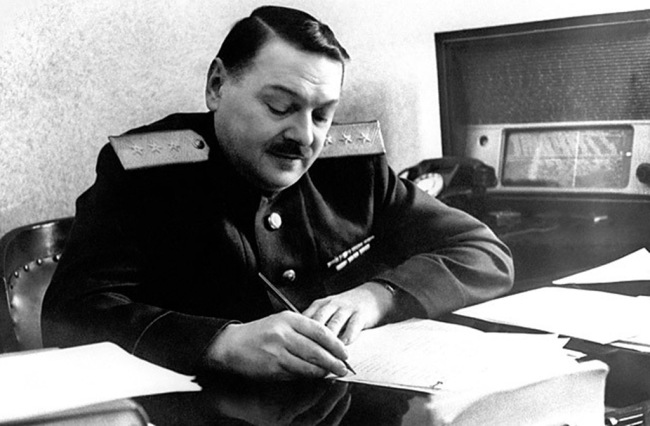
Andrey Zhdanov was one of the key figures in the Soviet Great Terror (Yezhovshchina) and, indeed, during Stalin’s reign more generally until his death in 1948. Zhdanov is perhaps best remembered for the strictures he imposed on Soviet cultural life in 1946, known as Zhdanovism (or Zhdanovshchina).

Continue reading

The “First Red Scare”: America and Communism in 1919

By Kyle Orton (@KyleWOrton) on 5 August 2023

Continue reading

Did Russia Ever Start a Democratic Transition? Can It?

By Kyle Orton (@KyleWOrton) on 16 July 2023

Continue reading

The Soviet Capture of Australia’s Intelligence System

By Kyle Orton (@KyleWOrton) on 25 June 2023

Continue reading

A Flawed Film Brings Attention to the Soviet Terror-Famine in Ukraine

By Kyle Orton (@KyleWOrton) on 28 April 2023

Continue reading

A Prop of Autocracy and a Nest of Spies: The Russian Orthodox Church

By Kyle Orton (@KyleWOrton) on 6 February 2023

Continue reading

“Socialism With A Human Face” Was Always Impossible

By Kyle Orton (@KyleWOrton) on 21 August 2022

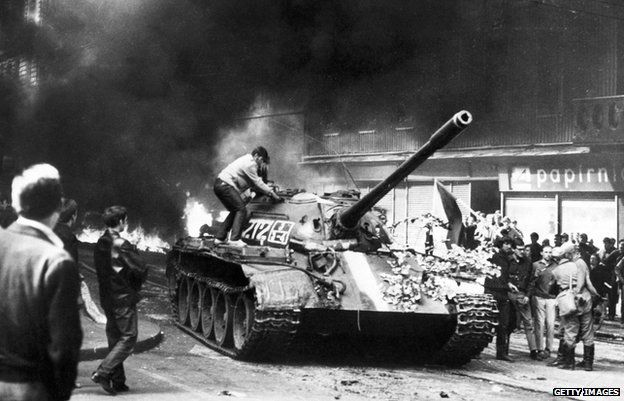
It was on this day in 1968, fifty-four years ago, that the Soviet Union invaded Czechoslovakia, one of its colonies in the “Warsaw Pact”, which had embarked on a program of liberalising reforms. The Czech leadership did not intend to depart from the socialist path, merely to soften its edges—and ran into the brute fact that this was not possible. Continue reading

The Bolshevik Assassination Campaign Against the Russian Royal Family

By Kyle Orton (@KyleWOrton) on 15 January 2022

The Russian Imperial Family: Olga, Maria, Nicholas II, Empress Alexandra, Anastasia, Tsesarevich Alexei, and Tatiana. Taken in Crimea, 1913.

Continue reading

The February Revolution: The End of the Russian Monarchy

By Kyle Orton (@KyleWOrton) on 19 December 2021
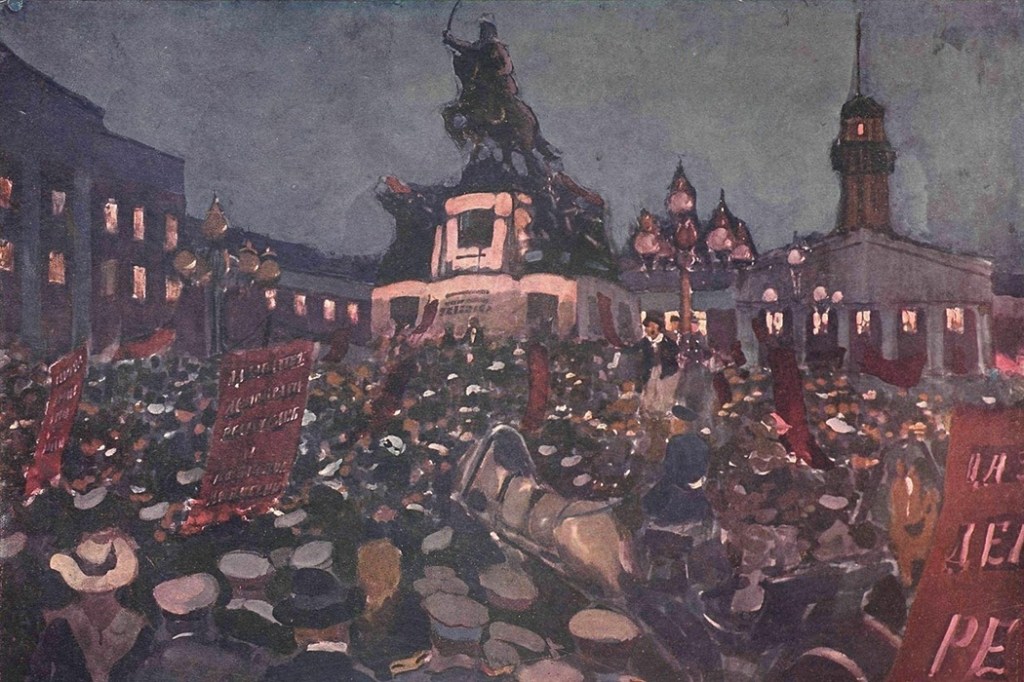
Skobelev Square during the February Revolution, painting by Aleksandr Gerasimov, 1917

The “February Revolution” is so-called because Russia at the time was on the Julian (Old Style (O.S.)) calendar. By the Gregorian (New Style (N.S.)) calendar, which Russia adopted in February 1918, these events take place in March 1917. And momentous events they were, leading to the abdication of the last Tsar, the end of a monarchy and an entire system of power and authority that dated back more than 350 years. For eight months in 1917, Russia struggled to extend the constitutionalist reforms that had begun under the Tsardom within a more liberal framework. The liberals never did gain the upper hand over the radicals, not even after the September 1917 de facto return to autocracy. In November 1917, a coup by the most extreme Leftist faction, the Bolsheviks, terminated the experiment, burying for seven decades even the aspirations in Russia for liberalism and democracy. Continue reading

Russian Influence on the Nazis

By Kyle Orton (@KyleWOrton) on 10 December 2021

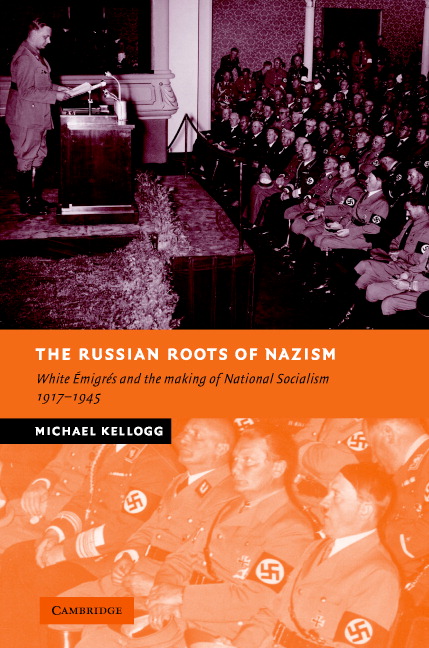
Michael Kellogg’s 2005 book, The Russian Roots of Nazism, argues that Russian “White émigrés” exerted financial, political-military, and ideological influences that “contributed extensively to the making of German National Socialism”. As such, argues Kellogg, Nazism “did not develop merely as a peculiarly German phenomenon”, but within an “international radical right milieu”. The book is interesting but deeply flawed, overstating its case by failing to set the facts it gathers in a proper context and for similar reasons misunderstanding where some of the Russian elements under discussion fit within the politics of the revolutionary upheaval after 1917, both within the borders of Russia and in exile in Europe. Continue reading