Tag Archives: Abu Musab al-Zarqawi

An Ideological Founder of Islamic State is Killed in Syria

UPDATE: It has subsequently become clear that the “Abu Abdullah al-Muhajir” who was killed in Syria on 18 November 2016 was not Muhammad al-Saghir, who is profiled below. The slain man, like al-Saghir a veteran of the war get the Soviets out of Afghanistan and an Egyptian jihadist with close links to al-Qaeda, also used the kunya “Abu Afghan al-Muhajir”.

By Kyle Orton (@KyleWOrton) on November 20, 2016

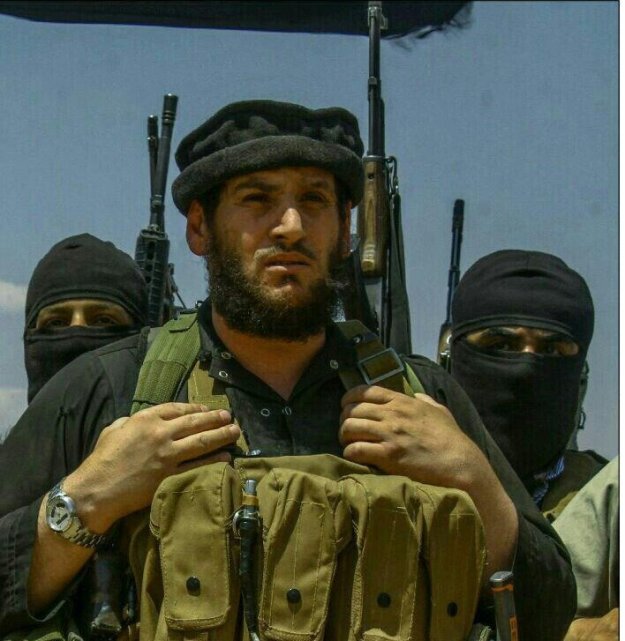
Abu Abdallah al-Muhajir (source)

A week ago, it became clear that the air war being waged by the U.S.-led Coalition, which primarily targets the Islamic State (IS), was going to expand its campaign against the leadership of Jabhat Fatah al-Sham (JFS), al-Qaeda’s rebranded branch in Syria. In the evening of 18 November 2016, the Coalition killed Abu Abdullah al-Muhajir, whose real name is Muhammad Ibrahim al-Saghir. Al-Saghir also uses the name Abd al-Rahman al-Ali. This killing would appear to be part of the Coalition’s new effort.

Al-Saghir has a long record as an important jihadi religious ideologue, though his exact relationship with al-Qaeda’s network remains unclear. Al-Saghir’s most lasting contribution to jihadi-salafism is as a key guide to the founder of IS, Ahmad al-Khalayleh. Continue reading
Al-Qaeda Signals A Return to Iraq, Incites Against An American-Iranian Conspiracy

By Kyle Orton (@KyleWOrton) on November 4, 2016

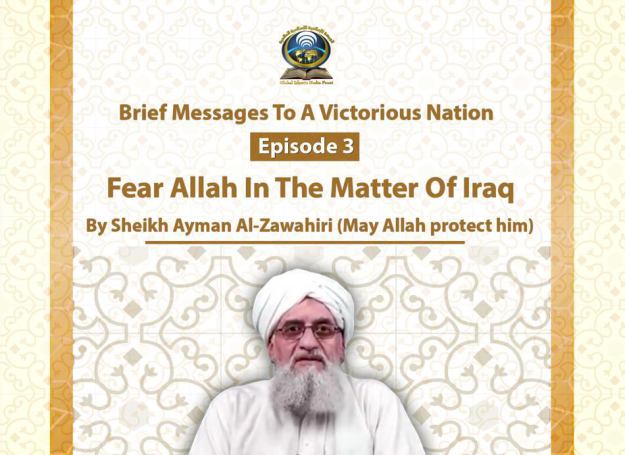
Al-Qaeda’s leader, Ayman al-Zawahiri, gave a speech on August 25, 2016, entitled, “Fear Allah in the Matter of Iraq” (or “Fear Allah in Iraq”). Released by al-Qaeda’s As-Sahab Media Foundation, the speech is the third installment of the “Brief Messages To A Victorious Nation” (or “Brief Messages To A Victorious Umma”) series. A translation of the speech was released by Al-Muwahideen Media, a pro-Qaeda channel, last month and is reproduced below with some editions in transliteration and important sections highlighted in bold. Continue reading

The Mosul Operation and Saddam’s Long Shadow

Originally published at The Henry Jackson Society

By Kyle Orton (@KyleWOrton) on October 28, 2016

Islamic State parade with captured equipment in Mosul, 23 June 2014 . (AP Photo, File)

The offensive to wrest the Iraqi capital of the Islamic State’s (IS) caliphate, Mosul, from the terror organization began on 17 October, led on the ground by Iraqi and Kurdish forces and supported from the air by the U.S.-led Coalition. While progress has been generally steady, IS has been able to mount a series of diversionary attacks, the most significant in Kirkuk City. Among those subsequently arrested for a role in planning the terrorism in Kirkuk is a cousin of Saddam Husayn, a micro-example of the influence of the fallen regime on the current situation in Iraq. Continue reading

Activist Group Lists Ten Most Important Islamic State Leaders Killed

Originally published at The Henry Jackson Society

By Kyle Orton (@KyleWOrton) on October 22, 2016

Coalition airstrikes in Mosul (source)

The activist group, Raqqa is Being Slaughtered Silently (RBSS), which works against the Islamic State (IS) in its Syrian capital, published a list on Thursday on Twitter of the eleven “most important” IS leaders who have been killed in Raqqa Province. Continue reading

Islamic State’s Propaganda Chief Killed in Syria

By Kyle Orton (@KyleWOrton) on September 18, 2016

Raqqa

Raqqa

The Coalition announced on Friday that it had killed Wael al-Fayad, more fully Wael Adil Hasan Salman al-Fayad, also known as Wael al-Rawi, Dr. Wael, and Abu Muhammad al-Furqan, a reference no doubt to al-Furqan Media, IS’s oldest and most important propaganda organ, which al-Fayad controlled. The head of IS’s Media Council, thus a key member of the group’s propaganda output, al-Fayad was a member of its Shura Council. The obscurity of his name is likely a testament to his seniority and importance within IS. [UPDATE: This turned out to be correct, though Abu Muhammad’s real name was Wael al-Ta’i, as IS revealed in May 2021, and he had also used the names “Ahmad al-Ta’i”, the media emir appointed in “the State’s” second cabinet back in 2009, and “Abu Ubayda Abd al-Hakim”, the mysterious senior IS operative who made a series of media “appearances” in 2011 and signed several captured letters addressed from IS-centre to the wilayats after 2014]
Continue reading

Fifteen Years After 9/11

By Kyle Orton (@KyleWOrton) on September 11, 2016

Originally published at The International Business Times

1

Fifteen years on from the 11 September 2001 terror attacks on the US, al-Qaeda is better-positioned than ever before. Its leadership held, and it has rebuilt a presence in Afghanistan. More importantly, al-Qaeda has built powerful regional branches in India, North Africa, Somalia, Yemen and Syria.

Rebranding itself away from the savagery of Iraq, al-Qaeda has sought to embed itself in local populations by gaining popular legitimacy to shield itself from retribution if, or when, it launches terrorist strikes in the West. This is proceeding apace, above all because of a failure to assist the mainstream opposition in Syria, sections of which were forced into interdependency with al-Qaeda to resist the strategy of massacre and expulsion conducted by the Assad regime. Continue reading

The Fall of the Islamic State’s Terrorism Director

By Kyle Orton (@KyleWOrton) on August 31, 2016

Taha Falaha (Abu Muhammad al-Adnani) in al-Naba

Taha Falaha (Abu Muhammad al-Adnani) in al-Naba

The Islamic State confirmed yesterday, via their “news” agency Amaq, that Taha Subhi Falaha had been killed in Aleppo. Falaha had gained global notoriety under his kunya, Abu Muhammad al-Adnani, after his September 2014 speech calling on Muslims in the West to “kill any disbeliever” in range, and to at least “spit in his face” if one was unable to find a knife or a car or a rock to do murder with.

Falaha was often referred to as the spokesman of IS, and so he was—the voice of the organization since 2011. He was also from the first generation of the organization, recruited before the invasion of Iraq, one of the few within the organization of that stature. But, as I explained recently in a paper for the Henry Jackson Society that compiled what is known of IS’s leadership, Falaha was much more than a figurehead.

Falaha was the governor of IS-held areas in Syria and the man who oversaw the external terrorist attacks. By now he was the caliph’s effective deputy. Heretofore, IS’s impressive bureaucracy has managed to replace individuals with minimal perturbation. IS will experience few perturbations quite like this.
Continue reading

The Islamic State’s Relationship With Al-Qaeda

By Kyle Orton (@KyleWOrton) on August 30, 2016

1

Since al-Qaeda broke ties with the Islamic State (IS), then the Islamic State of Iraq and Syria (ISIS), in 2014 there has been an ongoing war of narratives about what happened. Below is an attempt to work through this murky situation. Continue reading

Looking At the Islamic State’s Past, Seeing its Future

By Kyle Orton (@KyleWOrton) on August 27, 2016

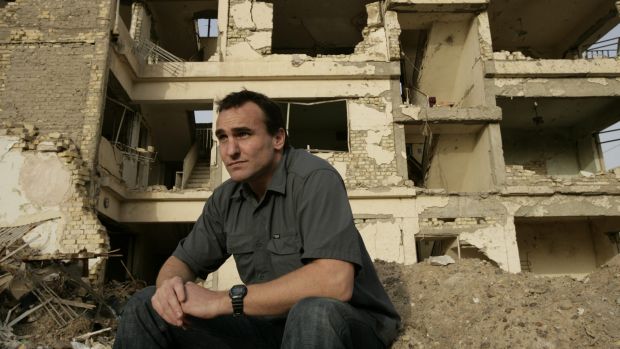
Michael Ware
Michael Ware

Only the Dead documents the experience of Michael Ware, an Australian journalist who arrived in Iraq in early 2003 and spent eleven months-per-year there for seven years. Ware made contact soon after the fall of Saddam Hussein with those resisting the new order, at a time when the Americans were struggling to map such forces.

Ware established communication with the more nationalist-Islamist forces. Once in that milieu, the globalist jihadists, who were working in the shadows, a small, foreign-dominated force towards which even many insurgents were guarded, found him. The leader of the jihadists, Ahmad al-Khalayleh, became something of an obsession for Ware as he stepped onto the world stage with his gruesome tactics as Abu Musab al-Zarqawi. Zarqawi, the “Shaykh of the Slaughters,” would found an organization that became a movement and then burst Iraq’s frontiers, known to us now as the Islamic State (IS).

In tracking Zarqawi and his men, Ware presents some incredible footage and gives some snapshots from the fascinating days, whose effects we are all still feeling, when the Iraqi insurgency was taking root.

Continue reading

The Dangers of Emptying Guantanamo

By Kyle Orton (@KyleWOrton) on August 17, 2016

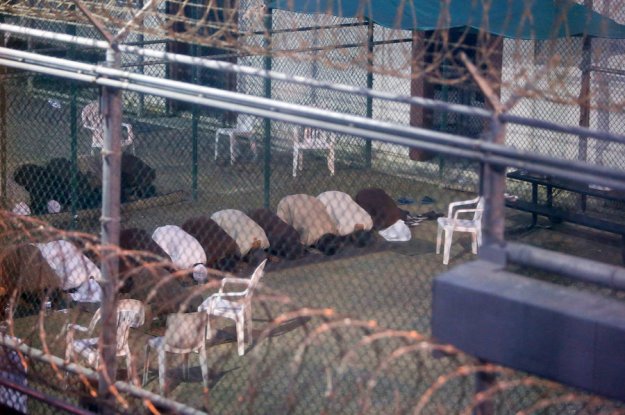
It was announced on 15 August that fifteen more inmates from the Guantanamo Bay detention facility have transferred, twelve Yemenis and three Afghans, to the United Arab Emirates, the largest individual release of the Obama administration. The U.A.E. also took in five “lower-level” Yemeni detainees in November. The Emirates had previously taken in just one—Abdullah al-Hamiri, in 2008—but President Obama leveraged this deal with the Gulf states at the May 2015 meeting when the Khaleejis were deeply concerned about the then-impending Iran nuclear deal, and in exchange for security reassurances, Obama extracted further concessions.

One reason why so many jihadists have been released to the U.A.E., other than having a similar language and culture, is because the U.A.E. has a competent security apparatus to monitor these people. Those released last November were kept in “a custodial rehabilitation program“—a version of house-arrest, basically. The conditions this time around are less clear.

What is clear is just how dangerous the operatives who are being let out of the Guantanamo detention facility are. Every single one of them has been assessed as posing a “high” risk to America, her interests, and her allies. Continue reading