By Kyle Orton (@KyleWOrton) on 9 March 2019
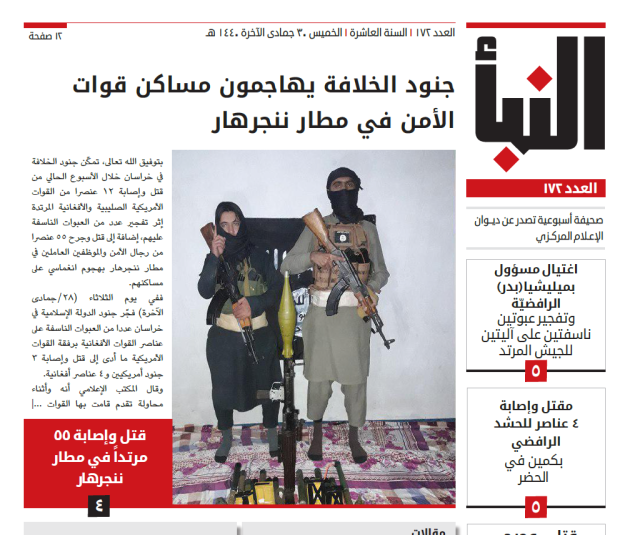
Al-Naba 172 front page
The Islamic State (IS) released the 172nd edition of Al-Naba, its newsletter, on 7 March 2019. Continue reading
By Kyle Orton (@KyleWOrton) on 9 March 2019
Al-Naba 172 front page
The Islamic State (IS) released the 172nd edition of Al-Naba, its newsletter, on 7 March 2019. Continue reading
By Kyle Orton (@KyleWOrton) on 28 February 2019
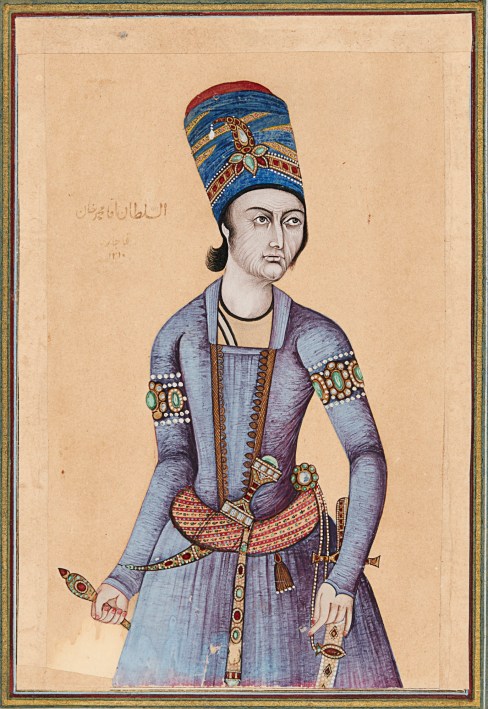
Agha Mohammad Khan Qajar, founder of the Qajar dynasty (1794-1925) in Iran [source]
A version of this article was published at CapX
By Kyle Orton (@KyleWOrton) on 21 December 2018

President Trump in a Twitter video saying fallen soldiers agree with his plan to withdraw from Syria, 19 December 2018 [image source]
By Kyle Orton (@KyleWOrton) on 4 December 2018
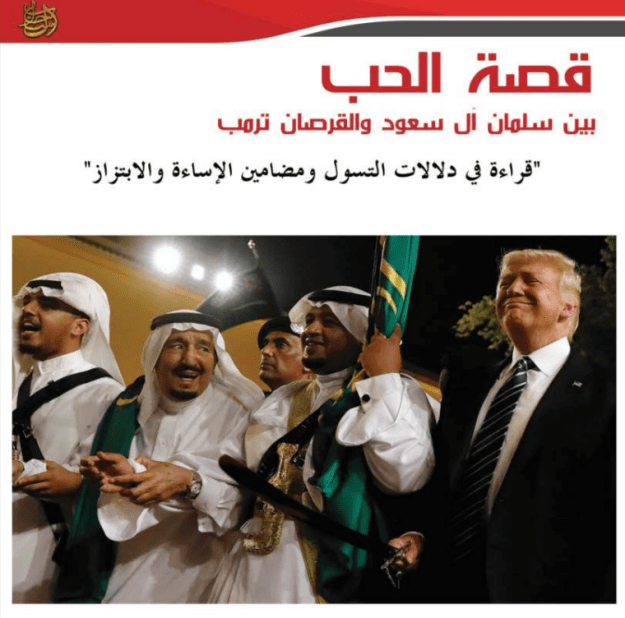
Al-Qaeda released a document on 23 October, “The Love Story Between Salman al-Saud and the Pirate Trump: A Reading of the Symptoms of Begging and the Significance of Wrong and Extortion”,[1] by Shaykh Awab Bin Hasan al-Hasni. Al-Qaeda’s Al-Sahab Foundation released an English translation of Al-Hasani’s essay on 26 November, which is reprinted below with some interesting sections highlighted in bold. Continue reading
By Kyle Orton (@KyleWOrton) on 26 November 2018
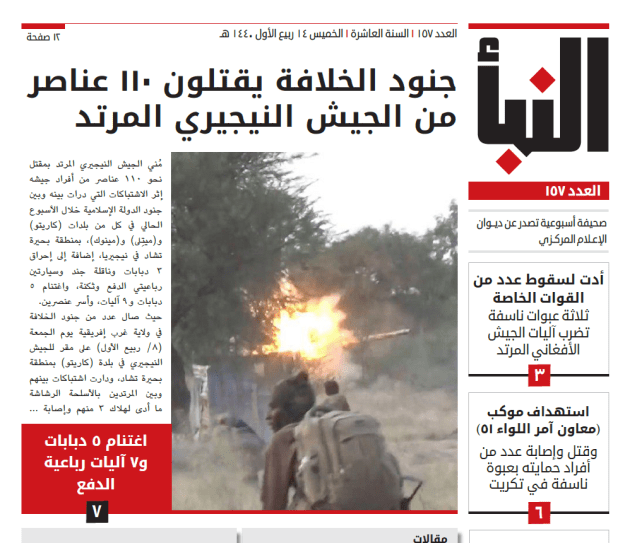
Al-Naba 157
The Islamic State (IS) released the 157th edition of its newsletter, Al-Naba, on 22 November. The content was fairly standard, underlining IS’s ideology, particularly its belief that the current hardships are merely bumps on the road to a victory that has been pre-ordained by God. The bulk of the newsletter is devoted to the fierce insurgent campaign IS is waging in northern Iraq and parts of eastern Syria. Continue reading
This article was originally published at The Brief
By Kyle Orton (@KyleWOrton) on 26 October 2018

At the beginning of September, New America published a paper, based on recovered al-Qaeda documents, which concluded that there was “no evidence of cooperation” between the terrorist group and the Islamic Republic of Iran. New America’s study lauds itself for taking an approach that “avoids much of the challenge of politicization” in the discussion of Iran’s relationship with al-Qaeda. This is, to put it mildly, questionable.
A narrative gained currency in certain parts of the foreign policy community during the days of the Iraq war, and gained traction since the rise of the Islamic State (IS) in 2014, that Iran can be a partner in the region, at least against (Sunni) terrorism, since Tehran shares this goal with the West. Under President Barack Obama, this notion became policy: the US moved to bring Iran’s revolutionary government in from the cold, to integrate it into the international system. Continue reading
By Kyle Orton (@KyleWOrton) on 5 September 2018
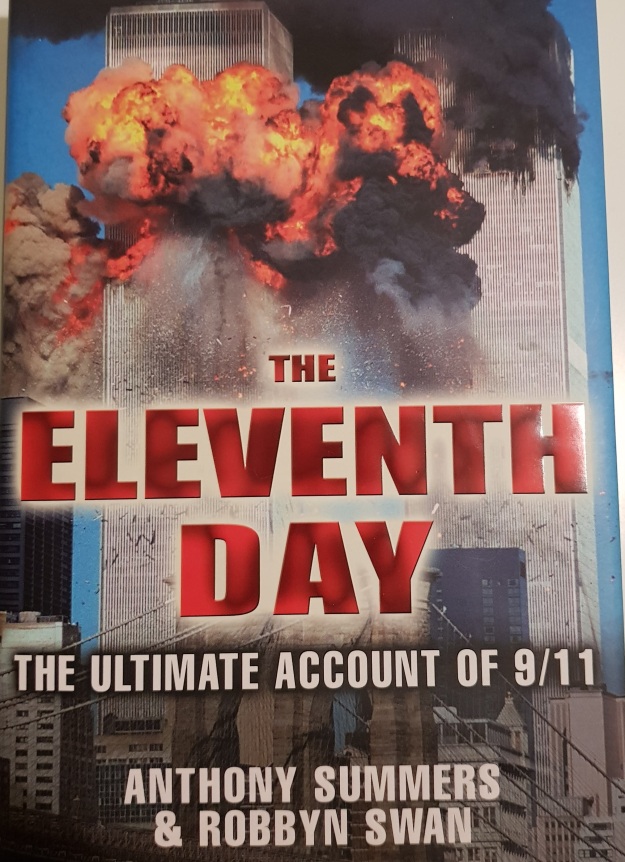
In less than a week, it will be the seventeenth anniversary of al-Qaeda’s “Plane’s Operation”, the assault on the United States. It is a vertiginous enough reflection that many of us have been alive more years since 11 September 2001 than before it, and positively alarming that many of those who will soon move into the government, media, and other leading societal institutions will have been born after an event that still shapes so much of the international scene. As Anthony Summers and Robbyn Swan put it in The Eleventh Day: The Ultimate Account of 9/11 (2011), we are left with “the brief name ‘9/11’,” the context and meaning stripped away all this time later. The book is a useful overview of an event that should always be to some degree fresh in mind, though it is not without its problems in its analytical sections. Continue reading
By Kyle Orton (@KyleWOrton) on 26 August 2018

Islamic State in Afghanistan (image source)
Attaullah Khogyani, a spokesman from Nangarhar province, says—and the spokesman for American forces in Afghanistan, Lt. Col. Martin O’Donnell, confirmed—that the leader of the Islamic State in Khorasan (ISK), Sad Arhabi, was killed in an airstrike in his province last night. It seems another ten ISK jihadists were killed alongside Arhabi. Continue reading
By Kyle Orton (@KyleWOrton) on 16 August 2018

The Taliban released a statement on Tuesday afternoon about its virtual takeover of Ghazni province in southern Afghanistan. Alongside other recent developments, military and political, the outlook for the Coalition mission is increasingly bleak. Continue reading
By Kyle Orton (@KyleWOrton) on 14 August 2018

The Islamic Emirate of Afghanistan, the official name for the Taliban, released a statement a few hours ago on the de facto fall of Ghazni province to its forces. They claimed it was “successful militarily, politically, and socially”, showing the coherence of the Taliban forces an the “disunity, weakness, anxiety, and lack of any local support of the enemy”. This strays into hyperbole, but it is difficult to argue there is no factual basis to it. The statement is reproduced below. Continue reading
 Kyle Orton's Blog
