Tag Archives: al-Qaeda in Iraq

Al-Qaeda Instructs the Islamic State’s Predecessor Not to Attack Iran

By Kyle Orton (@KyleWOrton) on 21 November 2017
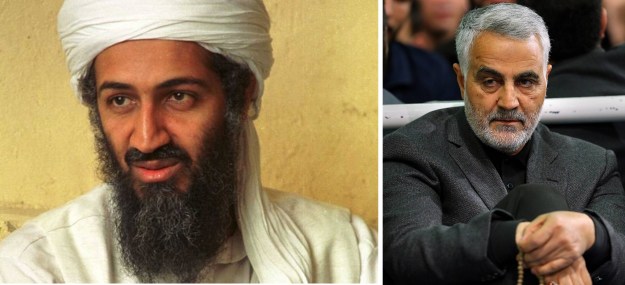
Usama bin Ladin, Qassem Sulaymani

Among the documents recovered from Usama bin Ladin’s compound in Abbottabad was the “Letter to Karim”, dated 18 October 2007. The letter was released in 2015 by the Office of the Director of National Intelligence (ODNI). “Karim” likely refers to Abdul Munim al-Badawi (Abu Hamza al-Muhajir), the leader of al-Qaeda in Mesopotamia (AQM), the predecessor organization to the Islamic State, after the group’s founder, Ahmad al-Khalayleh (Abu Musab al-Zarqawi), was killed in June 2006. The letter is reproduced below with some interesting details highlighted in bold. Continue reading

Profile of an Islamic State Media Emir: Abu Zahra al-Issawi

By Kyle Orton (@KyleWOrton) on 12 November 2017

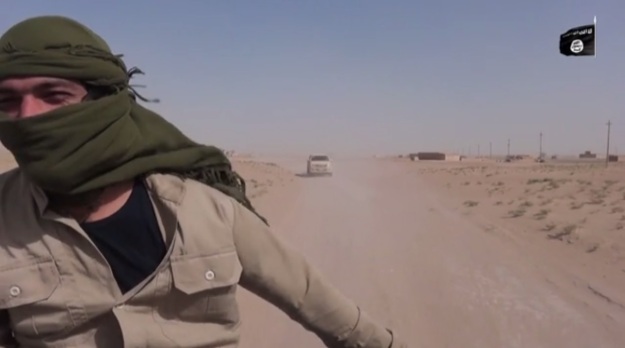
The forty-fifth edition of the Islamic State’s “Distinguished Martyrs” series, published by al-Furqan Media in Rajab 1431 (June/July 2010), profiled Abu Zahra al-Issawi, the media emir or information minister of the organization between some point after July 2007, when Khalid al-Mashadani (Abu Zayd al-Mashadani) was arrested, and some point before September 2009, when Ahmad al-Ta’i was announced as holding the position. [UPDATE: Al-Ta’i turned out to be Abu Muhammad al-Furqan, and his real name was Wael al-Ta’i.] Continue reading

The Third Deputy of the Islamic State: Muhammad Khalaf Shakar

By Kyle Orton (@KyleWOrton) on 12 November 2017

Muhammad Shakar had, according to his martyr biography, “become influenced by Salafism in 1997-98 while serving as a part of [Saddam] Hussein’s Special Republican Guard”.[1] Quitting the military and returning to his home in Mosul, Shakar was harassed by the regime until he went to join Ansar al-Islam in the mountains of Kurdistan.[2]

Shakar, known as Abu Talha al-Ansari or Abu Talha al-Mawsuli, joined the predecessor to Islamic State either just before or just after Saddam fell, and he was arrested in Mosul on 14 June 2005. Continue reading

The Islamic State Planned For Sectarian War in Iraq From the Beginning

By Kyle Orton (@KyleWOrton) on 13 October 2017

The Iraqi Kurdish authorities arrested Mustafa Haji Muhammad Khan (Hassan Ghul) on 23 January 2004. Khan had been dispatched to Iraq by Nashwan Abd al-Baqi (Abd al-Hadi al-Iraqi), one of the key military officials of al-Qaeda “central” (AQC), to function as AQC’s intermediary with Ahmad al-Khalayleh (Abu Musab al-Zarqawi), the founder of the Islamic State movement. Khan replaced Abdallah al-Kurdi, the first envoy sent by Abd al-Baqi. Al-Kurdi had failed to establish any footing to do his job effectively, but Khan, a battle-hardened jihadist from Baluchistan, earned a measure of respect from al-Khalayleh and facilitated a productive conversation between AQC and al-Khalayleh. Al-Khalayleh, possessed of a pathological anti-Shi’ism, wrote a seventeen-page memo to Usama bin Laden explaining his strategy to defeat the Americans by starting a total war between the sects in Iraq. That memo, in digital form, was given to Khan, and Khan had it in his possession when he was captured. A translation of the letter is given below with some interesting sections highlighted in bold.[1] Continue reading

The Syrian Regime Helped the Islamic State Murder Americans

By Kyle Orton (@KyleWOrton) on 26 August 2017

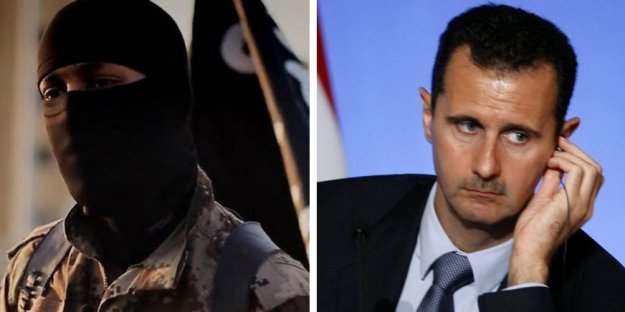
The Asad family regime in Syria has long been known to have had a key role in the formation and sustenance of the Islamic State (IS) and its predecessors. Without the Asad regime’s assistance, the IS movement could not have hoped to pose such a challenge to the Iraqi government, regional states, and Western interests and citizens. This has been underlined in a series of Federal Court rulings in the United States that have brought together evidence on this matter. In April, another such ruling found the Asad regime liable in the murder of three more Americans. Continue reading

The Top American in the Islamic State Attacks the Top American in Al-Qaeda

By Kyle Orton (@KyleWOrton) on 20 July 2017

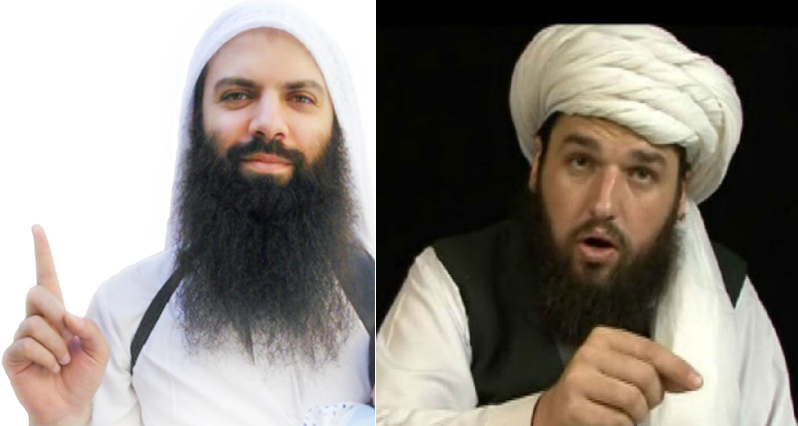
A couple of months ago, the Islamic State revealed that one of its most senior officials in the crucial media department until his death in January 2017 was an American, Ahmad Abousamra, known by various kunyas, including Abu Sulayman al-Shami and Abu Maysara al-Shami. Looking around afterwards, I came across an article by Abousamra condemning Adam Gadahn, another American, who was part of the core leadership of Al-Qaeda—one of the handful of men around Usama bin Laden and then Ayman al-Zawahiri—until he was killed in January 2015.

Continue reading

America Sanctions Operatives of the Islamic State’s Chemical Weapons Department

By Kyle Orton (@KyleWOrton) on 13 June 2017

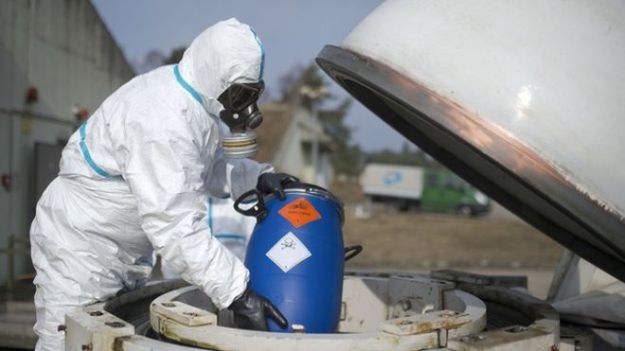
The U.S. Treasury Department’s Office of Foreign Assets Control (OFAC) announced financial sanctions against an individual involved in the “development” of chemical weapons of mass destruction (CWMD) for the Islamic State (IS) on 12 June. Simultaneously, the State Department labelled another individual involved in the development of CWMD for IS as a Specially Designated Global Terrorist (SDGT). These are the first sanctions of their kind. Continue reading

Al-Qaeda Reshapes the Insurgency in Northern Syria

By Kyle Orton (@KyleWOrton) on February 7, 2017

Hay’at Tahrir al-Sham logo

A series of clashes broke out on 19 January between al-Qaeda’s rebranded Syrian branch, Jabhat Fatah al-Sham (JFS), and its heretofore close ally and portal into the Syrian rebellion, Ahrar al-Sham. By 23 January, JFS had expanded its targets, engaging in hostilities with mainstream rebel groups in the “Greater Idlib” area, and specifically trying—and succeeding—in dismantling the positions of Jaysh al-Mujahideen, a moderate group, west of Aleppo. The crisis continued to escalate, forcing many groups to merge with Ahrar al-Sham for protection, until 28 January, when a JFS-led merger was announced under the banner of Hay’at Tahrir al-Sham (HTS), or the Syrian Liberation Committee. HTS announced a ceasefire, and since then individuals and groups—including a significant number from Ahrar—have given allegiance to HTS. This radical reshaping of revolutionary dynamics in northern Syria has undoubtedly created antibodies going forward against al-Qaeda that could be capitalized on by the international community, but the present situation is highly favourable to al-Qaeda. Continue reading

The Leader of the Islamic State in the 2004 Fallujah Battles: Umar Hadid

By Kyle Orton (@KyleWOrton) on January 30, 2017

Umar Hadid [right] (source)

Umar Hadid [right] (source)

Umar Hadid was a native of Fallujah, hence his kunya, Abu Khattab al-Falluji,[1] and a part of the extremist thread of the Salafist underground in Saddam Husayn’s Iraq. Working as an electrician for a time, Hadid had gone into internal exile years before the invasion after attacking Saddam’s security forces. In the aftermath of Saddam’s toppling, Hadid quickly joined with Ahmad al-Khalayleh (Abu Musab al-Zarqawi), the Jordanian founder of the Islamic State (IS) who had been in Baghdad from May 2002. Hadid rose swiftly in the ranks of the IS movement, and led the insurgency during the two battles with American forces in Fallujah in 2004, being killed during the second of them. Continue reading

Abdallah Najem al-Jawari: A Key Early Leader of the Islamic State

By Kyle Orton (@KyleWOrton) on January 28, 2017

1

Abdallah Najem al-Jawari (Abu Azzam al-Iraqi) was something like the Islamic State (IS) movement’s first Finance Minister and a senior regional official, first in his native Anbar—he was from Fallujah—and later in Baghdad. Joining the group quickly after the collapse of the Saddam Husayn regime, al-Jawari was killed in 2005. Al-Jawari remains among those commemorated by IS as founders who set the stage for the current rise of “the State”.
Continue reading