Tag Archives: al-Qaeda

The Darker Side of the Western Enthusiasm for “The Kurds”

A version of this article was published in The Arab Weekly

By Kyle Orton (@KyleWOrton) on 24 November 2019

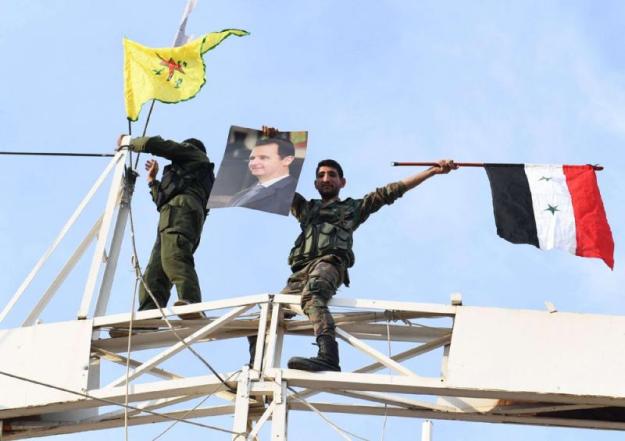
Solider from the Syrian regime holds up a portrait of Bashar al-Asad and a Syrian national flag, another stands by the Kurdish YPG/PKK flag, in Kobani, 18 October 2019. (AFP)

Mustafa Bali, head of the press office for the Syrian Democratic Forces (SDF), the coalition partner against the Islamic State (ISIS) in Syria, sent a tweet on November 14 showing Turkey’s Arab proxies engaged in “ISIS chants.” By this, he meant the takbir, “God is Great,” an expression used by Muslims every day. When criticised, Bali doubled down and blocked many critics. This was a microcosm of one of the darker threads in an SDF messaging strategy that is among the most effective propaganda campaigns on record. Continue reading

Trump’s Middle East Failure Was Made By Obama

By Kyle Orton (@KyleWOrton) on 19 November 2019

President Barack Obama meeting President-elect Donald Trump, 10 November 2016 [image source]

October 2019 may well remain in the popular memory as the inflection point marking the collapse of America’s — and by extension, the West’s — position in at least the northern Middle East. Having been thwarted twice before in efforts to leave Syria, in March and December 2018, President Donald Trump made one more try. For many, ‘Trump betrayed the Kurds’ will be the summary of the events that followed as Turkey made a swift move into the vacuum. The reality is a lot more complicated, and in truth the amount of blame that Trump can take for the events of the last month is rather limited. This catastrophe was baked into the policy of Barack Obama, and Trump’s main fault is to have followed the policy track laid down by his predecessor. Continue reading

Islamic State Bids Farewell to the Caliph

By Kyle Orton (@KyleWOrton) on 10 November 2019

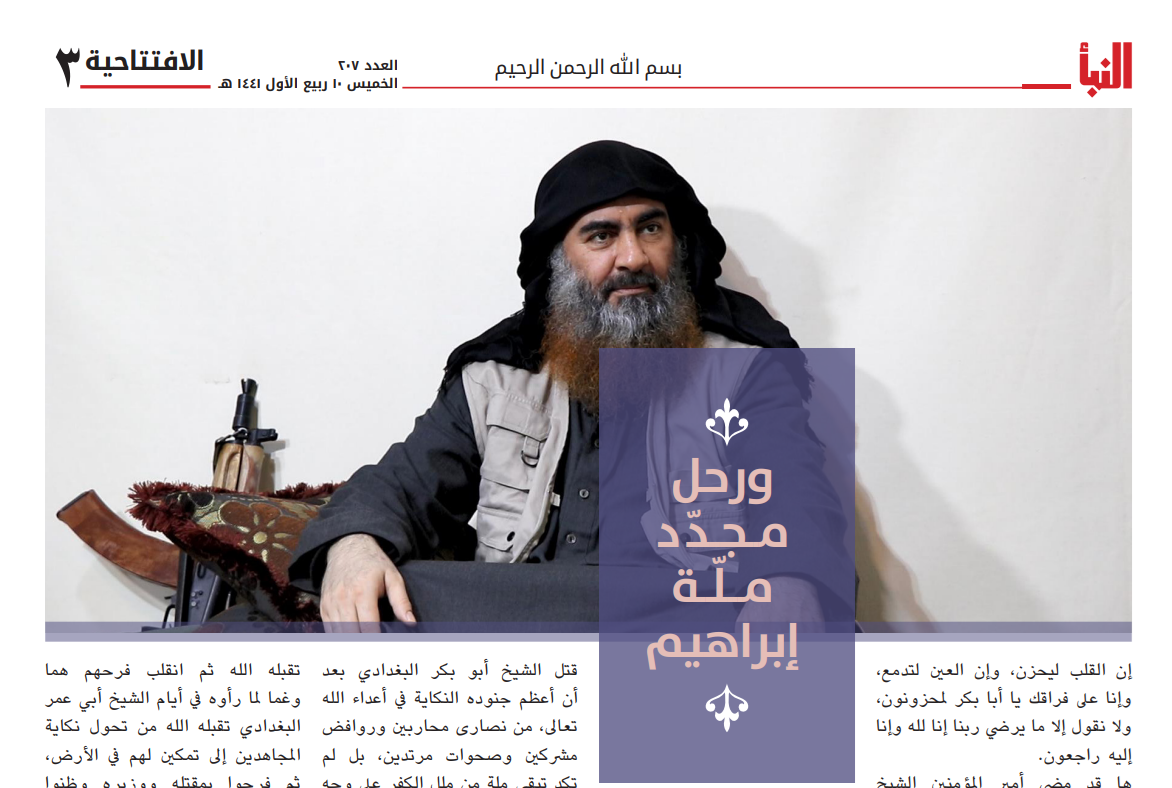
The 207th edition of Al-Naba, the weekly newsletter of the Islamic State (IS), published on 7 November 2019, devotes its main editorial to Ibrahim al-Badri (Abu Bakr al-Baghdadi), the first “Caliph” when the “Caliphate” was declared in June 2014, who was killed on 27 October 2019.

Continue reading

In Search of the Caliph

By Kyle Orton (@KyleWOrton) on 8 November 2019

This article was originally published at European Eye on Radicalization under the headline, “Who is the New Leader of the Islamic State?” 

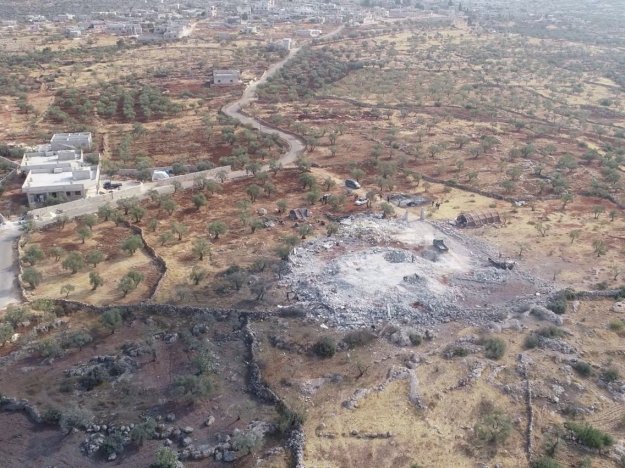
The destroyed compound where Abu Bakr al-Baghdadi was found in Syria // Drone footage taken by Turkey’s state-run Anadolu Agency

The so-called caliph of the Islamic State (ISIS), Ibrahim al-Badri (Abu Bakr al-Baghdadi), was killed in an American raid in Syria on 27 October, and the spokesman, Abu Hassan al-Muhajir, was killed the next day in an airstrike. ISIS acknowledged the losses and appointed new leaders on Halloween.

Abu Hamza al-Qurayshi introduced himself in a nearly-eight-minute audio statement as the new spokesman and named Abu Ibrahim al-Hashemi al-Qurayshi as Al-Baghdadi’s replacement. Little information was given about either man.

The U.S. government has said it knows “almost nothing” about the new caliph, Abu Ibrahim, leaving us no closer, for now, to knowing his identity. But some options present themselves. Continue reading

The First Speech of Islamic State Spokesman Abu Muhammad al-Adnani

By Kyle Orton (@KyleWOrton) on 7 November 2019

Taha Falaha (Abu Muhammad al-Adnani) [right] appearing in an Islamic State video alongside Tarkhan Batirashvili (Abu Umar al-Shishani, 3 June 2017, displaying a scene from 2014 when IS demolished the borders between Iraq and Syria. Falaha was killed in August 2016. It is common for IS to hold back pictures and footage of its leaders for time-spans that can reach over a decade.

Taha Falaha was the effective deputy of the Islamic State (IS) when he was killed on 30 August 2016, by which time he was also overseeing the foreign attacks campaign by IS and serving as governor of the IS-held areas in Syria. Likely, however, Falaha, is best-known internationally by his kunya, Abu Muhammad al-Adnani, and for his role as IS’s official spokesman, particularly his speech in September 2014 inciting Muslims in the West to commit terrorist attacks against their native countries. Falaha had been recruited in Aleppo in 2002 by IS’s founder, Ahmad al-Khalayleh (Abu Musab al-Zarqawi) and steadily advanced through IS’s media department, eventually being announced as the official spokesman with his first speech, released on 1 August 2011. An English-language transcript of that first speech, an hour-long audio message entitled, al-Dawlat al-Islam Baqiya (“The Islamic State Remains” or “The Islamic State Endures”), was released by “Ansar al-Mujahideen English Forum Language and Translation Department” and was posted to their forum on 4 March 2012. The transcript is reproduced below with some editions from the Arabic transcript and some important parts highlighted in bold. Continue reading

Turkey Balancing Between America and Russia

By Kyle Orton (@KyleWOrton) on 22 July 2019

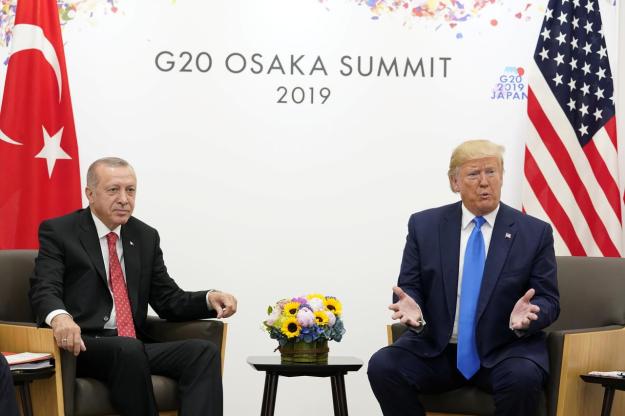
U.S. President Donald Trump and Turkey’s President Recep Tayyip Erdogan meeting during the G20 leaders summit in Osaka, Japan, 29 June 2019 [image source]

The delivery of the first parts of the Russian S-400 anti-missile missile system to Turkey on 12 July has brought the crisis in the Turkish-American relations to a head. This long-simmering problem is intertwined with America’s and Turkey’s policies in Syria, specifically where the latter is responsive to the former, which has resulted in as serious rift within NATO and exposed Turkey to pressure from the Russian government. Continue reading

The Trial: The St. Petersburg Metro Attack Reaches Court in Russia

By Kyle Orton (@KyleWOrton) and Oved Lobel on 14 July 2019

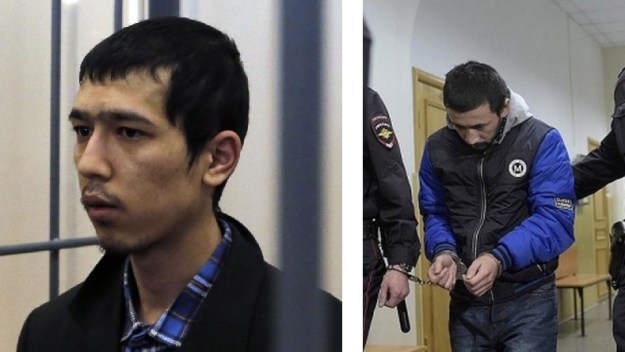
Abror Azimov in court in Moscow in April 2017 [photo source] and Mukhamadyusup Ermatov [photo source]

When defense officials from Russia, the U.S. and Israel met for an unprecedented trilateral summit in Jerusalem recently, it was in large measure another attempt by U.S. President Donald Trump and Israeli Prime Minister Benjamin Netanyahu to put into practice their long-running belief that Russia will help them deal with Iran and perhaps other counter-terrorist issues in Syria. Continue reading

Al-Qaeda Leader Wants to Take the Jihad in Kashmir Away from Pakistan

By Kyle Orton (@KyleWOrton) on 9 July 2019

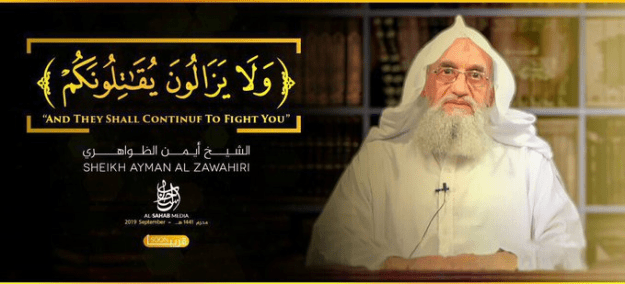
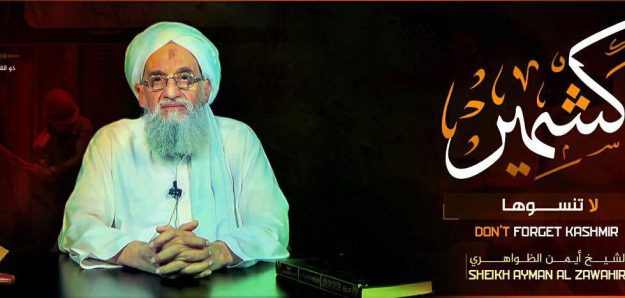
Al-Qaeda’s leader, Ayman al-Zawahiri, released a speech, “Don’t Forget Kashmir”, which as the title suggests focused on that conflict on the Subcontinent. Al-Zawahiri was insistent on fighting India, but he also wanted to “liberate” the Kashmiri jihad from the oversight of the Pakistani secret police and military, who have used these Islamist paramilitary forces as instruments of state policy against the Indian Union since the time of partition. In Al-Zawahiri’s telling the Pakistani state, such as it is, is too close to the Americans and the West. A transcript of the speech, released in English by Al-Qaeda’s As-Sahab Media, is reproduced below. Continue reading

The Memoir of a British Spy in Al-Qaeda

By Kyle Orton (@KyleWOrton) on 8 July 2019

This article was originally published at the European Eye on Radicalization

The main issue that Nine Lives has to overcome is the one that has attended Aimen Dean (a pseudonym) since he went public in March 2015 with an interview he gave to the BBC, claiming he had been a British spy within Al-Qaeda between 1998 and 2006. That issue is overcoming the doubts about his story. Nine Lives goes a long way to solving this by bringing in Paul Cruickshank, the editor-in-chief of CTC Sentinel, one of the premier academic resources in the terrorism field, and Tim Lister, a terrorism-focused journalist with CNN, as co-authors. As well as helping structure the book from Dean’s memories, the two co-authors note they had been able to “corroborate key details” that convinced them: “In the years immediately leading up to and following 9/11, Aimen Dean was by far the most important spy the West had inside al-Qaeda”.

Continue reading