By Kyle Orton (@KyleWOrton) on 11 January 2025
By Kyle Orton (@KyleWOrton) on 16 August 2022
By Kyle Orton (@KyleWOrton) on 8 May 2021
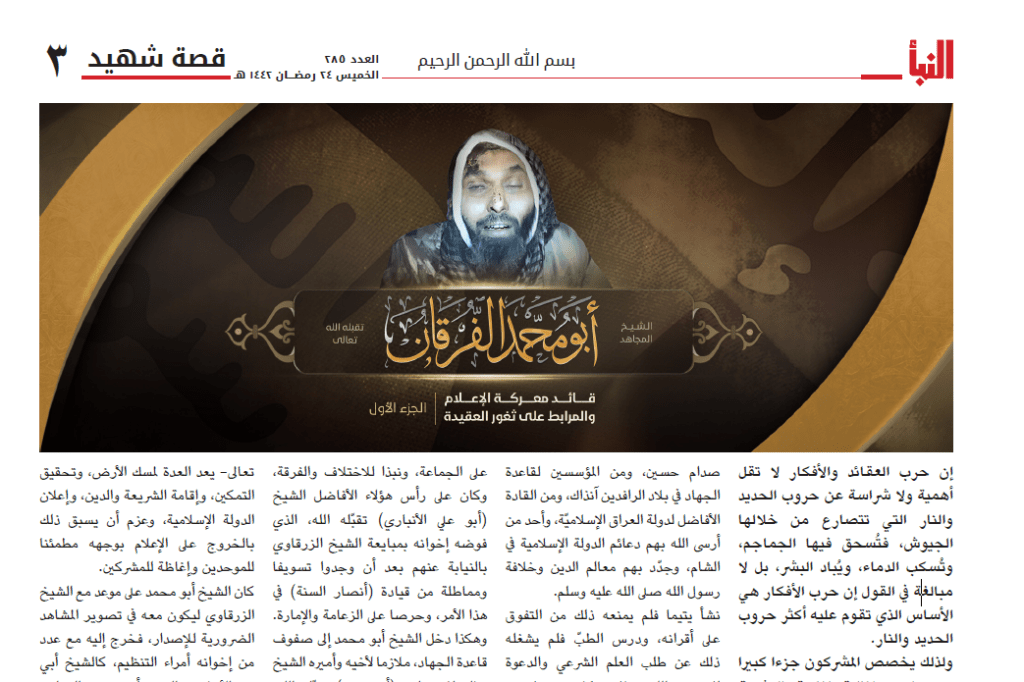
Wael al-Ta’i (Abu Muhammad al-Furqan), Al-Naba 285, p. 3
The 285th edition of Al-Naba, the weekly newsletter of the Islamic State (IS), released on 6 May, had a biography of Abu Muhammad al-Furqan, one of the most important IS leaders, the head of its Central Media Department and its operational ruler when he was killed in September 2016. Continue reading
By Kyle Orton (@KyleWOrton) on 12 November 2017
Muhammad Shakar had, according to his martyr biography, “become influenced by Salafism in 1997-98 while serving as a part of [Saddam] Hussein’s Special Republican Guard”.[1] Quitting the military and returning to his home in Mosul, Shakar was harassed by the regime until he went to join Ansar al-Islam in the mountains of Kurdistan.[2]
Shakar, known as Abu Talha al-Ansari or Abu Talha al-Mawsuli, joined the predecessor to Islamic State either just before or just after Saddam fell, and he was arrested in Mosul on 14 June 2005. Continue reading
By Kyle Orton (@KyleWOrton) on 13 October 2017
The Iraqi Kurdish authorities arrested Mustafa Haji Muhammad Khan (Hassan Ghul) on 23 January 2004. Khan had been dispatched to Iraq by Nashwan Abd al-Baqi (Abd al-Hadi al-Iraqi), one of the key military officials of al-Qaeda “central” (AQC), to function as AQC’s intermediary with Ahmad al-Khalayleh (Abu Musab al-Zarqawi), the founder of the Islamic State movement. Khan replaced Abdallah al-Kurdi, the first envoy sent by Abd al-Baqi. Al-Kurdi had failed to establish any footing to do his job effectively, but Khan, a battle-hardened jihadist from Baluchistan, earned a measure of respect from al-Khalayleh and facilitated a productive conversation between AQC and al-Khalayleh. Al-Khalayleh, possessed of a pathological anti-Shi’ism, wrote a seventeen-page memo to Usama bin Laden explaining his strategy to defeat the Americans by starting a total war between the sects in Iraq. That memo, in digital form, was given to Khan, and Khan had it in his possession when he was captured. A translation of the letter is given below with some interesting sections highlighted in bold.[1] Continue reading
By Kyle Orton (@KyleWOrton) on January 30, 2017
![Umar Hadid [right] (source)](https://kyleorton.co.uk/wp-content/uploads/2017/01/umar-hadid-1-right.jpg)
Umar Hadid [right] (source)
By Kyle Orton (@KyleWOrton) on January 28, 2017
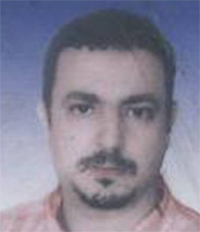
Mohamed Moumou (Abu Qaswara)
Mohamed Moumou, better-known as Abu Qaswara, was the Commander of the North for the Islamic State of Iraq (ISI), one of the most powerful military positions in the group, when he was killed by American forces in Mosul on 5 October 2008. Continue reading
By Kyle Orton (@KyleWOrton) on January 21, 2017
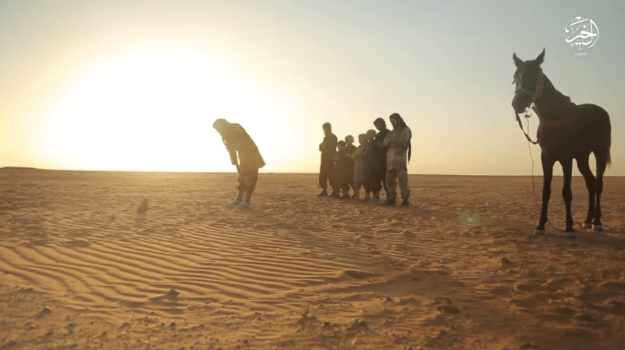
The first proto-caliph of the Islamic State (IS), Hamid al-Zawi (Abu Umar al-Baghdadi), gave his fourth audio speech on 16 April 2007, “The Harvest of the Years for the State of the Muwahideen (Monotheists)”. An English version of al-Zawi’s speech was disseminated by IS’s al-Furqan Media and it is reproduced below with some editions in transliteration and syntax, and some interesting or important sections highlighted in bold. Continue reading
By Kyle Orton (@KyleWOrton) on December 18, 2016
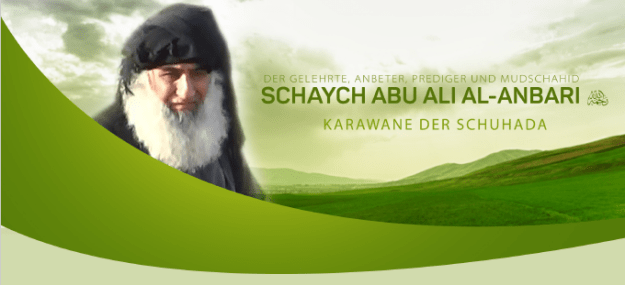
Obituary for Abdurrahman al-Qaduli in the German version of Rumiya, 11 November 2016
The forty-first edition of the Islamic State’s newsletter, al-Naba, released within the territory of the caliphate on 30 July 2016 and released online on 2 August, and the forty-third edition (released 13 and 16 August), contained a two-part obituary for Abd al-Rahman al-Qaduli (Abu Ali al-Anbari), the caliph’s deputy when he was killed on 24 March. The obituaries, entitled, “The Devout Scholar and Mujahid Preacher: Shaykh Abu Ali al-Anbari”,[1] make clear that al-Qaduli was one of the most consequential jihadists in the history of the Islamic State movement. Below is a translation, with some interesting and/or important sections highlighted in bold. The biography resolves some long-standing mysteries, and some of the claims are dubious in light of other evidence we have: these issues, and other points of context and explanation, are in the footnotes. The subheadings are mine, added to signpost the narrative and break it up into more manageable chunks.
Continue reading


 Kyle Orton's Blog