Tag Archives: Ayman al-Zawahiri

Defeat Jihadists in Syria by Being a Better Ally to the Opposition

By Kyle Orton (@KyleWOrton) on March 25, 2015

A still  from the video announcing the Ahrar a-Sham-Suqour a-Sham merger

A still from the video announcing the Ahrar a-Sham-Suqour a-Sham merger

Ahrar a-Sham “merged with“—in reality annexed—Suqour a-Sham on March 22. Ahrar’s leader, Hashem al-Sheikh (a.k.a. Abu Jabbar), is the leader of the Ahrar-Suqour formation, and Suqour’s leader, Ahmed Issa al-Sheikh (a.k.a. Abu Issa) is his deputy. Ahrar is the largest and most hardline Syrian insurgent group in Syria, and Suqour has a fairly stern Salafi-nationalist ideology—at least at its leadership level—and was once the largest rebel group in Idlib Province.

The first thing this brought to mind was Sam Heller’s witticism late last year: “the most successful, lasting approach to rebel unification so far has basically been ‘Ahrar al-Sham absorbs you’.” Continue reading

Iran and Global Terror: From Argentina to the Fertile Crescent

By Kyle Orton (@KyleWOrton) on February 27, 2015

Khobar Towers, which Iran jointly bombed with al-Qaeda

Khobar Towers, which Iran jointly bombed with al-Qaeda

Argentina’s government yesterday announced it was dissolving the Secretariat of Intelligence (S.I.), an intelligence agency tainted by the “Dirty War” regimes (1974-83), and more recent abuses as President Cristina Kirchner has taken Argentina back toward autocracy, and replacing it with a Federal agency. Just two days before, charges of corruption were levelled against Antonio Stiusso, S.I.’s director until Kirchner fired him in December. At the beginning of this month, Stiusso went missing. It now seems Stiusso has taken shelter in a neighbouring State.

These events are the latest twist in an extraordinary saga that has followed the discovery of the body of Alberto Nisman on Jan. 18 in his apartment in Buenos Aires, shot in the head in an apparent suicide. Nisman was a prosecutor investigating the July 18, 1994, bombing of the Argentine Israelite Mutual Association (AMIA) building in Argentina’s capital. All the evidence that Nisman had gathered pointed to Iran as the perpetrator. Few believe Nisman committed suicide, and—the history of Argentines being “suicided” considered—most fingers are pointing at Iran. Continue reading

The Islamic State, Libya, and Interventionism

By Kyle Orton (@KyleWOrton) on February 19, 2015

Rebels with Qaddafi's

Rebels with Qaddafi’s “golden gun”

Yesterday morning in Libya, it was announced that militias from Misrata were moving into Sirte to combat the Islamic State (I.S.). The militias preparing to fight I.S. are drawn from Libya Dawn, the Islamist coalition that ousted the internationally-recognised government in August 2014. Continue reading

Al-Qaeda Issues Strategic Guidelines for Jihadist Warfare

By Kyle Orton (@KyleWOrton) on January 7, 2015

Al-Qaeda’s emir, Ayman al-Zawahiri, released a document on 14 September 2013, entitled, Tawjihat ‘Amma lil-Amal al-Jihadi (توجيهات عامة للعمل الجهادي), variously translated as: “General Guidelines for the Work of Jihad” or “General Guidelines for Jihadist Action”. Al-Zawahiri’s document is reproduced below. Continue reading

Former Islamic State Leader Advises on Jihadist Conduct

By Kyle Orton (@KyleWOrton) on January 6, 2015

dabiq-6

The sixth edition of the Islamic State’s English-language magazine, Dabiq, published on 29 December 2014, reproduced a “speech” by Abu Hamza al-Muhajir, entitled, “Advice for the Soldiers of the Islamic State”, which dates from 23 September 2007.[1] It is reproduced below with some editions in transliteration and some important sections highlighted in bold. Continue reading

From Kessab to Cannibals: Syria’s Media War

By Kyle Orton (@KyleWOrton) on January 5, 2015

Mother Agnes Mariam on RT. An agent of the regime, she dismissed Syria's rebels as a foreign conspiracy.

Mother Agnes Mariam on RT. An agent of the regime, she dismissed Syria’s rebels as a foreign conspiracy.

Fouad Ajami once said Syria was the “first YouTube war“. An academic study called Syria “the most socially mediated civil conflict in history“. From the start of the Syrian war, the media and propaganda dimension has been of immense importance, impacting the course of the war on the ground and affecting the policy of foreign States who could make a decisive difference in the conflict. Continue reading

Iraq Is Still Suffering The Effects Of Saddam Hussein’s Islamist Regime

By Kyle Orton (@KyleWOrton) on December 17, 2014

Throughout his entire trial, Saddam Hussein was never without a Qur'an

Throughout his entire trial, Saddam Hussein was never without a Qur’an

In June, Samuel Helfont published a paper for the Middle East Institute entitled, ‘Saddam and the Islamists: The Ba’thist Regime’s Instrumentalization of Religion in Foreign Affairs’. Relying on “newly released Iraqi state and Ba’th Party archives,” Helfont’s central argument is:

Saddam maintained deep reservations about Islamism until the end. However, this did not prevent his regime from working extensively with Islamists and Islamic activists outside Iraq. Indeed, religion played a leading role in the country’s foreign policy throughout the 1990s.”

Continue reading

Russian Intelligence and the War In Syria

By Kyle Orton (@KyleWOrton) on October 21, 2014

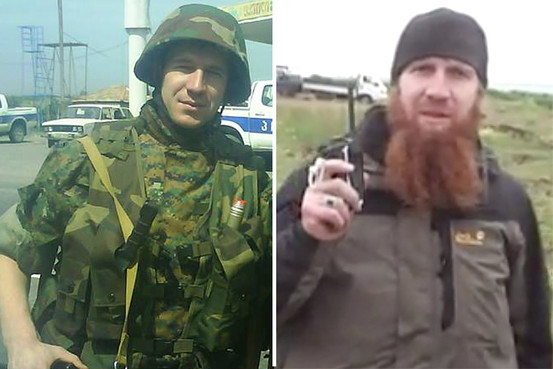
Abu Omar a-Shishani, while in Georgian military, now as I.S. leader in Syria/Iraq

Abu Omar a-Shishani, while in Georgian military, now as I.S. leader in Syria/Iraq

The Syrian rebellion, on Oct. 5, took over areas of Tel al-Hara, near Nawa, a major town twenty miles north of Deraa City, which is a strategic gateway to the road networks that keep the Assad regime alive in Deraa Province. The videos (1/2/3) showed FSA-branded rebels like Liwa al-Furqan and Jabhat Thuwar as-Suriya (the Syrian Revolutionaries’ Front) in control. Jabhat an-Nusra, the Syrian branch of al-Qaeda, had an important presence, but it was not dominant. So this seemed like good news on its own terms.

Two days later the plot thickened when a further video was uploaded to YouTube, showing the rebels touring a captured regime intelligence station in Tel al-Hara: Continue reading

Al-Qaeda in Syria Condemns Al-Qaeda in Yemen’s Softness on the Islamic State

By Kyle Orton (@KyleWOrton) on October 20, 2014

Maysar al-Jiburi (Abu Mariya al-Qahtani) [source]

Al-Qaeda broke relations with the then-Islamic State of Iraq and Syria (ISIS) in February. In June, ISIS declared that it had restored the caliphate and changed its name to simply the Islamic State (IS). Since then, some jihadist groups, including some affiliated with al-Qaeda, have declared their allegiance to IS. With the beginning of American airstrikes against IS, in Iraq on 7 August and extended to Syria on 23 September, the question of where jihadi-salafists stand with regard to IS has become more acute. It was in this predicament that a statement was released today from a leader of al-Qaeda in Syria condemning al-Qaeda’s branch in Yemen for its statement of solidarity with IS in the face of these U.S.-led attacks. By the lights of al-Qaeda in Syria, the Yemeni branch’s statement was too lenient toward IS and will be misinterpreted as support for an organization that has struck down senior officials of al-Qaeda in Syria and remains actively at war with al-Qaeda in that theatre to this hour. Continue reading

WikiBaghdady Claims to Leak the Islamic State’s Secrets

By Kyle Orton (@KyleWOrton) on October 8, 2014

Before the account, first published in April 2014, by an ostensible Islamic State (IS) defector, “Abu Ahmad”, there was the Twitter account @WikiBaghdady, which released a lot of information in the same vein about the alleged impiousness of the jihadist organization. @WikiBaghdady’s testimony, as collected by Yousef Bin Tashfin, is republished below, with some editions for transliteration and syntax, to ensure its preservation. Continue reading