Tag Archives: Britain

Britain’s New Syria Policy Concedes to Iran and Russia—and Keeps Assad in Power

By Kyle Orton (@KyleWOrton) on September 11, 2015

Published at Left Foot Forward

1

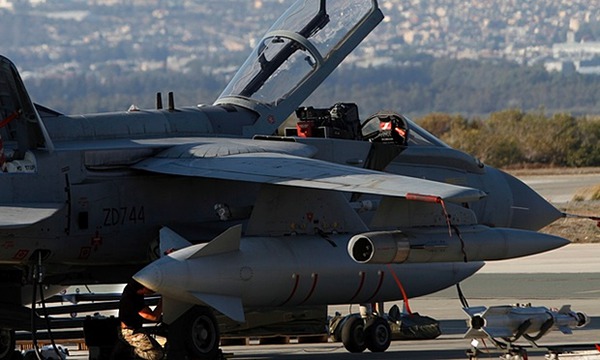
On 9 September the British government announced a new plan for dealing with Syria and the Islamic State (ISIS):

  1. Airstrikes when necessary into Syria to destroy the leadership of ISIS;
  1. Buttressing the Iraqi government in its fight with ISIS;
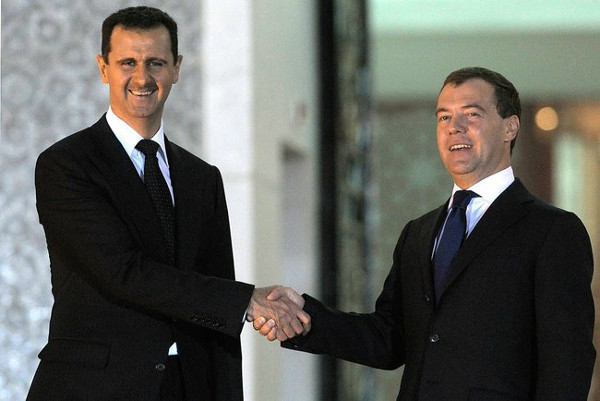
  1. Dropping the demand that Syrian dictator Bashar al-Assad step aside immediately and instead allowing Assad to lead a transition, in order that Russia and Iran will agree to Assad going at all.

All three parts of this plan push in a pro-Iran direction, and strengthen Assad. Continue reading

Britain’s Embassy in Iran Reopens, Putting Commerce Above Human Rights

By Kyle Orton (@KyleWOrton) on August 26, 2015

1

On Sunday the British Embassy in Iran was reopened after four years of closure. The British government’s decision is consistent with two emerging trends: the United States using the nuclear accord to facilitate détente with Iran, and European States falling into line with this policy and beginning to compete to enter the emerging Iranian market.

The British Embassy in Tehran was closed in November 2011 after ‘protesters’—a regime-orchestrated mob—stormed the building, ostensibly in protest against sanctions. The regime claimed helplessness in the face of angry demonstrators.

But it is worth remembering that when Iranian citizens take to the streets in a manner the regime actually disapproves of, it mobilises its security forces to murder them, and imprison them en masse in facilities where they are, male and female, raped as a form of punishment and torture. Continue reading

Book Review: A Shameful Act (2006) by Taner Akcam

By Kyle Orton (@KyleWOrton) on June 9, 20151

This is the complete review. It has previously been posted in three parts: Part 1 on the question of whether the 1915-17 massacres constitute genocide; Part 2 on the post-war trials and the Nationalist Movement; and Part 3 gives some conclusions on what went wrong in the Allied efforts to prosecute the war criminals and the implications for the present time, with Turkey’s ongoing denial of the genocide and the exodus of Christians from the Middle East.

A Question of Genocide

The controversy over the 1915-17 massacres of Armenian Christians by the Ottoman Empire is whether these acts constitute genocide. Those who say they don’t are not the equivalent of Holocaust-deniers in that while some minimize the figures of the slain, they do not deny that the massacres happened; what they deny is that the massacres reach the legal definition of genocide. Their case is based on three interlinked arguments:

  • Unlike the Nazi Holocaust when a defenceless population was murdered only for its identity, the Armenians were engaged in a massive armed revolt, and this is why the Ottoman government decided to deport them.
  • The intent of the Ottomans was not massacre but the removal of the Armenians, who had sided with one foreign invading power (Russia) and who were showing signs of collaborating with another (Britain), from the militarily sensitive areas as Turkey suffered a two-front invasion in early 1915.
  • While terrible massacres, plus starvation and the cold, took maybe a million lives during the deportations, when the Armenians reached their destinations in Syria and Iraq, which were also part of the Ottoman Empire, they were well-treated and allowed to rebuild their lives, which would not have been the case had the Ottomans intended their destruction.

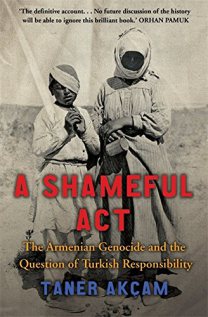
Taner Akcam’s A Shameful Act: The Armenian Genocide and the Question of Turkish Responsibility presents evidence to undermine every one of these arguments. Continue reading

Book Review: A Shameful Act (2006) by Taner Akcam, Part 3

By Kyle Orton (@KyleWOrton) on June 7, 20151

Post-War Turkey

The last foreign troops left Istanbul on October 2, 1923. On October 6, Turkish troops re-occupied Istanbul, and on October 13 the Turkish capital was moved to Ankara. The independence struggle won, the focus now turned to the form independence would take.

Having already abolished the Sultanate—that is the executive post held by the House of Ottoman—Mustafa Kemal (later Atatürk) abolished the Caliphate on March 3, 1924. Atatürk also scrapped the office of Şeyh-ül İslam, banished the House of Ottoman (packing Sultan Abdülmecid onto the Orient Express), and closed the separate religious schools on the same day. The ulema had given much ground during the reforms of the nineteenth century but they had also frustrated and defeated many reformers; Atatürk would not be one of them. The promulgation of the Republican Constitution on April 20, 1924, confirmed parliamentary supremacy over the shari’a, secular law over theocracy.

In the late 1920s, further reforms were made. The fez, which “had become the last symbol of Muslim identification,” was banned. Atatürk had said the fez was “an emblem of ignorance … and hatred of progress”. Turks would wear the costume “common to the civilized nations of the world,” which is to say Europe. Atatürk adopted the Swiss legal code, which removed the Holy Law from personal status—abolishing polygamy, making both parties to a marriage equal, allowing divorce, and allowing people to change their religion. Islam was disestablished as the State religion, and as the final step the Arabic script was changed to Roman. The connection with the East was broken, and Turkey was firmly oriented West. Continue reading

Book Review: A Shameful Act (2006) by Taner Akcam, Part 2

By Kyle Orton (@KyleWOrton) on June 4, 20151

The First Phase of the Trials

On October 30, 1918, the Ottoman Empire signed its final treaty of defeat. The Ottomans’ long decline began in 1683, and by the 1830s the Empire was referred to as the “sick man of Europe”. The armistice was a near-total surrender, allowing the occupation of any area the Allies deemed necessary for their security. Unfortunately, it was neither the end of the war nor the end of the massacres against the Armenians.

The Allies—Britain, France, and Russia—issued a declaration on May 24, 1915, saying:

In light of the crimes against humanity and civilisation committed by Turkey, the allied powers warn the Sublime Porte that members of the Ottoman government involved in the mass murder will be held personally responsible for these crimes.

Not coincidentally, within days of this an official deportation law was passed through the Ottoman Parliament and would thereafter be issued by the Interior Ministry as legal cover for the CUP’s actions. This was a first introduction of the concept of crimes against humanity, and of individual responsibility that extended to senior Generals and Heads of State. The Russians fell to the Communists and for reasons of realpolitik the French and Italians soon dropped their demands for punishing the Turkish war criminals, but the British were relentless. Continue reading

Book Review: A Shameful Act (2006) by Taner Akcam, Part 1

By Kyle Orton (@KyleWOrton) on June 1, 20151

A Question of Genocide

The controversy over the 1915-17 massacres of Armenian Christians by the Ottoman Empire is whether these acts constitute genocide. Those who say they don’t are not the equivalent of Holocaust-deniers in that while some minimize the figures of the slain, they do not deny that the massacres happened; what they deny is that the massacres reach the legal definition of genocide. Their case is based on three interlinked arguments:

  • Unlike the Nazi Holocaust when a defenceless population was murdered only for its identity, the Armenians were engaged in a massive armed revolt, and this is why the Ottoman government decided to deport them.
  • The intent of the Ottomans was not massacre but the removal of the Armenians, who had sided with one foreign invading power (Russia) and who were showing signs of collaborating with another (Britain), from the militarily sensitive areas as Turkey suffered a two-front invasion in early 1915.
  • While terrible massacres, plus starvation and the cold, took maybe a million lives during the deportations, when the Armenians reached their destinations in Syria and Iraq, which were also part of the Ottoman Empire, they were well-treated and allowed to rebuild their lives, which would not have been the case had the Ottomans intended their destruction.

Taner Akcam’s A Shameful Act: The Armenian Genocide and the Question of Turkish Responsibility presents evidence to undermine every one of these arguments. Continue reading

Why I Can’t Bring Myself To Vote On May 7

By Kyle Orton (@KyleWOrton) on April 20, 2015

1

There are few people in British public life more destructive, especially among the young, than Russell Brand, not least because of his poisonous advice that people should not vote. When I first saw him proffer this advice on Newsnight—where I could not believe he had been invited and then taken seriously—it seemed to me a form of vandalism, using his prominent and comfortable position to urge those less comfortable to throw away one of the few levers they had to make their lot better.

But now I find the only way I could cast a ballot in the upcoming Election is if there was an option for “None of the Above”. I can only differentiate myself by noting both the very considerable gulf in our audiences, and thus responsibilities, and that I do not seek to advise anybody, only explain my own personal decision. Continue reading

CAGE Still Has Questions To Answer About Mohammed Emwazi (“Jihadi John”)

By Kyle Orton (@KyleWOrton) on April 3, 2015

Moazzam Begg

Moazzam Begg

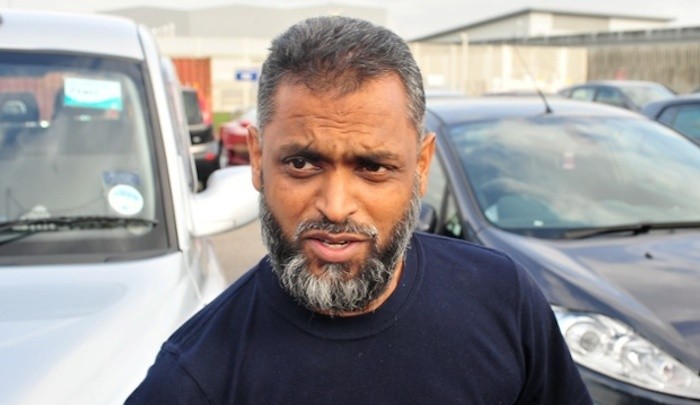
The outreach director of CAGE (formerly Cageprisoners), Moazzam Begg, went to Syria between October 2012 and April 2013. Begg was arrested in Britain on Feb. 25, 2014, on terrorism-related charges because while in Syria, Begg attended a terrorist training camp. Begg was held in Belmarsh until Oct. 1, 2014. Begg had been due to begin trial on Oct. 5, 2014, but that trial was abandoned because of new evidence that meant there was “no longer a realistic prospect of gaining a conviction,” and Begg was released.

Begg is on record as having said that he “help[ed] to run a training camp in the countryside near Idlib … where opponents of the [Assad] regime could undergo physical exercise and acquire the rudiments of first aid and military training, with fake wooden guns.” There is certainly an ambiguity here: the only real defensive policy for Syria’s civilians is one that overthrows Assad, so Begg’s claim that what he did “was not an act of terrorism, but an attempt to help people defend themselves,” is not, on its face, ridiculous. Begg’s problem is that this was not a camp for Syrians; the camp he “help[ed] to run” was for foreign al-Qaeda members, who have done immense damage to the anti-Assad cause, associating it with fanaticism and atrocity and warding off necessary international support that could have toppled the dictator. Continue reading

Mohammed Emwazi and al-Qaeda in Somalia

By Kyle Orton (@KyleWOrton) on March 1, 2015

Mohammed Emwazi (

Mohammed Emwazi (“Jihadi John”)

The good news of the week is that CAGE (formerly Cageprisoners) is finished. While there had been no shortage of people pointing out that CAGE is a Salafi jihadist advocacy group and terrorist-supporting outfit, not a human rights organisation, this was often met with accusations of “Islamophobia,” McCarthyism, and worse. In 2010, Amnesty International—which partners with CAGE—fired the head of its Gender Unit, Gita Shaghal, when she complained of making Moazzam Begg an A.I. poster-boy. Begg claims to have been wrongfully imprisoned in Guantanamo Bay (for his actual record start here and here.) But no person of good faith will ever again defend CAGE. Continue reading

Do Not Let The Murder of James Foley Distract From The Assad Regime

By Kyle Orton (@KyleWOrton) on August 20, 2014

James Foley

James Foley

Last night the Islamic State released a revolting video in which they beheaded the American journalist James Foley, who has been missing since Thanksgiving Day (November 22) 2012. Continue reading