By Kyle Orton (@KyleWOrton) on 11 January 2025
By Kyle Orton (@KyleWOrton) on 4 July 2018
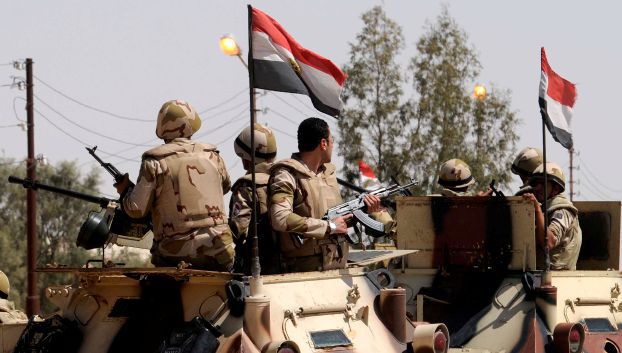
Egyptian soldiers in the Sinai (image source)
Five years on from the military coup d’etat in Egypt that brought to power Abdel Fattah el Sisi, the problems of the country—political, economic, demographic, security—remain as intractable as ever. Indeed, in many cases, the problems are worse than before. Among the problems that are noticeably worse now than in 2013 is security, specifically the Islamic State (Daesh) insurgency in the Sinai. Continue reading
By Kyle Orton (@KyleWOrton) on January 27, 2017

The Islamic State’s June 2014 declaration that the areas it controlled were the restored “Caliphate” was seen by many as a novel development. In fact, “the State” was declared in October 2006. The next month, the predecessor of the Islamic State (IS), Al-Qaeda in Mesopotamia (AQM), dissolved itself, and a month after that the claim to statehood was expanded upon—while being wilfully ambiguous about the caliphal pretensions—in the first speech by the then-emir, Hamid al-Zawi (Abu Umar al-Baghdadi). Similarly, though confusion remains on the point, it was in this same period that the symbol of the Islamic State, its black flag, was established.
By Kyle Orton (@KyleWOrton) on May 12, 2014
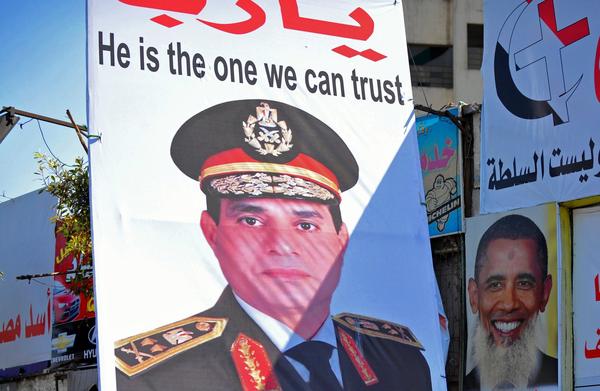
While the Sisi regime presents itself to the West as a barrier against Islamism, its internal propaganda delegitimizes the Islamists by presenting them as the cat’s paw of the United States, playing on the widespread anti-Americanism in Egypt
David Kirkpatrick on The New York Times front-page brought the news everyone following Egypt already knows: the putschists in Cairo have reneged on their promises of pluralism and religious tolerance, which was part of their sell in bringing off the coup last July. Continue reading
 Kyle Orton's Blog