Tag Archives: Dabiq

Propaganda and the War Against Independent Media in Syria

By Kyle Orton (@KyleWOrton) on December 29, 2015
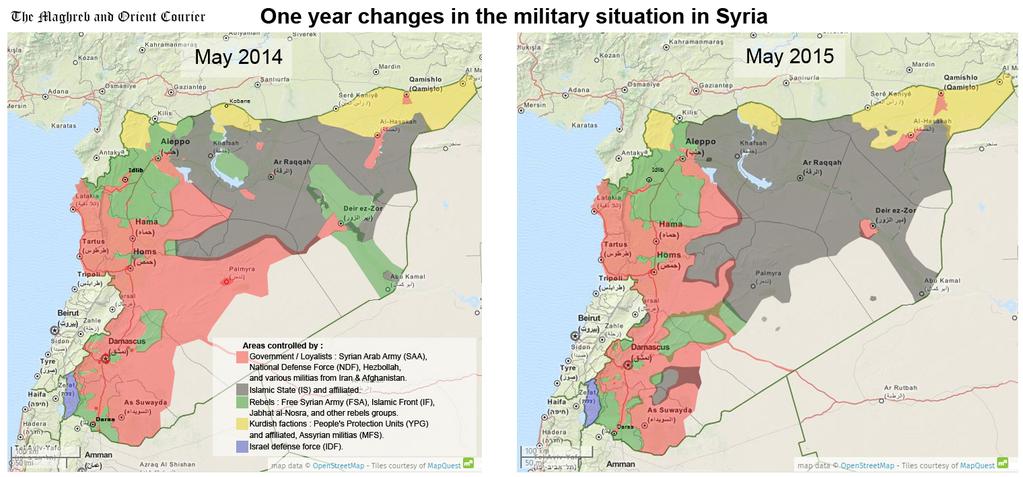
In the last month, the Islamic State (IS) has been waging a concerted campaign to shut down all independent sources of information emanating from its statelet. IS’s focus has been on Raqqa is Being Slaughtered Silently (RBSS), an activist group that began in April 2014 in IS’s de facto capital in northern Syria. RBSS has published information—including pictures and videos, much of it via Twitter—on the crimes of the “caliphate”. IS has now murdered at least five RBSS journalists and activists, two of them on foreign soil in Turkey, plus the father of one of RBSS’s founders. (The sixth case, also in Turkey, is more murky.) The suppression of independent media by IS is necessary to allow the group to maintain social control of the areas it rules and to sustain the narrative that it is building utopia on earth, which attracts in the foreign fighters that help IS maintain and expand its territory.
Continue reading
The Islamic State Strikes Lebanon

By Kyle Orton (@KyleWOrton) on November 22, 2015

1-b

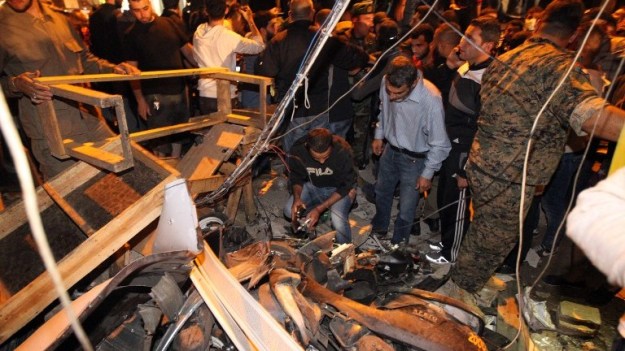
In Burj al-Barajna, a district of southern Beirut adjacent to Hizballah’s headquarters in Dahiya, at about 18:00 on 12 November 2015, a standing motorcycle laden with explosives was blown up outside a Shi’a mosque as a crowd of worshippers left after evening prayers. This was followed quickly by a suicide bomber blowing himself up among the crowd of Shi’a worshippers. A second suicide bomber blew himself up near a bakery, less than 500 yards away. Continue reading

Islamic State Spokesman Admits Caliph’s Deputy is Dead, Invites Armageddon

By Kyle Orton (@KyleWOrton) on October 14, 2015

1

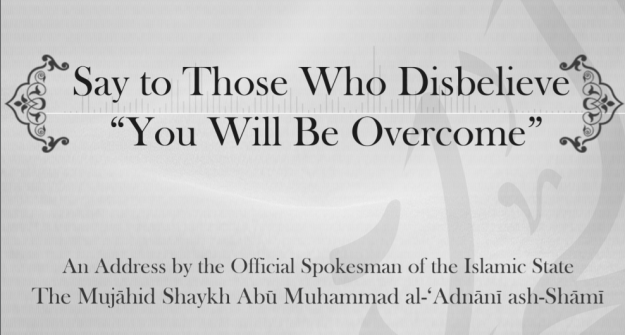
The Islamic State’s spokesman, Taha Subhi Falaha (Abu Muhammad al-Adnani) gave a speech on 13 October 2015 entitled, “Say to Those Who Disbelieve, ‘You Will Be Overcome’.”

Falaha’s speech contained an important piece of news, or rather confirmation of news: the caliph’s deputy, Fadel al-Hiyali, was in fact killed on 18 August 2015.[4]

The themes in Falaha’s speech were largely familiar: the jihadists were facing a global conspiracy of America, its allies, Russia, Iran, and apostate Muslims in Syria and Iraq; Muslims should therefore unite around the Islamic State’s banner in order to repel this aggression aimed at all (Sunni) Muslims; but the Islamic State remains strong—the killing of leaders and the loss of some areas was more than made up for by other advances—and able to murder those Muslims who remain opposed to it and shatter the Americans. Continue reading

The Horrors for Women of Islamic State Rule

By Kyle Orton (@KyleWOrton) on October 12, 2015

Published at Verily 

1

I have always been interested in the Middle East, specifically the Syrian conflict. In early summer 2014, as part of my master’s dissertation, I went to Lebanon to work with the United Nations. I was still there when the Islamic State group, commonly known as ISIS, struck Iraq.  Continue reading

An Interview With the Islamic State’s Leader in Libya

By Kyle Orton (@KyleWOrton) on September 10, 2015

In the eleventh edition of the Islamic State’s English-language magazine, Dabiq, released on 9 September 2015, there was an interview with the leader of their forces in Libya, Abul-Mughirah al-Qahtani,[1] about the situation for the Islamic State in that country. The interview is reproduced below with some editions to transliteration, some notes added for clarification, and some interesting sections highlighted in bold. Continue reading

The Islamic State’s Strategy Is Working, Its Enemies Are Failing

By Kyle Orton (@KyleWOrton) on May 23, 2015

1

To hear President Obama tell it, his announced program to defeat the Islamic State (ISIS), which began with airstrikes into Iraq last August that were extended into Syria in September, is working, albeit with some tactical setbacks. The implication is that the setbacks of the U.S.-led anti-ISIS campaign are not strategic.

As J.M. Berger phrased it:

In the Washington vernacular, the act of Being Strategic implies a near mystical quality of superior thinking possessed by some, and clearly lacking amongst the vulgarians of the world—heedless brutes such as ISIL. Tactics are short-term ploys, easy to dismiss. Strategy is for winners.

Unfortunately, this soothing view is almost exactly wrong: it is the United States that is relying on various short-term methods—commando raids into the Syrian desert, for example—while ISIS has a long-term goal fixed in mind and is working assiduously to achieve it. The U.S.-led Coalition is losing, in short, and ISIS is winning. Continue reading

Islamic State Claims the Attack on Muhammad Cartoon Event in Texas

By Kyle Orton (@KyleWOrton) on May 22, 2015

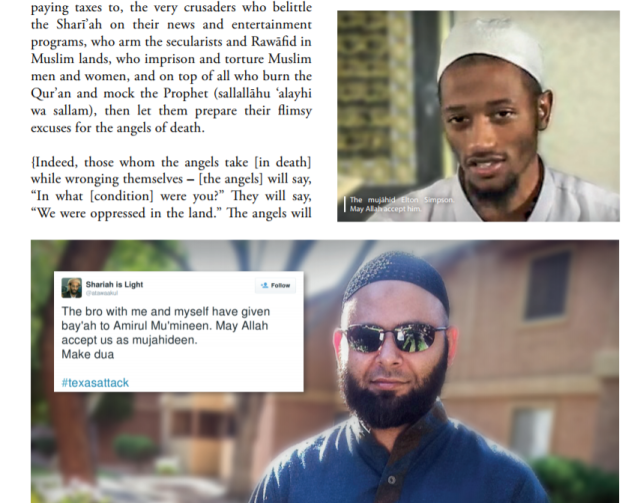
Dabiq 9, page 4

The Islamic State released the ninth edition of Dabiq, its English-language magazine, on May 21, 2015. The Foreword, on pages 3 and 4, claims “credit” for the attempted terrorist attack against in Garland, Texas, on May 3. The two would-be killers, Elton Simpson and Nadir Hamid Soofi, were killed outside the Curtis Culwell Center, which was hosting a “draw (Prophet) Muhammad” cartoon contest, led by anti-Islam activist Pamela Geller, who was among the primary targets of the attack. The attack had been guided by Islamic State operative Junaid Hussain, a British hacker. The article is reproduced below with some edits for transliteration. Continue reading

Former Islamic State Leader Advises on Jihadist Conduct

By Kyle Orton (@KyleWOrton) on January 6, 2015

dabiq-6

The sixth edition of the Islamic State’s English-language magazine, Dabiq, published on 29 December 2014, reproduced a “speech” by Abu Hamza al-Muhajir, entitled, “Advice for the Soldiers of the Islamic State”, which dates from 23 September 2007.[1] It is reproduced below with some editions in transliteration and some important sections highlighted in bold. Continue reading

Islamic State Claims Responsibility for Terror Attacks in Australia, Canada, and America

By Kyle Orton (@KyleWOrton) on November 21, 2014

The Islamic State released the fifth edition of its English-language propaganda magazine, Dabiq, on November 21, 2014. In it, the Islamic State claimed responsibility for the terrorist attacks: in Australia by Numan Haider on September 23, in Canada by Martin Couture-Rouleau on October 20 and Michael Zehaf-Bibeau on October 22, and in America by Zale Thompson on October 23. The Islamic State says these attacks were in response to the call on September 22 by the organization’s spokesman, Abu Muhammad al-Adnani. The article is reproduced below with some minor editions for transliteration and some important sections highlighted in bold. Continue reading

Religion’s Moral Guidance: The Islamic State, the Yazidis, and Mass-Rape

By Kyle Orton (@KyleWOrton) on October 24, 2014

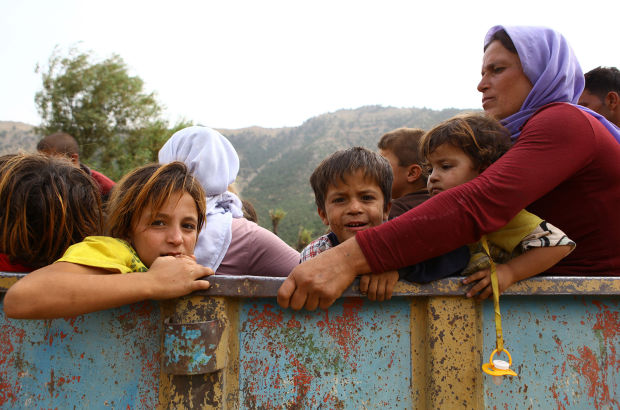
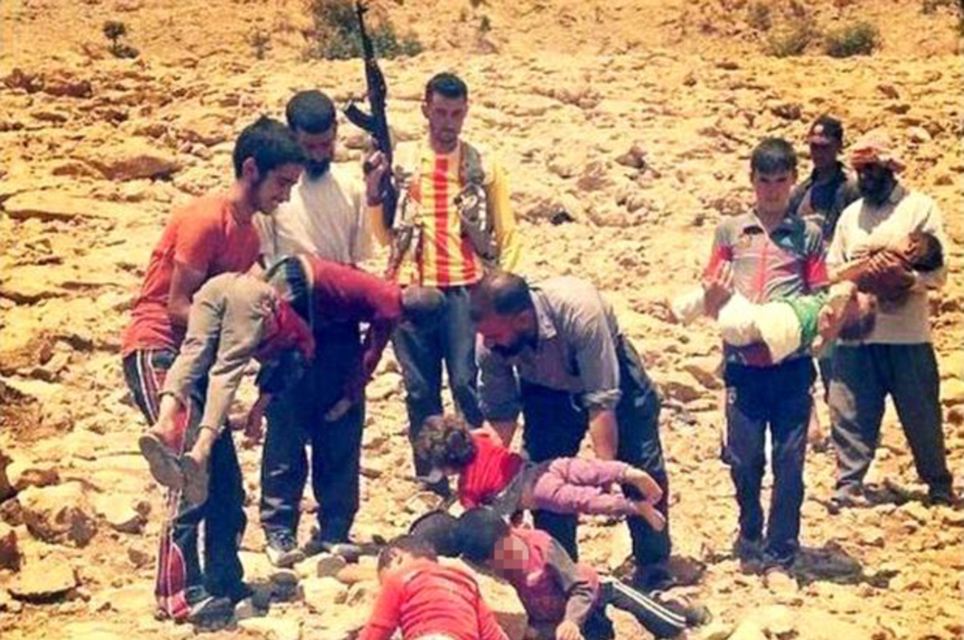
Yazidis fleeing from the Islamic State to Mount Sinjar, carrying their children

Yazidis fleeing from the Islamic State to Mount Sinjar, carrying their children

When the United States finally intervened against the Islamic State (I.S.) in early August the timing, if not exactly the strategic imperative, was determined at least in part by the scenes of Yazidis being starved to death on the side of Mount Sinjar. The Yazidis were forced to choose between descending the mountain and being murdered by the takfiris or remaining and dying of dehydration. As it turns out they were the lucky ones. Continue reading