By Kyle Orton (@KyleWOrton) on 19 November 2019

President Barack Obama meeting President-elect Donald Trump, 10 November 2016 [image source]
By Kyle Orton (@KyleWOrton) on 19 November 2019

President Barack Obama meeting President-elect Donald Trump, 10 November 2016 [image source]
A version of this article was published at The Arab Weekly.
By Kyle Orton (@KyleWOrton) on 12 October 2019

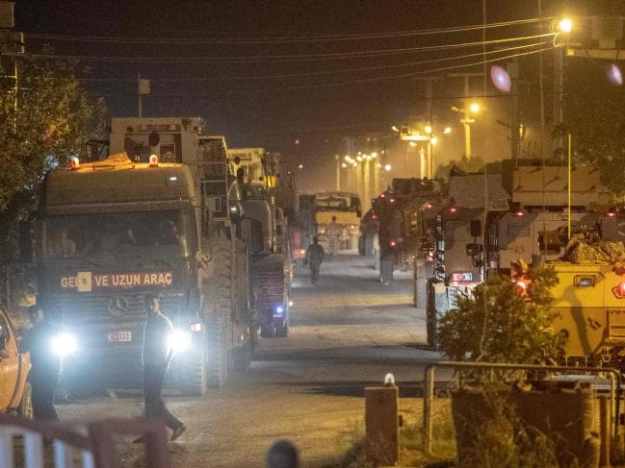
Turkish Armed Forces heading towards the border with Syria, 8 October 2019 // BULENT KILIC / AFP
The beginning of Turkey’s third incursion into Syria on Wednesday, this time dubbed Operation PEACE SPRING and aimed at the areas east of the Euphrates River, is the culmination of an American policy started under Barack Obama that has been continued by Donald Trump. That it is inevitable makes it no less tragic for the innocents caught up in this mess. It does mean that the emotive posturing on social media, and attempts by Obama era officials to cast the blame for the Syria catastrophe onto Trump, are more-than-usually grotesque. Continue reading
By Kyle Orton (@KyleWOrton) on 9 October 2019

Interview with De Re Militari Journal. Continue reading
This article was published at The New Turkey
By Kyle Orton (@KyleWOrton) on 1 October 2019

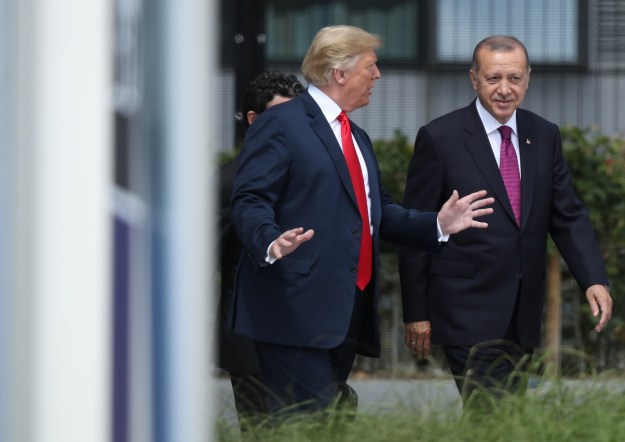
U.S. President Donald Trump and Turkish President Recep Tayyip Erdogan at the opening ceremony of the NATO Summit in Brussels, July 2018 // Getty Images
Turkey’s President Recep Tayyip Erdogan had said earlier in September that he would discuss the problems between Turkey and the United States when he met with the U.S. President Donald Trump on September 25, as part of his trip to New York for the opening of the United Nations General Assembly. But neither side has revealed what was discussed and if anything was resolved. Continue reading
By Kyle Orton (@KyleWOrton) on 12 September 2019
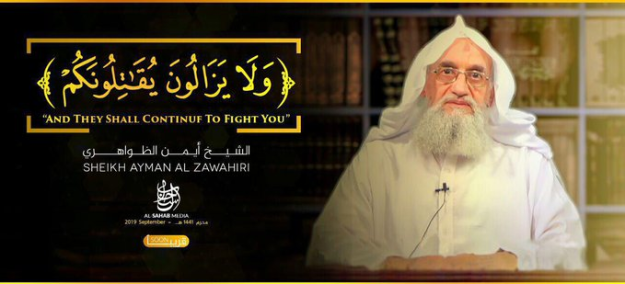
To mark the eighteenth anniversary of the 9/11 massacre, Al-Qaeda’s Al-Sahab media department released a video, “And They Shall Continue to Fight You”. The video, which ran over a half-hour, featured a speech by the group’s emir, Ayman al-Zawahiri, interspersed with other leadership figures.
Much attention has been given to Dr. Al-Zawahiri encouraging attacks on America, his contention that the U.S. has enabled the spread of Iranian power by providing its vicious sectarian militias in Iraq, Syria, and beyond with direct support as part of the war against the Islamic State (ISIS), and his use of the issue of Palestine. There are some indications Al-Qaeda is looking abroad again with its terrorism campaign, but the primary purpose of re-emphasising the justice of attacks on the West seems to be to meet the ideological challenge from ISIS. Behind the veneer of the “far enemy” rhetoric in this speech, Al-Zawahiri was in fact very defensive—particularly about 9/11, Al-Qaeda’s greatest “success”, where he seems stung by the accusation Al-Qaeda murdered innocents—and “near enemy” (regionally) focused. Even the call to attack America suggested attacks on military installations in the Middle East, rather than in America itself. Such attacks would also avoid the issue of civilian casualties, Al-Zawahiri noted.
An English translation was put out of the video of Al-Zawahiri’s speech and a transcript is reproduced below.
Continue reading
By Kyle Orton (@KyleWOrton) and Rob Clark (@RobertClark87) on 26 July 2019

A speedboat and a helicopter of the Iran’s Islamic Revolutionary Guards Corps Navy move around a British-flagged oil tanker Stena Impero, 21 July 2019. (Hasan Shirvani/Mizan News Agency via AP)
The series of provocations in the Gulf by the Islamic Republic of Iran, beginning with the sabotage of four vessels in mid-May, culminated last Friday in the illegal seizure by the Iranian Revolutionary Guard Corps Navy (IRGCN) of the British-flagged and operated Stena Impero oil tanker, followed shortly thereafter by the seizure of the Liberian-flagged, British operated MV Mesdar in the Strait of Hormuz. Only the Mesdar has been released. This episode has served to demonstrate the serious defence issues confronting Boris Johnson, the incoming United Kingdom (UK) Prime Minister, which have to be dealt with immediately and cannot be pushed off into the future when the domestic turbulence over Brexit has abated. Continue reading
By Kyle Orton (@KyleWOrton) on 22 July 2019

U.S. President Donald Trump and Turkey’s President Recep Tayyip Erdogan meeting during the G20 leaders summit in Osaka, Japan, 29 June 2019 [image source]
By Kyle Orton (@KyleWOrton) on 10 May 2019

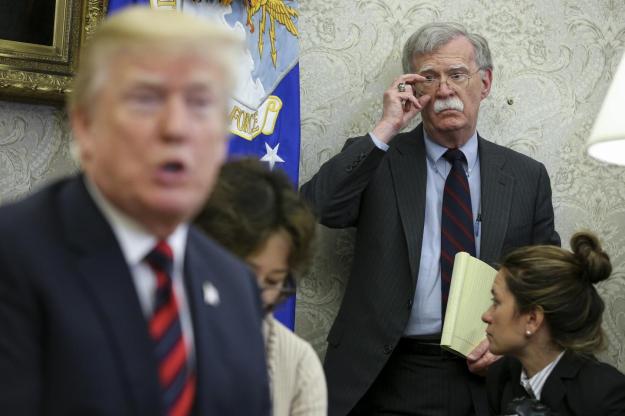
President Donald Trump speaks as John Bolton stands by in the Oval Office, 22 May 2018. OLIVER CONTRERAS-POOL/GETTY IMAGES
As tensions flared between the United States and Iran over the last ten days, a number of Washington’s Western allies have signalled their distance from the U.S. view, most dramatically in the case of Major-General Chris Ghika, Britain’s top commander in the coalition against the Islamic State (ISIS), who dismissed the U.S. intelligence assessment of an increased threat from Iran. This has since been walked back, but the fissures in the Western alliance over how to deal with Iran are real, and this has been compounded by differences within the U.S. government and the highly irregular nature of the Donald Trump administration, particularly its decision-making processes and public messaging. Continue reading
Published at The Arab Weekly
By Kyle Orton (@KyleWOrton) on 28 April 2019

A young boy rides his bicycle in Deraa // AFP
In military terms, the fall of Daraa, in south-western Syria, to Iranian and regime forces last July eliminated the last insurgent-held pocket not dominated by jihadists. Politically, it had profound effects, demonstrating American disengagement and Israel’s misperceptions of the Syrian landscape, particularly Russia’s role in it.
Recent signs of renewed insurgency in Daraa, however, underline how far from over Syria’s war is and how badly the West has mishandled the crisis. Continue reading
This article was published at Ahval
By Kyle Orton (@KyleWOrton) on 12 March 2019
The wheel turns again. After U.S. President Donald Trump announced the withdrawal of U.S. forces from Syria in December, it seemed rapprochement with Turkey was on the cards. Now that looks less likely. Continue reading