By Kyle Orton (@KyleWOrton) on 11 January 2025
By Kyle Orton (@KyleWOrton) on 6 April 2019

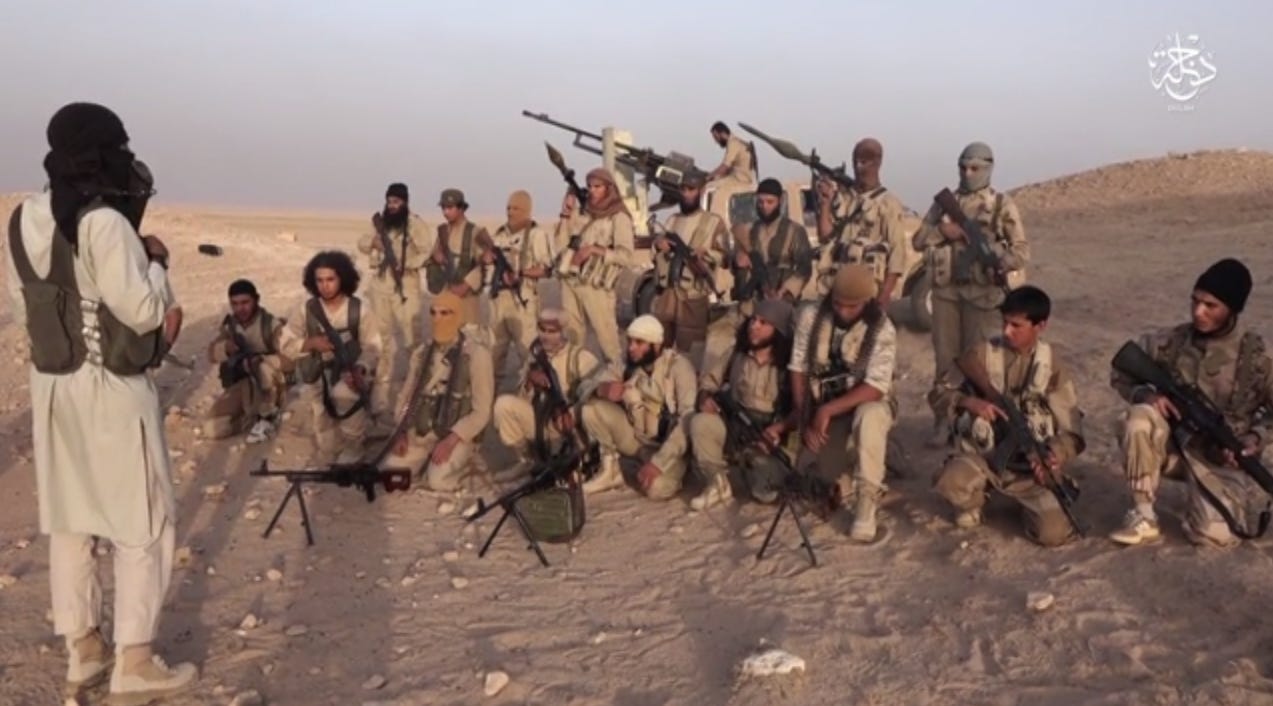
Islamic State flag in front of the main gate of Saddam Husayn’s palace in Tikrit, 5 April 2015 // AFP PHOTO / MOHAMMED SAWAF
A lengthy document—roughly sixty pages and 12,000 words—was published online on 21 February 2019 containing biographies of twenty-seven senior Islamic State (IS) officials, past and more recent. Those bios that are dated were written between October 2018 and the time of publication, with one exception that was written in the summer of 2018. The author claims to be an IS veteran. While longevity is difficult to prove, the fact that the author provides heretofore unseen images of some of the IS leaders suggests that at a minimum he is an IS operative. Continue reading
By Kyle Orton (@KyleWOrton) on January 30, 2017
![Umar Hadid [right] (source)](https://kyleorton.co.uk/wp-content/uploads/2017/01/umar-hadid-1-right.jpg)
Umar Hadid [right] (source)
By Kyle Orton (@KyleWOrton) on December 18, 2016
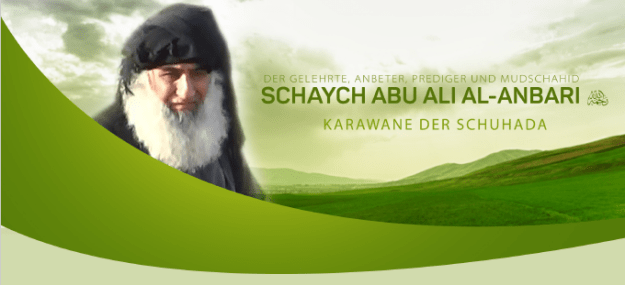
Obituary for Abdurrahman al-Qaduli in the German version of Rumiya, 11 November 2016
The forty-first edition of the Islamic State’s newsletter, al-Naba, released within the territory of the caliphate on 30 July 2016 and released online on 2 August, and the forty-third edition (released 13 and 16 August), contained a two-part obituary for Abd al-Rahman al-Qaduli (Abu Ali al-Anbari), the caliph’s deputy when he was killed on 24 March. The obituaries, entitled, “The Devout Scholar and Mujahid Preacher: Shaykh Abu Ali al-Anbari”,[1] make clear that al-Qaduli was one of the most consequential jihadists in the history of the Islamic State movement. Below is a translation, with some interesting and/or important sections highlighted in bold. The biography resolves some long-standing mysteries, and some of the claims are dubious in light of other evidence we have: these issues, and other points of context and explanation, are in the footnotes. The subheadings are mine, added to signpost the narrative and break it up into more manageable chunks.
Continue reading
By Kyle Orton (@KyleWOrton) on April 26, 2016
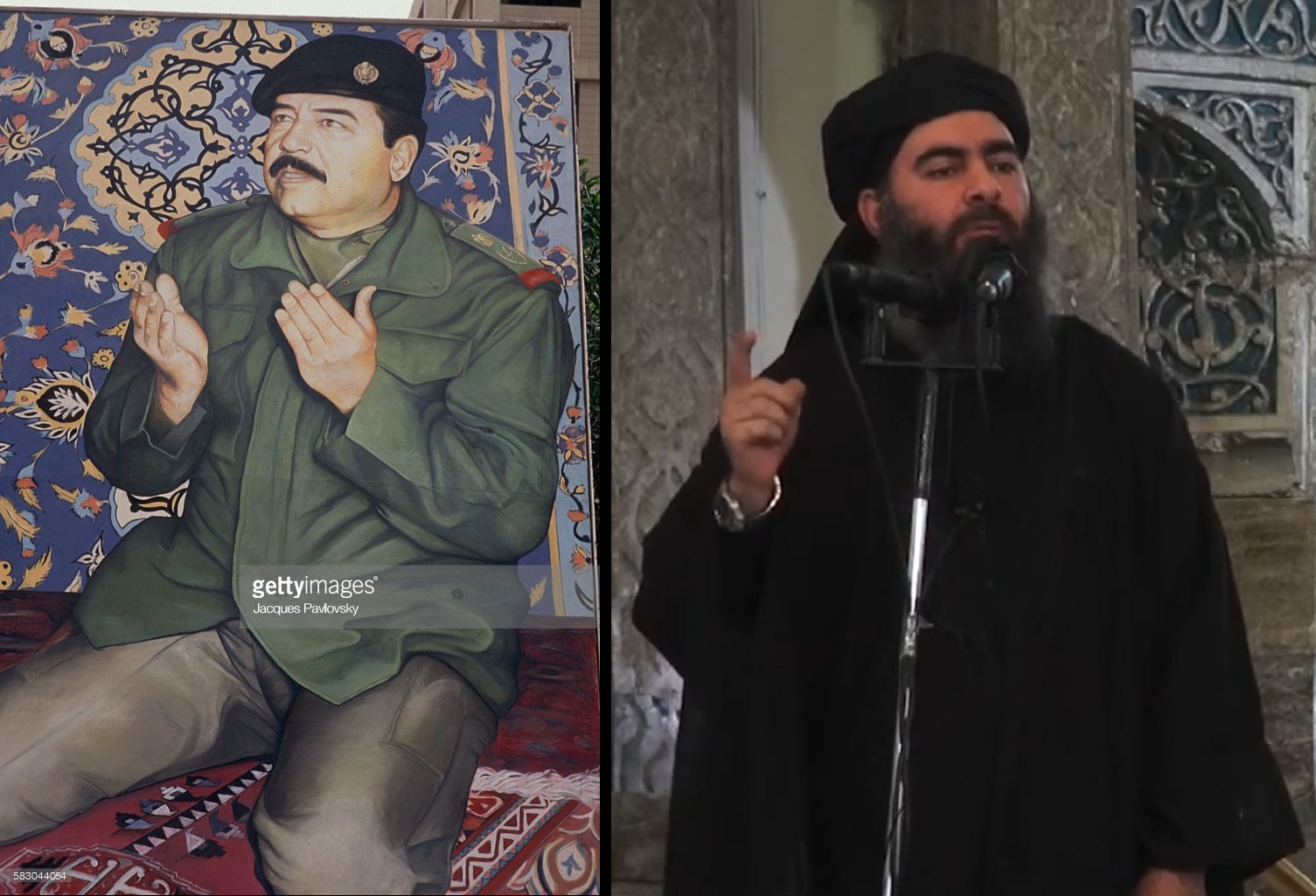
This essay, written to tie together my work on the relationship between the Saddam Hussein regime and the Islamic State, was completed last summer and submitted to an outlet, where it entered a form of development hell. After giving up on that option late last year, the opportunity arose to get a shorter version published in The New York Times in December. But I procrastinated too long over what to do with the full essay and a recent change in my work situation means I no longer have the bandwidth to go through the process of finding it a new home, so here it is.
“Abu-Bakr al Baghdadi is a product of the last decade of Saddam’s reign,” argues Amatzia Baram, a scholar of Iraq. He is correct in at least three ways. First, in its last decade in power, the Iraqi Ba’ath regime transformed into an Islamist government, cultivating a more religious, sectarian population on which the Islamic State (ISIS) could draw. Part of Saddam Hussein’s “Faith Campaign” also involved outreach to Islamist terrorists, including al-Qaeda, which meant that the synthesis of Ba’athism and Salafism that fused into the Iraqi insurgency after the fall of Saddam was already well advanced by the time the Anglo-American forces arrived in Baghdad in 2003. Second, the ISIS leadership and military planning and logistics is substantially reliant on the intellectual capital grown in the military and intelligence services of the Saddam regime. And finally, the smuggling networks on which ISIS relies, among the tribes and across the borders of Iraq’s neighbours, for the movement of men and materiel, are directly inherited from the networks erected by the Saddam regime in its closing decade to evade the sanctions. The advantages of being the successor to the Saddam regime make ISIS a more formidable challenge than previous Salafi-jihadist groups, and one that is likely to be with us for some time.
By Kyle Orton (@KyleWOrton) on March 25, 2016
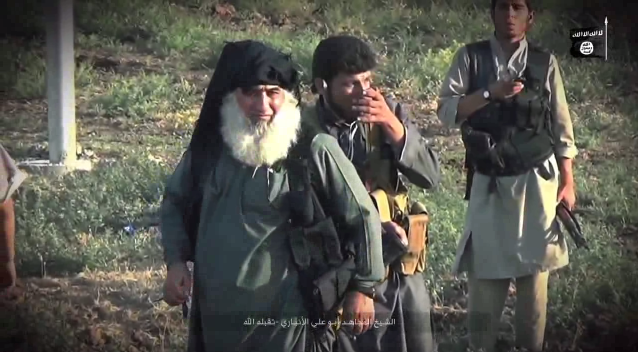
Abd al-Rahman al-Qaduli (Abu Ali al-Anbari) in an Islamic State video in May 2016
United States Secretary of Defense Ashton Carter announced this morning that he believed Abd al-Rahman Mustafa al-Qaduli, a senior leader of the Islamic State (IS), had been killed in a U.S. raid into Syria earlier this week. Al-Qaduli was “serving as a finance minister” and had been “responsible for some external affairs and plots,” said Carter. America is “systematically eliminating ISIL’s cabinet,” Carter went on, noting the alleged killing of Tarkhan Batirashvili (Abu Umar al-Shishani) two weeks ago, adding that al-Qaduli’s removal will “hamper” IS in conducting operations inside and outside its caliphate. Continue reading
By Kyle Orton (@KyleWOrton) on January 12, 2016
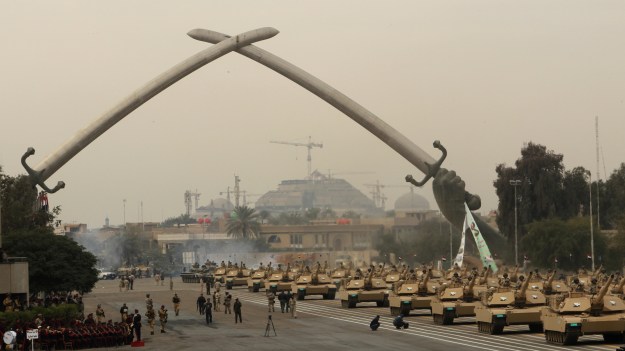
The “Victory Arch,” which Saddam built after the war with Iran. (January 2012)
About three weeks ago I wrote a piece for The New York Times explaining the evolution of Saddam Hussein’s regime away from the hard-secularism of its Ba’athist origins, and how this had prepared the ground for the Islamic State (IS). I received much positive feedback, but the social media reaction was inevitable: little thought and much anger, particularly from people who view Iraqi history through a political prism and felt I was trying to exculpate George W. Bush. With rare exceptions, the critique could hardly be called thoughtful. So it is nice to finally have such a critique to deal with, from Samuel Helfont and Michael Brill in today’s Foreign Affairs. Continue reading
By Kyle Orton (@KyleWOrton) on December 23, 2015
Published in The New York Times.

Whom should we blame for the Islamic State? In the debate about its origins, many have concluded that it arose from the American-led coalition’s errors after the 2003 invasion of Iraq. In fact, the groundwork for the emergence of the militant jihadist group was laid many years earlier by the government of Saddam Hussein.
The Arab nationalist Baath Party, which seized power in 1968 in a coup in which Mr. Hussein played a key role, had a firmly secular outlook. This held through the 1970s, even as religiosity rose among the Iraqi people. But soon after Mr. Hussein invaded Iran in 1980, it began to change.


 Kyle Orton's Blog