By Kyle Orton (@KyleWOrton) on 7 April 2023

By Kyle Orton (@KyleWOrton) on 8 December 2021
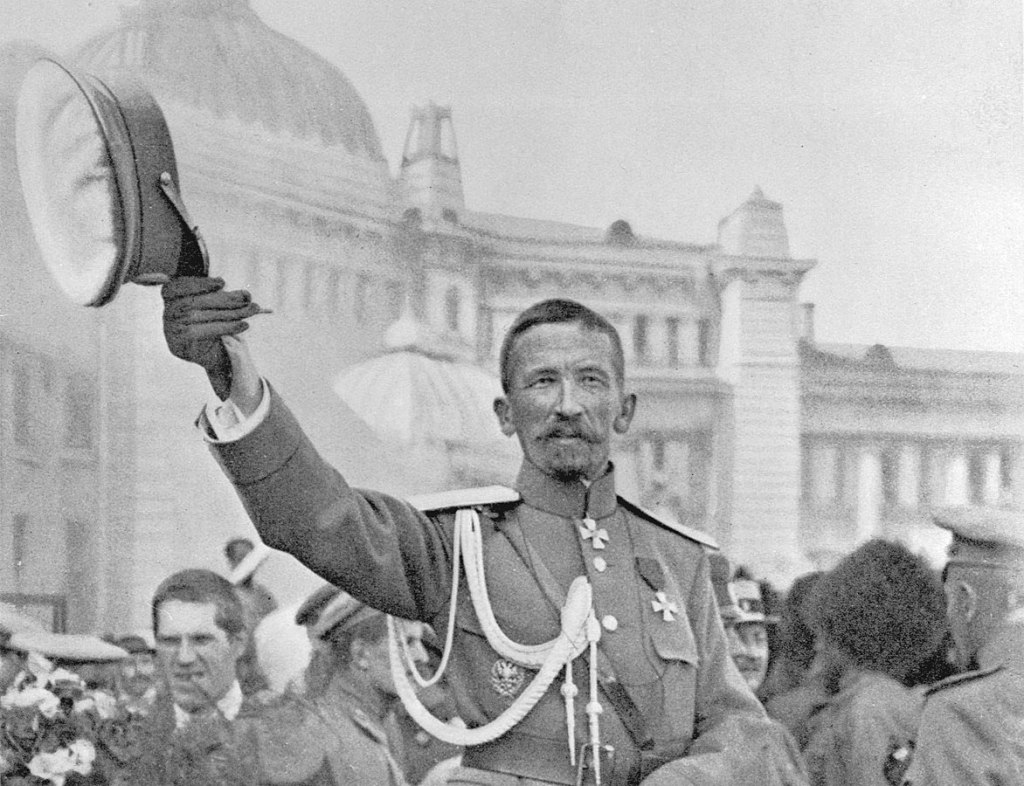
General Lavr Kornilov, 27 August 1917
The final key event on the road to the Bolshevik takeover of Russia in November 1917 was the “Kornilov Affair” that took place about two months earlier. Alexander Kerensky had become Prime Minister of the Provisional Government in July 1917 and around the same time General Lavr Kornilov had become Commander-in-Chief. A lot of accounts portray the “Kornilov Affair” as a “reactionary” coup attempt by Kornilov against Kerensky. The reality is very nearly the exact opposite. As historian Robert Pipes summarises: “All the available evidence, rather, points to a ‘Kerensky plot’ engineered to discredit the general as the ringleader of an imaginary but widely anticipated counterrevolution, the suppression of which would elevate the Prime Minister to a position of unrivaled popularity and power, enabling him to meet the growing threat from the Bolsheviks.”[1] Continue reading
By Kyle Orton (@KyleWOrton) on June 9, 2015
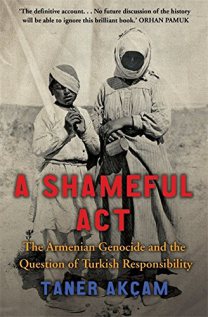
This is the complete review. It has previously been posted in three parts: Part 1 on the question of whether the 1915-16 Armenian massacres constitute genocide; Part 2 on the post-war trials and the Nationalist Movement; and Part 3 gives some conclusions on what went wrong in the Allied efforts to prosecute the war criminals and the implications for the present time, with Turkey’s ongoing denial that genocide took place and the exodus of Christians from the Middle East.
A Question of Genocide
The controversy over the 1915-16 massacres of Armenian Christians in the Ottoman Empire is whether those acts constitute genocide. Those who say they don’t are not the equivalent of Holocaust-deniers in that they do not deny that the massacres happened; what they deny is that the massacres reach the legal definition of genocide. Their case is based on three interlinked arguments:
Taner Akcam’s A Shameful Act: The Armenian Genocide and the Question of Turkish Responsibility presents evidence to undermine every one of these arguments. Continue reading
By Kyle Orton (@KyleWOrton) on June 4, 2015

Part 1 of this review dealt with the question of whether the 1915-16 Armenian massacres constitute genocide. This part is about the post-war trials and the Nationalist Movement. Part 3 gives some conclusions on what went wrong in the Allied efforts to prosecute the war criminals and the implications for the present time. Alternatively, the complete review is available here.
The First Phase of the Trials
On October 30, 1918, the Ottoman Empire signed its final treaty of defeat. The Ottomans’ long decline began in 1683, and by 1844—not the 1830s, as Akcam slightly strangely says—the Empire was referred to as the “sick man of Europe”. The armistice was a near-total surrender, allowing the occupation of any area the Allies deemed necessary for their security. Unfortunately, it was neither the end of the war nor the end of the massacres against the Armenians.
The Allies—Britain, France, and Russia—issued a declaration on May 24, 1915, saying:
In light of the crimes against humanity and civilisation committed by Turkey, the allied powers warn the Sublime Porte that members of the Ottoman government involved in the mass murder will be held personally responsible for these crimes.
Not coincidentally, Akcam remarks, within days of this an official deportation law was passed through the Ottoman Parliament and would thereafter be issued by the Interior Ministry as legal cover for the CUP’s actions. The Allied statement was a first introduction of the concept of crimes against humanity, and of individual responsibility that extended to senior Generals and Heads of State. The Russians fell to the Communists and for reasons of realpolitik the French and Italians soon dropped their demands for punishing the Turkish war criminals, but the British were relentless. Continue reading

 Kyle Orton's Blog