Tag Archives: Hamid al-Zawi

Profile of Hudayfa al-Batawi, Former Islamic State Emir of Baghdad

By Kyle Orton (@KyleWOrton) on January 29, 2017
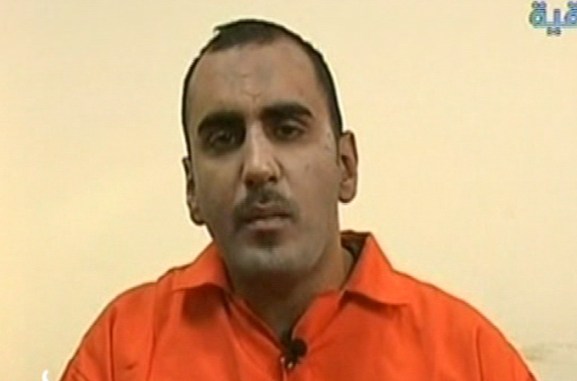
hudayfa-al-batawi-1

Hudayfa al-Batawi was among the Iraqis who joined the Islamic State (IS) movement early after the fall of Saddam Husayn, having been a long-time Salafist extremist. Al-Batawi rose through the ranks and became the emir of Baghdad, involved in some of the worst attacks in that city in 2009 and 2010. Arrested in late 2010, al-Batawi was killed in a prison riot in 2011. Continue reading
The Islamic State Was Winning When We Thought It Was Losing

By Kyle Orton (@KyleWOrton) on January 28, 2017

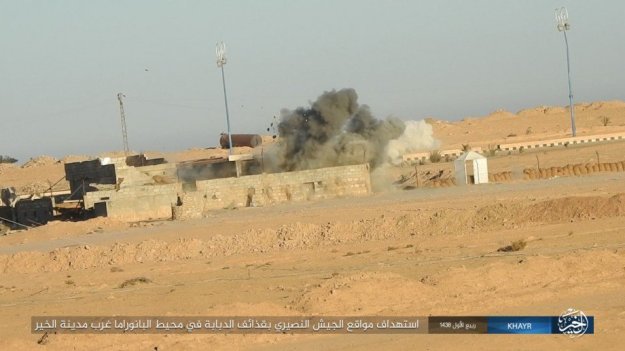
2016-12-17-is-west-of-deir-ezzor-p4

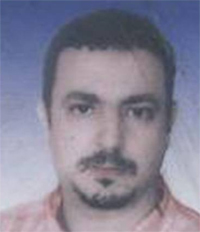
A joint American-Iraqi raid killed Ahmad al-Ubaydi (Abu Suhayb), the Islamic State of Iraq’s Northern Commander, on 19 April 2010, a follow-up raid after ISI’s emirs had been killed the day before. Al-Ubaydi’s death, and the many other ISI leaders picked off before and after him, seemed at the time to presage ISI’s downfall. Instead, ISI was just about to become more powerful than ever. Continue reading

Mohamed Moumou: Islamic State’s Commander of the North

By Kyle Orton (@KyleWOrton) on January 28, 2017

Mohamed Moumou (Abu Qaswara)

Mohamed Moumou (Abu Qaswara)

Mohamed Moumou, better-known as Abu Qaswara, was the Commander of the North for the Islamic State of Iraq (ISI), one of the most powerful military positions in the group, when he was killed by American forces in Mosul on 5 October 2008. Continue reading

The Caliph’s First Deputy

By Kyle Orton (@KyleWOrton) on January 28, 2017

numan-al-zaydi

When Ibrahim al-Badri (Abu Bakr al-Baghdadi) became the leader of the then-Islamic State of Iraq (ISI) in May 2010, his deputy was man named Numan al-Zaydi, who went under various pseudonyms: Abu Ibrahim al-Ansari, Abu Sulayman al-Nasser, and Al-Nasser Lideen Allah Abu Sulayman. Al-Zaydi was killed in February 2011. Continue reading

The Flag of the Islamic State

By Kyle Orton (@KyleWOrton) on January 27, 2017

The Islamic State’s June 2014 declaration that the areas it controlled were the restored “Caliphate” was seen by many as a novel development. In fact, “the State” was declared in October 2006. The next month, the predecessor of the Islamic State (IS), Al-Qaeda in Mesopotamia (AQM), dissolved itself, and a month after that the claim to statehood was expanded upon—while being wilfully ambiguous about the caliphal pretensions—in the first speech by the then-emir, Hamid al-Zawi (Abu Umar al-Baghdadi). Similarly, though confusion remains on the point, it was in this same period that the symbol of the Islamic State, its black flag, was established.

Continue reading

The Islamic State’s First War Minister

By Kyle Orton (@KyleWOrton) on January 25, 2017

One of the few existing pictures of Abu Hamza al-Muhajir (Abdul Munim al-Badawi)

One of the few existing pictures of Abu Hamza al-Muhajir (Abdul Munim al-Badawi)

Below is reproduced a very short biography for Abu Hamza al-Muhajir, sometimes called Abu Ayyub al-Masri, whose real name is Abdul Munim al-Badawi,[1] that circulated on pro-Islamic State forums. Al-Badawi took over leadership of al-Qaeda in Iraq (AQI) when its founder, Ahmad al-Khalayleh (Abu Musab al-Zarqawi), was killed on 7 June 2006. Al-Badawi then declared his allegiance to Hamid al-Zawi (Abu Umar al-Baghdadi) and the Islamic State of Iraq (ISI) on 10 November 2006, formally dissolving al-Qaeda on Iraqi territory, and becoming al-Zawi’s deputy. Abu Hamza had been in Iraq, including Baghdad, a year before Saddam Husayn was overthrown, and he and al-Zawi were killed together on 18 April 2010. Continue reading

What to Expect in Syria in 2017

By Kyle Orton (@KyleWOrton) on January 25, 2017

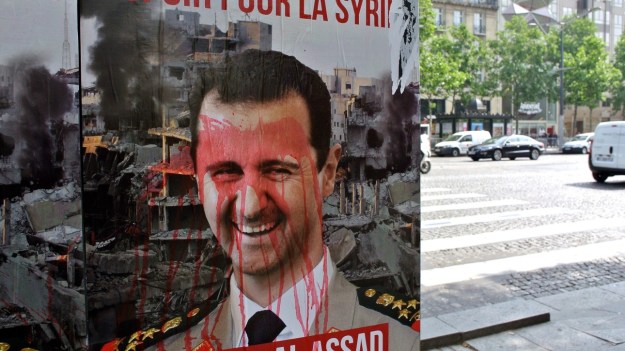
Syria has broken down as a functioning entity. There were some who saw in the takeover of Aleppo City last month by the coalition of states and militias that supports Bashar al-Assad’s regime the beginning of the end of the war. The pro-Assad coalition will make further territorial gains in 2017, but peace—even the peace of the graveyard—is still a long way off, and unlikely to ever arrive while Assad remains in power. The West, unwilling and apparently unable to remove him, nonetheless has vital interests in Syria that cannot be outsourced and must be secured by navigating a fragmented state. Continue reading

Jihadist Profile of Abu Bakr al-Baghdadi

By Kyle Orton (@KyleWOrton) on January 23, 2017

A short biography of the “Caliph” of the Islamic State (IS), Ibrahim al-Badri (Abu Bakr al-Baghdadi), was leaked online by the group in July 2013. A rough translation is reproduced below.

Continue reading

How the Islamic State’s Caliph Responded to Defeat Last Time

By Kyle Orton (@KyleWOrton) on January 21, 2017

1-2

The first proto-caliph of the Islamic State (IS), Hamid al-Zawi (Abu Umar al-Baghdadi), gave his fourth audio speech on 16 April 2007, “The Harvest of the Years for the State of the Muwahideen (Monotheists)”. An English version of al-Zawi’s speech was disseminated by IS’s al-Furqan Media and it is reproduced below with some editions in transliteration and syntax, and some interesting or important sections highlighted in bold. Continue reading

The Founder Lays Out The Islamic State’s Vision

By Kyle Orton (@KyleWOrton) on January 12, 2017

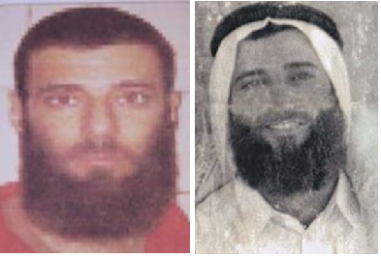
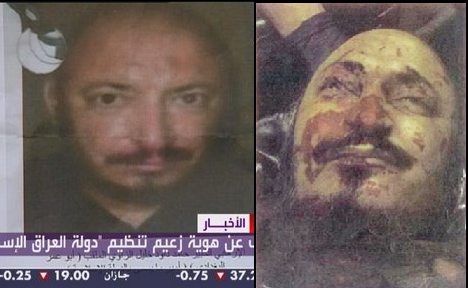
Two of the very few pictures of Hamid al-Zawi (Abu Umar al-Baghdadi) in existence. The picture on the right, taken after al-Zawi was killed in April 2010, is most often used in Islamic State media.

Two of the very few pictures of Hamid al-Zawi (Abu Umar al-Baghdadi) in existence. The picture on the right, taken after al-Zawi was killed in April 2010, is most often used in Islamic State media.

Hamid al-Zawi (Abu Umar al-Baghdadi), the first emir of the Islamic State when it was founded in 2006, gave his third speech—“Say, I Am Upon Clear Evidence From My Lord” or “Say, I Am Made Certain By My God”—on 13 March 2007. An English transcript of the speech was released online by the Jihad Media Battalion and a video of part of the speech was released, entitled, “This Is Our Doctrine”, a neat encapsulation of the speech’s content. The speech is an interesting first-hand statement of what the Islamic State actually believes, and is reproduced below.
Continue reading