By Kyle Orton (@KyleWOrton) on 5 February 2020

The Mujahideen Battalion (El-Mudžahid) in Bosnia in the early 1990s [image source]
By Kyle Orton (@KyleWOrton) on 5 February 2020
The Mujahideen Battalion (El-Mudžahid) in Bosnia in the early 1990s [image source]
By Kyle Orton (@KyleWOrton) on 7 January 2020
This article was originally published at European Eye on Radicalization
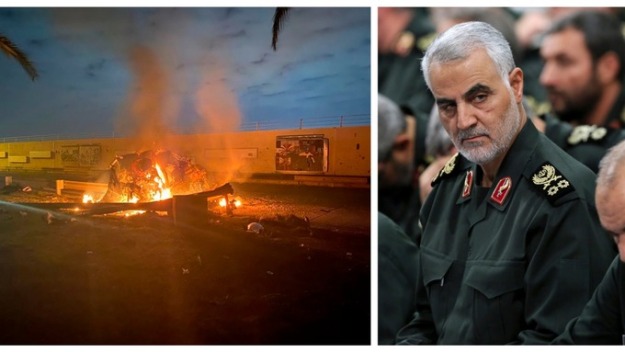
At 1 AM on 3 January, an American drone strike killed the head of Iran’s Quds Force, the division of the Islamic Revolutionary Guards Corps (IRGC) charged with exporting the Islamic revolution, and his Iraqi deputy, Jamal al-Ibrahimi (Abu Mahdi al-Muhandis). Sulaymani was the strategic driver of Iran’s expansionist policy in the Middle East, as well as the orchestrator of its terrorism and assassinations further afield. Unlike with the killing of Al-Qaeda’s Usama bin Laden in 2011 or the Islamic State’s Ibrahim al-Badri (Abu Bakr al-Baghdadi) in October, where the dynamics shifted little, Sulaymani’s death opens up questions about the direction in which the Middle East will now move. Continue reading
By Kyle Orton (@KyleWOrton) on 28 December 2019

In a long article last week, I looked at why the U.S. ran a formal occupation of Iraq for fourteen months after the fall of Saddam Husayn in April 2003, given that there had been an explicit pre-invasion decision not to have an occupation government. The short answer is that the occupation was installed through deception by the State Department, supported by the Central Intelligence Agency (CIA). State and CIA had argued for a protracted occupation in the Situation Room debates in 2002, but President George W. Bush had sided with the Pentagon, which advocated a rapid transfer of power to Iraqis. Having lost in the formal inter-agency process, the State Department succeeded by subversion in getting its way on the ground in Iraq. The disaster this caused in the mismanagement of post-Saddam Iraq was, as the article explained in detail, only the most serious impact of the toxic schism between State/CIA and the Pentagon, a factor whose import is difficult to overstate when examining how the Bush administration functioned. (This feud also at times drew in the Vice President’s Office, which tended to support the Pentagon.)
By Kyle Orton (@KyleWOrton) on 15 December 2019

This article was published at QPosts
The victory of Boris Johnson’s Conservative Party, and the crushing defeat of Jeremy Corbyn’s Labour Party, is the beginning of the end of three years of turbulence in Britain. Continue reading
By Kyle Orton (@KyleWOrton) on 19 November 2019

President Barack Obama meeting President-elect Donald Trump, 10 November 2016 [image source]
By Kyle Orton (@KyleWOrton) on 29 April 2019
This article was originally published at European Eye on Radicalization
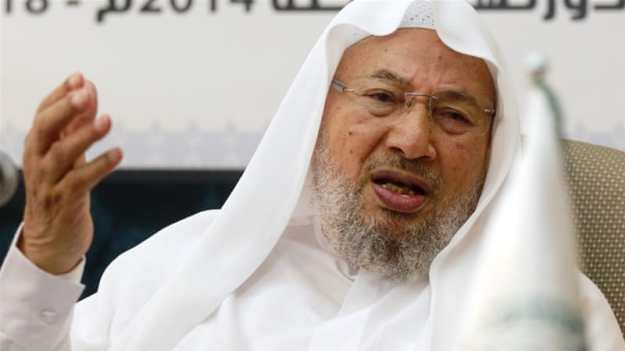
In the wake of the horrific bombings by the Islamic State (ISIS) in Sri Lanka on Eastern Sunday, which killed 250 people, an image has circulated purporting to show a terrorist connected to the attack in the company of the Qatar-based cleric of the Muslim Brotherhood, Yusuf al-Qaradawi. In fact, the image shows no such thing. But Al-Qaradawi’s influence in creating the ideology that motivates Islamist terrorists cannot be doubted. Continue reading
By Kyle Orton (@KyleWOrton) on 18 April 2019

Israeli opinion generally regards the country’s efforts to contain Iran, especially in Syria, as having been successful. In fact, the trendline runs the other way: Iran is constraining Israel, entrenching all around the Jewish state. Continue reading
By Kyle Orton (@KyleWOrton) on 9 April 2019
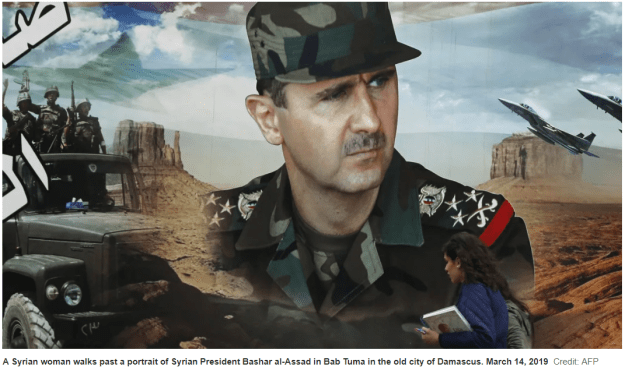
As the regime of Bashar Assad appears to be consolidating in Syria, many Israelis have concluded that their government’s handling of the crisis was generally laudable.
The most comprehensive statement of this view was given recently in Haaretz by Anshel Pfeffer (Netanyahu Outfoxed Russia, Iran and ISIS With His Cynical, Ruthless Syria Policy.) Every aspect of this is open to question. Continue reading
By Kyle Orton (@KyleWOrton) on 19 March 2019
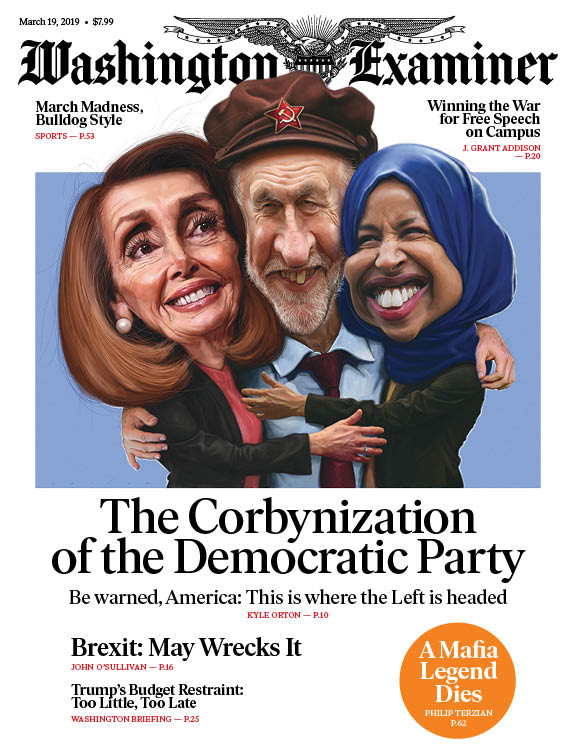
When the Democratic Party faced a revolt from its ranks for daring to propose condemning anti-Semitism, the scene gave those of us in Britain deja vu. The American Left is following the same script that led to the rapid radicalization of the Labour Party, led by Jeremy Corbyn. It’s no longer a mere talking point, a form of shorthand for journalists: The Democratic Party’s Corbynization is here, and it tacks so closely to what happened in Britain that it’s important for Americans to understand where we’ve been — and where they’re headed. Continue reading
By Kyle Orton (@KyleWOrton) on 5 February 2019
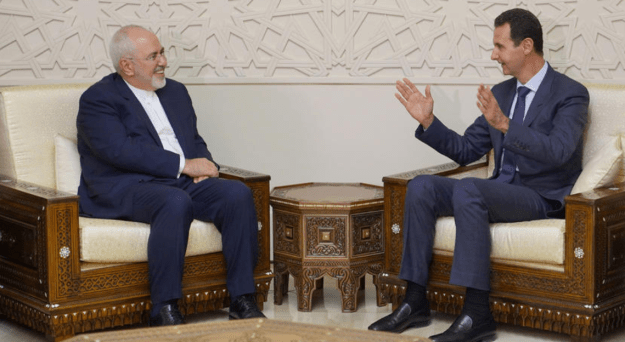
Bashar al-Assad meeting Iranian Foreign Minister Mohammad Javad Zarif, Damascus, Syria, 3 September 2018 // SANA handout to REUTERS
The Syrian regime of Bashar al Assad has nearly collapsed twice under pressure from the armed insurrection, in late 2012 and early 2015. On both occasions, Assad was rescued by outside powers, first Iran and then a joint Iranian-Russian operation. It has been a recurring illusion that there is or will be, a strategic split between Russia and Iran. This prospect has continued to tantalise the US and others, and occasional Moscow-Tehran disagreements are presented as evidence that dynamics are shifting this way. Another round of such speculation is currently underway. Continue reading

