Tag Archives: Inter-Services Intelligence

Islamic State Turns Attention to Kashmir

By Kyle Orton (@KyleWOrton) on 30 August 2021

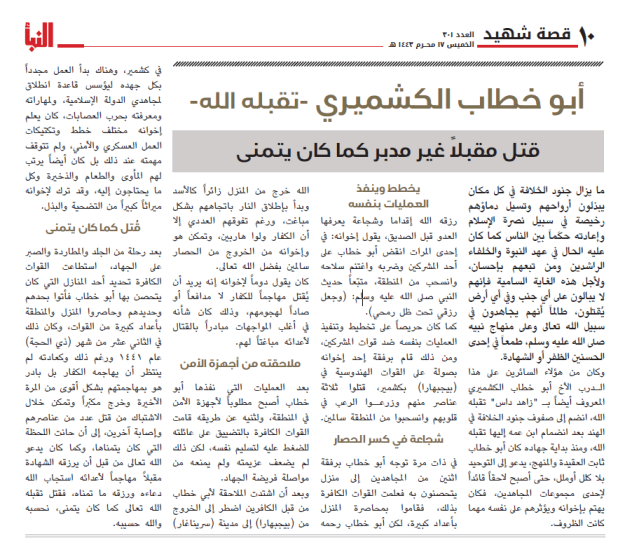
Al-Naba 301, page ten, headline reads: “Abu Khattab al-Kashmiri — May God Accept Him”

The Islamic State’s weekly newsletter, Al-Naba, released its 301st issue on 26 August. Page ten has an obituary for an Indian jihadist named as Zahed Dass (Abu Khattab al-Kashmiri). Continue reading

Islamic State in Afghanistan and Putting Pakistan Back into the Discussion

By Kyle Orton (@KyleWOrton) on 26 August 2021

Islamic State Khorasan Province

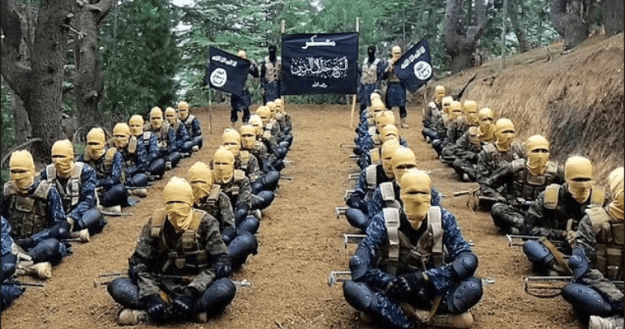
The suicide bombings at the Kabul airport are almost certainly the work of the Islamic State’s “Khorasan Province” (ISKP), the branch of the organisation in Afghanistan and Pakistan that was officially recognised by Islamic State (ISIS) “Centre” in 2015. The group had been oddly quiet since the fall of Kabul, and we can now see why. Continue reading

Signs of Improvement in the Media Coverage of Pakistan’s Role in Afghanistan

By Kyle Orton (@KyleWOrton) on 26 August 2021

Taliban patrol in Wazir Akbar Khan, Kabul, 18 August 2021 [image source]

Having recently complained about the lack of emphasis in the media coverage of Afghanistan on the fact that Pakistan controls the Taliban, it is only right to note that there have been some recent signs of improvement. Continue reading

Islamic State Reacts to Taliban Takeover of Afghanistan, Detects American Conspiracy

By Kyle Orton (@KyleWOrton) on 22 August 2021

Page three, Al-Naba 300

The Islamic State (IS) released the 300th edition of its weekly newsletter, Al-Naba, on 19 August, wherein the main editorial on page three dealt with the fall of Afghanistan to the Taliban on 15 August. The editorial was entitled, “Finally, They Elevated Mullah Bradley”. IS has used the term “Mullah Bradley” or “Mullah Bradley project” to refer to the Taliban, the accusation basically being that the Taliban are American agents. (The Taliban obviously are agents of a foreign power, but not the Americans.) The rest of the editorial fleshes out this idea that the U.S. and the Taliban have conspired in the Talibanization of Afghanistan, and the fact that all other Islamists support this—the Sururis, Muslim Brotherhood, etc.—only shows that IS is the sole standard bearer of Islam. Continue reading

Getting Real About Pakistan After the Jihadist Takeover of Afghanistan

By Kyle Orton (@KyleWOrton) on 20 August 2021

Khalil Haqqani, a senior Taliban leader and simultaneously a leader of Al-Qaeda’s Haqqani Network, leads Friday prayers at the Pul-i-Khishti, the largest mosque in Kabul, 20 August 2021

When the Taliban swept into the capital of Afghanistan on Sunday, little of the coverage focused on Pakistan and yet that was where this victory was made. This is a pattern that has persisted throughout the war. Continue reading

Pakistan and the Taliban

By Kyle Orton (@KyleWOrton) on 17 August 2021
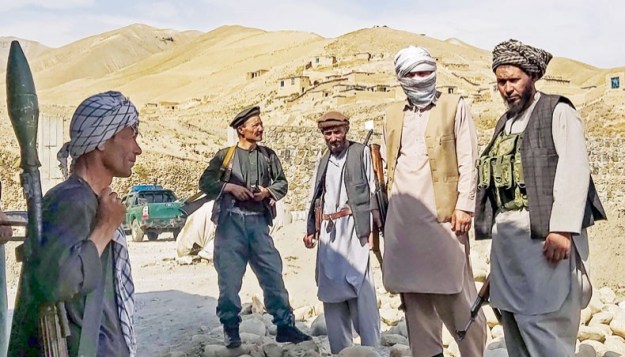
Afghan government forces guarding Taloqan, Takhar province, Afghanistan // July 2021 // AFP photo

Kabul fell to the Taliban on 15 August. There is so much more to be said about the disastrous decisions the United States that precipitated this calamity, not least the so-called peace process whose only concrete effects were to weaken and demoralise the Afghan government, while bolstering the ranks of the Taliban by forcing the release of thousands of jihadists. The chaotic Saigon scenes have testified to the incompetence of Joe Biden’s administration, even at administrative tasks, and the horrors are only just beginning.

This post has a slightly different focus, namely the role of Pakistan, specifically its military and Inter-Services Intelligence (ISI), as the author and operator of the Taliban and allied jihadists. This factor—absolutely fundamental to the conflict—has been, for twenty years, bizarrely absent in much of the coverage, and suggestions recur to this day that the Taliban is actually a problem for Pakistan. When the Pakistan dimension does come up, it will either be to note that Pakistan has some kind of role in funding or otherwise “supporting” the Taliban, and at its strongest the Taliban will be called a “proxy” of the ISI.

Even the word “proxy”, however, underplays the extent to which the Taliban is Pakistan, a wing of its (deep) state power. Continue reading

Joe Biden Chose Disaster in Afghanistan

By Kyle Orton (@KyleWOrton) on 16 August 2021

The Taliban took over Afghanistan’s capital on Sunday after a nine-day offensive captured one provincial capital after another. The United States had already decided to abandon the country, and without the US the other NATO states had no choice but to leave. It was quite clear that the Afghan state would crumble in the absence of a Western presence, though it seems President Joe Biden thought he would have a longer “decent interval” before the Saigon evacuation scenes and the massacres began. Continue reading

Russia’s View of the Endgame in Afghanistan

By Kyle Orton (@KyleWOrton) on 23 February 2021

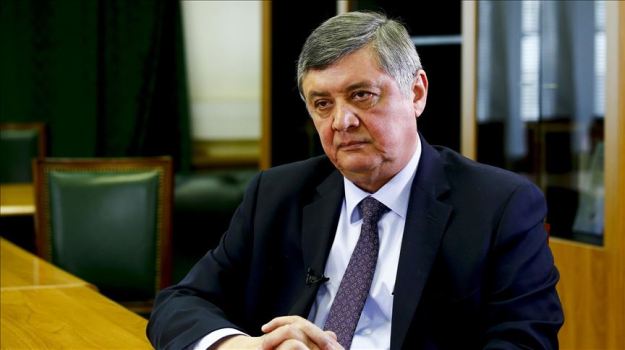
Russia’s presidential envoy for Afghanistan Zamir Kabulov

Russian ruler Vladimir Putin’s current special envoy for Afghanistan, Zamir Kabulov, spoke to Sputnik’s Tajik service on 17 February, and a translation of the interview is published below with some interesting sections highlighted in bold. Kabulov was the KGB resident in Kabul in the 1980s and early 1990s, and later in the 1990s, during the Taliban’s reign over Kabul and much of the rest of the country, he was an adviser to the United Nations peace envoy. Continue reading

The Current Condition of Al-Qaeda

By Kyle Orton (@KyleWOrton) on October 4, 2020

A chapter about Al-Qaeda I wrote for the American Foreign Policy Council’s (AFPC) ‘World Almanac of Islamism’ was published today. Do check it out, and the broader site, which is a great, accessible resource. The format of the website necessitated that the chapter as I submitted it was edited, condensed, and split up to fill out the various categories. In case it is of any interest, the original version of the chapter is reproduced below.

Continue reading

Al-Qaeda Has Never Been More Dominated by States

By Kyle Orton (@KyleWOrton) on September 11, 2020

In writing a chapter earlier this year about the current status of Al-Qaeda, part of the process was reviewing the organisation’s history since its formation in the late 1980s. What really struck me was how extensively Al-Qaeda is now manipulated, under the influence of, and in places even controlled by state powers. To mark the nineteenth anniversary of 9/11, I thought I could give a brief sketch of this development.

Continue reading