Tag Archives: Iraq

Russia’s Unreliable Claims About the Islamic State

By Kyle Orton (@KyleWOrton) on 1 October 2017

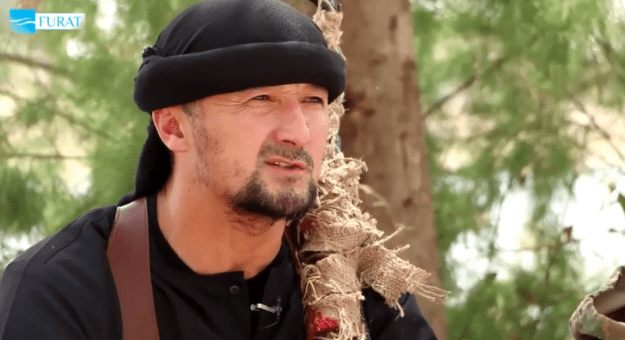
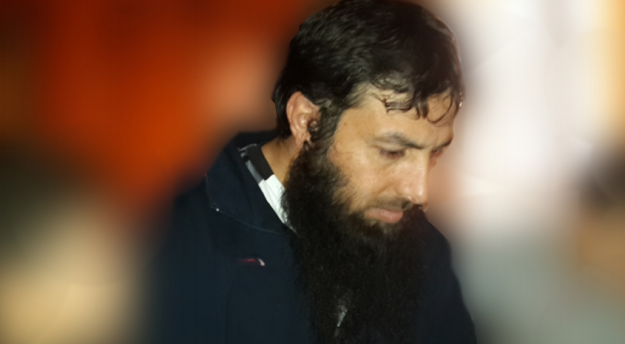
Gulmurod Khalimov

The Islamic State’s (IS) caliph, Ibrahim al-Badri (Abu Bakr al-Baghdadi), appeared on Thursday to deliver his first speech in nearly a year. Other than the contents of the speech, al-Badri’s re-appearance was confirmation that the claim by the Russian government, on 16 June, to have killed al-Badri and 330 other IS jihadists in a 28 May airstrike in Syria, was false.[1] This is far from the first mendacious claim Moscow has made on this topic.

On 8 September, the Russian Ministry of Defence claimed it had killed “four influential field commanders”, one of whom was Tarad al-Jarba (Abu Muhammad al-Shimali), and forty other IS jihadists, in an airstrike near Deir Ezzor city. Later in the day, the Russians claimed day that another of the four commanders was Gulmurod Khalimov (Abu Umar al-Tajiki), named by the U.S.-led coalition as IS’s War Minister. In fact, it is likely that Khalimov was already dead and that al-Jarba is still alive. Continue reading

The Islamic State’s Profile of Manaf al-Rawi

By Kyle Orton (@KyleWOrton) on 1 October 2017

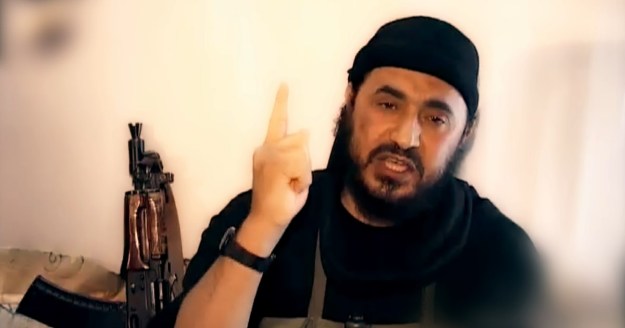
Manaf al-Rawi

The Islamic State and its supporters release short biographies of their slain leaders. One such profile was released by Manaf Abdul Rahim al-Rawi and is reproduced below. (A fuller profile of al-Rawi is available here.) Continue reading

The Coalition Kills Three Islamic State Drone Developers

By Kyle Orton (@KyleWOrton) on 29 September 2017

The international coalition against the Islamic State (IS) announced that it has killed “three senior and highly skilled ISIS officials” near Mayadeen in eastern Syria between 12 and 14 September. Continue reading

Iraqi Kurdistan’s Independence Referendum and the West’s Middle East Strategy

By Kyle Orton (@KyleWOrton) on 27 September 2017

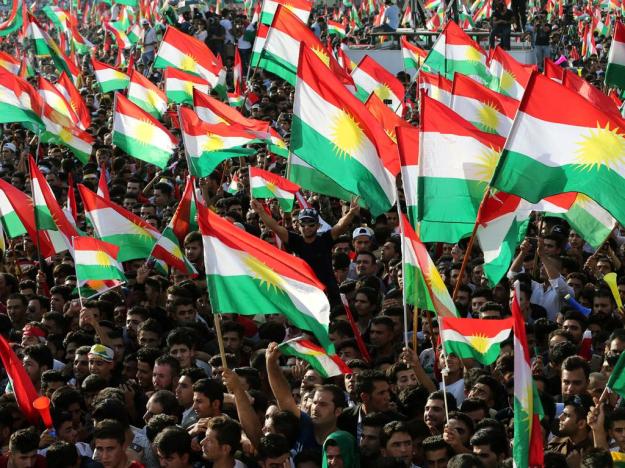
The Kurdistan Regional Government (KRG) held a referendum on 25 September, and voted overwhelmingly—with nearly 93% in favour—for independence. The comparison with Brexit might have been overworked by all sides, but there was a familiarity: while the result itself was not a shock, the fact of the referendum itself came as a surprise to many in what one might call the global elite, which lectured in that endearing way that had such success in deterring Brits a year ago. Then as now, the effect was, if anything, to stoke the bloody-mindedness of a population that had considerable qualms but had enough pride to repudiate being harangued in those accents. Still, as with Brexit, it wasn’t as if the naysayers didn’t have a case, and now comes the really difficult work. Continue reading

Iran Raises the Stature of One of Its Shi’a Jihadist Militias: Harakat Hizballah al-Nujaba

By Kyle Orton (@KyleWOrton) on 22 September 2017

Logo of Harakat Hizballah al-Nujaba

Reuters has published a profile of Harakat Hizballah al-Nujaba (HHN), sometimes simply called Harakat al-Nujaba, a Shi’a militia made up of Iraqi citizens that is loyal to Iran’s Supreme Leader Ali Khamene’i and the revolutionary theocracy’s ideology of absolute wilayat al-faqih (guardianship of the jurist). HHN, which first emerged in the summer of 2013, is one of a web of overlapping Shi’a jihadist groups recruited from Iraq, Afghanistan, Pakistan, and beyond—as far afield as the Ivory Coast—that have been used to spearhead Tehran’s imperial push into the Arab world, particularly the rescue of Bashar al-Asad’s regime in Syria that would otherwise have fallen to a popular rebellion. In recent months, Iran has been raising the profile of HHN. Continue reading

Fresh Wave of Repression in the Syrian Kurdish Areas

By Kyle Orton (@KyleWOrton) on 15 September 2017

Kurdish opposition figures arrested by the PYD/PKK on 14 September 2017, NORTHERN SYRIA OBSERVER

The Kurdistan Workers’ Party (PKK), an internationally-designated terrorist entity, currently controls about a fifth of Syria’s territory in the northeast, an area it calls “Rojava”. The PKK works, as I explained in a recent report for The Henry Jackson Society, under the banner of the People’s Protection Units (YPG) and the Democratic Union Party (PYD) while on Syrian territory, and has sought—with Western complicity—to obscure its activities even further by attaching some subordinate Arab units to its forces and calling this supposed-umbrella organization the Syrian Democratic Forces (SDF). The SDF is the principle partner of the seventy-three-member coalition, led by the United States, that seeks to destroy the Islamic State (IS). On 14 September, the PYD/PKK launched a fresh crackdown on the Kurdish opposition, which has been viciously persecuted by the PKK back to 2011 and assaulted with an especial vigour since the spring of this year. The Kurds arrested by the PKK yesterday, and whose demonstration was attacked and dispersed by the PKK this afternoon, were voicing their support for the independence referendum to be held on 25 September by the Kurdistan Regional Government (KRG) in northern Iraq. Continue reading

Coalition Risks Replacing the Islamic State With the Islamic Republic

By Kyle Orton (@KyleWOrton) on 14 September 2017

By recent reports, one could easily come away with the impression that war and instability across the Fertile Crescent are winding down. Predictions about what comes next, always a risky enterprise in the Middle East, are at a point of unique vulnerability. Chaos and violence for some considerable time to come look like a safe bet, though the timing and scale look more uncertain. Nonetheless, certain trendlines are visible, most clearly the emergence of a regional order, abetted by the international coalition’s campaign against the self-proclaimed Islamic State (ISIS), dominated by the Islamic Republic of Iran. Continue reading

Statement by Al-Qaeda Bomb-Maker Ibrahim al-Asiri on 9/11

By Kyle Orton (@KyleWOrton) on 13 September 2017

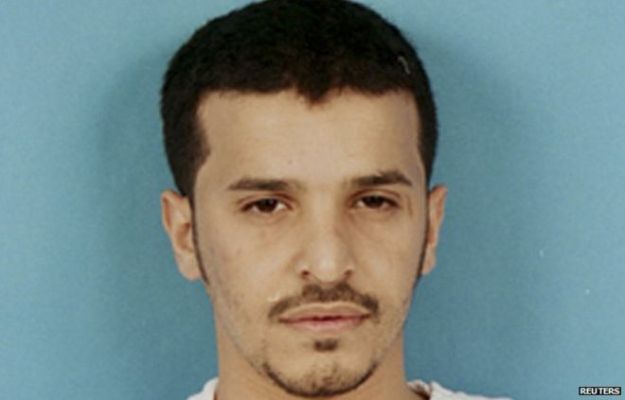
Ibrahim al-Asiri

Al-Malahim Media Institute, the affiliated media outlet for al-Qaeda in the Arabian Peninsula (AQAP), released a statement on 13 September 2017, “The March of Victory and the Defeat of America”, as part of al-Qaeda’s “In Remembrance of the Blessed September 11 Raids” series. The statement, attributed to Ibrahim Hassan bin Tali al-Asiri, the infamous AQAP bomb-maker, is reproduced below with some editions for syntax and spelling. Continue reading

The Islamic State’s Obituary for Abu Ayman al-Iraqi

By Kyle Orton (@KyleWOrton) on 12 September 2017

Ali al-Aswad (Abu Ayman al-Iraqi), al-Naba, 20 July 2017

In the ninetieth edition of its newsletter, al-Naba, released on 20 July 2017, the Islamic State (IS) published an obituary for one of its most senior operatives, Ali Aswad al-Jiburi, much better known as Abu Ayman al-Iraqi, who had been serving as the caliph’s “security advisor” when he was killed on 18 May 2016. Continue reading

One More Time on Saddam and the Islamic State

Originally published at The Henry Jackson Society

By Kyle Orton (@KyleWOrton) on 2 September 2017

The most recent issue of Perspectives on Terrorism had a paper by Ronen Zeidel entitled, ‘The Dawa’ish: A Collective Profile of IS Commanders’, which was “the first attempt to provide a comprehensive collective profile of commanders and leaders of the Islamic State (IS)”. Based on “an inventory of over 600 names”, the paper assessed the nationality, ethnicity, and tribal origins not just of the very senior IS commanders, but those lower down, a novel and much-needed line of investigation. Zeidel found that these commanders of the IS movement are or were overwhelmingly Iraqi and Sunni Arab, with an important Turkoman contingent.

Zeidel’s findings are important for drawing attention again to the local-revolutionary character of an organisation that gets a great deal of attention for its foreign fighters and external attacks, especially in the West, but which only a recently acquired global reach—and, indeed, only recently needed to: until 2011, the West was easily reachable since it had troops on the ground in Iraq, so the incentive to invest resources in creating a foreign terrorist apparatus was minimal.

One small part of Zeidel’s work has created something of a storm, however. Zeidel gives the occupation held by these commanders and, for those where this was known, 72% of them were former regime elements (FREs) from the dictatorship of Saddam Husayn. This reignited the argument over how important the FREs have been to IS. Continue reading