Tag Archives: ISIS

America’s Search for Stability in Syria is Hostage to the Turkey-PKK War

This article was published at Ahval

By Kyle Orton (@KyleWOrton) on 13 November 2018

Joint patrols begin around Manbij (image source)

The United States has taken steps Syria in recent months that suggest a shift towards reconciliation with Turkey. Even if this is so, however, there is still such a deep divide over strategic outlook that these steps could be easily reversed, opening a new round of uncertainty in northern Syria as 2018 draws to a close. Continue reading

A Rare Video Statement From An Islamic State of Iraq Leader: Chief Judge Abu Sulayman al-Utaybi

By Kyle Orton (@KyleWOrton) on 8 November 2018

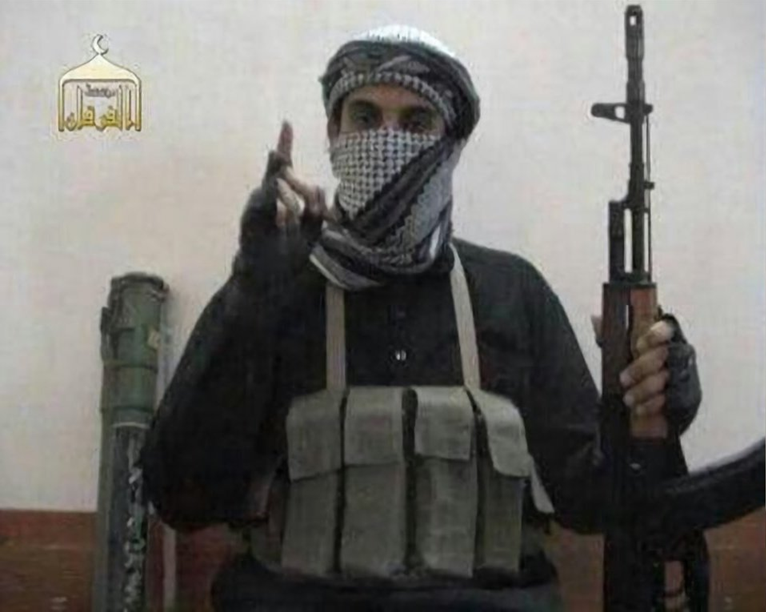
As explained in a previous post, Abu Sulayman al-Utaybi, the Chief Judge of the Islamic State of Iraq (ISI) from early April to late August 2007, has become an important character in many accounts of the history of the Islamic State movement because his abrupt removal from office was followed by his defection from ISI and a journey to Al-Qaeda’s central leadership in Pakistan, where he provided a testimony against his former bosses. If interested in an assessment of that testimony and the whole saga around how it has been used—by Western scholars, Al-Qaeda, and other critics of the Islamic State—check out the prior post. This post reproduces the transcript for what is, as far as I can tell, Abu Sulayman’s first media product for ISI, a twenty-minute video speech released by Al-Furqan Foundation for Media Production on 11 April 2007, entitled, “Why Do We Wage Jihad?”

Continue reading

Islamic State Response to the Leaking of Abu Sulayman al-Utaybi’s Testimony

By Kyle Orton (@KyleWOrton) on 7 November 2018

On 24 November 2013, the day after Al-Qaeda leaked the full testimony of Abu Sulayman al-Utaybi, the chief judge of the Islamic State (IS) who made various charges against the leadership after he defected in 2007, a pro-IS response was issued, signed by one Mu’awiya al-Qahtani, entitled, “Refutation of the Letter Attributed to the Judge Abu Sulayman al-Utaybi—May God Accept Him—with Evidence and Proofs”. A translation of Al-Qahtani’s document is given below.

Continue reading

Testimony of Islamic State Defector Abu Sulayman al-Utaybi

By Kyle Orton (@KyleWOrton) on 6 November 2018

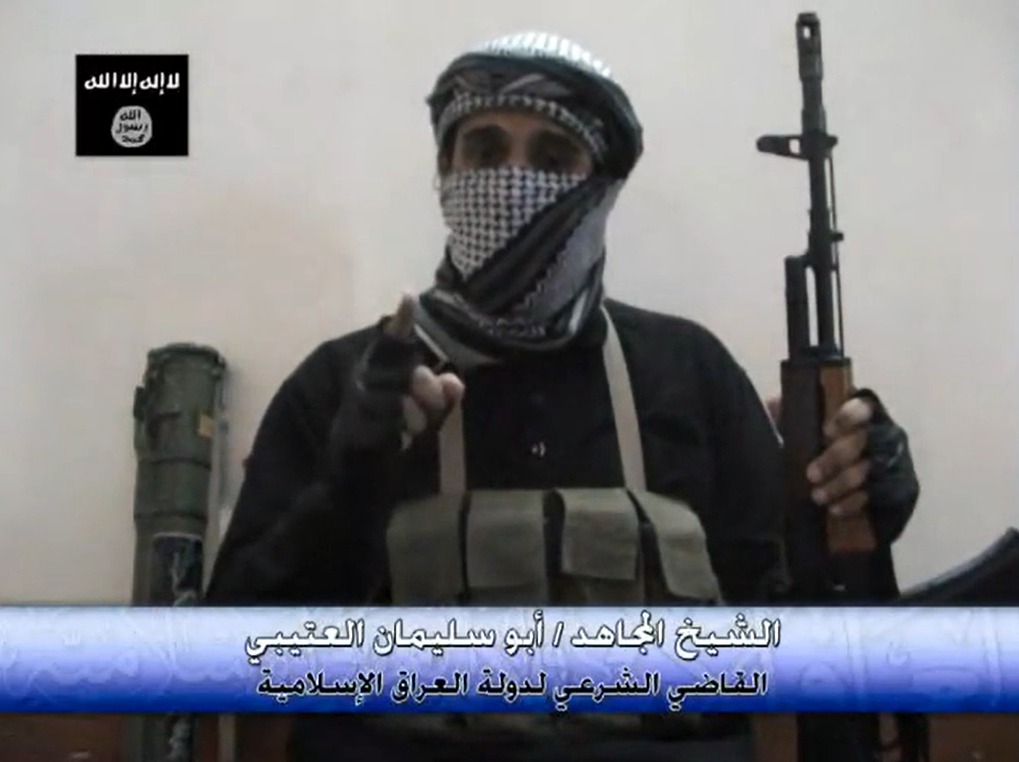
Abu Sulayman al-Utaybi, a Saudi who abandoned his Islamic studies to journey to Iraq in 2006, was appointed chief judge, of the Islamic State movement in March 2007, six months after the Statehood declaration. Between April and June 2007, Abu Sulayman released some public sermons—the picture above is from the first—for what was then called the Islamic State of Iraq (ISI), which had publicly dissolved its bonds to Al-Qaeda when it became a “State” in October 2006, while in fact retaining its bay’a (oath of allegiance) to Al-Qaeda in private.

Continue reading

Examining Iran’s Long Relationship with Al-Qaeda

This article was originally published at The Brief

By Kyle Orton (@KyleWOrton) on 26 October 2018
At the beginning of September, New America published a paper, based on recovered al-Qaeda documents, which concluded that there was “no evidence of cooperation” between the terrorist group and the Islamic Republic of Iran. New America’s study lauds itself for taking an approach that “avoids much of the challenge of politicization” in the discussion of Iran’s relationship with al-Qaeda. This is, to put it mildly, questionable.

A narrative gained currency in certain parts of the foreign policy community during the days of the Iraq war, and gained traction since the rise of the Islamic State (IS) in 2014, that Iran can be a partner in the region, at least against (Sunni) terrorism, since Tehran shares this goal with the West. Under President Barack Obama, this notion became policy: the US moved to bring Iran’s revolutionary government in from the cold, to integrate it into the international system. Continue reading

The Turkey-Saudi Rivalry for America’s Attention

This article was published at Ahval

By Kyle Orton (@KyleWOrton) on 26 October 2018

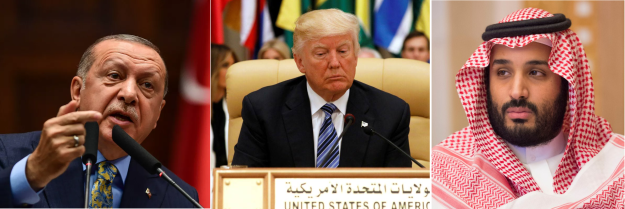
The Turkish government’s recent record in foreign policy is hardly a success story. It is therefore noteworthy that, so far, Ankara has handled the murder of Saudi journalist Jamal Khashoggi with a singular deftness. Whether Turkish President Recep Tayyip Erdoğan can see this through is now the key question. Continue reading

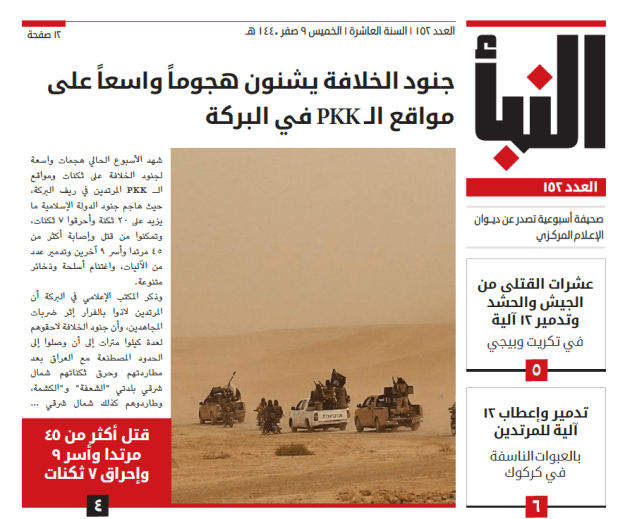
Islamic State Discusses Kurds and Insurgency

By Kyle Orton (@KyleWOrton) on 19 October 2018

The Islamic State (IS) released the 152nd edition of Al-Naba, its weekly newsletter, on 18 October. Continue reading

The Islamic State’s Lessons-Learned About Insurgency

By Kyle Orton (@KyleWOrton) on 5 October 2018

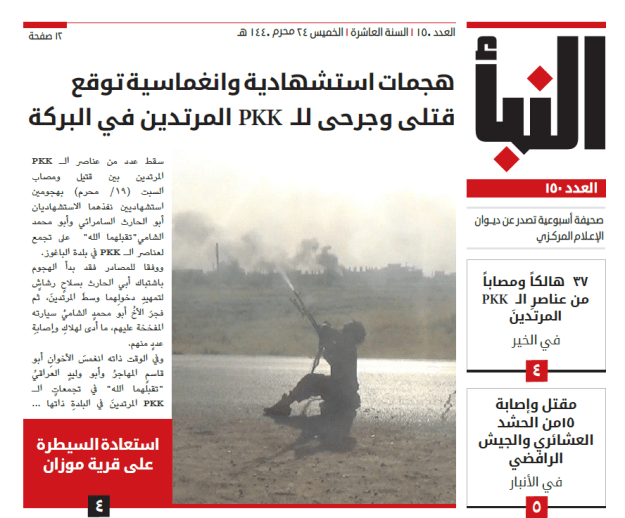
Al-Naba 150

The 150th edition of Al-Naba, the Islamic State’s (IS) weekly newsletter, was published on 4 October. IS focused on the progress of its guerrilla campaign in “Syraq” since the collapse of the caliphate, and gave a historical explanation of how it developed its insurgent methodology. Continue reading

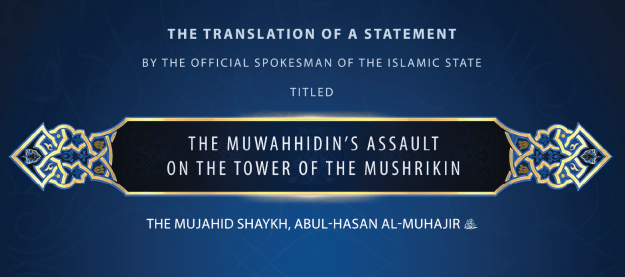
Islamic State Spokesman Claims the Attack in the Arab Area of Iran

By Kyle Orton (@KyleWOrton) on 26 September 2018

The spokesman for the Islamic State (IS), Abu Hassan al-Muhajir, gave a short speech today, “The Muwahhidin’s Assault on the Tower of the Mushrikin” (The Monotheists’ Assault on the Tower of the Polytheists). Abu Hassan’s speech was further confirmation of IS’s responsibility for the terrorist attack in Iran on 22 September. IS has published an English-language transcript of this speech, which is reproduced below with some editions for transliteration. Continue reading

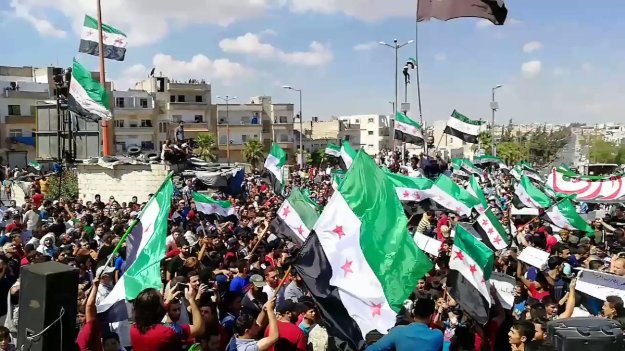
The Idlib Offensive: Delayed, Not Cancelled

By Kyle Orton (@KyleWOrton) on 20 September 2018

For about two months, it has seemed that an offensive by Bashar al-Assad’s regime, Iran, and Russia into Idlib was imminent, with disastrous humanitarian and strategic consequences. On Monday, an agreement was reached between Turkey and Russia that put a halt to this prospect, at least for now. There is good reason to think the pro-Assad forces are delaying, rather than cancelling, their plans to reconquer Idlib, but the extra time gives space to Turkey to alter the terms politically. Continue reading